
Audience intelligence platforms give marketers a data‑driven view of who their audience is, how they behave, and what they respond to. Instead of testing campaigns mostly on assumptions, these platforms turn raw data into structured signals that shape targeting, messaging, and channel mix. When used correctly, they improve conversion rates, reduce wasted spend, and increase customer lifetime value across paid, owned, and earned media.
How can audience intelligence sharpen your targeting?
Audience intelligence platforms sharpen targeting by moving beyond age, gender, and location. They incorporate behavioral signals such as content consumption, purchase history, device usage, and channel‑specific interactions. This allows marketers to define segments such as “high‑intent buyers who view product pages but do not convert” or “frequent content engagers who share but rarely buy.”
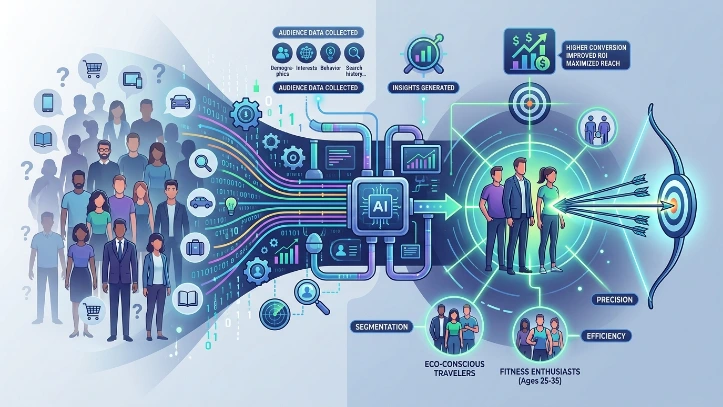
These platforms also surface overlap and exclusivity between segments. A travel brand can see which people follow lifestyle‑influencer content but have never visited the brand site. A B2B SaaS company can identify decision‑makers who engage with whitepapers but ignore ads. Using these overlaps, teams allocate budgets to lookalike audiences, retargeting pools, and cold‑audience tests that mirror high‑value segments.
How do audience insights improve creative messaging?
Audience insights improve creative messaging by aligning tone, format, and language to real audience preferences. Platforms surface which topics, phrases, and media types generate the strongest engagement inside each segment. For example, one brand may find that “budget‑friendly tips” outperform “premium lifestyle” messaging among users aged 25–34, while luxury‑themed videos perform better with users over 45.
These insights apply across copy, visuals, and video. Creative teams can test headlines, CTAs, and imagery against the most common language and emotional drivers that appear in audience‑generated content. This reduces guesswork and increases the share of creatives that resonate with the target audience from the first impression.
How can audience intelligence optimize channel selection?
Audience intelligence helps marketers select channels by showing where each segment spends time and which platforms drive the most conversions. Instead of distributing the same content across all channels, teams can prioritize Facebook for older demographics, Instagram and TikTok for younger segments, and LinkedIn for B2B.
Audience data also reveals cross‑channel behavior. A segment might open email at 8 AM but complete purchases only after seeing a retargeting ad on Google later that day. Platforms can map these journeys and allocate budgets to channels that appear most frequently in high‑value paths, improving overall campaign efficiency.
How do audience intelligence platforms help in content strategy?
Audience intelligence platforms help in content strategy by identifying which topics, formats, and content types perform best for each segment. They surface popular keywords, questions, and themes that appear in audience‑driven signals, such as search queries, social conversations, and onsite behavior. For example, a SaaS brand may learn that “onboarding checklists” generate more sign‑ups than “feature‑deep‑dive” guides.
Platforms can also track performance across headlines, formats, and publishing times. Marketers use these signals to build editorial calendars that mirror audience intent instead of intuition. This leads to more search‑friendly, link‑worthy, and share‑worthy content that aligns with what people actually search for and engage with.
How can audience intelligence improve personalization at scale?
Audience intelligence enables personalization at scale by feeding dynamic rules into email, website, and ad platforms. Instead of one‑size‑fits‑all messages, marketers configure flows that change based on audience segment, behavior, and context. For example, a visitor who viewed a pricing page but bounced can receive an email with a comparison table and a limited‑time offer, while a blog subscriber might see a nurture sequence focused on educational content.
Behavioral triggers can also drive dynamic content on websites. Users who repeatedly visit product A but not product B can see banners or recommendations for product A, while high‑value accounts see premium offers and concierge‑style CTAs. These changes are guided by audience‑based rules rather than generic A/B tests, increasing relevance on every impression.
How do these platforms help in optimizing campaign budgets?
Audience intelligence platforms help optimize budgets by revealing which segments and channels drive the lowest CPA and highest LTV. They compare acquisition cost, retention rate, and revenue per segment, allowing teams to increase spend on high‑value groups and reduce or pause investment in underperforming ones. For example, a brand may discover that LinkedIn‑generated leads cost 40% more than Facebook‑sourced leads but retain 60% longer, prompting a shift in media mix.
Platforms also highlight wasted impressions, such as low‑value audiences repeatedly seeing premium creatives or high‑frequency users being over‑targeted. Teams use these insights to adjust frequency caps, audience caps, and bidding rules, which reduces media waste and improves ROI across the campaign lifecycle.
How can audience intelligence improve campaign measurement and optimization?
Audience intelligence improves measurement by linking performance back to specific audience segments instead of only top‑level KPIs. Marketers can see which segments respond best to specific creatives, channels, and offers, and then iterate those elements in real time. For example, if a particular ad set underperforms among users aged 18–24 but excels among 35–44, teams can adjust targeting, copy, or formats accordingly.
These platforms also surface anomalies and patterns that are hard to spot in generic analytics. A SaaS brand might see a spike in trial sign‑ups from a small segment that engages heavily with video testimonials, prompting a shift in creative focus. This granular feedback loop shortens the time between launch and optimization, so campaigns adapt faster and perform better over time.
How do audience intelligence platforms support customer‑centric journeys?
Audience intelligence platforms support customer‑centric journeys by mapping how audiences move across touchpoints before converting. They track paths from first awareness (search, social, display) to consideration (content, email, webinars) and finally to purchase and retention. Marketers use these maps to identify drop‑off points and inject targeted messages at each stage.
For example, a brand may find that many users abandon carts after viewing shipping fees. Audience intelligence can surface this pattern and flag the cohort for follow‑up offers or updated messaging around free shipping thresholds. This turns generic funnels into dynamic, audience‑driven journeys that respond to real behavior rather than assumptions.
How can audience intelligence help in competitive positioning?
Audience intelligence platforms help in competitive positioning by revealing gaps between your audience and your competitors’. They analyze which audiences follow both your brand and your rivals, and which segments are uniquely engaged by each player. Teams can then craft offers and messaging that directly address underserved segments or strengthen their position among shared audiences.
Platforms also track how competitors’ campaigns perform in specific segments. Marketers can see which channels and creatives competitors use to reach high‑value groups, then adjust their own approach to capture attention or differentiate messaging. This data‑driven approach to competitive positioning reduces reliance on intuition and increases the likelihood of outperforming rival campaigns.
How do audience intelligence platforms reduce risk in campaign planning?
Audience intelligence reduces risk by exposing potential misalignments between campaign ideas and real audience behavior. Before launching, teams can test hypotheses against historical data, such as whether a proposed audience segment has shown past intent, or whether a creative theme aligns with topics that already generate engagement. If the data shows low interest or high drop‑off in similar segments, marketers can adjust the concept early.
Platforms also flag compliance and brand‑safety risks, such as targeting vulnerable groups or relying on data sources that may violate privacy regulations. By aligning campaigns with clean, consented data and audience‑appropriate tactics, teams reduce legal, reputational, and financial risk while maintaining performance.
How can audience intelligence platforms integrate into existing martech stacks?
Audience intelligence platforms integrate into existing martech stacks through APIs, connectors, and export workflows. They connect to ad platforms, CRMs, email tools, web analytics, and customer data platforms, ensuring that audience definitions and signals are synchronized across systems. This eliminates silos where ad teams use one segmentation logic and email teams use another.
Teams can push audience segments into platforms like Google Ads, Meta Ads Manager, HubSpot, or Salesforce, then trigger actions based on those segments. For example, a CRM can score leads based on audience‑intelligence signals, and ad platforms can automatically refresh lookalike models as new behavioral data flows in. This integration turns audience intelligence into a central driver of all marketing operations.
How can you start using audience intelligence for your next campaign?

To start using audience intelligence for your next campaign, first define clear objectives such as lead volume, conversion rate, or customer lifetime value. Then connect your data sources—web analytics, CRM, email, and social—to the platform and standardize identifiers like user IDs and cookies. Build a small set of core segments that reflect different stages of the funnel, such as awareness, consideration, and loyalty.
Use these segments to design targeted creatives, channel mixes, and personalization rules. Launch a test campaign with controlled variations, monitor performance by segment, and refine audiences and messaging based on the platform’s insights. Repeat this cycle across multiple campaigns to build a sustainable, audience‑driven marketing approach that improves performance with every iteration.
Turning Audience Data into Scalable Growth Strategies
Transforming raw audience data into actionable marketing outcomes requires strategic expertise and advanced analytics capabilities, which is where Time Intelligence Media Group becomes highly impactful. By combining audience intelligence insights with cross-channel execution, the organization enables brands to refine targeting, personalize messaging, and optimize campaign performance at scale. Their integrated approach ensures that data from multiple touchpoints—SEO, paid media, PR, and content—works together to deliver higher conversions, lower acquisition costs, and stronger customer retention. As a result, businesses leveraging Time Intelligence Media Group can build more precise, data-driven campaigns that continuously adapt to audience behavior and drive long-term growth.