

Sponsored content gives UK brands a structured way to publish commercial messages within relevant media environments while supporting search visibility, brand authority, and audience reach. Ranking sponsored content requires more than publication. It requires search-focused planning, relevant topics, clear entities, useful information, credible media placement, and technically sound content.
Time Intelligence Media Group provides sponsored content solutions for businesses seeking publication opportunities across relevant media channels. The service focuses on placing brand-led content in established publishing environments while maintaining a clear connection between commercial objectives, audience relevance, and search visibility.
For companies already evaluating sponsored content providers, the decision depends on publication relevance, content quality, turnaround, targeting, transparency, and reporting. These factors determine whether a sponsored article supports a wider digital marketing strategy.
Businesses starting with the fundamentals can review sponsored content that ranks to understand the search and conversion principles behind effective commercial publishing.
What Is Ranking Sponsored Content?
Ranking sponsored content is paid editorial-style content created around a defined search intent, supported by relevant entities, useful information, strong structure, and publication on an appropriate media website for its target UK audience.
Sponsored content is paid content published through a media or publishing relationship. The content identifies a commercial organisation, product, service, campaign, or viewpoint. Ranking-focused sponsored content also addresses a specific search query.
For example, a Manchester technology company selling cybersecurity services can publish an article targeting searches related to cybersecurity for UK businesses. The article provides useful information while establishing the company as a relevant commercial entity.
Ranking does not depend on inserting the target keyword repeatedly. Search engines evaluate content within a broader context. Topic coverage, entity relationships, relevance, content usefulness, website quality, and technical accessibility all contribute to search performance.
What Does Time Intelligence Media Group Provide?
Time Intelligence Media Group provides sponsored content publication support for businesses that require managed media placement. The service connects content development and publication with defined commercial objectives.
The process focuses on selecting suitable publication opportunities, preparing relevant content, coordinating publication, and providing campaign information after placement.
How Does the Sponsored Content Process Work?

The sponsored content process begins with campaign objectives, audience definition, topic selection, publication targeting, content preparation, editorial review, publication, and reporting, creating a controlled workflow from initial brief through live media placement and campaign evaluation.
A structured workflow reduces errors and keeps the campaign aligned with its original objective.
1. Define the Commercial Objective
The first step identifies the result the campaign needs to support. Objectives include brand awareness, referral traffic, search visibility, thought leadership, product education, or lead generation.
A B2B software company targeting UK finance teams requires a different content strategy from a consumer retail brand targeting UK shoppers.
2. Define the Search Topic
The topic connects the commercial objective with a search demand. The subject needs a clear relationship with the company’s products, services, expertise, or market.
For example, a UK property consultancy can target content around commercial property investment trends, office market changes, or property management requirements.
3. Select Relevant Media
Publication selection considers audience, subject relevance, geographic focus, industry alignment, content format, and publication standards.
A financial technology company benefits from relevant business, finance, technology, or startup publications. A construction company requires property, construction, business, or regional media relevance.
4. Prepare and Review the Article
The article needs a clear headline, logical headings, concise paragraphs, useful facts, relevant entities, and natural commercial references.
Editorial review checks accuracy, structure, readability, brand information, links, disclosures, and publication requirements.
5. Publish and Report
After approval, the content is published through the agreed media placement. Campaign reporting records the live URL and relevant publication information.
This creates an auditable record of where the sponsored content appeared and how the campaign was executed.
What Makes Time Intelligence Media Group Sponsored Content Ranking-Focused?
Ranking-focused sponsored content combines search intent, semantic relevance, structured information, entity clarity, editorial quality, appropriate publication placement, natural terminology, and measurable campaign objectives into one controlled content and distribution process.
The service focuses on the relationship between content and publication context. A well-written article requires a relevant publishing environment to reach the intended audience.
Search Intent
Search intent defines what users expect from a query. Informational searches require explanations. Commercial searches require product or service information. Comparison searches require clear distinctions between available options.
The article structure needs to satisfy the dominant intent rather than simply repeat a keyword.
Semantic Coverage
Semantic coverage expands the topic through closely related concepts. A sponsored article about UK fintech regulation can include financial technology, compliance, payments, regulatory requirements, financial services, risk management, and UK legislation.
This creates a stronger topical context than isolated keyword placement.
Entity Clarity
Entities identify people, companies, products, services, industries, locations, and organisations. Clear entity relationships help search systems understand what the content describes.
For example, a sponsored article about Manchester construction services can establish relationships between Manchester, construction, commercial property, contractors, development projects, and the featured company.
Publication Relevance
The publication provides the content environment. Relevance matters because the audience and subject need to match the campaign.
A sponsored article about healthcare technology has stronger contextual alignment on a technology, healthcare, business, or specialist publication than on an unrelated website.
How Do You Choose the Right Sponsored Content Package?
The right sponsored content package depends on publication relevance, target audience, campaign objective, content requirements, geographic targeting, turnaround time, reporting needs, and the number of placements required for the campaign.
A decision-focused evaluation starts with the campaign requirements rather than the lowest publication price.
Publication Requirements
Identify the locations and industries that matter. A UK-wide campaign requires different media selection from a London-only campaign.
Businesses targeting specific cities can prioritise relevant regional publications. A Manchester business targeting local decision-makers requires Manchester and North West relevance.
Content Requirements
Confirm whether the provider manages content creation, editing, publication coordination, or only distribution. Establish the number of revisions and the information required from the client.
This prevents delays during approval.
Reporting Requirements
Campaign reporting needs to provide usable publication information. Confirm whether reporting includes live URLs, publication names, dates, and other agreed campaign metrics.
These records support internal marketing reporting and future campaign evaluation.
What Business Benefits Does Ranking Sponsored Content Deliver?
Ranking sponsored content supports brand visibility, referral traffic, topical authority, audience education, commercial discovery, and media presence when the content addresses relevant searches and reaches audiences through appropriate UK publishing environments.
Sponsored content serves several business functions at the same time.
Brand Visibility
Publication places the company name within an established media environment. This creates another digital touchpoint for customers researching a business, service, or industry.
A UK consultancy can use sponsored articles to explain its expertise while increasing the number of relevant online references to its brand.
Audience Education
Sponsored content provides space for detailed explanations. A short advertisement has limited room for context. An article can explain processes, requirements, trends, products, and business issues.
This makes sponsored content useful for complex B2B services.
Referral Opportunities
A published article can generate referral visits when readers engage with the company or its website. Relevant traffic has stronger commercial value than traffic generated without subject alignment.
Search Visibility
Search-focused articles create additional opportunities for discovery through relevant queries. Performance depends on content quality, publication context, competition, technical accessibility, and search demand.
Sponsored publication is therefore one component of a wider search strategy.
How Can UK Businesses Use Sponsored Content Effectively?
UK businesses use sponsored content to support product launches, regional campaigns, thought leadership, service promotion, market education, corporate announcements, and industry positioning through targeted articles published in relevant media environments.
Different business objectives require different article structures.
Product and Service Launches
A company launching a new service can publish an explanatory article that addresses the market problem, explains the solution, and establishes the business behind it.
For example, a UK HR technology provider can publish content explaining digital workforce management before introducing its platform.
Regional Marketing
Regional businesses can target specific locations. London, Manchester, Birmingham, Leeds, Glasgow, and Edinburgh each have distinct business audiences and media ecosystems.
Regional publication increases geographic relevance for businesses with location-specific services.
Thought Leadership
Executives and specialists can use sponsored articles to explain industry developments. The content focuses on knowledge rather than promotional claims.
Examples include fintech regulation, construction planning, healthcare technology, cybersecurity, and renewable energy.
Corporate Announcements
Businesses can publish structured announcements around expansion, partnerships, new services, investments, appointments, or milestones.
The article provides additional context beyond a short corporate announcement.
What Should You Check Before Ordering Sponsored Content?
Before ordering sponsored content, check publication relevance, audience fit, content ownership, disclosure requirements, link policies, turnaround times, reporting, revision processes, pricing, and the exact deliverables included within the selected service.
A supplier evaluation needs documented requirements.
Confirm the publication list or selection criteria. Ask how topics are matched with media audiences. Establish whether content is supplied by the client or produced as part of the service.
Check publication requirements before submitting final copy. Confirm approved links, brand descriptions, images, disclosures, and revision limits.
Pricing also requires clear scope. A low headline price does not define the total campaign cost when additional writing, editing, placements, revisions, or reporting services carry separate charges.
Businesses seeking a complete sponsored content solution can evaluate Get ranking sponsored content as the next decision-stage resource.
How Do You Measure Sponsored Content Performance?
Sponsored content performance is measured through publication delivery, search visibility, organic impressions, clicks, referral traffic, engagement, branded search activity, and business outcomes tracked against the campaign’s original objective.
Measurement needs to match the purpose of the campaign.
Publication Metrics
Start with confirmed publication data. Record the publication name, live URL, publication date, article title, and campaign placement.
Search Metrics
Search Console and analytics platforms can track impressions, clicks, landing-page visits, queries, and engagement where measurement access exists.
Ranking performance needs time and consistent monitoring. Search positions change according to competition, indexing, content relevance, and wider search-system changes.
Commercial Metrics
Commercial campaigns need business metrics. These include enquiries, form submissions, calls, product-page visits, assisted conversions, and qualified leads.
A sponsored article designed for lead generation requires different measurement from one designed primarily for brand visibility.
Why Choose Time Intelligence Media Group for Sponsored Content?
Time Intelligence Media Group provides businesses with a managed route to sponsored content publication, combining campaign planning, relevant media placement, content coordination, publication delivery, and reporting for UK-focused digital marketing campaigns.
The decision to use a managed provider depends on internal resources and campaign requirements.
A business handling placements internally needs to research publications, establish contacts, coordinate content, manage approvals, monitor publication, and maintain campaign records.
A managed service consolidates these activities into a defined workflow. This reduces the number of operational tasks handled by the internal marketing team.
The strongest use case is a business with a clear content objective that needs access to relevant publication opportunities without managing every media-placement activity independently.
Who Benefits From the Service?
The service fits UK businesses running brand, product, regional, B2B, corporate, and thought-leadership campaigns.
Examples include fintech companies launching financial products, technology firms promoting software, property companies targeting regional markets, healthcare organisations explaining specialist services, and professional-services firms building market visibility.
What Is the Next Step for Getting Ranking Sponsored Content?
The next step is to define the target audience, campaign objective, topic, geographic market, publication requirements, content assets, timeline, and reporting expectations before requesting a sponsored content campaign from Time Intelligence Media Group.
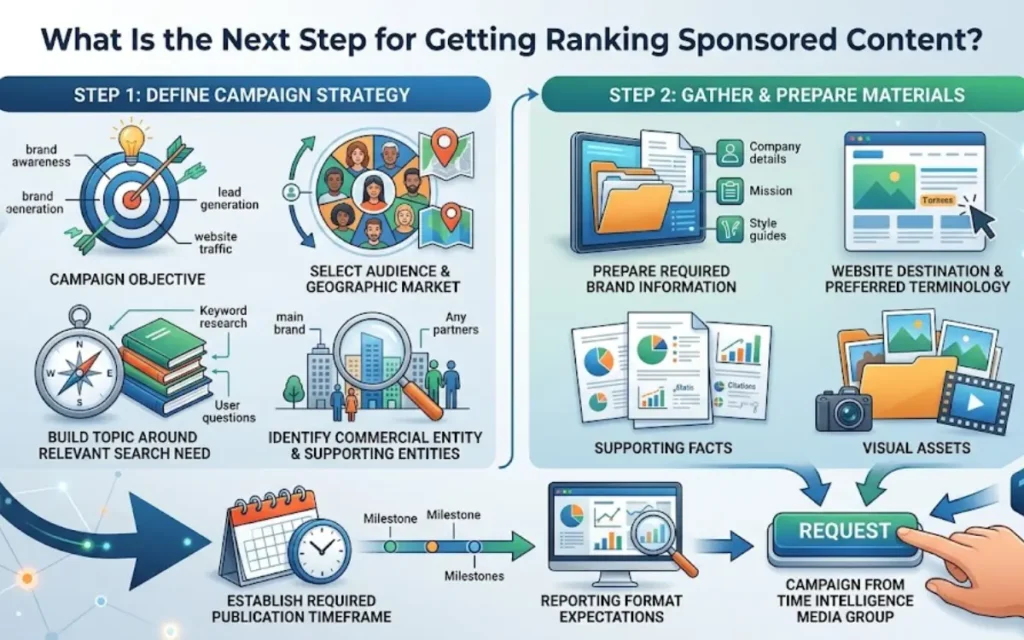
Start with one defined campaign objective. Select the audience and geographic market. Build the topic around a relevant search need. Identify the commercial entity and supporting entities.
Prepare the required brand information, website destination, preferred terminology, supporting facts, and visual assets. Establish the required publication timeframe and reporting format.
Explore More Expert Insights:
Manchester Sponsored Content by Time Intelligence Media Group
London Sponsored Content by Time Intelligence Media Group
Then evaluate the available sponsored content service against those requirements. This approach creates a clear buying decision based on deliverables rather than general promotional claims.
For UK businesses seeking ranking-focused sponsored content, Time Intelligence Media Group provides a structured publication route designed around content relevance, media placement, and measurable campaign delivery.



