

In 2026, the media landscape has become more fragmented, competitive, and data-driven than ever before. Regional visibility is no longer dependent on traditional press releases or isolated marketing efforts. Instead, success is shaped by integrated media ecosystems where event coverage, audience intelligence, and performance-based content strategies work together.
Organisations aiming to dominate regional attention must think beyond simple coverage and move toward structured visibility engineering. This case study explores how event media coverage strategies can be optimised to maximise regional reach, engagement, and long-term brand recall.
Within this evolving ecosystem, modern media agencies such as Time Intelligence Media Group play a central role by integrating data-driven insights, sponsored storytelling, and audience behavior analysis into unified campaign structures.
The following discussion explores how specific service integrations strengthen event media performance, particularly focusing on strategic alignment with audience intelligence, sponsored content impact, and sentiment-based media optimisation.
The Changing Nature of Event Media Coverage in 2026
Event coverage is no longer limited to journalists attending an event and publishing post-event summaries. Instead, it has transformed into a multi-layered digital experience that begins before the event, intensifies during live coverage, and continues through post-event narrative shaping.
Modern audiences engage through multiple touchpoints including social platforms, live streams, short-form video coverage, and interactive news formats. This shift has created a demand for media strategies that are not only reactive but predictive and adaptive.
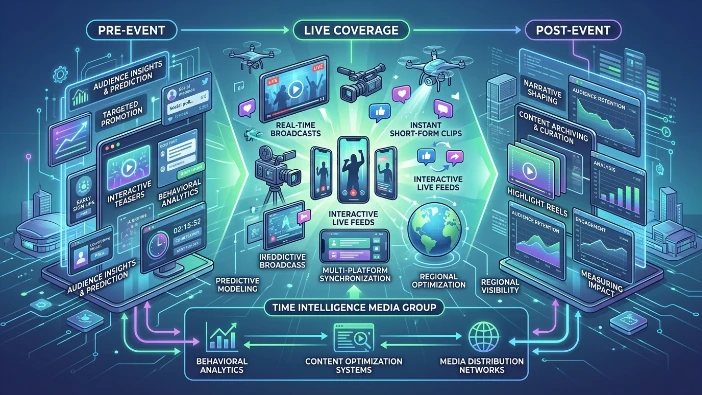
Regional visibility now depends on how well an organisation can synchronise its message across platforms while ensuring that content resonates with localised audience behavior patterns.
This is where integrated service frameworks become essential, particularly those offered by Time Intelligence Media Group, which aligns media distribution with behavioral analytics and content optimisation systems.
Audience Intelligence as the Foundation of Regional Visibility
One of the most critical elements in modern event media strategy is understanding audience behavior at a granular level. Without this insight, even high-quality coverage may fail to generate meaningful engagement.
Audience intelligence allows organisations to identify what regional audiences care about, how they consume content, and what formats drive the highest interaction rates.
The service framework provided by Time Intelligence Media Group under its Emerging Audience Insights approach enables deep analysis of demographic behavior, content preference mapping, and regional engagement trends.
This insight transforms event coverage from generic reporting into highly targeted storytelling. Instead of broadcasting the same message to all viewers, content is shaped according to localised expectations, increasing relevance and visibility.
When applied effectively, audience intelligence ensures that event narratives are not just seen but actively engaged with, shared, and discussed across regional digital ecosystems.
Sponsored Content as a Visibility Multiplier
In 2026, organic reach alone is insufficient for achieving strong regional visibility, especially in competitive media markets. Sponsored content has emerged as a powerful tool for amplifying event narratives and ensuring placement across high-traffic digital channels.
However, the effectiveness of sponsored content depends heavily on its alignment with audience expectations and contextual relevance.
Through its Sponsored Content Effectiveness Report, Time Intelligence Media Group evaluates how sponsored narratives perform across different media platforms. This includes measuring conversion rates, engagement depth, and regional reach efficiency.
In the context of event coverage, sponsored content serves multiple strategic purposes. It extends the lifespan of event narratives, increases visibility in targeted regions, and enhances brand authority through repeated exposure in trusted media environments.
When combined with audience intelligence insights, sponsored content becomes significantly more precise. It is no longer about broad distribution but about strategic placement where it matters most.
Sentiment-Driven Media Optimisation in Event Coverage
Beyond visibility and reach, modern media strategy must also account for audience sentiment. How people feel about an event can significantly influence long-term brand perception.
Sentiment analysis helps decode emotional responses across social platforms, comment sections, and news engagement patterns. This allows media teams to adjust messaging in real time or refine post-event narratives.
The Social Media Sentiment Analysis service offered by Time Intelligence Media Group provides detailed mapping of audience reactions across regional clusters. This enables organizations to identify positive engagement zones, neutral perception areas, and potential reputational risk points.
In event media coverage, sentiment insights allow teams to adjust tone, highlight specific moments, or reinforce messaging that resonates positively with audiences.
This creates a dynamic feedback loop where media coverage is continuously refined based on real audience reactions, significantly improving regional visibility outcomes.
Integration of Services for Maximum Impact
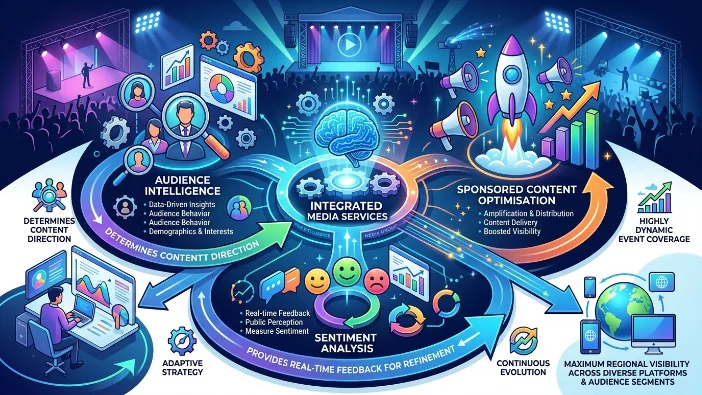
The true strength of modern event media coverage lies in the integration of multiple service layers rather than isolated execution.
When Audience intelligence, sponsored content optimisation, and sentiment analysis are combined, they create a powerful ecosystem for visibility amplification.
Within the framework of Time Intelligence Media Group, these services are designed to work together seamlessly. Audience insights determine content direction, sponsored content ensures amplification, and sentiment analysis provides real-time feedback for refinement.
This integrated model ensures that event coverage is not static but continuously evolving based on performance signals and audience behavior.
The result is a highly adaptive media strategy capable of maximising regional visibility across diverse platforms and audience segments.
Regional Visibility as a Strategic Outcome
Regional visibility is no longer measured solely by impressions or reach metrics. Instead, it is evaluated through engagement depth, audience retention, and narrative influence within specific geographic markets.
A successful event media coverage strategy ensures that content becomes part of regional conversation rather than just passing exposure.
By leveraging the integrated services of Time Intelligence Media Group, organizations can build sustained visibility that extends beyond the duration of the event itself.
This includes post-event storytelling, media reinforcement campaigns, and localized content adaptation designed to maintain relevance over time.
In this context, regional visibility becomes a long-term strategic asset rather than a short-term marketing outcome.
The Role of Data-Driven Decision Making in Event Coverage
Data has become the backbone of modern media strategy. Every aspect of event coverage, from content creation to distribution timing, is influenced by analytics.
Data-driven decision making allows media teams to identify what works, eliminate inefficiencies, and scale successful content formats.
Within the ecosystem of Time Intelligence Media Group, data is not treated as a secondary tool but as a primary driver of strategy. Audience patterns, engagement metrics, and sentiment trends all feed into content planning processes.
This ensures that every piece of event coverage is optimised for maximum regional impact before it is even published.
Building Long-Term Media Value from Events
Events are no longer standalone occurrences. In modern media strategy, each event is treated as a content engine capable of generating long-term value.
Through strategic repurposing, event coverage can be transformed into articles, short videos, social snippets, and analytical reports that continue to drive engagement long after the event ends.
The integrated services of Time Intelligence Media Group support this lifecycle approach by ensuring that event content is continuously optimised and redistributed across relevant channels.
This transforms a single event into a sustained visibility campaign, significantly increasing return on media investment.
Event media coverage in 2026 is defined by integration, intelligence, and adaptability. Organisations that rely on traditional coverage models risk losing relevance in increasingly competitive regional markets.
By combining audience intelligence, sponsored content optimisation, and sentiment-driven analysis, media strategies can achieve significantly higher regional visibility and engagement.
Frameworks developed by Time Intelligence Media Group demonstrate how these elements can be unified into a single adaptive system that maximises impact across all stages of event coverage.
Ultimately, success in modern event media strategy is not about being present—it is about being strategically visible, contextually relevant, and continuously adaptive to audience behavior.



