Ecommerce sponsored content is paid editorial-style content that promotes an online retail brand, product, service, or campaign through a publisher’s digital platform, combining commercial messaging with useful information for a defined audience.
Ecommerce sponsored content gives UK retailers a structured way to communicate with shoppers through online publications. The format focuses on useful content rather than a conventional display advertisement.
A sponsored article can explain a product category, present buying information, introduce a new retail offer, or discuss a consumer trend connected to a brand.
For ecommerce businesses, the format connects brand messaging with relevant publishing environments. The content also creates a dedicated digital asset that supports awareness, consideration, product discovery, and website traffic.
If you are evaluating how this format reaches UK audiences,
Ecommerce sponsored content provides the commercial execution point after understanding how sponsored content reaches shoppers.
How does Time Intelligence Media Group deliver ecommerce sponsored content?
Time Intelligence Media Group delivers ecommerce sponsored content through a structured publishing process covering campaign requirements, content preparation, publication placement, audience relevance, and reporting for UK ecommerce brands seeking measurable digital visibility.
The process begins with campaign requirements. These requirements establish the brand, product, target audience, campaign objective, preferred messaging, and publishing requirements.
Content development follows the campaign brief. The material uses a format suitable for the selected publication and maintains clear commercial identification.
Publication placement then connects the content with relevant digital audiences. The distribution strategy focuses on UK media environments aligned with the campaign topic.
The final stage involves campaign reporting. Reporting records the published content and provides a clearer view of campaign delivery.
What does the campaign process include?
A typical ecommerce sponsored content campaign includes:
- Campaign briefing
- Audience and topic alignment
- Sponsored content development
- Editorial formatting
- Publisher placement
- Publication monitoring
- Campaign reporting
This structure gives ecommerce brands a defined route from campaign planning to published content.
What does an ecommerce sponsored content campaign include?
An ecommerce sponsored content campaign includes brand messaging, product information, audience relevance, sponsored disclosure, publisher placement, campaign links, and measurable publication details that connect commercial objectives with digital content distribution.
The content itself forms the central campaign asset. It contains information that supports the commercial objective while remaining useful to the target audience.
Brand information establishes the company and its market position. Product information explains the relevant offer. Audience relevance ensures the subject matches shopper interests.
Sponsored disclosure identifies the commercial relationship. Clear labelling supports transparency between publishers, brands, and audiences.
Links provide a direct route to the ecommerce website, product page, category page, or campaign landing page.
Which content formats work for ecommerce campaigns?
Common formats include:
- Sponsored articles
- Product-focused editorial features
- Buying guides
- Brand stories
- Consumer trend articles
- Product comparison content
- Seasonal shopping features
- Retail campaign content
For example, a UK homeware retailer launching a new sustainable kitchen range can use a sponsored feature focused on changing kitchen purchasing habits and introduce its product range within that context.
How does sponsored content reach UK ecommerce shoppers?
Sponsored content reaches UK ecommerce shoppers through digital publisher environments where relevant topics, consumer interests, product categories, and commercial messages intersect, giving brands access to audiences already consuming online information about purchasing decisions.
The publishing environment determines where the content appears. A fashion campaign requires a different audience context from a technology, home improvement, beauty, or grocery campaign.
Audience relevance remains central to placement decisions. The content topic also affects how shoppers discover the campaign.
Search engines provide another discovery route when published pages are indexed. Social sharing and direct publisher traffic provide additional pathways when supported by the publication.
The result is a multi-stage discovery process. A shopper can encounter the article through a publisher, search result, social distribution, or a direct link.
Why does publisher relevance matter?
Publisher relevance connects the content with an established audience context.
For example, a consumer electronics retailer benefits from content positioned around technology, gadgets, connected devices, or consumer electronics. A fashion retailer requires a different editorial environment.
This relevance improves contextual consistency. It also gives the campaign a clearer relationship between the product and the audience reading the content.
Brands can use:
Ecommerce sponsored content to reach shoppers at different stages of the purchase journey. Informational content supports discovery, product-focused features support consideration, and campaign-specific content supports action.
How does Time Intelligence Media Group support ecommerce brands?
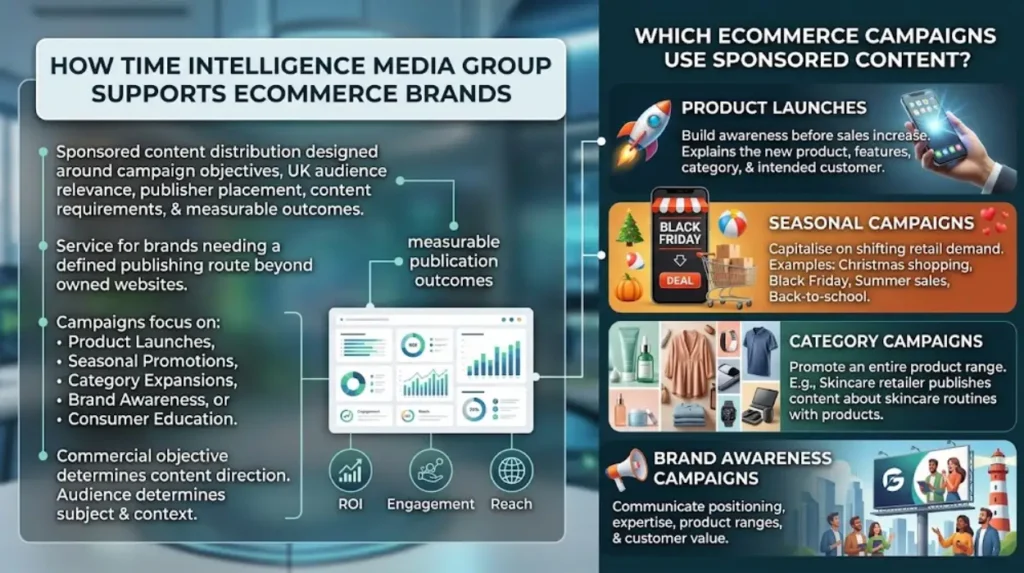
Time Intelligence Media Group supports ecommerce brands by providing sponsored content distribution designed around campaign objectives, UK audience relevance, publisher placement, content requirements, and measurable publication outcomes.
The service is designed for brands that need a defined publishing route rather than relying exclusively on owned website content.
A campaign can focus on a product launch, seasonal promotion, category expansion, brand awareness initiative, or consumer education topic.
The commercial objective determines the content direction. The audience determines the subject and publishing context.
Which ecommerce campaigns can use sponsored content?
Sponsored content fits several ecommerce campaign types.
Product launches
A new product requires awareness before purchase activity increases. Sponsored content provides a dedicated format for explaining the product, its features, its market category, and its intended customer.
Seasonal campaigns
Retail demand changes throughout the year. Examples include Christmas shopping, Black Friday, summer sales, back-to-school campaigns, and Valentine’s Day promotions.
Category campaigns
Brands can promote an entire product category rather than one item. A skincare retailer, for example, can publish content about skincare routines and introduce relevant products.
Brand awareness campaigns
Established ecommerce businesses use sponsored content to communicate positioning, expertise, product ranges, and customer value.
What are the benefits of ecommerce sponsored content?
Ecommerce sponsored content gives UK retailers controlled brand messaging, publisher visibility, contextual audience access, direct website pathways, reusable campaign assets, and measurable publication records within a structured digital marketing campaign.
The first benefit is message control. The brand defines the campaign subject, key information, and commercial focus.
The second benefit is publisher exposure. The content appears within a media environment rather than existing only on the retailer’s own website.
The third benefit is contextual relevance. The campaign connects products with topics that match audience interests.
The fourth benefit is website access. Links inside the published content create a direct path to relevant ecommerce destinations.
The fifth benefit is campaign documentation. Published URLs provide permanent references to campaign activity, subject to publisher policies.
How does sponsored content support SEO?
Sponsored content and SEO serve different functions. A sponsored publication is a paid media placement, while SEO focuses on organic search visibility.
Published content can provide an additional indexed page associated with the brand. Links and mentions also create pathways between publisher content and ecommerce destinations.
Brands must distinguish paid placement from organic editorial coverage. Search performance depends on many factors, including technical SEO, content quality, site authority, relevance, and search engine policies.
The primary role of sponsored content is controlled media distribution. SEO benefits form part of the broader digital visibility environment rather than the sole campaign objective.
Which UK ecommerce brands can use this service?
UK ecommerce brands across retail categories can use sponsored content for product launches, seasonal campaigns, category promotion, brand awareness, and consumer education when controlled publisher distribution aligns with their marketing objectives.
The service applies across multiple ecommerce categories.
Examples include:
- Fashion and apparel
- Beauty and cosmetics
- Consumer electronics
- Home and furniture
- Health and wellness products
- Food and grocery
- Jewellery and accessories
- Sports and fitness products
- Pet products
- Lifestyle products
Each category requires different messaging and audience context.
A furniture retailer can focus on home design and purchasing considerations. A technology retailer can focus on device selection. A beauty brand can focus on product routines and category education.
The campaign structure remains consistent while the content topic changes according to the commercial objective.
How can ecommerce brands choose the right sponsored content campaign?
Ecommerce brands can choose the right sponsored content campaign by defining the business objective, target shopper, product category, content format, publisher environment, campaign timing, destination URL, and reporting requirements before publication.
Start with the commercial objective.
A brand seeking awareness requires a different content approach from a retailer promoting a specific product launch.
Next, identify the target shopper. Define demographic, geographic, interest, and purchasing characteristics where relevant.
Then select the content format. A buying guide suits product education. A brand feature suits positioning. A seasonal feature suits time-sensitive retail activity.
The destination URL also matters. Campaign traffic needs a relevant landing page. Sending every visitor to a generic homepage reduces the connection between content and product intent.
What should brands prepare before publication?
Prepare these campaign elements:
- Brand name and description
- Campaign objective
- Target audience
- Product or service information
- Preferred topic
- Key messages
- Destination URL
- Supporting imagery
- Campaign dates
- Required disclosures
- Reporting requirements
Clear preparation reduces content revisions and keeps publication aligned with the commercial objective.
Why choose Time Intelligence Media Group for ecommerce sponsored content?
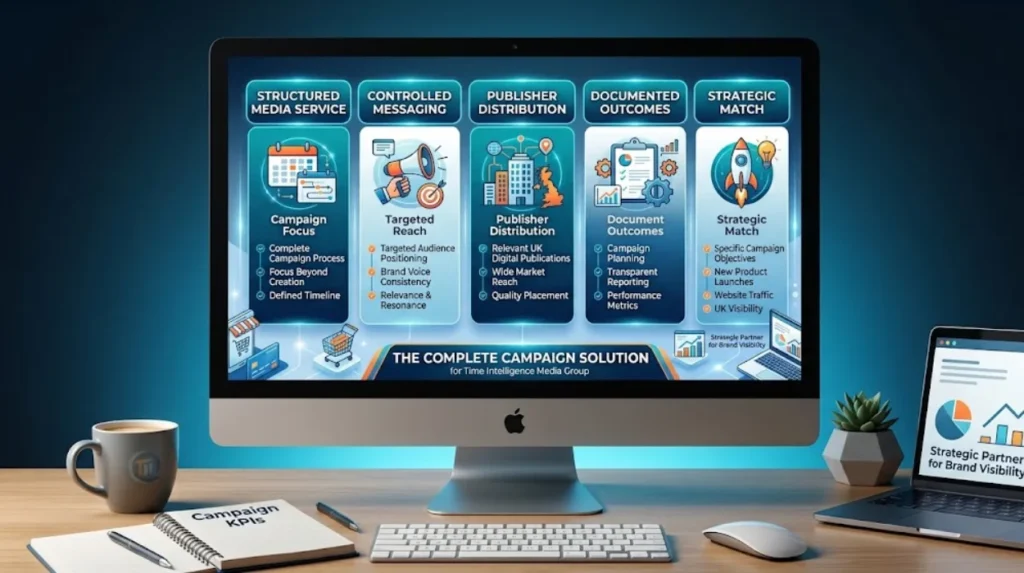
Time Intelligence Media Group provides ecommerce sponsored content as a structured media service for UK brands requiring campaign-focused content, publisher distribution, controlled messaging, relevant audience positioning, and documented publication outcomes.
The service focuses on the complete campaign process rather than content creation alone.
This includes campaign planning, sponsored content preparation, publisher placement, and reporting.
For ecommerce brands, the key decision is whether the service matches the campaign requirement. Brands can evaluate the target audience, content format, publication environment, delivery timeline, and reporting structure before proceeding.
The service also fits campaigns requiring a defined media placement strategy across UK digital publications.
When is ecommerce sponsored content the right choice?
Sponsored content fits campaigns where a brand needs controlled communication within a publisher environment.
It works particularly well for:
- New product launches
- Seasonal retail campaigns
- Brand awareness
- Product education
- Category promotion
- Consumer trend campaigns
- Website traffic campaigns
- UK market visibility
Brands with a specific campaign objective can use these requirements to assess the appropriate content format and distribution strategy.
How can you start an ecommerce sponsored content campaign?
You can start an ecommerce sponsored content campaign by defining your campaign objective, product focus, target UK audience, preferred content format, destination URL, timing, and publication requirements, then submitting the campaign brief for planning and execution.
Begin with the campaign objective and product focus. Identify the audience and explain the commercial message.
Next, prepare the destination URL and supporting brand information. Confirm the preferred campaign timing and content format.
Time Intelligence Media Group can then structure the sponsored content campaign around these requirements and coordinate the publishing process.
Explore More Expert Insights:
Thought Leadership Content by Time Intelligence Media Group
Sponsored Listicles by Time Intelligence Media Group
For ecommerce brands seeking a direct route from campaign planning to sponsored publication, this service provides a defined framework for UK-focused content distribution.
Explore ecommerce sponsored content with Time Intelligence Media Group to plan a campaign around your products, audience, publication requirements, and commercial objectives.