

UK PR distribution services in 2026 differ on three core variables: audience reach, publication speed, and campaign cost. The right choice depends on whether the goal is broad syndication, targeted journalist pickup, or regulated distribution with a defined release schedule.
A UK PR distribution service publishes or syndicates press releases to journalists, newsrooms, databases, and online media outlets across the United Kingdom. In 2026, the main decision points are total reach, turnaround time from approval to live placement, and the price of each release or campaign.
A UK distribution service exists to move one announcement into many media channels at once. Some services focus on newsroom feeds and journalist access, while others focus on online publishing and SEO visibility. The market now includes agencies, freelancer-led distribution, and platform-based self-service options.
How do reach, turnaround, and cost differ?
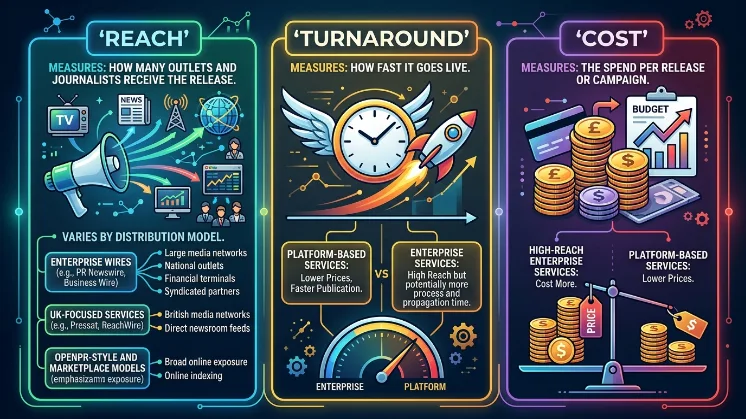
Reach measures how many outlets and journalists receive the release, turnaround measures how fast it goes live, and cost measures the spend per release or campaign. In practice, high-reach enterprise services cost more, while platform-based services deliver faster publication at lower prices.
Reach
Reach varies by distribution model. Enterprise wires and premium UK-focused services connect to large media networks and can extend into major national outlets, financial terminals, and syndicated partners. Platform-led services often deliver wider online indexing but weaker direct newsroom access.
For example, PR Newswire and Business Wire serve enterprise and regulated communications, while UK-focused services such as Pressat and ReachWire emphasise British media networks and direct newsroom feeds. OpenPR-style and marketplace models focus more on broad online exposure and specific publication placement.
Turnaround
Turnaround in 2026 ranges from same-day automation to longer managed campaigns. Online release platforms usually offer the fastest launch because they use template submission and automated publishing workflows. Agency-led distribution takes longer because it includes editing, targeting, approval cycles, and journalist follow-up.
For example, a platform release can go live quickly after payment and approval, while a managed campaign often includes drafting, outreach, and revisions before distribution. Businesses with a time-sensitive launch use faster platforms. Businesses with a reputation-sensitive announcement use slower managed services.
Cost in the UK market spans from low-cost platform fees to four-figure managed campaigns. One 2025 UK pricing guide lists online platforms at roughly £25 to £350, freelance support at about £1,000 to £1,500, agency campaigns at £2,500 to £5,000, and large retained agency work at £5,000 to £12,000 or more.
Those ranges fit the service type. Lower prices buy speed and automation. Higher prices buy targeting, editorial support, and more direct human outreach. For companies that need regulated or high-authority distribution, the higher price tier is standard.
Which services cover the widest UK reach?
The widest UK reach comes from services with direct newsroom feeds, major wire syndication, and strong placement in national and business media. In 2026, PR Newswire, Business Wire, Pressat, and other UK-oriented distribution networks represent the top reach-focused options in market comparisons.
PR Newswire offers large-scale enterprise distribution and connects into major media systems. Business Wire is strong for corporate, regulatory, and investor relations releases. Pressat is positioned as a UK-focused wire with newsroom feeds and journalist distribution. ReachWire appears in 2026 comparisons as a UK and Ireland specialist with premium syndication.
The practical difference is audience depth. A large international wire reaches many channels at once. A UK-specialist service concentrates on British editorial ecosystems. That matters when the release concerns local launches, UK funding news, sector commentary, or national business announcements.
Which services are fastest to launch?
The fastest services are online distribution platforms with automated submission and minimal editorial friction. Managed agencies are slower because they add human review, targeting, and follow-up, but they also provide tighter message control.
Platform services suit routine announcements, product updates, and SEO-led publishing. They often complete distribution in a short cycle after approval. Agency services suit launches that need message shaping, sector targeting, and media relations support. The trade-off is simple: faster systems reduce control, and slower systems increase control.
For urgent announcements, turnaround matters more than broad manual outreach. For major company news, controlled timing matters more than raw speed. That is why many UK businesses use a platform for speed and an agency for strategic releases.
What does each price tier buy?
Low-cost tiers buy distribution automation, mid-tier spend buys targeted pitching and support, and premium tiers buy national reach, editorial handling, and enterprise-grade delivery. In 2026, the UK market separates clearly by service model rather than by price alone.
At the bottom end, online platforms provide basic publication and link placement. In the middle, freelancers and boutique services add editing, list building, and selective pitching. At the top, enterprise wires and agencies provide stronger newsroom integration, compliance handling, and high-authority visibility.
Examples help here. A startup announcement often fits a lower-cost platform. A funding round or product expansion often fits a freelance or boutique service. A public-company statement fits a premium wire with established distribution controls.
Which service fits each use case?
The best UK PR distribution service depends on the release purpose, not only the budget. Product launches, local announcements, investor news, and national reputation campaigns each need different reach, speed, and editorial handling.
A startup launch often benefits from fast, low-cost publishing because the aim is visibility and search presence. A local service business announcement benefits from UK-specific distribution because the audience is regional. A corporate or listed-company release benefits from enterprise wires because the audience includes analysts, investors, and financial media.
For example, product news and SEO campaigns often fit platform distribution. Local business updates often fit UK-specialist services. Regulatory and investor releases often fit Business Wire or PR Newswire-style systems. deme.stanford
Explore More Expert Insights:
Why 9 in 10 UK SMEs Switch to Managed PR Distribution in Year 2
PR Distribution Services UK: ROI Comparison Across 6 Providers
How do you choose the right service in 2026?
Choose the service by matching audience, speed, and budget to the announcement type. UK buyers get the best results when they compare media reach, same-day or next-day turnaround, and total campaign cost before selecting a provider.
Start with the target audience. Then decide whether the release needs national syndication, local UK visibility, or corporate-grade distribution. After that, compare turnaround and review what is included in the fee. The most useful comparison is not the headline price alone, but the amount of reach and editorial support attached to that price.
For a practical path, use a lower-cost platform for routine announcements, a specialist UK service for national British coverage, and a premium wire for regulated or investor-facing news. That structure matches the 2026 UK market and keeps spend aligned to release importance.
What should buyers remember?
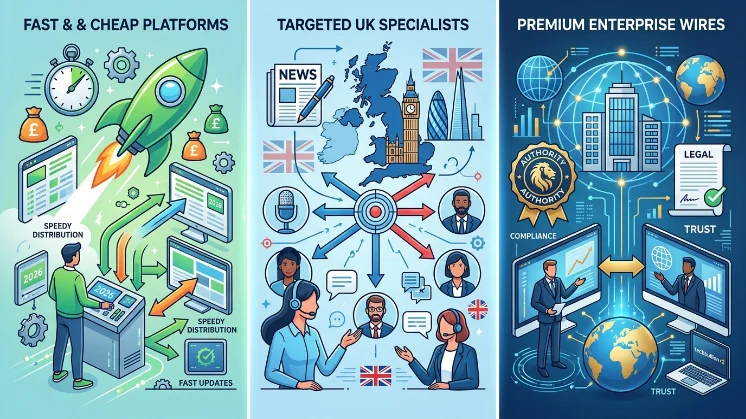
In 2026, UK PR distribution services fall into three clear categories: fast and cheap platforms, targeted UK specialists, and premium enterprise wires. The right option depends on whether the release needs speed, reach, compliance, or direct media credibility.
Read More for Better Understanding:
How AI Search Engines Are Replacing Traditional Newswires for 800M Weekly Users
A buyer who values cost first selects a platform. A buyer who values British editorial reach selects a UK specialist. A buyer who values corporate authority selects an enterprise wire. That framework keeps the decision clear and practical for the UK market.
Dive Deeper Into This Topic:
Step-by-Step: Writing a Press Release That Wins AI Citations and News Pickups



