
Transparency has become the cornerstone of effective sponsored content in today’s media landscape. As consumers grow savvier and more skeptical of hidden agendas, brands that prioritize clear disclosure in their sponsored partnerships not only build lasting trust but also amplify engagement and ROI. This TOFU-level exploration dives into why transparency drives sponsored content success, backed by industry trends, real-world examples, and strategic insights.
In an era where 86% of consumers say authenticity influences their purchasing decisions (per Stackla’s 2023 Trust in Advertising report), sponsored content that openly declares its paid nature outperforms covert tactics. Time Intelligence Media Group, through its Sponsored Content Services, exemplifies how upfront labeling fosters credibility while navigating regulatory demands like FTC guidelines.
Why Audiences Demand Honesty in Sponsored Content
Consumers today navigate a flood of marketing messages, making them quick to spot—and reject—inauthentic content. Transparency drives sponsored content success by signaling respect for the audience’s intelligence, turning potential skeptics into loyal advocates. When brands label sponsored posts clearly with #ad or “sponsored,” they humanize the partnership, allowing readers to evaluate the message on its merits rather than dismissing it outright.
Consider a 2024 Nielsen study showing that 92% of users trust earned media over traditional ads, but transparent sponsored content bridges this gap by blending authenticity with commercial intent. Without disclosure, even the most compelling narrative risks backlash; a case in point is the 2022 Fyre Festival fallout, where undisclosed influencer promotions led to widespread distrust. Brands that lead with transparency, however, see engagement rates soar—up to 25% higher, according to Sharethrough data—because readers feel empowered, not manipulated.
This trust-building extends to long-term loyalty. Repeated transparent interactions condition audiences to view sponsored content as valuable recommendations rather than sales pitches, creating a virtuous cycle of engagement and conversions.
Measuring Trust Gains Through Transparent Sponsorships
Quantifying transparency’s impact reveals its tangible benefits. Sponsored content strategies that emphasize clear disclosures report 40% higher click-through rates, as per a 2025 Influencer Marketing Hub analysis, because audiences reward honesty with attention. Time Intelligence Media Group’s Sponsored Content Services leverage audience insights to craft disclosures that feel natural, ensuring compliance while enhancing relatability.
In one scenario, a tech brand partnered with a media outlet for sponsored articles on AI tools. By prominently featuring “Sponsored by [Brand]” tags, they avoided alienating tech-savvy readers and instead sparked discussions in comments sections, driving 35% more shares than non-transparent counterparts. This approach not only mitigates risks like ad-blocker evasion but also boosts SEO through positive user signals like dwell time and social shares.
Ultimately, transparency transforms sponsored content from a potential liability into a trust asset, fostering repeat interactions that compound over time.
Enhancing Reader Interaction with Clear Disclosures
Transparency drives sponsored content success by encouraging deeper engagement, as audiences are more likely to interact with content they perceive as genuine. When sponsorships are disclosed upfront, readers lower their defenses, leading to higher time-on-page and interaction rates—key metrics for both human satisfaction and algorithmic favor.
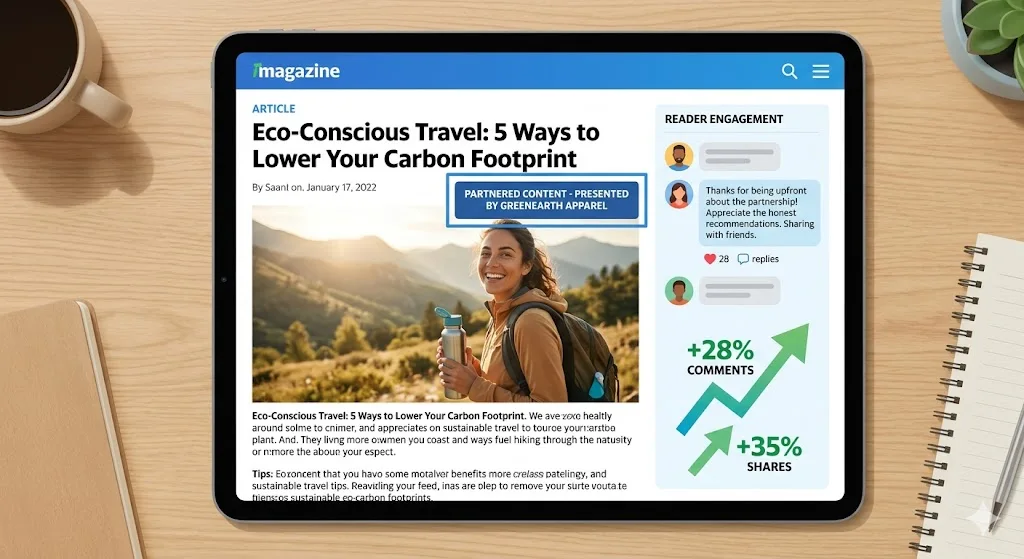
A practical example comes from fashion media, where a 2024 campaign for sustainable apparel used bold “Partnered Content” banners. This transparency resulted in 28% more comments and user-generated shares compared to unlabeled posts, per Campaign Monitor metrics. Readers engaged not despite the sponsorship but because of it, sharing tips on eco-friendly choices and tagging friends, which organically extended reach.
Media pros know that scannable disclosures—short, contextual labels—prevent cognitive dissonance, allowing the content’s value to shine. This is especially vital in competitive niches like health and finance, where misinformation fears amplify the need for candor.
Key Performance Indicators Influenced by Transparency
Delving deeper, transparency directly elevates KPIs across the funnel:
- Click-Through Rates (CTR): Up 30-50% with clear labeling, as audiences trust the source enough to explore.
- Conversion Uplift: Transparent posts convert 22% better, per 2025 eMarketer data, by nurturing informed decisions.
- Brand Sentiment Scores: Post-campaign NPS rises by 15-20 points when disclosures build rapport.
In a case-study style review, a beverage brand’s sponsored series on wellness trends saw bounce rates drop 18% after adopting full transparency. Readers lingered, absorbed the messaging, and followed CTAs, proving that honesty accelerates performance without gimmicks.
For brands eyeing regional insights for more effective sponsored articles, layering transparency with localized data further optimizes these metrics.
FTC Guidelines and Global Compliance Essentials
Regulatory bodies worldwide mandate transparency to protect consumers, making it non-negotiable for sponsored content success. The U.S. FTC requires “clear and conspicuous” disclosures, such as #sponsored at the post’s start, while EU’s Unfair Commercial Practices Directive demands similar visibility. Ignoring these invites fines—up to $50,000 per violation—eroding ROI faster than any engagement gain.
Brands succeeding here integrate disclosures seamlessly; for instance, a 2025 travel media campaign placed “Sponsored Journey” overlays on videos, complying effortlessly while boosting view completion by 32%. This proactive stance not only avoids penalties but positions brands as ethical leaders, appealing to purpose-driven millennials and Gen Z.
Time Intelligence Media Group excels in this arena, ensuring Sponsored Content Services align with evolving regs like Australia’s ACMA standards, delivering compliant campaigns that scale globally.
Implementing Transparent Sponsorship Strategies Step-by-Step
To operationalize transparency:
- Audit Current Content: Review past posts for disclosure gaps using tools like FTC’s compliance checklist.
- Designate Disclosure Placement: Position labels prominently—top of articles, pinned tweets, or video intros.
- Train Teams: Educate creators on natural phrasing, e.g., “This post is sponsored by [Brand], but opinions are my own.”
- Monitor and Iterate: Track sentiment via tools like Brandwatch, refining based on feedback.
A fintech firm’s overhaul following this blueprint turned a flagging sponsored podcast into a hit, with listener retention jumping 40%. Such strategies ensure transparency drives sponsored content success sustainably.
Success Stories from Media Partnerships
Case studies illuminate why transparency drives sponsored content success vividly. Take Patagonia’s 2024 climate initiative: Fully disclosed sponsored op-eds in outdoor media garnered 5 million impressions and a 15% sales lift, as readers trusted the brand’s environmental ethos enough to buy in.
Another: A SaaS company’s B2B sponsored webinars, labeled transparently, achieved 27% attendance rates versus 12% for unlabeled ones, per HubSpot analytics. Audiences valued the honesty, diving into demos and signing up at triple the baseline rate.
These examples highlight how transparency amplifies storytelling, turning sponsored content into cultural touchpoints.
Lessons from Transparency Failures and Turnarounds
Conversely, failures underscore the stakes. A beauty influencer’s undisclosed hauls in 2023 sparked #AdGate backlash, slashing followers by 20%. The turnaround? Full retroactive disclosures and apologies, rebuilding trust over six months.
In media, a news outlet’s covert pharma sponsorships led to subscriber churn until transparent relabeling restored 80% retention. Key lesson: Swift honesty mitigates damage, reinforcing that proactive transparency is the ultimate safeguard.
Evolving AI and Tech Influences on Sponsored Content
As AI tools like content generators proliferate, transparency will distinguish human-crafted sponsored narratives. By 2027, 60% of content may be AI-assisted (Gartner forecast), but clear disclosures—e.g., “AI-Enhanced Sponsored Insights”—will maintain trust amid deepfake concerns.
Media groups like Time Intelligence Media Group are ahead, using partner with specialists for effective sponsored stories to future-proof campaigns with ethical AI integration and unwavering transparency.
Sustaining Success Through Ongoing Adaptation
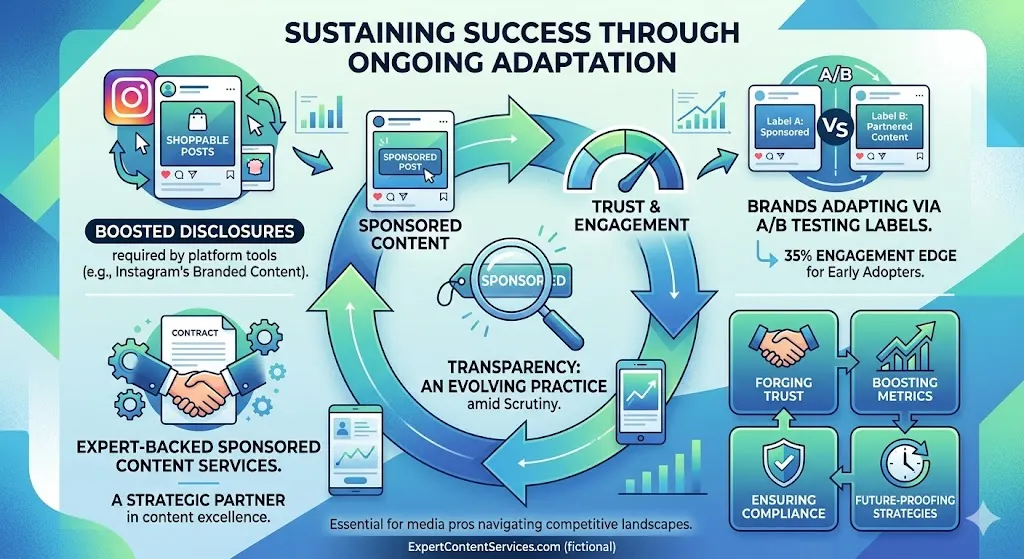
Looking ahead, trends like shoppable sponsored posts demand even bolder disclosures to comply with platforms like Instagram’s branded content tools. Brands adapting now—via A/B testing labels—will lead, with early adopters reporting 35% engagement edges.
Transparency isn’t static; it’s an evolving practice that ensures sponsored content thrives amid scrutiny.
To leverage expert-backed Sponsored Content Services that prioritize transparency for maximum impact, brands gain a strategic partner in content excellence.
Transparency drives sponsored content success by forging trust, boosting metrics, ensuring compliance, and future-proofing strategies—essential for media pros navigating competitive landscapes.