

In today’s dynamic media landscape, understanding the types of media partnerships today is essential for brands aiming to amplify reach, share resources, and drive mutual growth. These collaborations range from simple content exchanges to complex strategic alliances, evolving with digital trends like streaming platforms and social media algorithms. As media consumption fragments across channels, partnerships help organizations navigate competition by pooling audiences and expertise.
Media partnerships today emphasize data-driven decisions, leveraging analytics to measure success metrics such as engagement rates and conversion uplift. For instance, a news outlet partnering with a podcast network can cross-promote episodes to tap into niche listeners, resulting in 20-30% audience growth based on industry benchmarks from sources like the Interactive Advertising Bureau (IAB). This article explores the key types, providing actionable insights for businesses exploring these opportunities.
Co-Marketing Partnerships: Shared Promotion for Broader Reach
Co-marketing partnerships represent one of the most common types of media partnerships today, where two or more entities collaborate on joint promotional campaigns without merging operations. These alliances focus on cross-promoting content, events, or products to their combined audiences, often through email blasts, social media takeovers, or banner exchanges. A prime example is when a digital magazine teams up with an influencer platform to host a virtual webinar, splitting promotion costs while doubling exposure.
The appeal of co-marketing lies in its low-risk, high-reward structure. Partners negotiate clear terms on audience segmentation and performance tracking, ensuring equitable benefits. In practice, brands like Time Intelligence Media Group have seen success by aligning co-marketing efforts with audience insights, leading to improved ROI through targeted outreach. This type thrives in competitive markets, where standalone marketing budgets fall short against algorithm-driven platforms like TikTok and YouTube.
To implement effectively, partners define KPIs upfront, such as click-through rates or lead generation. Challenges arise from mismatched audience demographics, but tools like shared analytics dashboards mitigate this. Overall, co-marketing partnerships build long-term relationships, fostering repeat collaborations that evolve into deeper integrations over time.
Content Syndication Agreements: Amplifying Distribution Channels
Content syndication agreements form another core type of media partnerships today, allowing outlets to republish or distribute each other’s content across platforms for wider dissemination. This model benefits publishers by extending content lifespan—think a blog post from a tech site appearing on industry aggregators like Flipboard or Apple News. Syndication often involves revenue-sharing models, where original creators earn from ad placements or affiliate links on syndicated versions.
These partnerships require robust legal frameworks to protect intellectual property, including clauses on attribution and exclusivity periods. For example, a regional news network syndicating investigative reports to national broadcasters can boost credibility while accessing premium ad revenue. Trends show syndication growing 15% annually, driven by AI-curated feeds that prioritize fresh, high-quality content.
Success hinges on quality control and performance monitoring. Partners use metrics like page views and time-on-page to refine selections, ensuring syndicated material resonates. This type of media partnership is ideal for resource-strapped creators, scaling reach without proportional production costs.
Strategic Alliances: Long-Term Integration for Mutual Growth
Strategic alliances elevate media partnerships today to a collaborative ecosystem level, involving shared resources like technology stacks or joint ventures. Unlike transactional deals, these commit to ongoing initiatives, such as co-developing a streaming app or merging ad sales teams. A real-world scenario: two media conglomerates forming an alliance to bid on major sports streaming rights, combining subscriber bases for economies of scale.
The depth of strategic alliances demands alignment on vision and governance, often with joint steering committees. They excel in addressing industry shifts, like the rise of connected TV, where partners integrate data platforms for personalized recommendations. Time Intelligence Media Group’s expertise in media partnerships solutions highlights how such alliances optimize outcomes through structured negotiation and execution.
Risks include integration hurdles, but benefits like 25-40% cost savings on tech infrastructure outweigh them. These partnerships future-proof operations amid consolidation trends, positioning collaborators as market leaders.
Sponsorship and Branded Content Collaborations
Sponsorship partnerships, a staple among types of media partnerships today, pair brands with media entities for funded content creation or event backing. This includes native advertising, where sponsors integrate messaging into podcasts or videos seamlessly. For instance, a fintech company sponsoring a finance podcast series gains authentic endorsements, blending promotion with value-driven narratives.
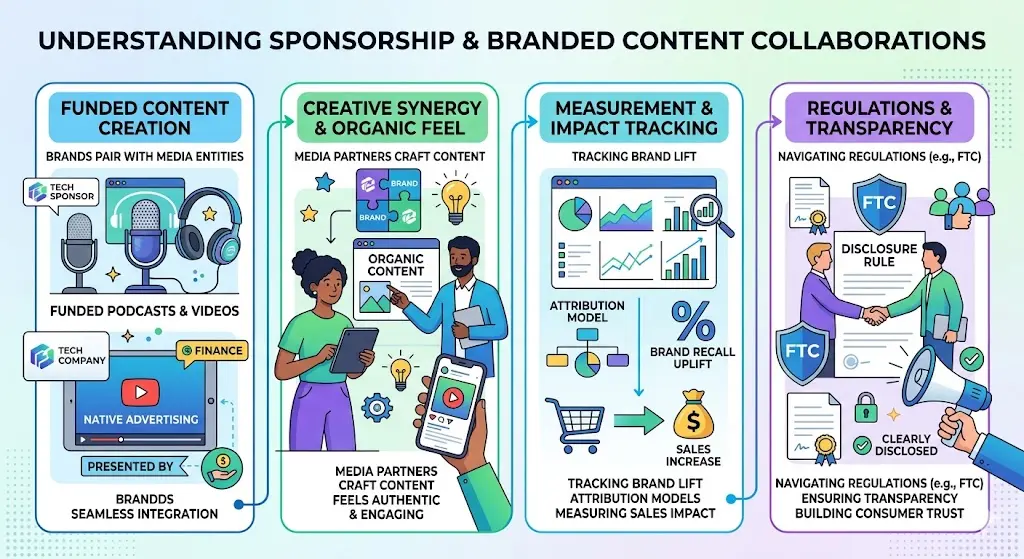
These collaborations prioritize creative synergy, with media partners crafting branded content that feels organic. Measurement relies on attribution models tracking uplift in brand recall or sales. Evolving with influencer culture, sponsorships now extend to micro-influencer networks for hyper-targeted impact.
Navigating regulations like FTC disclosure rules ensures transparency. When executed well, they yield high engagement, with studies showing 5x better retention than traditional ads.
Audience and Data-Sharing Partnerships: Leveraging Insights for Precision
Audience-sharing partnerships focus on exchanging anonymized data to refine targeting, a growing type of media partnerships today amid privacy regulations like GDPR. Partners swap first-party data on demographics and behaviors, enabling hyper-personalized campaigns. Picture a lifestyle blog sharing reader preferences with a complementary e-commerce site for co-targeted emails.
Ethical data handling is paramount, using secure APIs and consent frameworks. This model boosts efficiency, reducing acquisition costs by up to 30% through precise segmentation. It’s particularly potent for niche media, where pooled insights reveal untapped opportunities.
Integration with AI tools enhances predictive modeling, forecasting trends. Such partnerships underscore the shift toward intelligence-driven media strategies.
Event and Experiential Partnerships: Creating Immersive Connections
Event partnerships unite media brands for live or virtual experiences, from conferences to pop-up activations. These types of media partnerships today capitalize on FOMO, drawing shared audiences for networking and content generation. An example: a media group co-hosting a tech summit with a streaming service, live-streaming sessions to global viewers.
Planning involves logistics sharing and multi-channel promotion. Post-event, content repurposing extends value. They foster community loyalty in an era of digital fatigue.
Metrics like attendance and NPS scores gauge impact, often revealing partnership synergies.
Navigating Challenges in Media Partnerships
While exploring types of media partnerships today, it’s crucial to address hurdles like Common Challenges in Media Partnerships. Misaligned goals or poor communication can derail efforts, but structured contracts help.
Detailed due diligence on partner metrics prevents mismatches. For proven navigation, see our Case Study: Media Partnership Success Story, showcasing a collaboration that overcame obstacles for 50% revenue growth. Proactive strategies ensure partnerships deliver sustained value.
Partnering with Experts for Success
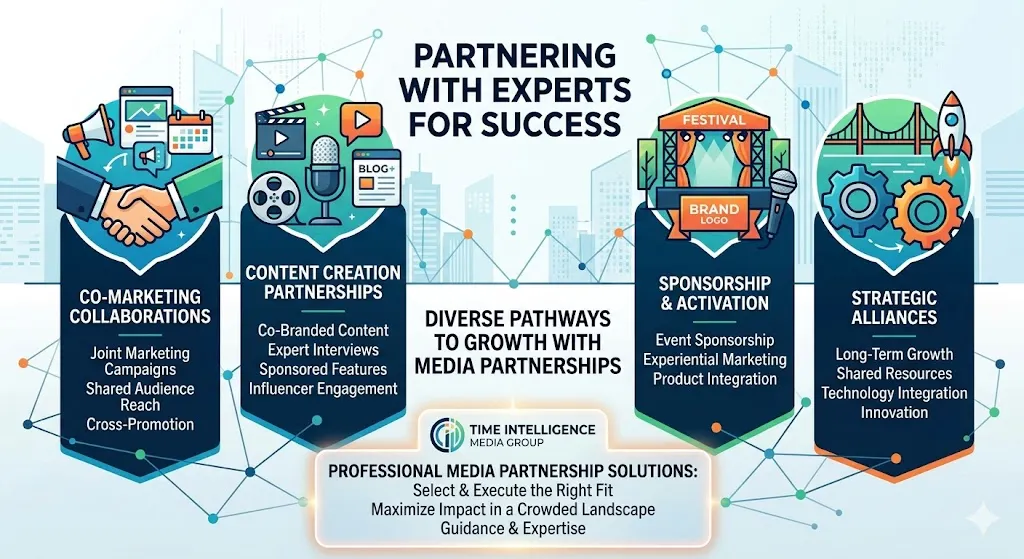
The types of media partnerships today offer diverse pathways to growth, from co-marketing to strategic alliances. Time Intelligence Media Group delivers professional media partnerships solutions to help brands select and execute the right fit, maximizing impact in a crowded landscape.
