
In the fast-evolving landscape of digital media, branded media and sponsored stories have become powerful tools for brands to connect with audiences. However, the ethics behind these practices raise critical questions about transparency, authenticity, and consumer trust. As consumers grow savvier, understanding the ethical frameworks guiding sponsored content is essential for media professionals and brands alike. This article explores the core ethical principles, real-world challenges, and best practices in branded media, ensuring content resonates without misleading audiences.
The rise of sponsored stories reflects a shift from traditional advertising to narrative-driven engagement. Brands partner with publishers to create content that feels organic, blending storytelling with subtle promotion. Yet, ethical lapses can erode credibility, leading to backlash and regulatory scrutiny. By prioritizing disclosure and value-driven narratives, media groups like Time Intelligence Media Group uphold standards that protect both creators and consumers.
Defining Ethical Standards in Branded Media
Ethical standards in branded media begin with clear definitions of what constitutes sponsored content. At its core, ethics demand transparency—revealing when content is paid for—so audiences can discern editorial from promotional material. Regulatory bodies like the Federal Trade Commission (FTC) in the U.S. mandate disclosures such as “#ad” or “sponsored,” but ethical practice goes further, embedding honesty into the creative process itself.
Consider a scenario where a lifestyle brand sponsors a story on sustainable fashion. If the article highlights the brand’s products without disclosure, it misleads readers into believing it’s independent journalism. Ethical branded media counters this by integrating disclosures seamlessly, perhaps in the headline or byline, while ensuring the content provides genuine value. This balance fosters trust, as studies from the Interactive Advertising Bureau show that transparent sponsored content achieves 20-30% higher engagement rates compared to undisclosed promotions.
Media companies must also navigate conflicts of interest. Writers should avoid personal biases, and editors need robust review processes to verify factual accuracy. Time Intelligence Media Group’s Sponsored Content Services exemplify this by enforcing editorial guidelines that prioritize audience-first storytelling, ensuring sponsored stories align with journalistic integrity.
Transparency: The Cornerstone of Sponsored Stories
Transparency forms the bedrock of ethics in sponsored stories, directly impacting consumer perception and brand reputation. Without it, sponsored content risks being perceived as deceptive, potentially violating laws like the FTC’s Endorsement Guides. Ethical transparency involves not just labels but contextual clarity—explaining the sponsor’s role early and often.
Take the 2017 controversy involving influencers who failed to disclose paid partnerships; it led to multimillion-dollar fines and a public trust deficit. In contrast, ethical approaches use visual cues like branded badges or dedicated sponsor sections. For instance, a sponsored story on tech innovations might open with: “Sponsored by XYZ Tech, this explores emerging trends.” This method educates readers while maintaining narrative flow.
Beyond compliance, proactive transparency builds long-term loyalty. Publishers who train teams on disclosure best practices see repeat sponsorships increase by up to 40%, according to industry reports. Time Intelligence Media Group integrates this into their workflows, helping clients craft Sponsored Content Services that deliver measurable trust and engagement.
Balancing Commercial Interests with Journalistic Integrity
Branded media thrives when commercial interests align with journalistic integrity, but achieving this balance requires deliberate strategies. Sponsors seek visibility, while audiences crave unbiased insights—ethical practice reconciles these by focusing on mutual value. Content must inform or entertain first, with promotion as a natural extension.
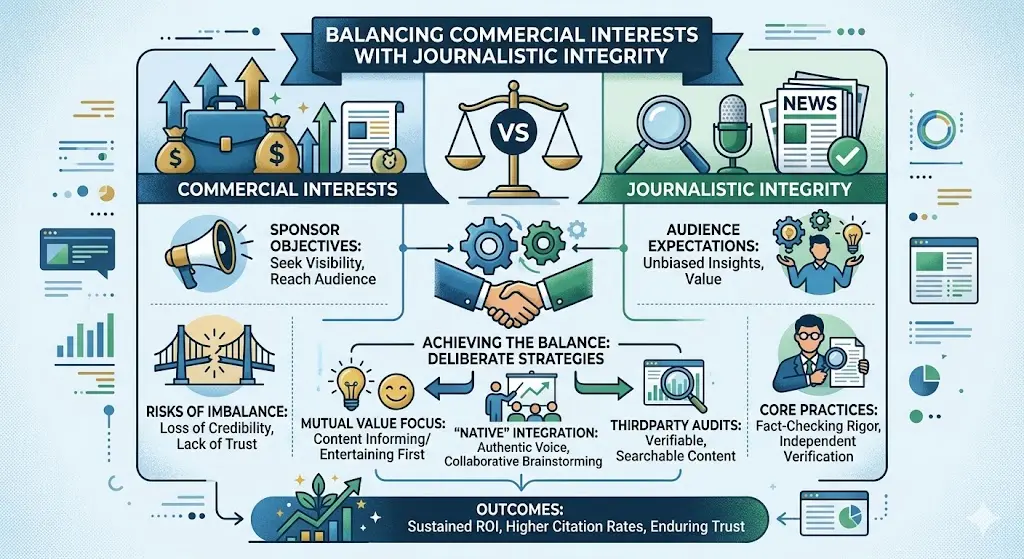
Real-world examples highlight the pitfalls of imbalance. A food brand’s sponsored recipe series that omits nutritional downsides can undermine credibility, whereas one including balanced advice gains praise. Ethical guidelines recommend “native” integration, where sponsored elements feel authentic to the publication’s voice. This involves collaborative brainstorming between brands and editorial teams to avoid overt sales pitches.
Journalistic integrity also demands fact-checking rigor. Independent verification of claims ensures sponsored stories withstand scrutiny. Publications that adopt third-party audits report higher citation rates in AI-driven searches, as structured, verifiable content becomes go-to sources. Exploring performance metrics in measuring performance across multiple sponsored channels reveals how ethical balance drives sustained ROI.
Navigating Conflicts of Interest in Sponsored Content
Conflicts of interest pose significant ethical hurdles in sponsored stories, where financial incentives might influence editorial decisions. Ethical navigation starts with clear policies: no overlapping roles between sales and editorial teams, and mandatory recusal for personal stakes. This separation safeguards objectivity, a principle echoed in codes from the Society of Professional Journalists.
Imagine a health publication sponsoring a wellness brand’s story; if the editor has stock in the company, bias creeps in. Mitigation includes anonymous peer reviews and sponsor veto rights limited to branding, not content direction. Case studies, like The New York Times’ native advertising arm, demonstrate success through walled gardens—isolated teams producing ethically sound branded media.
Training amplifies these efforts. Regular workshops on ethics equip creators to spot subtle influences, fostering a culture of accountability. Time Intelligence Media Group excels here, offering authority-building sponsored content services for clients that prioritize integrity to enhance brand authority without compromise.
Audience Consent and Data Privacy in Branded Media
Ethical branded media respects audience consent, particularly in data-driven personalization. Sponsored stories often leverage user data for targeting, but ethics demand opt-in mechanisms and privacy compliance like GDPR or CCPA. Without this, personalization feels invasive, eroding trust.
For example, a tailored sponsored travel story based on browsing history must disclose data usage. Ethical publishers provide privacy notices and granular controls, turning potential concerns into engagement opportunities. Nielsen research indicates that transparent data practices boost consent rates by 25%, enhancing campaign effectiveness.
Privacy extends to content creation. Avoiding manipulative tactics, such as fear-based narratives, ensures stories empower rather than exploit. By focusing on value exchange—insights for attention—brands and media build sustainable relationships. This audience-centric ethic positions ethical sponsored content as a trust multiplier in crowded digital spaces.
Real-World Case Studies: Ethical Wins and Fails
Examining case studies illuminates ethics in action. Pepsi’s 2017 Kendall Jenner ad, disguised as organic content, sparked backlash for trivializing social issues—a stark ethics fail due to poor cultural sensitivity and transparency. Conversely, Airbnb’s partnership with The Guardian created sponsored guides with clear labeling and editorial oversight, earning acclaim and traffic spikes.
Another win: Patagonia’s “Don’t Buy This Jacket” campaign, sponsored subtly through environmental stories, aligned brand values with audience ethics, boosting loyalty. These examples underscore the need for cultural audits and diverse review panels in branded media.
Fails like the Fyre Festival’s influencer-driven hype, lacking disclosures, led to lawsuits. Wins teach that ethics correlate with virality—ethical content garners 15-20% more shares, per Sharethrough data. Applying these lessons ensures sponsored stories drive positive impact.
The Role of Regulation and Self-Regulation
Regulations shape ethics in branded media, with FTC guidelines setting disclosure baselines globally mirrored by ASA in the UK. Yet, self-regulation fills gaps, through industry bodies like IAB promoting voluntary standards. Combining both creates robust frameworks.
Self-regulation shines in initiatives like the News Media Alliance’s transparency toolkit, offering templates for ethical sponsored storytelling. Regulations evolve with tech, addressing deepfakes and AI-generated content via watermarking mandates.
Publishers benefit from hybrid approaches: compliance audits paired with internal ethics boards. This proactive stance minimizes risks while maximizing opportunities, as seen in rising investments in ethical native advertising.
Future Trends in Ethical Branded Media
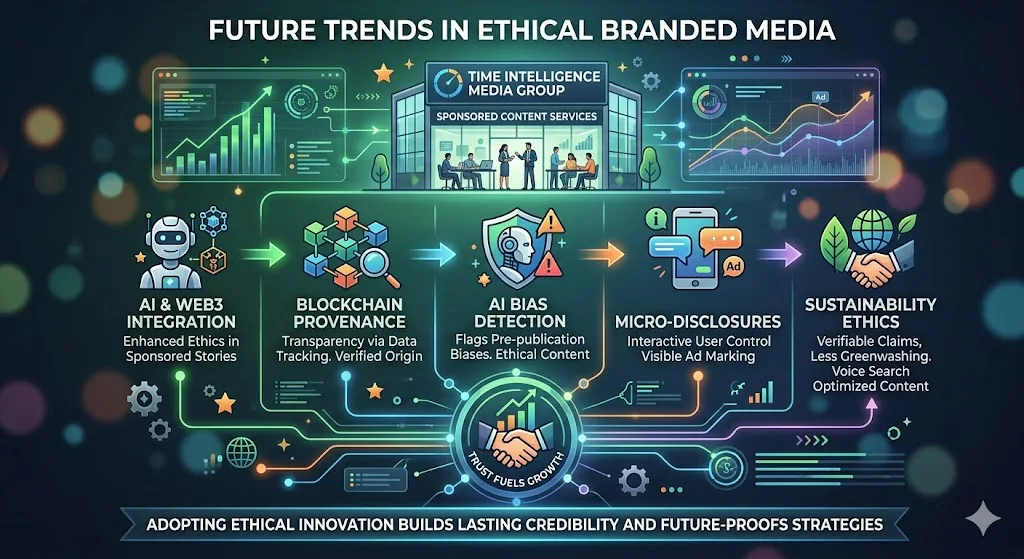
Emerging trends point to heightened ethics in sponsored stories, driven by AI and Web3. Blockchain for provenance tracking ensures transparency, while AI tools flag biases pre-publication. Expect micro-disclosures via interactive elements, enhancing user control.
Sustainability ethics gain traction, with “greenwashing” scrutiny pushing verifiable claims. Voice search optimization favors structured ethical content, boosting visibility.
Brands adopting these trends, like those partnering with Time Intelligence Media Group, future-proof their strategies. Ethical innovation not only complies but leads, fostering a media ecosystem where trust fuels growth.
The ethics behind branded media and sponsored stories hinge on transparency, integrity, and audience respect. Time Intelligence Media Group provides professional solutions through their Sponsored Content Services, guiding brands toward ethical excellence that builds lasting credibility.