
UK charities depend on media coverage to increase public awareness, attract donations, recruit volunteers, and influence policy discussions. However, many campaigns receive limited attention despite addressing important social issues. Understanding how newsrooms select stories explains why some charity campaigns appear in national headlines while others receive little or no coverage.
This guide explains the main reasons behind limited media coverage, how journalists assess charity campaigns, and what characteristics increase the likelihood of editorial interest.
Why do UK charities struggle to get media coverage for campaigns?
UK charities struggle to secure media coverage because journalists prioritise stories with clear public interest, verified evidence, timely relevance, local impact, and unique developments. Many campaigns lack these essential news elements, reducing their editorial value despite important social objectives.
Media organisations publish a limited number of stories each day. Editors review hundreds of pitches from businesses, charities, government departments, researchers, and public relations professionals.
Charity campaigns compete directly with:
- Political developments
- Business announcements
- Crime reporting
- Health updates
- Scientific research
- Consumer issues
- Entertainment news
- Sporting events
Editorial teams select stories that provide the greatest relevance to their audience.
What makes a campaign newsworthy?
Journalists commonly evaluate campaigns using recognised news values.
These include:
- Timeliness
- Public impact
- Human interest
- Conflict
- Novelty
- Local relevance
- Verified evidence
- Prominent individuals or organisations
Campaigns containing several of these characteristics receive greater editorial attention than campaigns presenting only general awareness messages.
How do journalists decide whether a charity campaign deserves coverage?

Journalists assess charity campaigns by examining factual evidence, audience relevance, original information, expert credibility, local significance, and publication timing. Stories that answer key editorial questions quickly receive greater consideration during newsroom planning meetings and daily editorial reviews.
Editors generally ask several questions before assigning coverage.
Is the campaign introducing new information?
News organisations publish developments rather than ongoing activities.
Examples include:
- New research findings
- National survey results
- Government policy responses
- Official statistics
- Newly launched programmes
- Major fundraising milestones
A campaign repeating previously reported information provides little editorial value.
Does the campaign affect the public?
Editors prioritise stories affecting identifiable groups.
Examples include:
- Families facing rising living costs
- Young people experiencing mental health challenges
- Older adults requiring social care
- Veterans seeking employment support
Specific public impact increases news relevance.
Can journalists verify the claims?
Editors expect evidence supporting every important statement.
Reliable sources include:
- Government datasets
- Academic institutions
- NHS statistics
- Office for National Statistics publications
- Peer-reviewed research
Verified information improves editorial confidence.
Why do many charity press releases fail to attract attention?
Many charity press releases receive limited coverage because they focus on organisational activities instead of public interest. Weak headlines, missing evidence, unclear statistics, and promotional language reduce editorial value for journalists working under strict publication deadlines and limited newsroom resources.
A press release functions as a factual news document.
It does not operate as advertising.
Common weaknesses in charity announcements
Several recurring issues reduce publication opportunities.
These include:
- Generic campaign launches
- No supporting statistics
- Long introductory paragraphs
- Promotional language
- Missing expert quotations
- No local connection
- Weak headlines
- Unclear public benefit
Editors often reject releases that require substantial rewriting.
Why do headlines matter?
Newsroom staff scan hundreds of headlines daily.
An effective headline identifies:
- The issue
- The affected population
- The new development
- The location
Specific headlines communicate editorial value immediately.
What role does timing play in charity media coverage?
Campaign timing directly influences media attention because news organisations organise coverage around current events, awareness periods, government announcements, seasonal topics, and breaking news. Poor timing reduces visibility regardless of campaign quality or organisational reputation.
Timing affects editorial competition.
Launching an important campaign during major national events limits available newsroom capacity.
Which events influence newsroom priorities?
Examples include:
- General elections
- Budget announcements
- NHS policy updates
- Severe weather events
- Royal events
- National emergencies
- Major sporting competitions
Breaking news frequently replaces planned feature coverage.
Why do awareness days matter?
National awareness events create existing editorial interest.
Examples include:
- Mental Health Awareness Week
- Carers Week
- Volunteers’ Week
- World Cancer Day
- World Environment Day
Campaigns aligned with recognised awareness periods often fit existing newsroom calendars.
How does local relevance improve charity campaign coverage?
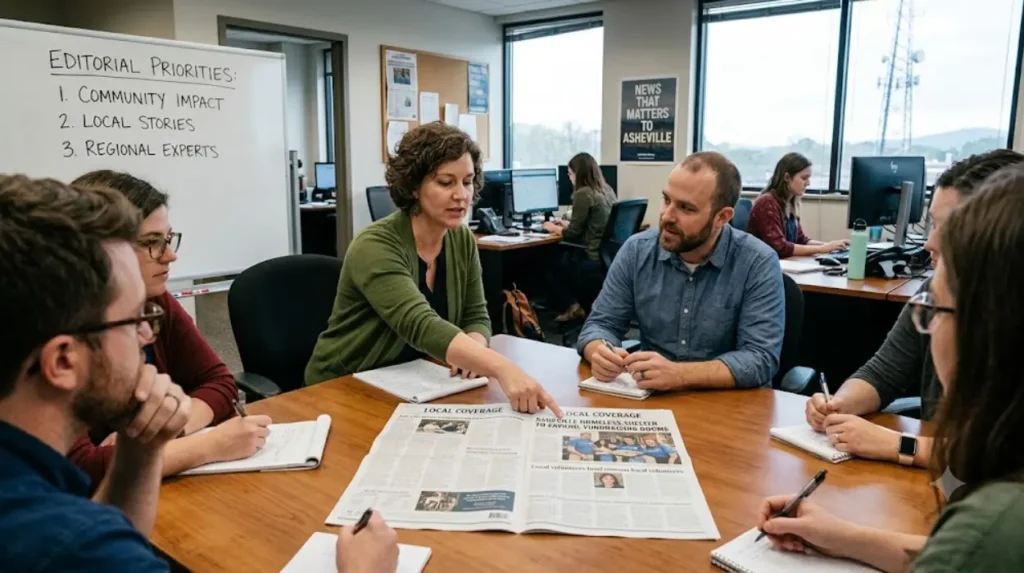
Local relevance strengthens media interest because regional publications prioritise issues affecting nearby communities. Campaigns supported by local statistics, community stories, regional experts, and nearby events match the editorial priorities of local newspapers, radio stations, and digital publishers.
Regional journalism focuses on community impact.
Local evidence increases audience relevance.
What creates local relevance?
Effective local information includes:
- City-specific statistics
- Regional survey findings
- Local fundraising achievements
- Community partnerships
- Local beneficiary stories
- Events within the publication’s coverage area
A national issue supported by regional data often becomes more attractive to local editors.
Why are human stories important in charity campaigns?
Human stories provide real-world context for social issues through verified personal experiences. Journalists use individual case studies to explain broader challenges while supporting factual reporting with evidence, expert analysis, and measurable public impact.
Statistics explain scale.
Personal stories explain experience.
The strongest campaigns combine both.
What makes a case study suitable?
A useful case study includes:
- Verified consent
- Clear factual details
- Relevant experience
- Direct connection to the campaign
- Respect for privacy
Journalists require accurate information before publication.
Personal experiences work best when supported by credible research.
How do data and research increase media interest?
Reliable data strengthens charity campaigns because journalists require measurable evidence supporting reported issues. Research findings, surveys, official statistics, and independently verified reports provide factual foundations for news coverage and improve editorial confidence.
Evidence transforms general awareness into reportable news.
Journalists frequently use numerical findings to explain public impact.
Which sources carry strong authority?
Examples include:
- Office for National Statistics
- NHS England
- UK Government departments
- Universities
- Independent research organisations
- Professional associations
Well-designed surveys also contribute useful evidence when methodology remains transparent.
Campaigns supported by robust research often receive broader discussion across multiple publications.
What challenges do smaller UK charities face compared with larger organisations?
Smaller charities often face resource limitations affecting media outreach, research production, campaign planning, and communications capacity. Larger organisations frequently possess dedicated communications teams, established media relationships, and greater access to research funding and national spokespersons.
Media engagement requires preparation.
Large organisations often employ communications specialists responsible for:
- Media monitoring
- Journalist outreach
- Research coordination
- Press release development
- Interview preparation
- Campaign planning
Smaller charities frequently combine these responsibilities within existing operational roles.
This difference affects the quantity and consistency of media engagement rather than the social value of the organisation’s work.
Explore More Expert Insights:
How to Localise a Global Announcement for the UK Press
What Counts as Newsworthy to UK Business Editors in 2026
How can charities understand different media distribution approaches?
Understanding media distribution methods helps charities recognise how news reaches journalists. Different distribution approaches vary in newsroom reach, editorial targeting, reporting, and publication opportunities depending on campaign objectives and available communication resources.
Learning how distribution works helps charities plan realistic communication strategies.
Educational comparisons explain the strengths and limitations of different approaches without focusing on individual providers.
For a detailed explanation of distribution methods, see:
Free Press Release Sites vs Paid UK Distribution.
Understanding reporting methods after distribution also provides useful context for campaign evaluation.
Additional information appears in:
Time Intelligence Media Group Reports Coverage.
UK charities struggle to get media coverage for campaigns because newsroom decisions depend on clear editorial standards rather than organisational purpose alone. Journalists prioritise stories containing verified evidence, timely developments, public impact, local relevance, credible sources, and strong human stories supported by factual data.
Campaigns that combine these elements align more closely with established news values used across UK media organisations. Understanding these editorial principles helps charities develop campaigns that communicate social issues with greater clarity, stronger evidence, and increased relevance to journalists and their audiences.