

A banner advertising funnel is a structured digital marketing process that guides online shoppers from initial product awareness toward active product evaluation. Retailers use sequential banner advertisements, audience segmentation, and behavioural targeting to increase product consideration before final purchase decisions occur online.
Banner advertising funnels operate between awareness-stage marketing and conversion-stage marketing. The process focuses on keeping products visible during the research and comparison phase of online shopping.
A retailer first introduces products through awareness-focused banner ads. After the first interaction, the advertising system displays additional banners containing more product details, pricing information, feature highlights, or category comparisons.
This structured sequence increases product familiarity and strengthens customer engagement across multiple browsing sessions.
Readers seeking awareness-stage traffic strategies can read to understand:
How Retailers Convert Cart Abandoners Into Completed Sales Using Urgency-Based Banner Ads
How do banner advertising funnels increase product consideration?
Banner advertising funnels increase product consideration by repeatedly exposing shoppers to relevant products during online research activity. Repeated visibility improves product recognition, strengthens customer recall, and encourages users to compare specifications, pricing, and features before making purchase decisions.
Product consideration begins after initial awareness. At this stage, shoppers actively evaluate products across multiple websites and retailers. They compare quality indicators, delivery information, reviews, and pricing structures.
Banner advertising funnels maintain visibility throughout this process.
A customer searching for running trainers, for example, first sees a general footwear advertisement. Later advertisements display specific trainer models, product benefits, and limited-time product availability.
This sequence keeps the product category relevant during active comparison behaviour.
Retailers in the United Kingdom frequently use banner funnels during high-competition retail periods including Black Friday campaigns, summer sales events, and seasonal category launches.
Why do retailers use multi-stage banner advertising instead of single ads?
Retailers use multi-stage banner advertising because shoppers rarely complete product evaluation after one advertisement interaction. Sequential advertising creates ongoing engagement, delivers additional information gradually, and supports deeper product exploration during the customer decision-making process across digital retail platforms.
Single advertisements introduce products. Multi-stage banner funnels continue the conversation through repeated digital exposure. The first banner often focuses on awareness. The second advertisement highlights product features. The third advertisement introduces reviews, ratings, or category-specific benefits. This layered approach supports product consideration without forcing immediate conversion pressure.
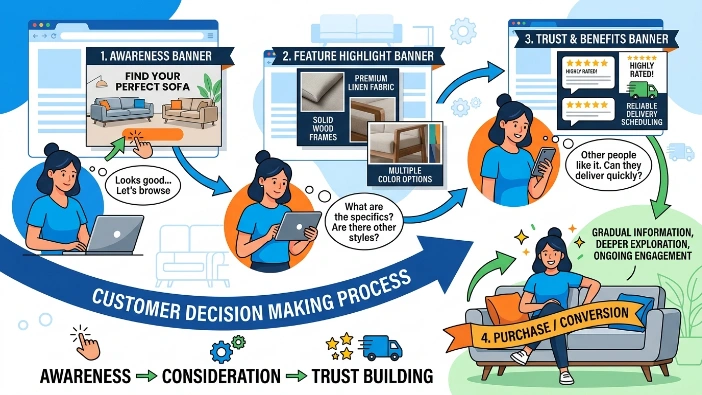
A furniture retailer, for example, first displays banner ads featuring modern sofas. Later banners focus on material quality, delivery timelines, colour options, and customer ratings. This process improves information retention and keeps the product visible across different browsing sessions.
Banner advertising strategies bridge the gap between traffic acquisition and conversion-focused remarketing campaigns.
How does audience segmentation improve banner advertising funnels?
Audience segmentation improves banner advertising funnels by grouping shoppers according to browsing behaviour, product interest, and engagement patterns. Segmented campaigns deliver more relevant banner messages, increasing interaction rates and strengthening product consideration across different customer categories and shopping intentions.
Audience segmentation divides users into smaller targeting groups.
Retailers commonly segment audiences based on:
- Product category visits
- Time spent on product pages
- Cart activity
- Device usage
- Geographic location
- Returning visitor behaviour
A shopper browsing gaming laptops receives different banner advertisements than a shopper researching kitchen appliances.
This targeting structure increases advertisement relevance.
Retailers in the United Kingdom also segment users by seasonal demand patterns. Winter clothing advertisements target cold-weather shoppers, while travel accessory campaigns increase before summer holiday periods.
Relevant messaging improves engagement consistency throughout the consideration stage.
How do retargeting banners support product evaluation?
Retargeting banners support product evaluation by reintroducing previously viewed products to online shoppers. These advertisements maintain product visibility after website exits and encourage users to return for additional research, specification reviews, pricing comparisons, and category exploration across retail websites.
Retargeting uses tracking technology to reconnect with previous website visitors.
When users leave a retailer’s website without purchasing, advertising systems display related banner ads across other digital platforms.
These advertisements often contain:
- Previously viewed products
- Product recommendations
- Price reminders
- Product category highlights
- Customer review references
A customer researching office chairs later encounters banner ads displaying ergonomic chair models while reading news websites or browsing lifestyle platforms.
This repeated exposure keeps products active within the shopper’s evaluation process.
Retargeting funnels perform strongly in sectors involving extended comparison behaviour, including electronics, furniture, home improvement, and premium fashion categories.
Why does visual consistency matter in banner advertising funnels?
Visual consistency matters in banner advertising funnels because repeated design structures improve product recognition and user familiarity. Consistent colours, layouts, imagery, and messaging create a stable visual identity that strengthens customer recall during repeated product research sessions online.
Banner advertising funnels rely heavily on recognition.
When advertisements maintain consistent visual structures, shoppers identify products faster during future browsing sessions.
Visual consistency includes:
- Product photography style
- Typography structure
- Colour palette
- Promotional formatting
- Layout positioning
A beauty retailer using consistent product imagery across multiple banner stages improves recognition during repeat exposure.
Inconsistent designs weaken recall performance and reduce campaign continuity.
Mobile responsiveness also supports visual consistency. UK e-commerce traffic increasingly originates from smartphones, making responsive banner formatting essential for product consideration campaigns.
Retailers optimise banner layouts for mobile feeds, tablet browsing, and desktop display placements simultaneously.
How do banner funnels support comparison-stage shopping behaviour?
Banner advertising funnels support comparison-stage shopping behaviour by delivering feature-focused messaging during active product evaluation. Retailers use comparison-oriented banner content to highlight specifications, pricing differences, category advantages, and product relevance during multi-site shopping research sessions online.
Comparison-stage shoppers actively analyse alternatives.
They review:
- Product specifications
- Shipping costs
- Product ratings
- Delivery speed
- Warranty terms
- Product availability
Banner advertising funnels respond by introducing informational messaging instead of simple awareness headlines.
A consumer electronics retailer, for example, displays advertisements featuring battery life, storage capacity, and screen quality comparisons during the evaluation phase.
This informational structure supports research-driven shopping behaviour.
Fashion retailers use comparison-stage banners to highlight fabric quality, seasonal suitability, and sizing availability. Home appliance retailers focus on energy efficiency ratings and installation features.
These targeted messages increase product consideration depth.
Readers interested in conversion-focused advertising strategies can explore [Insert Link to BOFU Article] to understand how urgency-based banner ads encourage final purchase completion.
Explore More Expert Insights:
How E-commerce Businesses Warm Up Leads Through Dynamic Display Ads
How Online Stores Nurture Shoppers Using Product-Focused Banner Campaigns
How do retailers measure product consideration through banner funnels?
Retailers measure product consideration through engagement metrics including return visits, product page duration, click-through rates, category exploration depth, and repeat interactions. These indicators help retailers evaluate how effectively banner advertising funnels support customer evaluation behaviour online.
Product consideration involves more than advertisement clicks.
Retailers analyse multiple behavioural indicators to understand customer engagement quality.
Important metrics include:
- Repeat website visits
- Product comparison activity
- Time spent on product pages
- Product image interactions
- Wishlist additions
- Return engagement frequency
A shopper revisiting the same product category three times within seven days demonstrates active evaluation behaviour.
Banner advertising funnels support these repeated research sessions.
Retailers also monitor assisted conversions. Assisted conversions occur when banner ads contribute to the research process before the final transaction occurs through another traffic source.
This measurement structure provides clearer visibility into mid-funnel campaign effectiveness.
Which industries use banner advertising funnels most effectively?
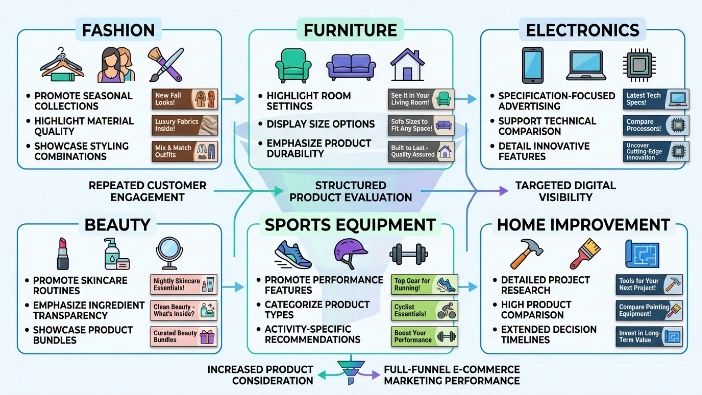
Banner advertising funnels perform effectively in industries involving detailed product research, high comparison activity, and extended purchase timelines. Fashion, furniture, electronics, beauty, sports equipment, and home improvement sectors regularly use banner funnels to strengthen customer evaluation behaviour online.
Electronics retailers frequently use specification-focused advertising funnels because consumers compare technical features extensively before purchase. Beauty retailers focus on skincare routines, ingredient transparency, and product bundles during consideration-stage campaigns.
Retailers beginning awareness-stage strategies can read to explore:
How E-commerce Brands Drive Product Page Traffic with Banner Ads
Together, these stages create a connected advertising structure supporting full-funnel e-commerce marketing performance. Banner advertising funnels increase product consideration by supporting repeated customer engagement, structured product evaluation, and targeted digital visibility across online retail environments.
Retailers use these funnels to strengthen product awareness, improve comparison-stage engagement, and guide shoppers toward future purchase decisions.



