

Banner ads are visual digital advertisements placed on websites, mobile apps, video platforms, and online publications to direct users toward e-commerce product pages. They use images, headlines, pricing signals, and clickable formats to increase website visits and product discovery across online retail channels.
Banner ads form a major part of display advertising in e-commerce. They appear in multiple formats including leaderboard banners, sidebar placements, mobile display units, and responsive ad layouts. Their primary purpose in top-of-funnel marketing is traffic generation.
An e-commerce product page is a webpage containing product information, pricing, specifications, reviews, shipping details, and purchase options. Banner ads direct users from external platforms to these product pages.
Retailers use banner ads to increase visibility during the early stages of customer research. A user searching for running shoes, kitchen appliances, or home furniture often encounters banner advertisements while reading articles, browsing blogs, or watching online content.
Banner advertising platforms use audience signals such as browsing history, page relevance, device type, and geographic location. In the United Kingdom, retailers frequently target audiences based on shopping behaviour, seasonal demand, and local consumer interests.
Readers exploring consideration-stage strategies can continue with to understand:
How Retailers Increase Product Consideration Using Banner Advertising Funnels
How do banner ads increase product page traffic?
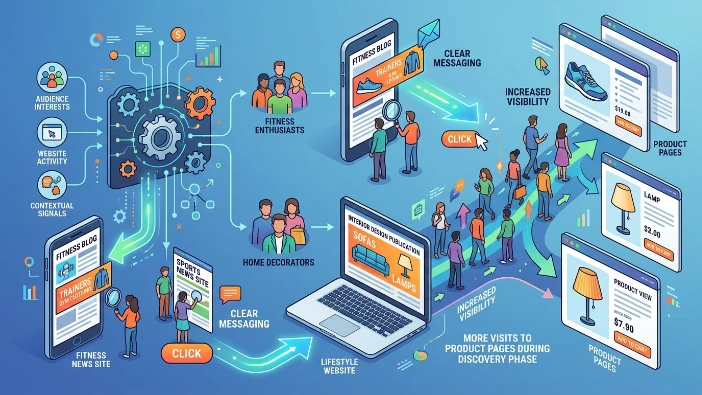
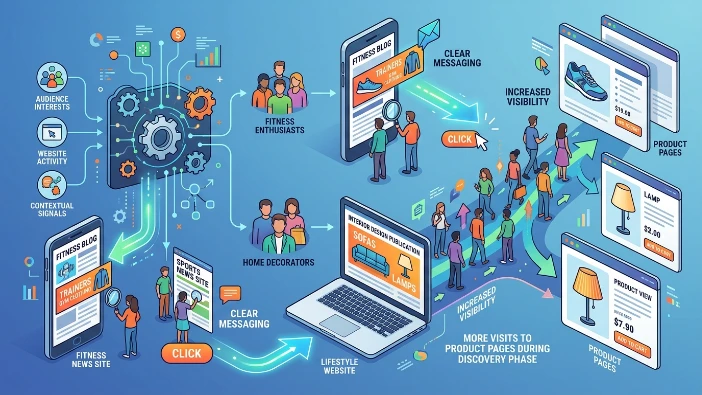
Banner ads increase product page traffic by placing product-focused visuals in front of relevant online audiences. The ads generate clicks through targeted placements, clear messaging, and audience segmentation. Increased visibility creates more visits to product pages during the discovery phase of online shopping.
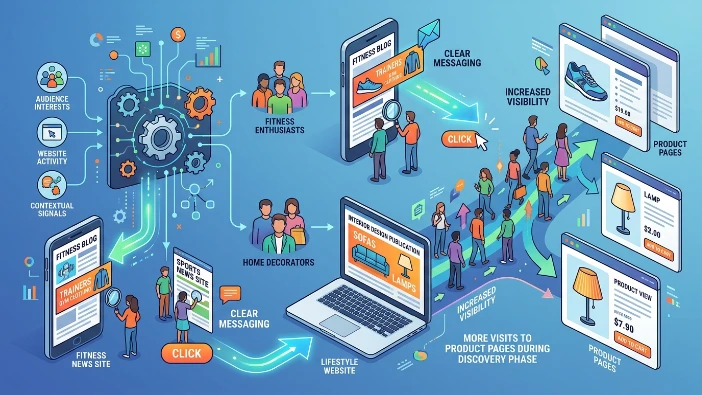
Traffic generation begins with audience targeting. Advertising systems analyse user interests, website activity, and contextual signals. The system then displays relevant ads to users likely to engage with the advertised product category.
A sportswear retailer, for example, displays banner ads related to trainers, gym clothing, or outdoor jackets on fitness blogs and sports news websites. A home décor retailer places banner advertisements on interior design publications and lifestyle websites.
How does audience targeting work in banner advertising?
Audience targeting uses behavioural, contextual, and demographic data. Behavioural targeting focuses on browsing patterns. Contextual targeting focuses on webpage content. Demographic targeting focuses on age groups, locations, and interests.
UK retailers often increase traffic during seasonal periods such as:
- January fitness campaigns
- Spring home improvement periods
- Summer travel seasons
- Black Friday retail events
- Christmas shopping months
Banner ads perform effectively when the message matches the user’s immediate interest. Clear product imagery and concise headlines improve click-through rates.
Why does visual design affect traffic performance?
Banner advertisements rely heavily on visual communication. Users process visual information quickly during browsing sessions. A strong visual layout increases ad attention and improves interaction rates.
Effective banner ad design includes:
- High-resolution product images
- Simple headlines
- Visible pricing information
- Strong contrast between text and background
- Mobile-responsive layouts
Poorly designed ads reduce visibility and lower engagement levels.
What types of banner ads drive e-commerce visitors?
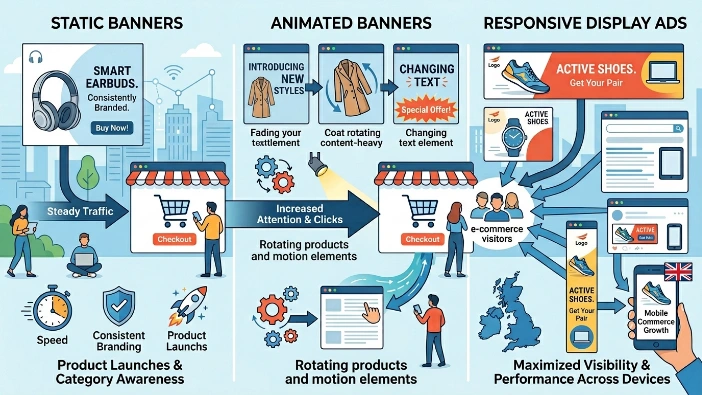
Different banner ad formats attract different audience behaviours. Static banners support awareness campaigns, animated banners increase attention, and responsive banners adapt automatically across devices and placements to improve visibility and click performance.
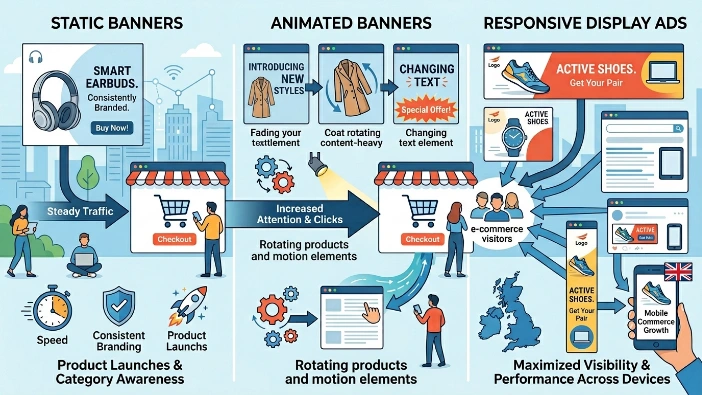
Static banner ads contain fixed images and text. They load quickly and maintain consistent branding. Retailers use static ads for product launches and category awareness.
Animated banners include motion elements such as sliding text, rotating products, or changing visuals. These ads capture user attention more effectively on content-heavy webpages.
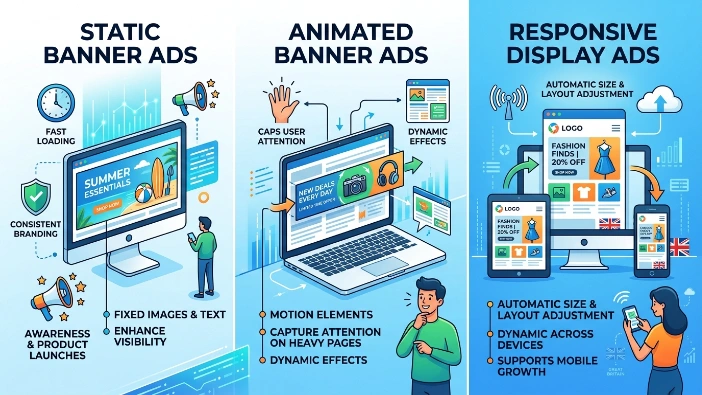
Responsive display ads automatically adjust their size and layout according to screen dimensions and advertising inventory. This format supports mobile commerce growth across the United Kingdom.
How do retargeting banner ads support traffic growth?
Retargeting banner ads re-engage users who previously visited a website. These ads remind users about viewed categories or previously explored products.
A customer browsing wireless headphones, for example, later sees banner advertisements for related electronics while visiting other websites.
Retargeting increases repeat visits to product pages and strengthens brand recall during the research phase.
How do category-focused banner ads improve discovery?
Category-focused banners promote collections instead of single products. Retailers use this strategy to introduce broader product ranges.
Examples include:
- Summer clothing collections
- Smart home technology categories
- Back-to-school office supplies
- Winter skincare ranges
These advertisements guide users toward category pages and increase exploration depth across the e-commerce website.
Why do retailers use banner ads for top-of-funnel marketing?
Retailers use banner ads in top-of-funnel marketing because the format supports large-scale visibility, audience discovery, and early-stage customer engagement. Banner advertising introduces products to users before purchase intent becomes fully developed.
Top-of-funnel marketing focuses on awareness and traffic generation. At this stage, consumers research products, compare options, and gather information.
Banner ads help retailers enter this research process early. They expose users to product categories before direct purchase searches occur.
How do banner ads support product awareness?
Product awareness increases when users repeatedly encounter product visuals across different digital environments.
For example:
- A user reading travel blogs sees luggage advertisements
- A fitness reader encounters protein supplement banners
- A gaming enthusiast sees accessory promotions
Repeated exposure improves product familiarity and increases future engagement.
Why is early-stage visibility important in e-commerce?
E-commerce competition in the United Kingdom remains highly saturated across fashion, electronics, furniture, beauty, and grocery sectors. Early-stage visibility allows retailers to appear before competitors dominate user attention.
Consumers often compare several websites before making decisions. Banner advertising increases the probability of entering the comparison process earlier.
How Retailers Convert Cart Abandoners Into Completed Sales Using Urgency-Based Banner Ads
How do banner ads connect with customer behaviour?
Banner ads connect with customer behaviour by aligning advertisements with browsing habits, online interests, and digital consumption patterns. Data-driven targeting allows retailers to present relevant products during active content engagement across websites and mobile platforms.
Online shopping behaviour follows predictable stages. Users first discover products, then compare options, and later evaluate pricing and features.
Banner advertising aligns with these stages through audience segmentation.
What role does browsing behaviour play in targeting?
Browsing behaviour helps advertising systems determine user interests. A customer researching camping equipment receives outdoor product advertisements more frequently than unrelated categories.
Behavioural signals include:
- Search activity
- Website visits
- Product category engagement
- Content consumption patterns
- Mobile app activity
These signals improve advertisement relevance.
How does mobile browsing affect banner advertising?
Mobile commerce accounts for a large share of UK e-commerce traffic. Banner advertisements now prioritise mobile responsiveness and vertical-friendly design structures.
Mobile banner formats include:
- In-app display units
- Sticky footer banners
- Scroll-based visual placements
- Responsive content ads
Fast-loading mobile banners improve visibility and reduce user drop-off rates.
What metrics measure banner ad traffic performance?
Banner ad traffic performance is measured through impressions, click-through rates, landing page visits, bounce rates, and session duration. These metrics help retailers understand how effectively advertisements attract users to product pages.
An impression represents one advertisement display. A click occurs when a user interacts with the banner. Click-through rate measures the percentage of impressions resulting in clicks.
Why is click-through rate important?
Click-through rate measures advertisement engagement efficiency. Higher click-through rates indicate stronger audience relevance and better creative performance.
Retailers improve click-through rates by:
- Simplifying headlines
- Using stronger product imagery
- Improving mobile optimisation
- Matching ads to audience interests
How does landing page quality affect traffic value?
Landing page quality directly affects visitor behaviour after the advertisement click. A strong product page supports continued browsing and product exploration.
Effective product pages contain:
- Clear product images
- Accurate descriptions
- Transparent pricing
- Delivery information
- Customer reviews
Poor landing experiences increase bounce rates and reduce advertising efficiency.
Which industries benefit most from e-commerce banner ads?
E-commerce banner advertising performs strongly in industries with high online product discovery activity. Fashion, electronics, home décor, beauty, sports equipment, and consumer technology sectors frequently use banner ads to increase product visibility and traffic.
Fashion retailers use banner ads to promote seasonal collections and trend-based products. Electronics retailers use display advertising to introduce new devices and accessories.
Beauty retailers frequently advertise skincare launches, cosmetic ranges, and promotional bundles through visual banner campaigns.
Why does fashion advertising perform strongly with banner ads?
Fashion products rely heavily on visual presentation. Banner advertising supports clothing discovery through imagery, colour presentation, and seasonal styling.
Examples include:
- Winter coat collections
- Summer footwear launches
- Activewear campaigns
- Occasion-based fashion ranges
Visual product appeal increases click engagement rates.
How do electronics retailers use banner campaigns?
Electronics retailers use banner ads to promote:
- Smartphones
- Laptops
- Gaming accessories
- Audio equipment
- Smart home devices
These campaigns often highlight specifications, discounts, and launch availability to increase product page visits.
Explore More Expert Insights:
How Online Retailers Recover Abandoned Carts Using Banner Advertising
How E-commerce Stores Boost Sales Using Retargeting Banner Ads
How do banner ads support future e-commerce conversions?
Banner ads support future conversions by increasing product familiarity and repeated customer exposure. Early-stage traffic generation strengthens later purchase consideration, retargeting opportunities, and sales funnel progression within e-commerce marketing systems.
Not every visitor purchases immediately after clicking a banner advertisement. Many users return later through direct searches, email campaigns, or retargeting ads.
Traffic generation creates future remarketing opportunities.
How does repeated exposure improve conversion potential?
Repeated exposure increases recognition. Users remember products previously seen during browsing sessions. Familiarity strengthens trust and improves future engagement.
A shopper researching office chairs, for example, often revisits products several times before making a final decision.
Readers interested in conversion-stage strategies can explore [Insert Link to BOFU Article] to learn how urgency-based banner advertising recovers abandoned carts and increases completed sales.
Banner advertising remains a foundational component of e-commerce traffic acquisition because it supports scalable product discovery across multiple customer touchpoints.



