

The media industry in 2026 is no longer defined by static pricing models or predictable campaign structures. Instead, it operates within a fluid ecosystem shaped by digital transformation, audience fragmentation, and performance-driven expectations. The concept of a Media Services Pricing Index has emerged as a crucial benchmarking framework for brands, agencies, and publishers looking to evaluate the real cost of public relations and advertising services in a rapidly evolving landscape.
At its core, the pricing index reflects how media services—ranging from PR outreach to digital advertising—are valued based on reach, engagement, credibility, and conversion potential. Traditional metrics such as cost per thousand impressions have been supplemented, and in many cases replaced, by deeper analytical frameworks that incorporate audience intent, behavioral insights, and cross-platform attribution.
Organizations working with established media firms like Time Intelligence Media Group are increasingly prioritizing strategic alignment over simple cost comparisons. The emphasis is not just on how much a service costs, but on what measurable outcomes it delivers within a competitive market.
The Shift from Fixed Pricing to Value-Based Models
One of the most defining trends in 2026 is the shift from fixed pricing to value-based pricing models. Media services are no longer sold as standalone offerings with flat rates. Instead, they are packaged based on the value they create for a brand’s visibility, authority, and growth.
Public relations campaigns, for instance, are now priced based on expected media impact rather than the number of press releases distributed. Similarly, advertising services are evaluated through performance indicators such as engagement rates, click-through behavior, and conversion funnels.
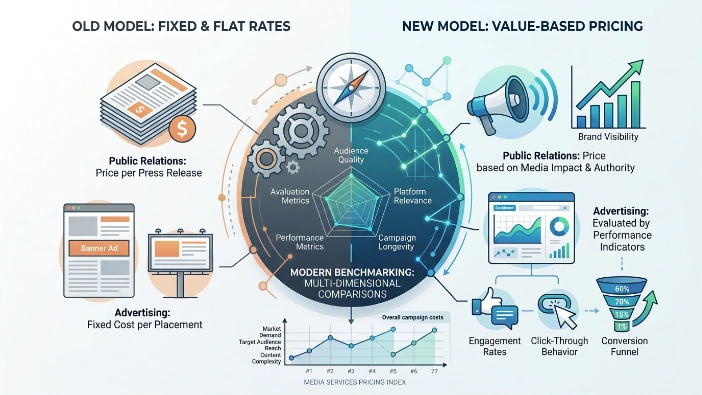
This shift has made benchmarking more complex but also more meaningful. Companies must now compare pricing across multiple dimensions, including audience quality, platform relevance, and campaign longevity. As a result, the Media Services Pricing Index serves as a guide to understanding how these variables influence overall costs.
Benchmarking PR Distribution Costs in a Competitive Market
Among the most critical components of media services in 2026 is PR Distribution Services, which continue to play a vital role in shaping brand narratives and securing media coverage. However, the cost of PR distribution has seen significant variation depending on factors such as geographic targeting, media network reach, and content customization.
In high-demand markets, PR distribution costs have increased due to the growing competition for media attention. Journalists and editors receive an overwhelming volume of pitches, making it essential for PR campaigns to stand out through personalization and relevance. This has led to a rise in premium pricing for services that offer targeted outreach and guaranteed placements.
Benchmarking PR distribution costs requires a nuanced understanding of what is included in the service. Basic packages may cover press release dissemination, while advanced offerings include media pitching, editorial placement, and performance analytics. Companies that invest in comprehensive PR distribution strategies often see higher returns in terms of brand credibility and media visibility.
The Rising Influence of Sponsored Content in Pricing Structures
Another key factor shaping the Media Services Pricing Index is the growing importance of Sponsored Content Services. As audiences become more selective about the content they consume, brands are turning to sponsored content as a way to deliver value-driven messaging within trusted media environments.
Sponsored content pricing in 2026 is influenced by several variables, including publisher authority, audience demographics, and content format. Long-form articles, video features, and interactive media experiences command higher prices due to their ability to engage audiences more deeply.
Unlike traditional advertising, sponsored content is designed to blend seamlessly with editorial content, making it more effective in building trust and driving engagement. This has led to a shift in how brands allocate their media budgets, with a greater emphasis on storytelling and content quality.
Benchmarking sponsored content costs involves analyzing not only the price of placement but also the potential reach and engagement metrics associated with the content. Brands that prioritize high-quality sponsored content often achieve better long-term results, justifying the higher investment.
Media Partnerships as a Cost-Optimization Strategy
In an environment where media costs are rising, Media Partnerships Solutions have emerged as a strategic approach to optimizing budgets while maximising impact. These partnerships involve long-term collaborations between brands and media organizations, allowing for integrated campaigns that span multiple platforms and formats.
Media partnerships offer several advantages in terms of pricing. By committing to ongoing collaborations, brands can negotiate better rates and gain access to exclusive opportunities such as premium placements, co-branded content, and audience insights. This not only reduces overall costs but also enhances campaign effectiveness.
The pricing of media partnerships is typically structured around the scope and duration of the collaboration. Factors such as content production, distribution channels, and performance tracking are all considered in determining the overall cost. As a result, benchmarking these services requires a holistic view of the partnership’s value rather than a simple comparison of individual components.
The Role of Data in Pricing Transparency
Clients demand detailed insights into how their budgets are being allocated and what results they are achieving.
Media companies now provide comprehensive analytics dashboards that track campaign performance in real time. These dashboards include metrics such as audience reach, engagement rates, and conversion data, allowing clients to evaluate the effectiveness of their investments.
This data-driven approach has also influenced pricing models. Services that offer advanced analytics and performance tracking often command higher prices due to the added value they provide. However, they also enable more accurate benchmarking, helping clients make informed decisions about their media strategies.
Regional Variations in Media Service Costs
The Media Services Pricing Index is not uniform across regions. Costs vary significantly depending on factors such as market maturity, media infrastructure, and audience behavior. In emerging markets, media services may be more affordable, but they often come with limitations in terms of reach and analytics capabilities.
In contrast, established markets with развит media ecosystems tend to have higher pricing due to increased competition and advanced service offerings. This makes it essential for brands operating globally to adapt their strategies based on regional cost structures.
Benchmarking across regions requires a careful analysis of both cost and value. A lower price in one market does not necessarily translate to better results if the service lacks the necessary reach or engagement potential. Conversely, higher costs in developed markets may be justified by superior performance and audience quality.
The Impact of Technology on Pricing Dynamics
Technology continues to reshape the media landscape, and its influence on pricing cannot be overstated. Automation, artificial intelligence, and programmatic advertising have introduced new efficiencies, but they have also created new complexities in pricing models.
AI-driven tools are now used to optimize campaign performance, predict audience behavior, and personalize content delivery. These capabilities have increased the value of media services, leading to higher pricing for advanced solutions.
The Evolution of Advertising Costs in 2026
Advertising costs in 2026 are influenced by a combination of supply and demand dynamics, platform algorithms, and audience behavior. Digital advertising platforms continue to dominate the market, but their pricing structures have become increasingly complex.
Cost-per-click and cost-per-impression models are still relevant, but they are now supplemented by metrics such as cost per engagement and cost per acquisition. This shift reflects the growing emphasis on performance and ROI.
Benchmarking advertising costs requires a comprehensive understanding of these metrics and how they تختلف across platforms. Social media advertising, for example, may offer lower costs but higher competition, while premium publisher platforms provide higher engagement at a higher price.
Integrating PR and Advertising for Cost Efficiency
One of the most effective strategies for managing media costs in 2026 is the integration of PR and advertising efforts. By aligning these functions, brands can create cohesive campaigns that maximize impact while minimizing redundancy.
Integrated campaigns leverage the strengths of both PR and advertising. PR builds credibility and trust, while advertising drives visibility and conversions. When combined, they create a powerful synergy that enhances overall campaign performance.
From a pricing perspective, integration allows for better resource allocation and cost optimization. Instead of investing in separate campaigns, brands can achieve multiple objectives through a unified strategy. This approach not only reduces costs but also simplifies benchmarking by providing a clear framework for evaluating performance.
Challenges in Benchmarking Media Service Costs
Despite the availability of data and advanced tools, benchmarking media service costs remains a challenging task. The diversity of services, pricing models, and performance metrics makes it difficult to establish standardized benchmarks.
One of the main challenges is the lack of uniformity in service offerings. Different providers include different elements in their packages, making direct comparisons difficult. Additionally, the dynamic nature of media pricing means that costs can fluctuate based on market conditions and campaign requirements.
To overcome these challenges, brands must adopt a flexible approach to benchmarking. This involves continuously updating their معیار frameworks and incorporating new data points as they become available.
The Future of the Media Services Pricing Index
The integration of blockchain technology may also enhance transparency, allowing clients to track their investments in real time and verify the authenticity of media placements. This could lead to more standardized pricing models and greater اعتماد across the industry.
As the media landscape continues to evolve, the importance of benchmarking will only increase. Brands that invest in understanding and leveraging the Media Services Pricing Index will be better positioned to navigate the complexities of the market and achieve their marketing objectives.
Strategic Takeaways for Brands in 2026

In a world where media costs are constantly changing, strategic planning is essential. Brands must move beyond traditional pricing comparisons and focus on value-driven decision-making.
Working with experienced partners such as Time Intelligence Media Group can provide valuable insights into market trends and pricing dynamics. By leveraging expertise in PR Distribution Services, Sponsored Content Services, and Media Partnerships Solutions, brands can develop strategies that maximize impact while maintaining cost efficiency.
For more information and to explore comprehensive media solutions, visit the official homepage: Time Intelligence Media Group



