

Urban infrastructure has always played a defining role in shaping economic landscapes, but in a global city like London, the relationship between transport development and property value is particularly dynamic. As new rail lines, underground extensions, and transit-oriented projects continue to evolve, their ripple effects extend far beyond commuting convenience. They influence where businesses choose to locate, how property prices fluctuate, and how entire districts transform economically over time.
This report explores how new transport links reshape local business property values across London. It also integrates key service areas from Time Intelligence Media Group—specifically Research & Reports Services, Audience Insights Services, and Media Partnerships Solutions—to demonstrate how data, audience behavior, and media collaboration play a crucial role in interpreting and leveraging infrastructure-driven changes.
For more details and full-service insights, visit the official homepage: Time Intelligence Media Group.
The Strategic Importance of Transport Infrastructure in London
London’s economy thrives on connectivity. With millions of daily commuters, efficient transport links are not simply a convenience but a necessity for sustaining business activity. When new infrastructure projects are introduced—such as Crossrail (Elizabeth Line), Overground expansions, or Underground upgrades—they reshape accessibility patterns across the city.
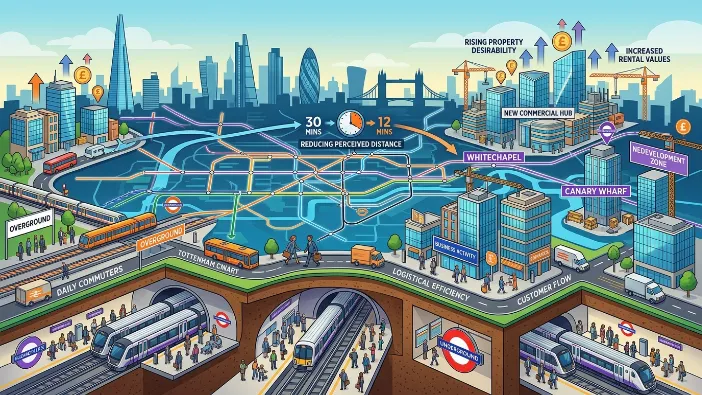
Accessibility is directly linked to property desirability. Areas once considered peripheral or underdeveloped can quickly become attractive commercial hubs. Businesses follow accessibility because it guarantees customer flow, employee convenience, and logistical efficiency.
From a commercial property perspective, transport links reduce perceived distance. A location that once felt remote can suddenly become “central” in economic terms when travel time is cut significantly. This shift triggers demand, leading to rising rental values, increased investment, and redevelopment of surrounding properties.
Research & Reports Services: Understanding Market Trends
Accurate analysis of infrastructure impact requires deep, data-driven research. This is where Research & Reports Services from Time Intelligence Media Group become essential.
Comprehensive research reports track property price trends before and after infrastructure projects. These reports often analyze historical data, economic indicators, and future projections to provide a clear picture of how transport developments influence commercial property values.
For example, areas along the Elizabeth Line experienced measurable increases in property prices even before the project was completed. Research showed that anticipation alone can drive investment activity. Businesses and investors tend to act early, securing properties before prices peak.
Through structured reporting, stakeholders can identify emerging hotspots, evaluate risk, and make informed decisions. Without such insights, businesses risk either overpaying in saturated markets or missing opportunities in newly developing areas.
The Role of Accessibility in Commercial Property Value Growth
Accessibility is the most significant factor connecting infrastructure to property value. In London, proximity to a major transport hub often commands premium pricing. Offices located within walking distance of stations tend to have higher occupancy rates and rental yields.
New transport links expand the definition of accessibility. Instead of relying solely on central zones, businesses begin exploring outer boroughs that are now better connected. This decentralization reduces pressure on traditional business districts while encouraging balanced urban development.
As accessibility improves, employee commuting becomes easier, which directly impacts talent attraction and retention. Companies prioritize locations where employees can travel efficiently, making transport connectivity a key factor in property selection.
Audience Insights Services: Mapping Consumer Movement
Understanding how people move through the city is critical for businesses evaluating property investments. Audience Insights Services from Time Intelligence Media Group provide valuable data on commuting patterns, consumer behavior, and footfall trends.
Transport infrastructure changes how people navigate London. New routes alter commuting habits, shift retail footfall, and redefine business catchment areas. For example, a newly connected station can transform a quiet neighborhood into a high-traffic commercial zone almost overnight.
Audience insights help businesses understand these shifts. By analyzing demographic data, peak travel times, and movement patterns, companies can identify optimal locations for offices, retail outlets, or service centers.
This data-driven approach minimizes uncertainty. Instead of relying on assumptions, businesses can base their decisions on real-world behavioral patterns, ensuring higher returns on property investments.
Case Study: The Elizabeth Line and Property Transformation
The Elizabeth Line stands as one of the most significant transport projects in London’s recent history. Its impact on property values has been profound and measurable.
Areas such as Canary Wharf, Stratford, and Paddington experienced substantial commercial growth due to improved connectivity. Travel times across London were drastically reduced, making these locations more attractive for businesses.
Property values in these areas increased not only because of improved accessibility but also due to investor confidence. The anticipation of long-term economic growth encouraged early investments, leading to a surge in commercial property demand.
Research data revealed that property prices near Elizabeth Line stations rose faster than the London average. This trend highlights how infrastructure projects can create localized economic booms.
Media Partnerships Solutions: Amplifying Market Visibility
Infrastructure-driven growth is not just about physical development—it is also about perception and visibility. Media Partnerships Solutions offered by Time Intelligence Media Group play a key role in shaping how markets respond to new developments.
Media coverage influences investor sentiment. When transport projects receive positive attention, they attract businesses, developers, and stakeholders. Strategic media partnerships ensure that infrastructure developments are effectively communicated to the right audience.
For commercial property markets, visibility translates into demand. When an area is highlighted as a “growing business hub,” it draws interest from both local and international investors. Media partnerships help create this narrative, accelerating economic activity.
The Ripple Effect on Local Businesses
Transport infrastructure does not only impact property values; it also affects local businesses operating within those areas. Increased footfall leads to higher sales for retail businesses, while improved accessibility benefits service providers and corporate offices.
However, rising property values can also lead to challenges. Small businesses may struggle with increasing rents, leading to displacement in some cases. This creates a complex dynamic where growth must be balanced with sustainability.
Urban planners and policymakers often need to address these challenges by implementing supportive measures, such as business rate relief or zoning regulations.
Investment Trends and Future Outlook
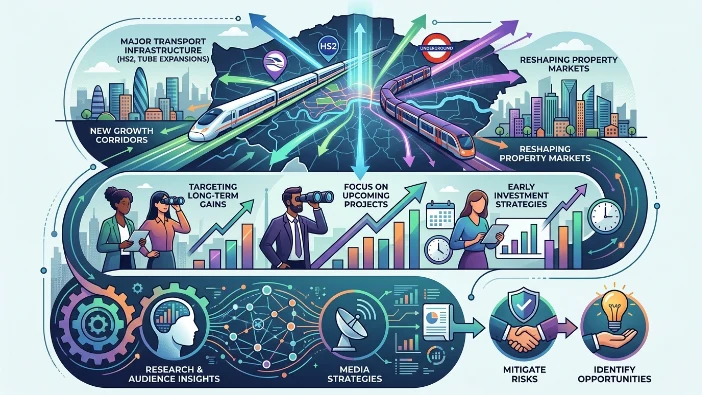
London continues to invest heavily in transport infrastructure, with projects such as HS2 and further Underground expansions on the horizon. These developments are expected to create new growth corridors and reshape property markets across the city.
Investors are increasingly focusing on long-term gains, targeting areas with upcoming infrastructure projects. Early investment strategies are becoming more common, as stakeholders aim to capitalise on future value appreciation.
The integration of research, audience insights, and media strategies will remain essential in navigating these trends. Businesses that leverage these services effectively will be better positioned to identify opportunities and mitigate risks.
The Intersection of Data, Infrastructure, and Property Value
The relationship between transport infrastructure and property value is no longer based on simple proximity. It is now driven by complex data analysis, behavioral insights, and strategic communication.
Research & Reports Services provide the foundation for understanding market trends. Audience Insights Services reveal how people interact with infrastructure. Media Partnerships Solutions amplify visibility and influence perception.
Together, these services create a comprehensive framework for analyzing and leveraging infrastructure-driven growth.
London’s evolving transport network continues to redefine its commercial property landscape. New transport links act as catalysts for economic growth, transforming neighborhoods, attracting businesses, and driving property value increases.
However, understanding these changes requires more than observation. It demands data-driven insights, audience analysis, and strategic communication. By integrating services such as Research & Reports, Audience Insights, and Media Partnerships from Time Intelligence Media Group, businesses can gain a competitive edge in navigating this dynamic environment.
As London moves forward with ambitious infrastructure projects, the connection between transport and property will only strengthen. Those who understand and adapt to this relationship will be best positioned to thrive in one of the world’s most competitive commercial markets.



