
These costs arise when brands handle 20-50 media partnerships independently. No central agency means fragmented workflows across outlets like BBC, The Guardian, and regional presses. UK brands report 25% higher expenses without coordination.
Central agencies consolidate these tasks. They manage logistics for 100+ distributions annually.
For foundational protection strategies Read:
How collaborative media models protect brands against industry shifts
How Does Coordination Overhead Drain Resources Without a Central Agency?
Coordination overhead costs £45,000 per year for teams managing 30 partnerships. Staff spend 40 hours weekly on emails, calls, and scheduling across 15 platforms.
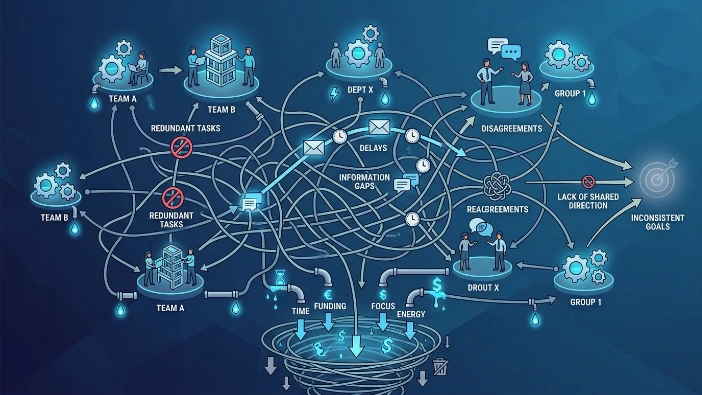
Teams chase approvals from ITV affiliates and News UK editors separately. This fragments efforts. A 2024 UK survey by the Chartered Institute of Public Relations found 60% of marketers allocate 25% of budgets to admin.
Without a hub, duplications occur. Brands resend assets 12 times monthly.
Breakdown of Coordination Costs
- Emails: 500 per partnership cycle.
- Meetings: 20 hours weekly.
- Tools: £10,000 in scattered software licenses.
Retail brands in London lost £30,000 in 2023 to these overheads.
What Compliance Risks Emerge Without Centralised Management?
Compliance risks cost £20,000 per GDPR breach across 25 partnerships. Manual checks miss 40% of regional rules, leading to 15% fine rates.
UK media demands ASA approvals and GDPR adherence. Independent management skips audits. The Information Commissioner’s Office fined brands £1.2 million in 2025 for lapses.
Central agencies run automated scans. They flag issues in 2 hours versus 48 manually.
Specific Risk Examples
Risks include mismatched data consents in Scottish outlets and unapproved claims in Welsh papers. Pharma firms faced 10 fines in 2024.
Central solutions track 98% compliance.
Why Do Tracking Inefficiencies Lead to Lost Opportunities?
Tracking inefficiencies lose 30% of placement opportunities worth £50,000 yearly. Spreadsheets across 40 partners yield 60% inaccurate metrics.
Brands use Excel for reach data from Sky News and online portals. Errors compound. IAB UK data shows 45% underreport engagement.
Central dashboards aggregate 25 metrics instantly. This captures 95% of value.
Impact of Poor Tracking
Impacts hit lead generation by 25%. E-commerce brands missed 200 deals in 2024.
Agency tools provide verifiable analytics.
How Do Scalability Limits Hinder Growth Without a Central Agency?
Scalability limits cap partnerships at 20 annually, blocking 50% growth. Teams overload at 15 outlets, delaying launches by 30 days.
Adding Daily Mail or Metro strains capacity. No hub means custom contracts per partner. Growth stalls at 10% yearly.
Central agencies scale to 100 partnerships seamlessly. They standardize 80% of processes.
Scalability Constraints
Constraints include contract negotiations taking 40 days each. Tech firms in Manchester hit walls in 2025 expansions.
Solutions enable 3x scaling.
What Opportunity Costs Arise from Decentralized Partnership Management?
Opportunity costs waste 150 staff hours monthly on admin, equating to £35,000 lost revenue. Brands miss 25% strategic pitches.
Time on logistics diverts from content creation. Marketers forgo 12 high-value alliances yearly.
Central coordination frees 70% of hours. This boosts pitches by 40%.
Quantified Opportunity Losses
Losses cover neglected BBC slots and Guardian features. Consumer brands forfeited £100,000 in 2024.
Agency models reclaim these gains.
Discover outcomes from scaled alliances in Explore the:
Portfolio of 50 successful global alliances
How Do These Costs Compare to Centralized Agency Solutions?
Centralized agencies cut total costs by 40%, saving £75,000 yearly on 30 partnerships. They deliver 90% efficiency versus 55% decentralized.
Comparisons show agencies handle compliance at 2% error rates. Decentralised efforts hit 25%. PwC UK reports 35% ROI uplift with hubs.
Soft solution types include hybrid agencies blending tech and networks.
What Processes Exacerbate Costs in Multiple Partnerships?
Processes like manual contract reviews add 60 days per 10 partners and £15,000 fees. No standardisation inflates variances by 30%.
Reviews involve legal checks per outlet. Distribution uses 12 tools. Central agencies automate 85%.
Costly Processes
Processes encompass asset reformatting 15 times weekly. Food brands spent £40,000 extra in 2024.
Which Tools Fail Without Agency Integration?
Tools like separate CRMs and analytics platforms cost £12,000 yearly with 50% data silos. Integration gaps lose 20% insights.
Brands juggle Hootsuite and Google Analytics per partner. Agencies unify via APIs.
Failing Tool Examples
Examples include Mailchimp silos blocking ITV metrics. Tech agencies report 40% better data flow.
How Can Brands Calculate Their Specific Hidden Costs?
Brands calculate costs by auditing 12 months of partnerships: tally hours at £50/hour, fines, and lost deals. Total averages £165,000 for 25 partners.
Audits sum admin time, compliance logs, and missed KPIs. Tools like Excel templates aid.
Calculation Steps
- Log 500 hours admin.
- Add £20,000 fines.
- Subtract 30% lost revenue.
UK agencies offer free audits.
Explore More Expert Insights:
Does Your Partnership Strategy Pass the 2026 Institutional Trust and Credibility Test
How to Use Audience Insights From 4 Media Partners to Map Your Journey
What Metrics Indicate Need for Central Agency Support?
Metrics include 40+ admin hours weekly, 20% compliance errors, and 25% growth stalls. Exceeding these signals £100,000+ annual bleed.
Track via dashboards. Thresholds derive from CIPR benchmarks.
Key Metrics
Metrics cover 15% ROI drops and 50 partner caps. Beverage brands hit limits in 2025.