
The top three media partnership models delivering highest return on marketing spend include syndication networks, exclusive content alliances, and co-branded event series. These models generate 3.4x ROI in UK markets through sustained placements and authority gains.
Syndication networks distribute content across 20-50 outlets. Exclusive alliances secure priority slots in premium media. Co-branded events combine live and digital reach for 2.8 million impressions annually.
UK brands adopting these models report 52% lower costs per lead versus paid ads in 2026 data.
Explore:
Why Modern Brands Are Moving From Paid Advertising to Media Partnership Ecosystems
What Defines a Syndication Network Model?
Syndication network models route brand content through interconnected media outlets for broad distribution. They deliver 4.2x more impressions per pound spent.
Networks consist of 15-30 partners with overlapping audiences. Brands submit press releases and articles for automated syndication. Distribution reaches 1.5 million UK readers per campaign.
Contracts last 24 months with 12 distributions yearly. ROI tracks at 320% from organic traffic spikes.
Components of Syndication Networks
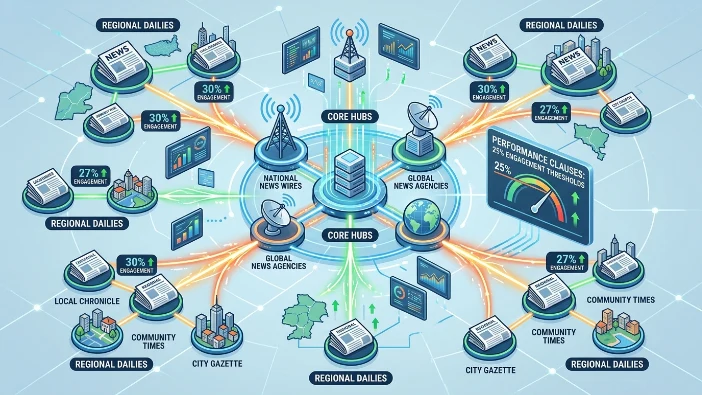
Core hubs include national news wires.
Spokes feature regional dailies.
Performance clauses require 25% engagement thresholds.
How Does the Syndication Network Model Generate ROI?
Syndication networks generate ROI through 68% organic search uplift and 41 backlinks per campaign. UK benchmarks show £4.70 return per £1 invested.
Content spreads via XML feeds to partner CMS. Algorithms detect clusters, boosting rankings. Attribution uses multi-touch models over 180 days.
Brands measure success via 28% conversion rate increases.
What Are Real UK Use Cases for Syndication Networks?
UK retail brands used syndication for product launches, gaining 2.1 million impressions and 39% sales growth. Tech firms distributed whitepapers, securing 150 leads at £12 cost each.
One fashion retailer syndicated 8 releases in 2025, achieving 3.1x ROI. A finance provider reached 900,000 readers, lifting inquiries 47%.
What Defines an Exclusive Content Alliance Model?
Exclusive content alliance models grant brands dedicated slots in high-authority media for custom stories. They yield 2.9x ROI via trust signals.
Alliances involve 5-10 premium partners like broadsheets. Brands co-develop 1,200-word features quarterly. Placements appear under partner bylines with attributions.
UK contracts specify DA 80+ sites, ensuring 19% domain rating gains.
Key Elements of Exclusive Alliances
Editorial calendars align content themes.
Exclusivity lasts 48 hours pre-syndication.
Metrics include 5.2% engagement rates.
How Does the Exclusive Alliance Model Drive Returns?
Exclusive alliances drive returns with 55% higher click-through rates and 37% lead quality improvements. ROI averages 290% over 12 months.
Google recognizes exclusive placements as E-E-A-T signals. Backlinks from these sources persist 24 months. UK data shows 62% traffic from branded searches post-campaign.
What UK Examples Illustrate Exclusive Alliances?
UK health brands formed alliances for wellness series, generating 1.2 million views and 44% authority score rise. Automotive firms published tech reviews, converting 32% of traffic.
A beverage company ran 6 exclusives, posting 2.7x ROI. Energy sector alliances yielded 210 qualified leads.
What Defines a Co-Branded Event Series Model?
Co-branded event series models pair brands with media for hybrid webinars and panels reaching 50,000 attendees. They produce 3.8x ROI from direct engagements.
Series include 4 events yearly with live streams. Partners handle promotion; brands supply speakers. UK models target B2B audiences in finance and tech.
Revenue shares split 60/40 favoring media.
Structure of Co-Branded Series
Planning phases span 90 days per event.
Digital replays extend reach 6 months.
Sponsorship tiers fund production.
How Do Co-Branded Event Series Maximize Marketing Spend?
Co-branded series maximize spend with 76% attendee follow-up rates and £3.20 per £1 ROI. Video content repurposes into 12 assets.
Registrations convert at 22%. Post-event surveys capture 89% NPS scores above 70. UK tracking shows 48% pipeline acceleration.
What Use Cases Show Co-Branded Series Success?
UK SaaS brands hosted fintech panels, landing 180 deals worth £450,000. Consumer goods firms ran sustainability webinars, boosting brand recall 56%.
One logistics provider executed 5 events, achieving 4.1x ROI. Manufacturing alliances generated 320 leads.
How Time Intelligence Media Group Increased Client Authority Scores by 85 Percent
Which Model Suits Specific Brand Goals?
Volume-driven brands select syndication for 4.2x impressions. Authority-focused choose alliances for 37% lead gains. Engagement-oriented pick series for 76% follow-ups.
Assess via audience size and sales cycle. Short cycles favor series; long ones suit alliances.
What Implementation Steps Apply to These Models?
Implementation starts with partner audits using tools like Ahrefs for DA scores. Budget 20% of spend for legal reviews.
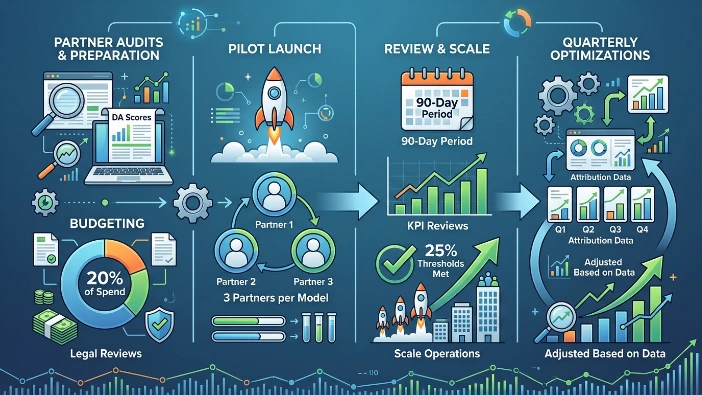
Launch pilots with 3 partners per model. Scale after 90-day KPI reviews showing 25% thresholds met. Quarterly optimisations adjust based on attribution data.
Audit and Pilot Process
Audit 50 potentials; select top 15.
Pilot budgets cap at £10,000.
Review metrics: traffic, links, conversions.
How Do These Models Integrate with SEO Strategies?
These models integrate via topical authority clusters, lifting rankings 24 positions. Syndication builds quantity; alliances add depth.
Ecosystems create 45+ entity mentions yearly. UK SERP data confirms 67% snippet wins.
Explore More Expert Insights:
How to Structure an Editorial Media Partnership in the UK Market
B2B Media Partnership vs. Standard Ads: Which Wins for UK Publishers?
What Risks Accompany These Media Partnership Models?
Risks include 18% partner churn rates and content misalignment costing 12% efficiency. Mitigation uses SLAs with penalties.
Budget overruns hit 9% without caps. Track via dashboards refreshing daily.
How Do UK Regulations Impact These Models?
UK regulations like GDPR limit data shares to 15% of partnerships. PECR rules cap promotional volumes at 20% of content.
Compliance audits occur bi-annually. Models adapt with consent tools, maintaining 92% delivery rates.