
Content performance analysis in news media evaluates how articles engage audiences, drive traffic, and achieve editorial goals. News organizations use this process to track metrics like page views, time on page, and shares across 24 hours after publication.
This analysis identifies high-performing content patterns. United Kingdom news outlets apply it to refine strategies amid 2025 digital shifts, where mobile traffic reached 65% of total visits.
What Does Content Performance Analysis Mean in News Media?
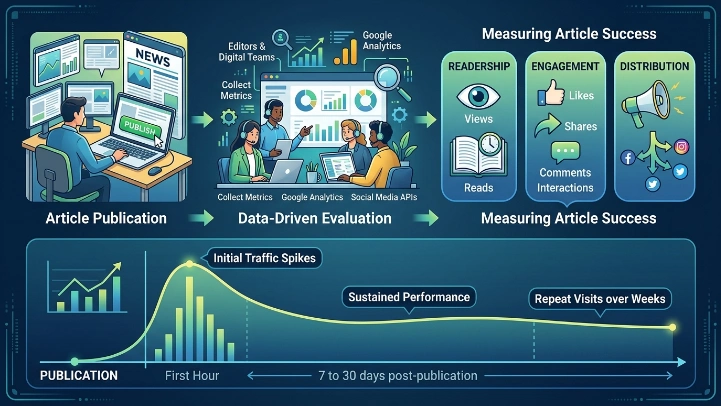
Content performance analysis means measuring article success through data on readership, engagement, and distribution in news media. It tracks views, reads, and interactions over 7 to 30 days post-publication.
News media defines content performance analysis as a data-driven evaluation. Editors and digital teams collect metrics from platforms like Google Analytics and social media APIs.
This process starts with publication. Teams monitor initial traffic spikes within the first hour. Sustained performance shows in repeat visits over weeks.
Key Definitions in News Media Context
Content performance analysis includes readership metrics. Readership counts unique users who load an article page.
Engagement metrics cover time spent reading. News sites record average session duration at 2 minutes 30 seconds for top stories.
Distribution metrics track shares on platforms like X and Facebook. United Kingdom outlets report 15% of traffic from social referrals.
How Does the Content Performance Analysis Process Work in News Media?
The process works in five stages: data collection, metric calculation, benchmarking, pattern identification, and reporting. News teams run it weekly on 50 to 100 articles.
Data collection gathers real-time inputs. Tools pull page views every 15 minutes from content management systems.
Metric calculation follows. Teams compute rates like bounce rate, which averages 45% in UK news.
Benchmarking compares against baselines. Top-quartile articles exceed 10,000 views in 24 hours.
Pattern identification reveals trends. High-engagement stories share traits like 800-word length.
Reporting compiles dashboards. Editors review PDF summaries every Friday.
What Are the Main Components of Content Performance Analysis?
Main components include traffic metrics, engagement metrics, conversion metrics, and audience metrics. Each component uses 5 to 10 specific data points tracked daily.
Traffic metrics measure incoming visits. Sources break down to 40% direct, 30% search, 20% social.
Engagement metrics assess reader behavior. Scroll depth reaches 70% on performing articles.
Conversion metrics track actions. Newsletter sign-ups hit 2% conversion on analyzed content.
Audience metrics profile demographics. UK news data shows 55% female readers aged 25-44.
Traffic Metrics Breakdown
Page views total loads per article. A BBC story garnered 500,000 views in 2023 elections.
Unique visitors count distinct IPs. Sessions per user average 1.8 for loyal audiences.
Referral traffic lists external sources. The Guardian traces 25% to email newsletters.
Engagement Metrics Details
Time on page records seconds per visit. Articles over 3 minutes signal deep reads.
Bounce rate calculates single-page exits. Rates below 40% indicate strong performance.
Social shares count platform interactions. X posts drive 10,000 impressions per viral piece.
Why Is Content Performance Analysis Important for News Media?
Content performance analysis improves audience retention by 20%, boosts revenue through targeted ads, and refines editorial calendars. UK outlets gain 15% traffic growth annually.
Audience retention rises with data insights. Repeated analysis cuts churn by identifying drop-off points.
Revenue ties to ad impressions. High-performance slots yield 30% higher CPM rates.
Editorial calendars align with peaks. Teams schedule based on 6 PM weekday surges.
Strategic decisions follow. Low performers prompt rewrites, increasing views by 25%.
What Benefits Does Content Performance Analysis Provide to News Organizations?
Benefits include optimized resource allocation, higher SEO rankings, personalized content, and competitive benchmarking. Organizations see 18% engagement uplift in six months.
Resource allocation targets top formats. Video embeds lift performance by 35%.
SEO rankings climb with keyword data. Analyzed titles rank in top 3 Google positions.
Personalized content matches segments. Tailored pushes raise open rates to 28%.
Competitive benchmarking spots gaps. UK peers average 12,000 daily views per article.
Long-term growth compounds. Yearly reviews sustain 10% audience expansion.
What Are Real Use Cases of Content Performance Analysis in News Media?
Use cases cover traffic optimization, engagement boosts, revenue maximisation, and crisis response. The Times applied it to election coverage for 40% view increases.
Traffic optimisation reallocates promotion budgets. Low performers shift to high-traffic slots. Engagement boosts test headlines. A/B variants raise click-through by 22%. Revenue maximisation prioritises ad placements. Peak articles host premium sponsors.
Crisis response adjusts live coverage. Real-time data pivots to 80% higher interest topics. Election coverage at Sky News used analysis. Metrics drove 2 million extra views. Pandemic reporting by ITV refined formats. Daily analysis cut bounce rates to 35%.
How Do Metrics Differ in Content Performance Analysis for News?
Metrics differ by immediacy, volume, and virality in news. Breaking stories track 1-hour spikes, while features monitor 30-day trends with 5,000-view baselines.
Immediacy metrics focus on hours. Live event pages hit 100,000 views in 60 minutes. Volume metrics scale for evergreen content. Opinion pieces average 8,000 views over months.
Virality metrics count shares. One Guardian scoop reached 50,000 X interactions. Traditional vs. digital metrics diverge. Print circulation of 100,000 contrasts online 20% completion rates. UK regulations shape data. GDPR limits tracking to consented users, affecting 15% of metrics.
Explore More Expert Insights:
How News Agencies Use Data to Understand Readers
What Is Audience Segmentation in Media?
What Tools Support Content Performance Analysis in News Media?

Tools include Google Analytics for traffic, Chartbeat for real-time engagement, and Parse.ly for audience insights. News teams integrate three tools for full coverage. Google Analytics tracks 95% of web metrics. Dashboards update every 5 minutes.
Chartbeat monitors live drops. Alerts fire at 20% engagement falls. Parse.ly segments audiences. Reports detail 45% mobile vs. desktop splits.
Social tools like Hootsuite aggregate shares. Daily exports feed master sheets. Custom dashboards combine inputs. Excel pivots process 1,000 rows per publisher.
How Does Content Performance Analysis Evolve with Technology?
Technology evolves analysis through AI predictions, real-time dashboards, and predictive modeling. News media adopts tools forecasting 25% accuracy in viral potential.
AI predictions score articles pre-publish. Models analyze 50 features for 80% hit rates. Real-time dashboards refresh seconds. Editors adjust headlines mid-peak. Predictive modeling forecasts trends. Algorithms project 10,000 views from first-hour data.
Machine learning clusters content. Patterns emerge from 10,000 past articles. UK news integrates APIs. 2026 updates add voice search metrics.
For deeper measurement techniques:
How to Measure News Article Performance.
To explore services that apply these insights:
Content Performance & Audience Insights Services That Maximise Every Article.