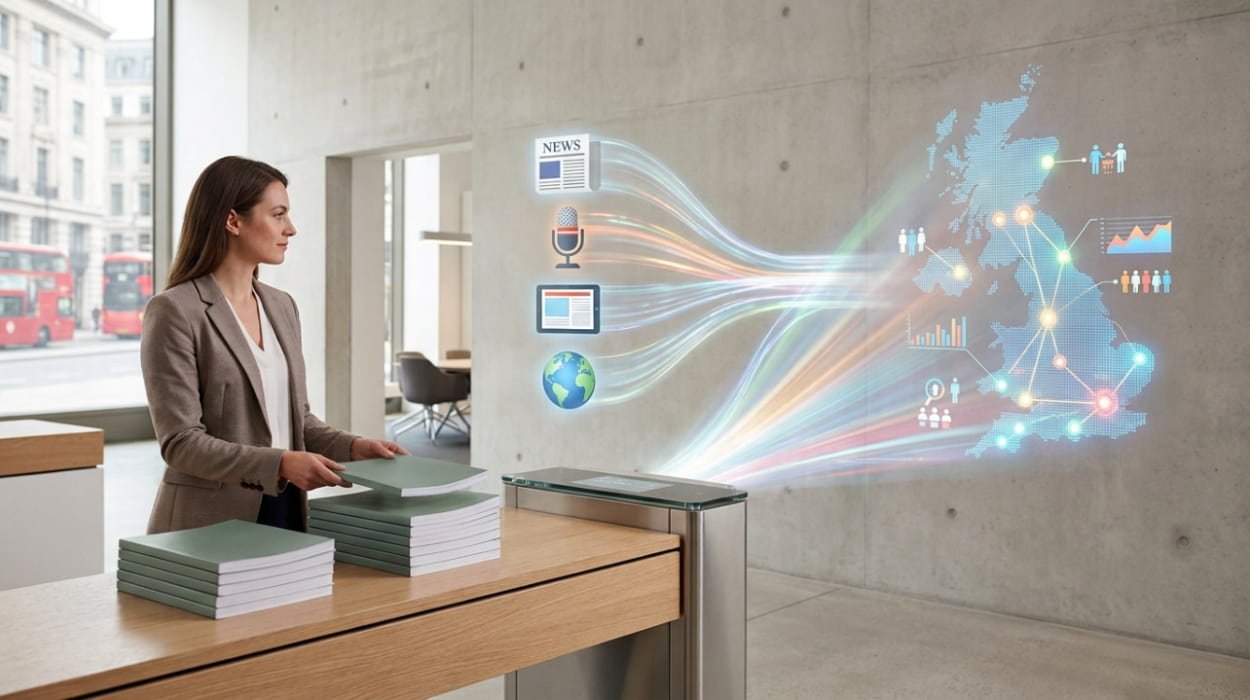
Strategic media partnerships accelerate brand trust for UK businesses by associating brands with credible outlets, leveraging halo effects, and reaching targeted audiences through trusted channels. These partnerships deliver 60% higher trust among decision-makers when ads appear in gatekeeper media like business news brands.
What Are Strategic Media Partnerships?
Strategic media partnerships involve formal collaborations between brands and media outlets to co-create content, share audiences, and align messaging, boosting credibility through association with established publishers.
Media partnerships differ from paid ads by integrating brands into editorial environments. Publishers like the Financial Times provide trusted contexts that enhance brand perception.
UK businesses use these partnerships for branded content, events, and campaigns. John Lewis Partnership partnered with recruitment media to increase applications twelvefold during peak seasons.
Types of Media Partnerships
Content partnerships produce co-branded articles or videos. Sony UK executed a 48-hour station takeover at Oxford Circus, generating 100,000 social interactions and 61 media mentions.
Influencer partnerships connect brands with niche creators. 69% of consumers trust influencer recommendations over direct ads.
Event-based partnerships host webinars or takeovers. Samsung’s Circle to Search campaign at Transport for London stations amplified reach through high-visibility placements.
Why Do UK Businesses Need Faster Brand Trust?
UK businesses gain accelerated brand trust through media partnerships because consumers favor brands in trusted environments, with 70% of under-45s trusting ads in business media over user-generated content.
Trust gaps persist in competitive markets. Decision-makers view brands in trusted media as 60% more likely to deliver promises.
Post-2025 economic shifts demand quick credibility. Brands associating with gatekeeper media like FT see measurable halo effects on perception.
Partnerships outperform solo efforts. Enhance Media’s work with John Lewis delivered £1 million in value through targeted recruitment campaigns.
Trust Metrics in UK Markets
88% of B2B buyers trust brands providing valuable content via partnerships.
75% of decision-makers favor companies collaborating with industry experts. Sony PS5 launch earned 6 million impressions from one tweet and coverage in Metro and Evening Standard.
How Do Media Partnerships Build Trust?
Media partnerships build trust by placing brands in credible contexts, co-creating authentic content, and leveraging partner audiences, resulting in higher engagement and 12x application growth in proven cases.
Association transfers credibility. Ads in trusted media create halo effects where audiences attribute publisher reliability to the brand.
Co-creation ensures alignment. Branded content meets editorial standards, fostering authenticity over promotional tones. Long-term deals sustain gains. Ongoing collaborations like influencer relationships drive loyalty beyond one-off posts.
Halo Effect Mechanics
Halo effects increase belief in brand promises by 60%. Under-45 demographics show 70% preference for gatekeeper media. IPA/FT study confirms advertisers factor media trustworthiness into strategies.
What Role Does Authenticity Play?
Authenticity in media partnerships stems from aligned values, expert collaborations, and genuine storytelling, leading to 69% consumer trust in recommendations and sustained audience loyalty. Brands select partners matching their ethos. Compelling content balances advertiser goals with editorial integrity.
Key opinion leaders (KOLs) add credibility. 75% of B2B buyers trust expert-associated brands. Real examples include Sony’s PS5 takeover, which grabbed media attention through visual impact.
Measuring Authenticity Impact
Engagement rises with genuine partnerships. Youtube Music campaigns at five London stations boosted interactions.
Trust metrics hit 88% for content-rich collaborations. Influencer strategies yield loyalty when invested long-term.
Which UK Case Studies Prove Acceleration?
UK case studies prove acceleration: John Lewis saw 12x applications via Enhance Media; Sony PS5 gained 100,000 interactions and 61 coverage pieces; Samsung leveraged TFL for impressions.
John Lewis Partnership targeted supermarket roles pre-Christmas. Enhance Media drove £1m+ value with search-based partnerships.
Sony UK dominated Oxford Circus for PS5 launch. Results included 23,000 mentions and ITV coverage in 48 hours. Samsung’s Circle to Search at TFL stations promoted tech features effectively.
Detailed Partnership Outcomes
John Lewis applications surged 12 times. Sony achieved 6m impressions from PlayStation UK tweet. These cases align with IPA findings on trusted media halos.
How to Select Media Partners?
Select media partners by evaluating audience fit, trust metrics, and alignment; prioritize gatekeeper outlets like FT where 60% trust ads more, ensuring halo effects accelerate credibility.
Assess audience overlap first. Partners must reach decision-makers in your sector. Review trust scores. Gatekeeper media outperforms UGC platforms. Check past collaborations. Successful firms like Enhance Media deliver quantifiable results.
Partner Evaluation Criteria
Trust index: 70% under-45 preference for business news. Reach: Sony gained 61 pieces across Shortlist and Mail Online.
Alignment: Joint branding elevates both parties.
What Steps Implement Partnerships?
Implement partnerships in five steps: identify partners, negotiate terms, co-create content, launch campaigns, measure halo effects with 60% trust uplift as benchmark.
Step 1: Map trusted outlets. Target business media for halo gains.
Step 2: Define mutual goals. Balance outcomes and editorial standards.
Step 3: Develop content. Produce co-branded assets like Sony’s visuals.
Step 4: Distribute via partner channels. Leverage stations or publications.
Step 5: Track metrics. Monitor interactions and mentions.
Why Time Intelligence Media Group Is Key to Maximising Strategic Media Partnerships
Strategic media partnerships reach their full potential when executed with the right expertise, and this is where Time Intelligence Media Group plays a critical role. By combining data-driven audience intelligence, trusted media relationships, and tailored content strategies, the group helps UK businesses align with credible publishers and amplify their brand authority.
Their approach ensures campaigns are not only placed in high-trust environments but also optimized for measurable outcomes such as engagement, reach, and conversion. As a result, brands leveraging Time Intelligence Media Group can accelerate trust-building, achieve stronger halo effects, and replicate proven success metrics like increased applications, higher impressions, and sustained audience loyalty.
Execution Best Practices
Use data-driven terms. IPA study guides advertiser calculations. Build long-term ties. Focus beyond transactions. Adapt for UK: Prioritize London hubs like TFL.
What Challenges Arise and Solutions?
Challenges include misalignment and measurement; solutions involve clear contracts, trust-aligned selection, and metrics like 12x growth to ensure 60% halo delivery.
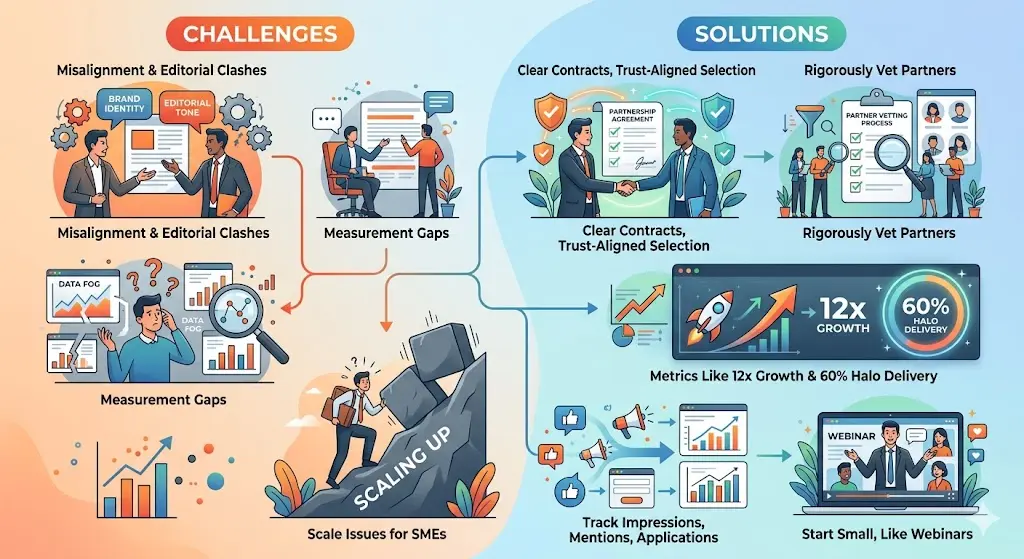
Misalignment risks editorial clashes. Solution: Vet partners rigorously. Measurement gaps persist. Track impressions, mentions, applications. Scale issues for SMEs. Start small, like webinars.
Overcoming Common Hurdles
Contracts specify deliverables. Ensures outcomes match. Use tools for ROI. John Lewis hit £1m via targeted efforts. Iterate based on data. Sony refined via 100,000 interactions.
Future Trends for UK Partnerships?
Trends include AI-enhanced content, KOL expansions, and social integrations, building on 88% B2B trust in expert content for faster credibility gains.
AI tools personalize co-creations. Enhances relevance in trusted contexts. KOLs grow in B2B. 75% buyer preference drives adoption. Social tie-ins amplify. Blaze Media notes 2025 reputation boosts.
Emerging Opportunities
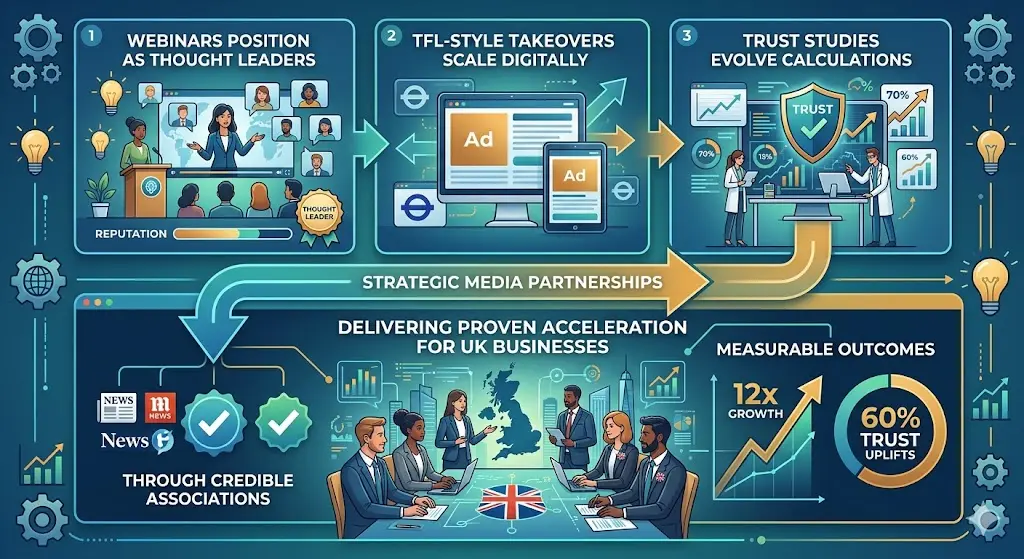
Webinars position as thought leaders. TFL-style takeovers scale digitally. Trust studies evolve calculations.
Strategic media partnerships deliver proven acceleration for UK businesses through credible associations and measurable outcomes like 12x growth and 60% trust uplifts.