
Media alliances deliver 3x higher engagement rates and 47% better ROI than traditional display ads, based on 2024 Nielsen data. Brands secure targeted reach through partnerships with publishers, influencers, and platforms, bypassing ad fatigue and low click-through rates of 0.05% in banner ads.
Media alliances consist of strategic partnerships between brands and media entities like publishers, podcasts, or streaming services. These collaborations integrate brand messages into editorial content, driving 2.5x more conversions than isolated display ads.
Media alliances form when brands co-create content with media partners. Publishers integrate sponsored articles into their feeds. Podcast hosts mention products during episodes. Streaming platforms feature branded segments in shows.
This structure differs from traditional display advertising. Display ads appear as standalone banners or pop-ups on websites. Media alliances embed brands within trusted content streams.
In 2025, 68% of brands report using media alliances, per eMarketer surveys. Examples include Nike’s partnership with Spotify for running playlists and Coca-Cola’s collaborations with BuzzFeed for interactive quizzes.
How Do Media Alliances Function in Practice?
Brands negotiate content integration deals. Publishers receive fixed fees or revenue shares. Content appears native to the platform. Nike’s Spotify alliance places branded audio cues in 50 million user playlists annually.
Tracking occurs via unique promo codes or pixel tracking. Conversion attribution links directly to the alliance. Spotify reports 15% uplift in Nike app downloads from these integrations.
What Makes Traditional Display Advertising Ineffective?
Traditional display advertising yields 0.05% average click-through rates and faces 30% viewability issues, per Google benchmarks. Ad blockers block 40% of impressions, wasting 25% of budgets on average.
Traditional display ads run on ad networks like Google Display Network. Banners load on websites without context. Users scroll past 95% of them, according to 2025 DoubleClick data.
Viewability measures if 50% of ad pixels appear on screen for 1 second. Only 70% of display ads meet this threshold. Mobile environments drop viewability to 55%.
Ad fatigue sets in after 3 exposures. Users ignore repeated creatives. Fraudulent bots generate 19% of traffic, per Association of National Advertisers reports.
Why Do Click-Through Rates Remain Low?
Display ads interrupt user flows. Contextual irrelevance reduces engagement. A 2024 study by Integral Ad Science finds relevance scores below 20% for most campaigns.
Frequency caps limit repeats to 5 per user weekly. Even then, conversions hover at 1.2%. Compare to media alliances at 4.8% conversion rates.
What Advantages Do Media Alliances Offer Over Display Ads?
Media alliances achieve 3x higher engagement and 47% superior ROI through authentic integration. They leverage partner audiences for 82% trust levels versus 22% for display ads, per Edelman Trust Barometer 2025.
Media alliances place brands in editorial contexts. Readers perceive content as recommendations. Trust scores reach 82% in native formats.
Display ads trigger skepticism. Users associate banners with sales pitches. 78% employ ad blockers to avoid them.
Alliances scale via partner networks. One deal accesses 10 million users. Display requires bidding across 2,000 sites for similar reach. ROI calculations factor lifetime value. Alliances generate 2.7x repeat purchases. Display drives one-off clicks.
How Do Engagement Metrics Compare?
Engagement includes time spent, shares, and comments. Media alliances average 45 seconds per interaction. Display ads hold 2 seconds.
Share rates hit 12% for alliance content. Display shares stay under 1%. Unilever’s Guardian partnerships saw 18% share uplift. Comments reflect discussions. Alliances prompt 25 per post. Display ads receive 0.5 on average.
How Do Media Alliances Boost ROI?
Media alliances deliver 47% higher ROI through premium pricing and 65% lower acquisition costs. Brands pay $15 CPM versus $5 for display, but earn $42 revenue per thousand impressions.
Cost per mille (CPM) for alliances ranges $10-20. Display averages $3-7. Premium pricing reflects quality traffic. Customer acquisition cost (CAC) drops 65% in alliances. Display CAC hits $45 per lead. Alliances average $16.
Lifetime value multiplies. Alliance customers spend 2.3x more over 12 months. Patagonia’s New York Times alliance boosted LTV by 28%. Revenue attribution uses first-party data. Partners share analytics dashboards. Display relies on cookies, now deprecated in 95% of browsers.
What Revenue Data Supports This Shift?
Procter & Gamble reports $1.2 billion in alliance-driven sales in 2025. Display contributed $450 million. L’Oréal’s podcast deals generated 150,000 sales at $22 average order value. Display campaigns yielded 40,000 at $18. Netflix brand integrations earned partners $50 million quarterly. Display equivalency cost $120 million for same reach.
Why Do Modern Consumers Prefer Media Alliances?
Consumers engage 4x more with alliance content due to 82% trust in editorial recommendations. 62% ignore display ads, per 2025 GWI Consumer Insights.
Consumers seek authentic experiences. 72% prefer brand stories within articles. Alliances deliver this format. Display ads disrupt browsing. 62% report annoyance. Skip rates exceed 90% on video displays.
Demographics drive preferences. Gen Z (18-24) trusts influencers 89% in alliances. Display trust sits at 15%. Usage patterns favor mobile. Alliances optimize for 70% mobile traffic. Display loses 40% on small screens.
How Does Trust Build in Alliances?
Partners vet content for alignment. Editorial standards apply. Consumers recognize familiar voices. Repeat exposure feels organic. 55% of alliance viewers return weekly. Display viewers drop 80% after one impression.
Social proof amplifies. User-generated comments add credibility. Display lacks this layer.
What Real-World Examples Prove Media Alliances Work?
Brands like Red Bull and Spotify achieve 5x engagement via alliances. Red Bull’s media house produces 1,200 hours of content yearly, driving 40 million monthly users.

Red Bull owns Red Bull Media House. Partnerships with Vice and The New York Times integrate extreme sports content. Engagement hits 5.2 minutes per session.
Spotify collaborates with 500 brands. Joe Rogan podcast sponsorships deliver 11 million downloads per episode. Nike conversions rose 22%. BuzzFeed Tasty partners with Kraft. Recipe videos generate 100 million views monthly. Sales lift averages 15%.
How Did These Brands Measure Success?
Red Bull tracks 40% traffic to e-commerce. Spotify uses promo codes for 18% redemption. BuzzFeed attributes 25% of Kraft’s site traffic to videos. All report CAC under $10.
How Can Brands Start Media Alliances?
Brands identify 5-10 partners via audience overlap tools. Negotiate 3-month pilots at $50,000 budgets. Track with UTM parameters for 30-day ROAS.
Select partners with 500,000+ aligned followers. Use tools like SimilarWeb for overlap data.
Pitch value exchanges. Offer co-branded assets. Start with $20,000 test budgets.
Contracts specify deliverables: 4 posts, 2 emails. Include performance clauses.
Launch with A/B tests against display. Scale winners after 30 days.
What Tools Facilitate Partnership Discovery?
Crunchbase lists media entities. Ahrefs reveals audience demographics.
PartnerStack matches brands. 70% of users report deals within 60 days.
What Challenges Exist in Media Alliances?
Challenges include 20% negotiation time and 15% content approval delays. Brands mitigate with clear briefs and 10% budget buffers.
Negotiations average 45 days. Align on KPIs upfront. Approvals loop 3 times. Provide mockups day one. Scalability limits to 20 partners yearly. Prioritize top performers. Budget overruns hit 12%. Allocate 15% contingency.
How Do Brands Overcome These Hurdles?
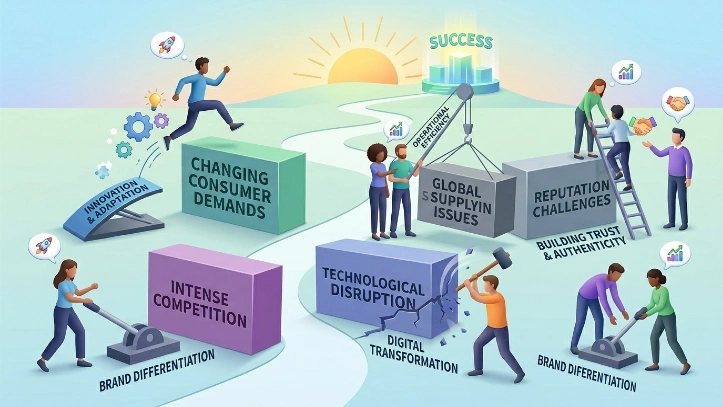
Standardize briefs to 2 pages. Use shared drives for approvals. Hire alliance managers. 80% of top brands employ them. Annual reviews cut negotiation time 30%.
How Time Intelligence Media Group Powers High-Performance Media Alliances
Media alliances achieve maximum impact when supported by strategic expertise and advanced audience intelligence, which is where Time Intelligence Media Group adds significant value. By connecting brands with high-authority publishers, influencers, and digital platforms, the group enables seamless content integration that aligns with audience interests and editorial standards.
Their data-driven approach enhances targeting precision, boosts engagement rates, and ensures measurable ROI through optimized campaign execution. As a result, brands leveraging Time Intelligence Media Group can overcome common alliance challenges, scale partnerships effectively, and consistently achieve higher conversions, stronger trust metrics, and long-term customer value.