Press releases deliver factual announcements to journalists for news coverage. Sponsored content marketing places branded articles on publisher sites for direct audience engagement. Press releases target media gatekeepers. Sponsored content targets readers directly.
A press release is a concise document that organizations distribute to media outlets to announce newsworthy events, providing journalists with facts for potential news stories. It follows a standardized format with 400 to 600 words.
Press releases contain specific sections. The headline captures the core news. The dateline indicates location and date. The lead paragraph summarizes who, what, when, where, and why. Body paragraphs add details and quotes from executives. The boilerplate at the end describes the organization.
Journalists receive press releases through wire services or email. They decide whether to publish the information as news articles. Distribution reaches thousands of outlets. Coverage appears in sections like business or technology news. In 2023, global press release distribution services sent over 10 million releases.
Standard Format of Press Releases
Press releases use an inverted pyramid structure. Key facts appear first. Supporting details follow. This format aids editors who cut from the bottom. Contact information sits at the top for follow-up queries.
Quotes add credibility. They come from CEOs or experts. Each quote spans one to two sentences. The “###” symbol marks the end. This signals completeness to recipients.
Distribution Channels for Press Releases
Wire services like PR Newswire handle distribution. They send releases to 5,000 media outlets. Email pitches target specific reporters. Online platforms post releases on websites. Free options exist through services like EIN Presswire.
Timing matters in distribution. Releases launch at 6 AM Eastern Time for maximum pickup. Embargoes delay publication until specified dates. Follow-up calls increase coverage rates by 20 percent.
What Is Sponsored Content Marketing?
Sponsored content marketing involves paid placements of branded articles on third-party publisher websites, where content blends with editorial style to inform and engage target audiences directly. Pieces range from 800 to 1,500 words.
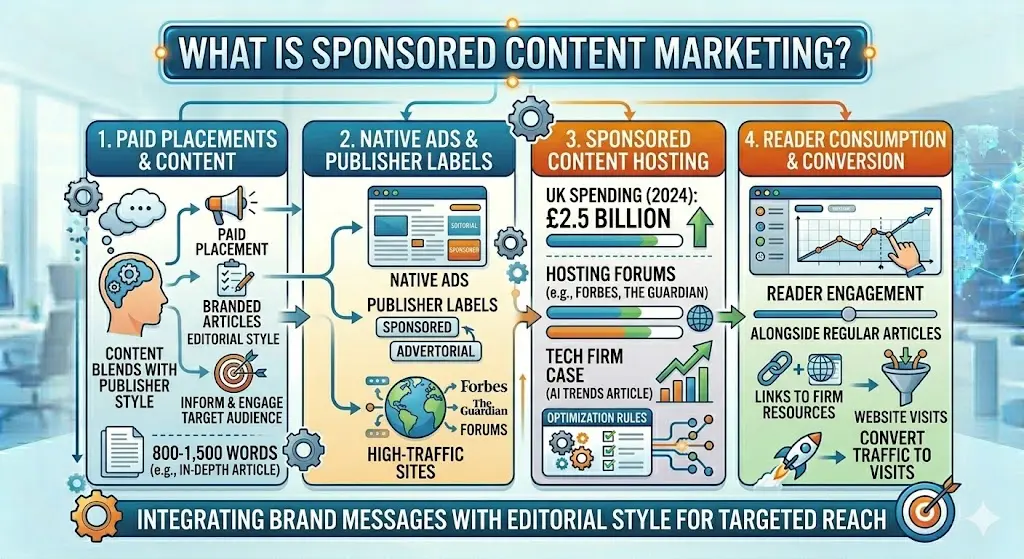
Sponsored content appears as native ads. Publishers label it “sponsored” or “advertorial.” Brands pay for placement on high-traffic sites. Content matches the site’s tone. Readers consume it alongside regular articles.
Forums like Forbes and The Guardian host sponsored content. A tech firm publishes a piece on AI trends there. The article links to the firm’s resources. Traffic converts to website visits. In 2024, sponsored content spending in the UK reached £2.5 billion.
Key Elements of Sponsored Content
Sponsored content includes visuals like images or infographics. Headings break up text. Subtle brand mentions integrate naturally. Calls to action direct readers to landing pages. Data from studies backs claims.
Publishers review content for quality. Approval takes 5 to 10 days. Performance metrics track views and clicks. Evergreen topics sustain long-term traffic.
Placement Platforms for Sponsored Content
Premium publishers dominate placements. Sites like BBC or Telegraph charge £10,000 per article. Niche sites target specific industries. Networks like Outbrain amplify reach through recommendations.
UK regulations require clear labeling. The Advertising Standards Authority enforces transparency. Sponsored content avoids news-style presentation.
How Do Press Releases Work?
Press releases work through a one-way distribution model where organizations send formatted announcements to journalists, who then filter and publish selected facts as independent news stories across media channels.
Organizations draft releases for events like product launches. They select distribution lists. Services blast the content. Journalists scan inboxes daily. They rewrite facts into articles.
Coverage generates backlinks. News sites link to the organization’s site. Google indexes these quickly. Visibility spikes for 48 hours post-release. UK firms use this for regulatory announcements.
Step-by-Step Press Release Process
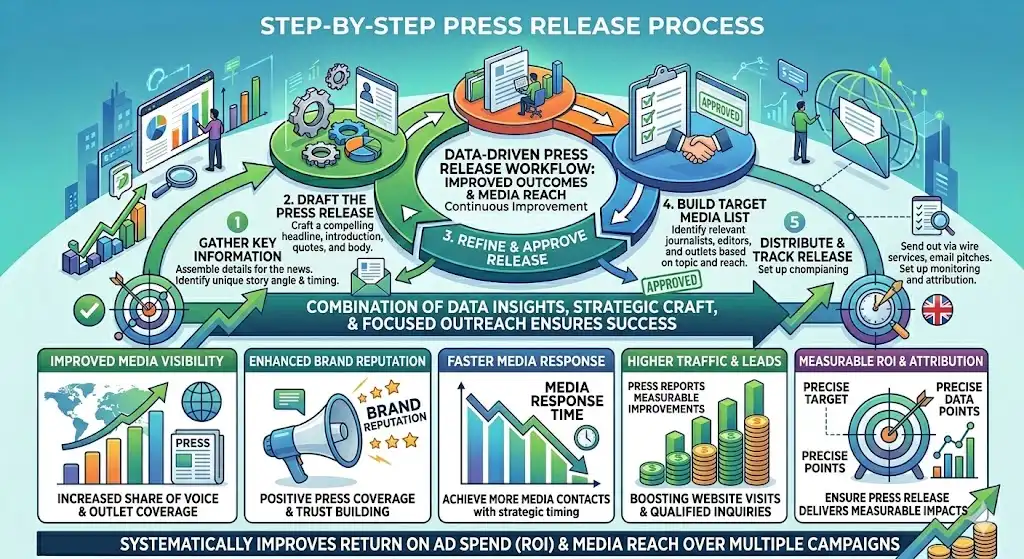
Drafting starts with research. Writers gather 10 key facts. Editing ensures AP style compliance. Proofreading checks for errors. Distribution follows. Upload to wires costs £200 per release. Target 500 journalists. Track pickups via monitoring tools. Analyze results after one week.
Measurement of Press Release Success
Metrics include media pickups and impressions. Tools like Cision report 1 million impressions per release. Share of voice compares competitor coverage. Sentiment analysis scans article tones.
Backlinks boost domain authority. Each quality link adds 1 to 2 points. Long-term effects appear in search rankings over months.
How Does Sponsored Content Marketing Work?
Sponsored content marketing works via direct placement where brands create articles, pay publishers for publication, and drive audience engagement through native formats that integrate with site content.
Brands brief writers on topics. Content aligns with audience interests. Publishers edit for fit. Publication occurs on schedule. Promotion via social shares extends reach.
Readers click through to brand sites. Conversion rates hit 2 to 5 percent. UK e-commerce brands use this for product education. Sessions last 3 minutes on average.
Sponsored Content Creation Process
Research identifies audience pain points. Outlines structure 1,200 words. Writers incorporate data from 5 sources. Designers add 3 visuals. Publisher submission includes mockups. Revisions address 10 feedback points. Live links embed tracking pixels.
Tracking Sponsored Content Performance
Analytics capture 50,000 views per placement. Click-through rates average 0.5 percent. Tools like Google Analytics segment traffic. Engagement time exceeds 2 minutes.
ROI calculates from leads generated. One campaign yields 200 qualified inquiries. For deeper insights on timing decisions, When Should You Choose Sponsored Content Over Traditional Press Release Distribution?.
What Are the Main Components of Press Releases?
Press releases consist of a headline, dateline, lead paragraph, body with quotes, boilerplate, and contact info, totaling 400 to 600 words in a structured format.
Headline uses 10 words maximum. Dateline lists city and date. Lead delivers 35 words of summary. Body expands with 3 paragraphs. Quotes number two per release. Boilerplate repeats across releases. It spans 50 words. Contacts include phone and email.
Detailed Breakdown of Press Release Elements
Headlines employ active verbs. They promise value. Lead paragraphs hook editors. Facts dominate over adjectives. Quotes humanize announcements. Executives speak in first person. Boilerplates link to websites.
What Are the Main Components of Sponsored Content?
Sponsored content features a compelling headline, introduction, 800 to 1,500 words of value-driven body text, visuals, brand integration, and calls to action, labeled as sponsored.
Headline matches editorial style. Introduction poses questions. Body delivers 5 key insights. Visuals include charts.
Brand appears in 20 percent of text. CTAs link externally.
Structure Within Sponsored Articles
Sections use H2 headings. Lists highlight benefits. Data tables present comparisons. Conclusion reinforces messages.
Integration feels organic. Labels ensure compliance.
What Benefits Do Press Releases Offer?
Press releases offer third-party credibility, wide media reach, SEO backlinks from news sites, and cost-effective awareness for announcements. Credibility stems from journalist validation. Reach hits millions via syndication. Backlinks improve rankings. Costs average £300 per release. Pickups generate 500,000 impressions.
SEO and Cost Benefits
News backlinks pass high authority. Rankings rise within days. Budgets support 12 releases yearly.
What Benefits Does Sponsored Content Marketing Provide?
Sponsored content provides targeted audience access, high engagement rates, branded control over messaging, and measurable conversions on premium sites.
Access reaches 100,000 niche readers. Engagement yields 3 percent interaction. Control shapes narratives. Conversions track directly. UK placements drive 15 percent sales lift.
Conversion and Measurement Gains
Pixels track full funnels. Attribution assigns revenue. Reports detail 10 metrics. To explore publication strategies, Publish Sponsored Content Instead of Press Releases for Better SEO and visibility.
When Do Organizations Use Press Releases?
Organizations use press releases for crisis responses, earnings reports, partnerships, and product launches to secure earned media coverage. Crises demand 24-hour turnaround. Earnings hit quarterly. Partnerships announce joint ventures. Launches detail features. UK regulators require certain disclosures.
Common Use Cases for Press Releases
Mergers generate 50 percent more pickups. Awards highlight achievements. Events promote attendance. Non-profits announce fundraisers.
When Do Organizations Use Sponsored Content Marketing?
Organizations use sponsored content for thought leadership, product education, industry trends, and lead generation on audience-aligned sites. Thought leadership positions experts. Education explains complex topics. Trends forecast changes. Leads fill forms post-read. UK brands target professionals.
Practical Applications of Sponsored Content
B2B firms educate buyers. E-commerce details benefits. SaaS shares case studies. Events preview innovations.