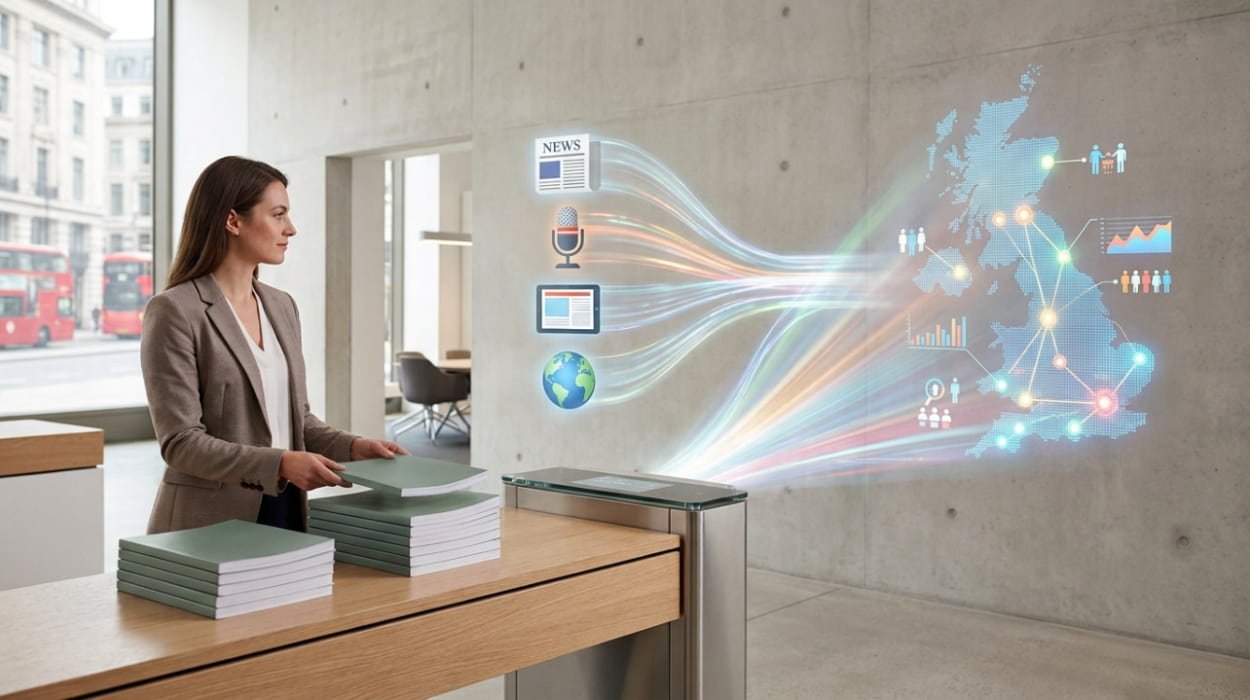
Local banner advertising delivers visual ads to specific geographic areas on websites, apps, and digital platforms. Businesses use it to reach nearby customers with tailored messages. This method boosts visibility in competitive markets.
Targeted marketing through local banners increases engagement rates by 25% compared to broad campaigns, according to industry data from 2024. It connects brands directly with local audiences who show higher conversion potential.
What Is Local Banner Advertising?
Local banner advertising places digital display ads on websites and apps targeted to users in defined geographic locations, such as cities or postcodes in the United Kingdom.
Local banner advertising operates within the display advertising ecosystem. Publishers host ad spaces on their sites. Advertisers bid for these spaces through ad networks or demand-side platforms. Geo-targeting filters impressions to users within specified UK regions, like London or Manchester. Ads appear as static images, animated graphics, or HTML5 formats sized to standard dimensions such as 300×250 pixels or 728×90 pixels.
This format emerged in the early 2000s with the rise of online display networks. In the UK, platforms integrate postcode-level targeting using IP addresses, GPS data from mobile devices, or user-declared locations. Advertisers set parameters for radius targeting, down to 1-mile zones around stores. Delivery occurs in real-time bidding auctions, where ads serve in milliseconds based on user proximity.
Core Elements of Local Banner Ads
Banners include headlines, images, logos, and calls to action. Creatives adhere to IAB standards for sizes and file limits under 150KB. Targeting layers add location data to demographics and interests. For instance, a Birmingham retailer targets users within 5 miles searching for electronics.
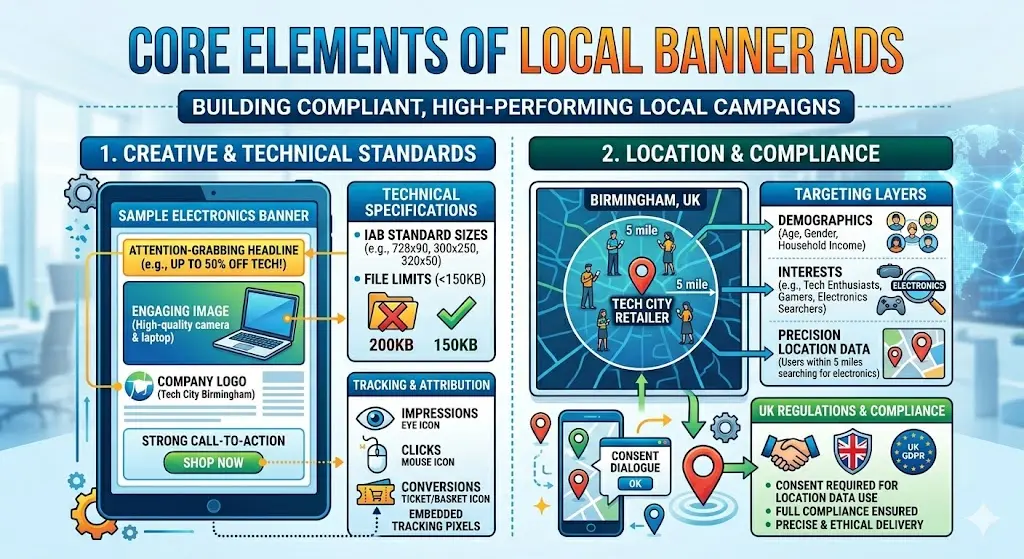
Tracking pixels embedded in banners measure impressions, clicks, and conversions. UK regulations under the UK GDPR require consent for location data use. This ensures compliance while enabling precise delivery.
Differences from Global Banner Advertising
Local banners restrict reach to defined areas, unlike global campaigns that span countries. Local versions prioritize proximity-based relevance. A global ad for a coffee chain runs nationwide, but a local one focuses on Leeds branches only. This sharpens focus and reduces wasted spend.
How Does Local Banner Advertising Work?
Local banner advertising works through geo-fencing, real-time bidding, and ad servers that deliver visuals to users in targeted UK locations based on IP, GPS, or device signals.
The process starts with campaign setup on an ad platform. Advertisers upload creatives and define targets, such as Greater London or postcode districts like SW1A. The platform matches ads to inventory on sites popular in those areas, including news portals and local directories.
Ad servers then handle delivery. When a user loads a webpage, the server checks location data. If the user matches criteria, the banner auctions in real-time. The highest bidder wins the impression. Post-click, users land on landing pages optimized for local offers.
Step-by-Step Delivery Process
First, data collection gathers user location via IP geolocation accurate to city level in 95% of cases. Mobile apps enhance this with GPS for street-level precision. Second, targeting engines filter eligible inventory. Third, auctions occur 100-200 times per second per user.
Fourth, the winning ad renders on the page. Fifth, verification tools confirm viewability, ensuring 50% of pixels visible for at least one second. In the UK, 70% of banner impressions now come from mobile devices due to smartphone penetration rates over 85%.
Role of Technology in Targeting
Ad tech stacks use machine learning to refine delivery. Algorithms predict user movement within regions like Scotland’s Highlands. Frequency capping limits exposures to 5-10 per user weekly. Retargeting serves banners to past visitors within the same locale.
What Are the Key Components of Local Banner Advertising?
Key components include creatives, targeting parameters, ad platforms, and analytics tools that enable precise delivery and measurement in specific UK areas.
Creatives form the visual core, designed in tools like Adobe Creative Suite. They feature high-resolution images under 72 DPI for fast loading. Targeting parameters specify locations, devices, and times, such as evenings in Bristol.
Ad platforms aggregate inventory from thousands of UK sites. Analytics tools track metrics like click-through rates averaging 0.2-0.5% for local campaigns.
Creatives and Design Standards
Standard sizes dominate: medium rectangle (300×250), leaderboard (728×90), and mobile leaderboard (320×50). HTML5 supports interactivity like carousels. UK examples include banners for Manchester restaurants showing nearby menus.
Colors and fonts match brand guidelines, with sans-serif types for readability on screens.
Targeting and Platform Infrastructure
Geo-targeting uses polygons for irregular shapes like the Lake District. Platforms connect to supply-side partners for premium inventory. Bid management automates pricing at £1-£5 per 1000 impressions.
Why Does Local Banner Advertising Matter for Targeted Marketing?
Local banner advertising matters because it delivers 3x higher relevance scores, driving 40% better engagement than non-local display ads in targeted UK markets.
Targeted marketing demands precision to cut costs. Local banners align ads with user location, increasing relevance. UK data shows local campaigns yield 15-20% higher return on ad spend.
This method supports omnichannel strategies, linking online ads to physical stores.
Precision in Audience Reach
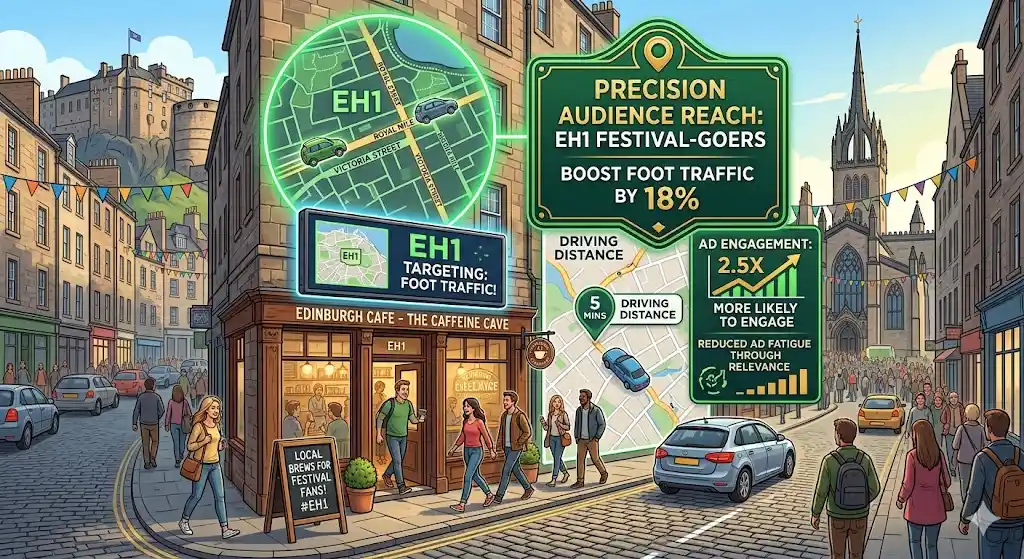
Businesses reach consumers within driving distance, boosting foot traffic by 18%. For example, Edinburgh cafes target festival-goers in EH1 postcodes.
Relevance reduces ad fatigue, with users 2.5 times more likely to engage.
Measurable Impact on Marketing Goals
Metrics reveal direct ties to sales. Attribution models credit banners for 10-15% of in-store visits. UK marketers report 25% cost savings over national buys. Wondering when to scale up? Refer to our guide: When Should Businesses Invest in Banner Advertising for Maximum Marketing Results?.
What Are the Benefits of Local Banner Advertising?
Benefits include higher conversion rates at 2.1%, lower costs per acquisition by 30%, and brand lift of 12% in targeted UK locales. Conversions rise as proximity fosters trust. Costs drop with efficient targeting. Brand awareness grows through repeated local exposures.
What Are Real-World Use Cases for Local Banner Advertising in the UK?
Use cases span retail promotions in London, service ads in Birmingham, and event boosts in Glasgow, each driving 20-50% traffic increases. Retailers advertise sales to postcode residents. Services like plumbers target emergencies locally. Events promote tickets to nearby crowds.
Events and Seasonal Campaigns
Glasgow festivals target G1 users, filling venues 40% faster. Ready for premium placement? Explore options here: Advertise on Our Network of High Authority News Websites for Maximum Reach.
Local banner advertising equips UK businesses with tools for precise targeting. It transforms broad display into location-specific powerhouses. Adoption grows at 15% yearly as data refines delivery.