
Banner ads consist of rectangular or square graphical displays placed on websites, delivering visual messages to drive clicks or views, with costs determined by multiple platform-specific factors.
Banner ads appear as static or animated images on digital publishing platforms such as news sites, blogs, and content hubs. Publishers integrate these ads into page layouts, including top headers, sidebars, or content breaks. The standard sizes follow IAB specifications, like 728×90 pixels for leaderboards or 300×250 pixels for medium rectangles. Digital publishing platforms host these ads to generate revenue from advertiser payments.
Costs for banner ads vary across platforms due to differences in integration methods. Publishers use ad servers to deliver banners dynamically based on user data. Factors like ad format and placement position influence the final price. For instance, a leaderboard banner on a high-traffic news site commands higher rates than a sidebar unit on a niche blog. This structure ensures advertisers pay for exposure aligned with platform capabilities.
How Do Banner Ad Formats Affect Costs?
Banner ad formats include static images, HTML5 animations, and rich media with interactive elements. Static banners cost less because they require minimal loading resources. HTML5 formats increase costs by 20-30% due to enhanced engagement features like hover effects. Rich media banners, which expand on click or include video, raise prices further by demanding more server bandwidth.
Publishers charge based on format complexity across platforms. A 300×250 static banner on a UK news site averages lower CPM rates than an expandable rich media version. Format choice ties directly to production expenses, which platforms pass to advertisers.
What Determines the Cost Models for Banner Advertising?
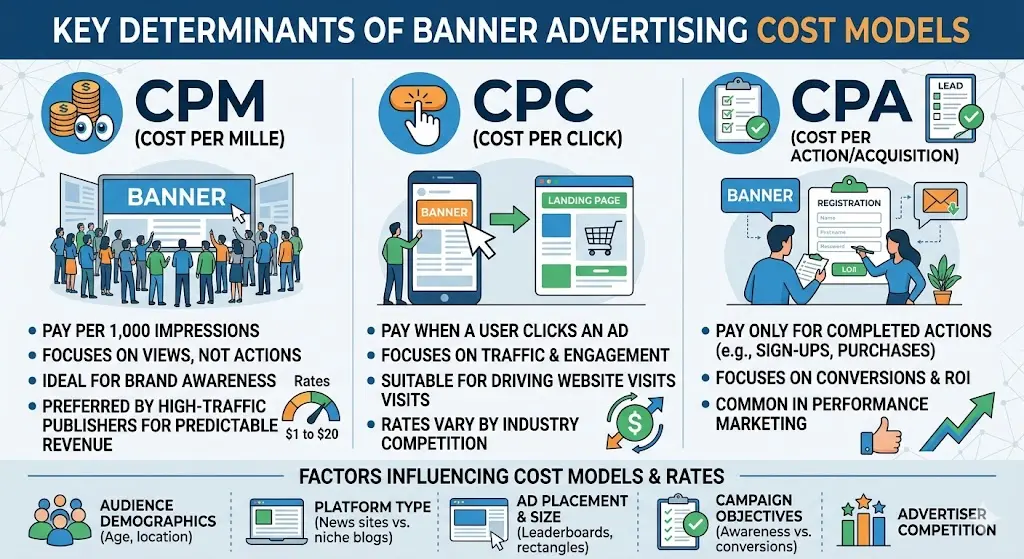
Banner advertising costs follow models like CPM for impressions, CPC for clicks, and CPA for actions, with CPM dominating digital publishing at rates from $1 to $20 per 1,000 impressions.
Cost models define how publishers bill advertisers for banner placements. CPM tracks every 1,000 views, suitable for brand awareness campaigns. CPC charges per user click, ideal for traffic-driven goals. CPA bases fees on conversions like form submissions. Digital publishing platforms prefer CPM for its predictability in revenue streams.
Publishers select models based on audience behavior and platform traffic. High-traffic news sites use CPM to maximize earnings from broad exposure. CPC applies to platforms with engaged users likely to click. Rates fluctuate by model; CPM on UK platforms ranges from $2.50 for general sites to $15 for premium publishers. Advertisers choose models matching campaign objectives.
Why Do CPM Rates Vary by Platform?
CPM rates depend on platform traffic volume and quality. Platforms with 10 million monthly users charge higher CPMs than those with 1 million. Quality metrics like dwell time and page views per session elevate rates. UK-based publishing platforms adjust CPMs seasonally, peaking during holidays at 25% above averages.
Real examples show variation: a national UK news platform sets CPM at $8, while a regional blog lists $3. These differences stem from verified traffic data from tools like Google Analytics.
How Does Audience Quality Impact Banner Ad Costs?
Audience quality drives costs through demographics, engagement levels, and intent signals, with premium segments like 25-44-year-olds in the UK increasing rates by 40-60%.
Audience quality refers to user attributes such as age, income, and interests tracked via cookies or device IDs. Publishers segment audiences into tiers; high-value groups command premium pricing. In the UK, audiences with high disposable income or professional occupations boost banner costs. Engagement metrics like time on page over 2 minutes signal quality, raising rates.
Platforms use data management platforms to quantify audience value. A platform targeting UK professionals charges 50% more than one serving general traffic. Intent signals from search history further elevate costs. For banner ads, quality audiences yield higher click-through rates, justifying elevated pricing.
What Role Do Demographics Play in Pricing?
Demographics include age, gender, location, and income levels. UK platforms prioritize 25-54-year-olds, who represent 60% of online spending. Female audiences in fashion segments increase costs by 30%. Geo-targeting to London raises rates over rural areas due to higher purchasing power.
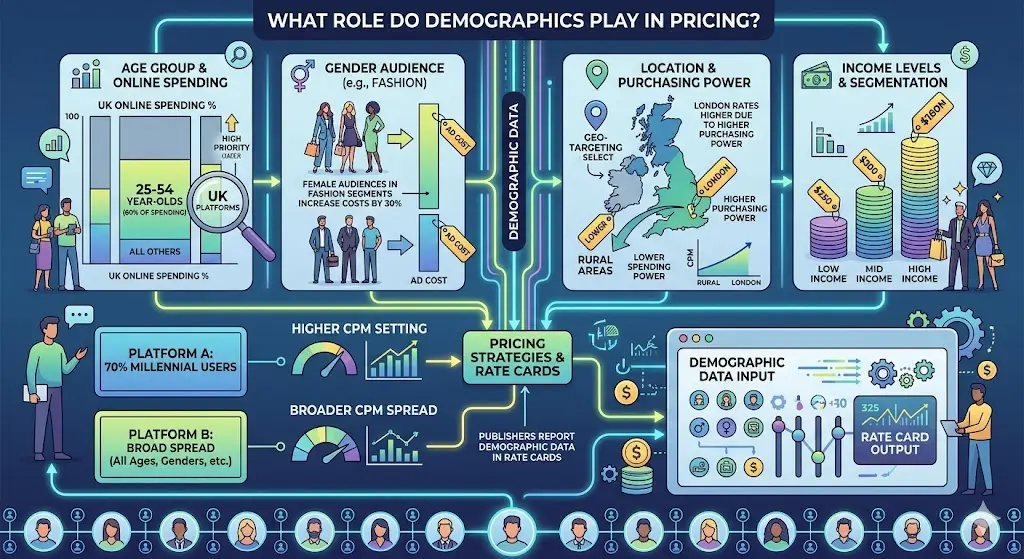
Publishers report demographic data in rate cards. A platform with 70% millennial users sets higher CPMs than one with broader spreads.
What Effect Does Traffic Volume Have on Banner Advertising Costs?
Traffic volume directly scales costs, with platforms exceeding 5 million monthly users charging 2-3 times more than those under 1 million, based on unique visitors and page views.
Traffic volume measures unique visitors and page views per month. High-volume platforms spread ad inventory across more impressions, allowing premium pricing. Digital publishing sites with 10+ million users dominate cost structures. Low-volume platforms offer discounts to fill inventory.
UK platforms disclose traffic via certified metrics. A site with 8 million monthly uniques sets CPM at $10, compared to $4 for 800,000 uniques. Volume ensures consistent delivery, reducing risk for advertisers.
How Do Page View Metrics Influence Rates?
Page views count total loads, with high ratios per user indicating sticky content. Platforms averaging 3+ views per session charge 20% more. News sites generate 5-7 views per visit, elevating banner costs. Blogs with 1.5 views compete at lower rates.
Metrics from comScore or SimilarWeb verify these figures, guiding advertiser budgets.
Curious about the hurdles in executing these campaigns: What Challenges Do Businesses Face When Running Banner Advertising Campaigns Today?
Why Do Ad Placements Alter Banner Advertising Costs?
Ad placements like above-the-fold positions cost 50-100% more than below-the-fold, with header banners on digital publishing platforms fetching top rates due to immediate visibility.
Ad placements position banners relative to content. Above-the-fold spots appear without scrolling, capturing 70% of initial views. Sidebars and footers cost less due to lower visibility. Digital publishing platforms optimize layouts for high-impact zones.
Publishers assign value based on viewability scores over 70%. A leaderboard above editorial content on a UK site doubles costs over a footer banner. Placement testing via heatmaps confirms performance differences.
What Makes Premium Placements Expensive?
Premium placements integrate seamlessly with content, like in-article banners. These spots achieve 2x click rates, justifying premiums. Sticky sidebars that follow scrolls add 30% to costs. Platforms reserve these for direct-sold inventory.
Examples include news sites placing 970×250 banners mid-article at elevated rates.
How Does Viewability Influence Banner Ad Pricing?
Viewability measures ad visibility for at least 50% of pixels over 1 second, with rates above 80% increasing costs by 25-40% on digital publishing platforms.
Viewability standards from the Media Rating Council define effective impressions. Platforms with 85% viewability certify inventory as premium. Low-viewability placements discount by 20%. Tools like Active View track compliance.
UK publishers emphasize viewability in contracts. High scores correlate with performance, driving up prices. A platform at 90% viewability charges $12 CPM versus $9 at 70%.
Why Track Viewability Metrics?
Metrics prevent fraud and ensure value. Platforms report average viewability monthly. Scores impact IAB compliance and advertiser trust, stabilizing costs.
What Impact Do Seasons and Timing Have on Costs?
Seasonal demand peaks costs by 30-50% during Q4 holidays, with real-time bidding adjusting rates hourly based on competition across platforms.
Seasons affect supply-demand dynamics. Black Friday drives 40% rate hikes. Off-peak periods like January drop costs by 25%. Digital publishing platforms use programmatic auctions for dynamic pricing. UK platforms see spikes in retail seasons. Weather events or elections temporarily elevate news site traffic and rates.
How Does Time of Day Affect Pricing?
Peak hours from 8-10 AM and 6-9 PM increase costs by 15-20% due to higher traffic. Platforms throttle inventory during lows. Dayparting strategies optimize spends.
Ready to turn these factors into growth: Get Measurable Growth With Banner Advertising Across High Traffic News Websites
How Does Competition Shape Banner Advertising Costs?
Competition from advertisers raises costs through bidding wars, with 10+ bidders pushing CPMs up 50% on popular digital publishing platforms.
Competition arises in programmatic marketplaces. High-demand categories like finance see intense bidding. Platforms with exclusive inventory attract more competitors, inflating prices. UK e-commerce campaigns during sales face 2x competition, per exchange data. Direct deals lock rates, avoiding peaks.
What Drives Bidding Intensity?
Advertiser budgets and campaign scales fuel bids. Limited premium slots intensify pressure. Platforms monitor auctions for transparency.
What Technical Factors Affect Banner Ad Costs?
Technical factors like ad size, load speed under 3 seconds, and mobile optimization increase costs by 15-30%, ensuring compatibility across devices.
Ad sizes adhere to IAB standards for compatibility. Faster load times reduce bounce rates, commanding premiums. Mobile-first designs add value on responsive platforms.
Publishers test for cross-device performance. A non-optimized banner discounts by 20%. HTTPS compliance avoids penalties.