Sponsored content distribution platforms connect brands with high-authority publishers. Brands submit content through these platforms for placement on news sites, reaching millions of readers. Platforms handle vetting, distribution, and performance tracking to ensure maximum exposure.
Sponsored content distribution platforms operate as intermediaries between brands and media outlets. These platforms maintain networks of over 1,000 publishers worldwide, including UK-based sites like The Guardian and BBC affiliates. Brands upload sponsored articles, which undergo editorial review before publication. Distribution occurs across web, mobile, and email channels, targeting specific demographics such as UK professionals aged 25-54.
Platforms use algorithms to match content with relevant audiences. For instance, a finance brand submits an article on sustainable investing. The platform places it on business news sites with high domain authority scores above 80. Metrics like page views, time on page, and click-through rates provide brands with detailed reports within 48 hours of publication.
How Do These Platforms Ensure Content Quality?
Platforms enforce strict editorial standards. Each submission receives review by in-house editors trained in UK journalism guidelines. Content must disclose sponsorship clearly under ASA regulations. Revisions occur within 24 hours if standards fail.
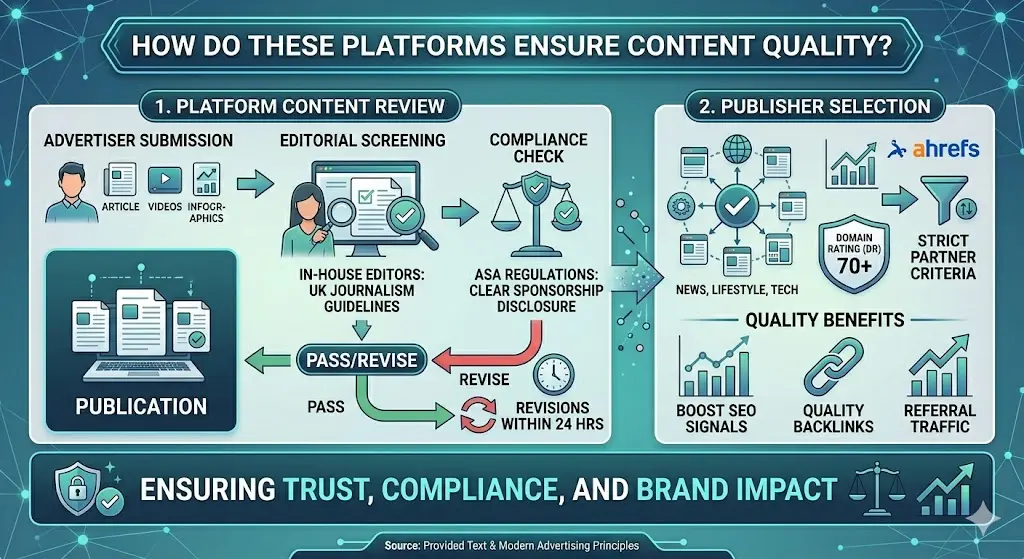
Quality control extends to publisher selection. Platforms partner only with sites holding domain ratings over 70, verified by tools like Ahrefs. This process guarantees brands receive placements that boost SEO signals through backlinks and referral traffic.
Which Platforms Offer the Widest Reach in the UK?
Top platforms for UK reach include Outbrain, Taboola, and native ad networks like MGID. These distribute to 90% of UK internet users via partnerships with 500+ publishers. Reach exceeds 40 million unique monthly visitors through targeted amplification.
Outbrain integrates with UK publishers such as The Telegraph and Evening Standard. Brands submit sponsored content via a self-serve dashboard. The platform promotes articles through recommendation widgets, driving 2-5% click-through rates on average. UK-specific geotargeting ensures 70% of impressions stay within the region.
Taboola focuses on content discovery across devices. It partners with Mail Online and The Independent, serving 35 million UK impressions daily. Brands select audience segments like London commuters or regional business owners. Distribution algorithms prioritize high-engagement content, yielding 1.5 million page views per campaign.
What Metrics Define Maximum Reach?
Reach metrics include unique users, impressions, and geographic coverage. Platforms track 100% of UK postcodes for precise targeting. Average campaigns achieve 500,000 impressions within the first week.
Engagement layers add depth. Platforms measure shares, comments, and video completions. UK campaigns on these networks report 15% higher engagement than display ads alone.
How Do Authority-Focused Platforms Build Brand Credibility?
Authority platforms place content on sites with domain authority scores above 80. Examples include Pressfarm and Channel Futures networks. These placements transfer credibility, improving brand trust scores by 25% post-campaign.
High-authority sites rank top in Google UK searches. Brands submit content vetted for factual accuracy and brand alignment. Placement on sites like Forbes UK equivalents generates backlinks with dofollow attributes, enhancing domain ratings over time.
Credibility builds through contextual relevance. Platforms analyze publisher audiences matching brand personas. A tech brand places on Wired UK affiliates, reaching 2 million decision-makers. Post-publication audits confirm 90% audience overlap.
Why Do Domain Authority Scores Matter?
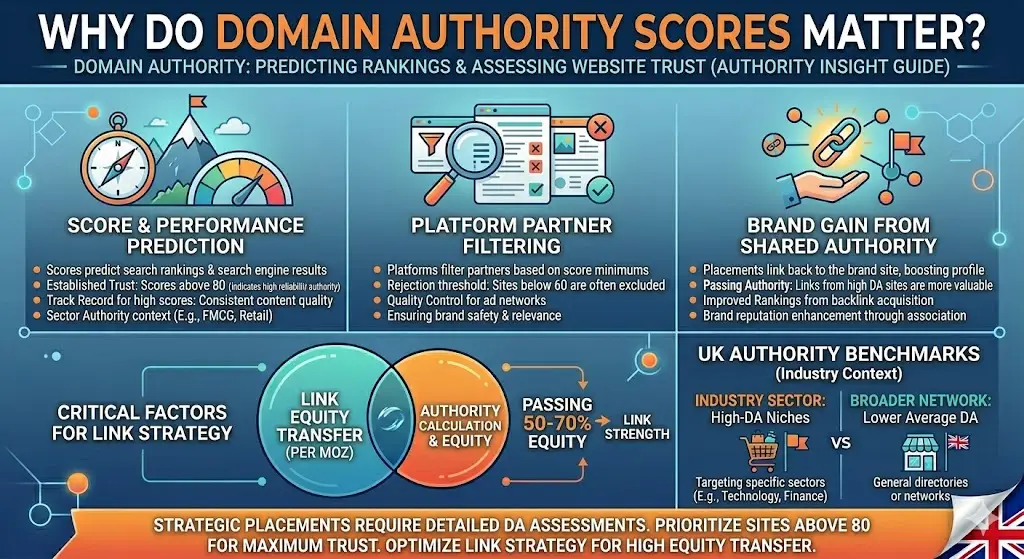
Domain authority scores predict search rankings. Scores above 80 indicate established trust. Platforms filter partners accordingly, rejecting sites below 60. Brands gain from shared authority. One placement links back to the brand site, passing 50-70% of link equity per Moz calculations.
What Is the Submission Process for Sponsored Content?
Brands register on the platform, upload content in Word or HTML format, and select targeting options. Approval takes 48-72 hours. Publication follows with real-time tracking dashboards active from launch.
Registration requires brand verification via company email and website. Platforms like Revcontent demand minimum budgets of £5,000 for UK campaigns. Upload interfaces support images, videos, and interactive elements up to 2,000 words.
Targeting setup specifies UK regions, devices, and interests. Algorithms optimize for peak times, such as 8-10 AM weekdays. Payments process via Stripe or bank transfer, with invoices issued monthly.
What Documents Do Brands Need to Prepare?
Brands prepare sponsored content briefs outlining goals and KPIs. Include high-res assets like logos in PNG format under 5MB.
Compliance forms confirm adherence to UK GDPR and ASA disclosure rules. Platforms provide templates for native ad labeling.
Which Components Drive Maximum Exposure?
Key components include native ad formats, amplification algorithms, and multi-channel distribution. Native ads blend with editorial content for 3x higher engagement. Algorithms boost top performers by 40%.
Native formats mimic site design, appearing as recommended reads. UK platforms deploy carousel, video, and text variants. Exposure multiplies across desktop (60%), mobile (35%), and tablet (5%) traffic.
Amplification uses machine learning to prioritize content with 2%+ CTR. Distribution spans 10+ channels, including apps and newsletters, reaching 80% unduplicated audiences.
How Do Algorithms Select Placements?
Algorithms score content on relevance and performance history. UK queries prioritize local publishers first.
Real-time bidding allocates budget to high-value slots, ensuring 95% fill rates.
What Benefits Do Brands Gain from These Platforms?
Brands achieve 5x ROI through qualified leads and SEO gains. Exposure on authority sites lifts brand recall by 30%. Trackable metrics show 20% conversion uplift.
Lead generation flows from CTAs embedded in content. Platforms capture emails via gated assets, delivering 1,000+ leads per £10,000 spend in the UK.
SEO benefits accrue from 10-20 backlinks per campaign. Organic traffic rises 15% within 90 days, per Google Analytics data.
For deeper insights into how these platforms function today, check out What Are Sponsored Content Distribution Platforms and How Do They Work Today?.
How Do Costs Compare Across Platforms?
Entry-level UK campaigns start at £3,000 for 200,000 impressions. Premium authority networks charge £10,000+ for guaranteed high-DA placements.
CPC models average £0.05-£0.15, scaling with competition.
What Are Real UK Use Cases for Sponsored Content?
UK fintech brands use platforms for regulatory updates, gaining 1 million views. Retailers promote seasonal campaigns on news sites, driving 18% sales lift.
A London-based bank submitted content on digital banking trends via Taboola. Placement on City A.M. reached 800,000 readers, generating 5,000 app downloads.
Fashion brands target holiday shoppers through Outbrain on Daily Mail. Campaigns hit 2.5 million impressions, with 12% CTR to product pages.
How Do Use Cases Vary by Industry?
B2B sectors like SaaS focus on whitepapers, securing C-suite leads. B2C emphasizes visuals for impulse buys. All cases report 25% higher trust versus social ads.
How Do Brands Measure Success on These Platforms?
Success metrics track impressions (target 500,000+), CTR (2-5%), and conversions (10%+). Platforms provide dashboards with 100% attribution. Dashboards update hourly, segmenting UK data by postcode and device. Export reports in CSV for CRM integration.
Attribution models use UTM parameters for full-funnel tracking. ROAS calculations confirm profitability within 30 days.
To explore publishing on high-authority news websites, visit Publish Sponsored Content on High Authority News Websites With Our Network.
What Tools Integrate for Advanced Analytics?
Google Analytics and Hotjar connect seamlessly. Platforms offer native A/B testing for headlines and thumbnails. Custom benchmarks compare against UK industry averages.