
Sponsored content distribution platforms connect advertisers with publishers. These platforms enable brands to place paid articles, videos, or graphics on news sites, blogs, and social channels. They handle matching, distribution, tracking, and payments. In 2026, they process over 500,000 campaigns annually across digital media.
What Are Sponsored Content Distribution Platforms?
Sponsored content distribution platforms are digital marketplaces that match advertisers with publishers for paid native content placement. They facilitate deals between brands and media outlets for articles or videos that blend with editorial content. Core functions include campaign setup, targeting, and performance analytics.
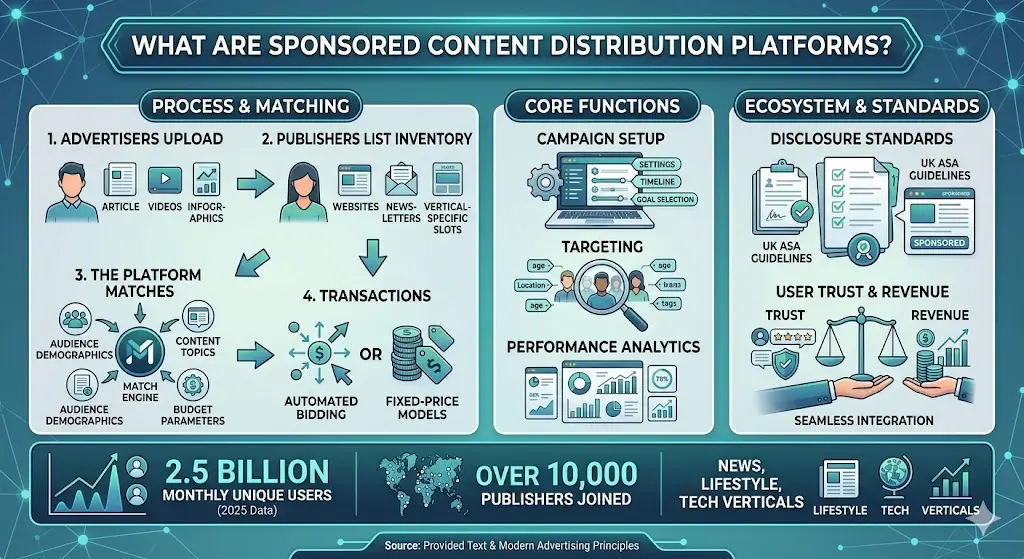
These platforms operate as intermediaries in the advertising ecosystem. Advertisers upload content assets, such as articles or infographics, ready for publication. Publishers list available inventory, including slots on their websites or newsletters. The platform’s algorithm matches based on audience demographics, content topics, and budget parameters. Transactions occur through automated bidding or fixed-price models. Data from 2025 shows these platforms distributed content to 2.5 billion unique users monthly.
Platforms ensure content complies with disclosure standards. Advertisers label pieces as “sponsored” per regulations like the UK’s Advertising Standards Authority guidelines. Publishers integrate content into feeds without disrupting user experience. This setup maintains trust while driving revenue. Over 10,000 publishers join major platforms, covering news, lifestyle, and tech verticals.
Key Entities in Sponsored Content Platforms
Advertisers represent brands seeking visibility. They create content that aligns with publisher styles. Publishers own digital properties with engaged audiences. Platforms provide dashboards for both parties to manage campaigns.
Historical Evolution of These Platforms
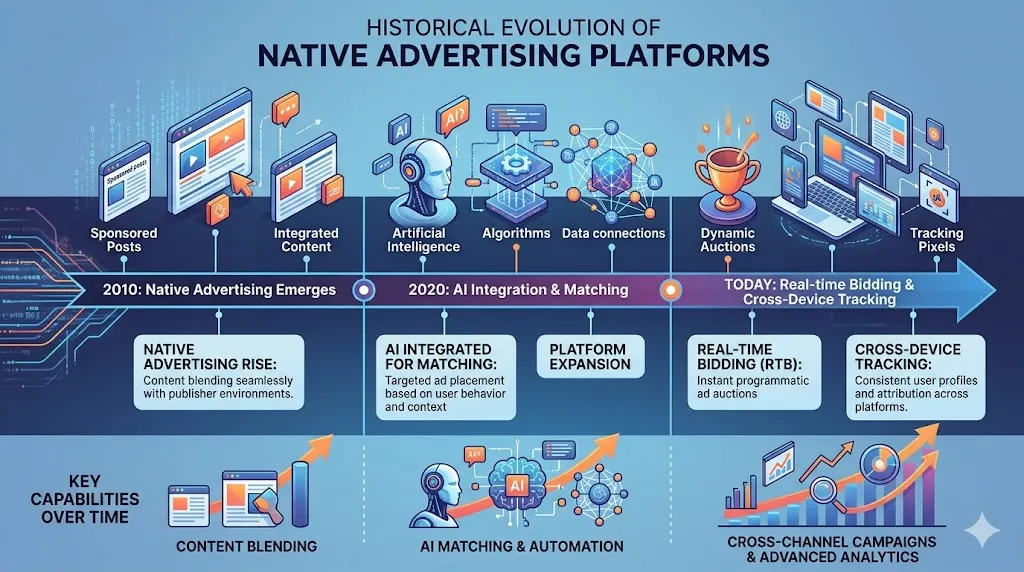
Platforms emerged in 2010 with native advertising rise. By 2020, they integrated AI for matching. Today, they support real-time bidding and cross-device tracking.
How Do Sponsored Content Distribution Platforms Work?
These platforms work through a five-step process: content upload, audience targeting, publisher matching, publication, and analytics reporting. Advertisers set budgets from £500 to £50,000 per campaign. Systems track views, clicks, and engagements in real time.
The process starts with advertiser registration. Users create accounts, verify budgets, and upload assets like 800-word articles or 30-second videos. Platforms review content for quality and compliance within 24 hours. Targeting options include location (e.g., UK cities), interests (e.g., finance), and devices (mobile vs. desktop). Algorithms prioritize matches with 80% audience overlap.
Publication follows approval. Platforms push content to selected publishers via APIs. Articles appear labeled as sponsored in editorial sections. Tracking pixels embedded in content capture metrics like 5-second view rates and click-throughs at 0.5-2%. Reports generate daily, showing ROI based on cost per engagement (£0.10-£1.00).
Step-by-Step Campaign Flow
- Upload and review content.
- Define targeting and budget.
- Match with publishers.
- Publish and monitor.
- Analyze and optimize.
Technology Powering the Workflow
AI engines analyze content semantics. Blockchain verifies transactions in some platforms. APIs integrate with 500+ publisher CMS systems.
What Are the Main Components of Sponsored Content Platforms?
Main components include advertiser dashboards, publisher inventories, matching algorithms, payment gateways, and analytics suites. Dashboards handle 90% of user interactions. Algorithms process 1 million matches daily.
Advertiser dashboards offer campaign builders with drag-and-drop interfaces. Users select formats (articles, videos, podcasts) and set durations from 7 to 90 days. Budget controls allocate funds across tiers: premium sites charge £10 CPM, mid-tier £5 CPM. Inventory management lists 50,000+ slots from UK publishers like regional news and national outlets.
Matching algorithms use machine learning on 100+ data points. They score compatibility by relevance (70% weight), audience fit (20%), and pricing (10%). Payment gateways process via Stripe or PayPal, with 99.9% uptime. Analytics suites deliver heatmaps, A/B test results, and attribution models tracking 30-day conversions.
Advertiser Tools Breakdown
Dashboards track 20 metrics live. Budget pacing prevents overspend by 15%.
Publisher Inventory Features
Inventories update hourly. Filters sort by DA scores from 50 to 90+.
For deeper insights into platforms offering maximum reach, Where Can Brands Submit Sponsored Content for Maximum Reach and Authority Exposure?.
What Benefits Do Sponsored Content Distribution Platforms Offer?
Platforms deliver 3x higher engagement than banners, with 75% brand lift in trust metrics. They reduce setup time by 70% versus direct deals. Costs average 40% lower than traditional ads.
Engagement stems from native formats. Sponsored articles achieve 2.5% click rates versus 0.1% for display ads. Readers spend 52% more time on branded content. Platforms enable precise targeting, reaching 85% of intended UK demographics like 25-44-year-olds in London.
Cost efficiency arises from aggregated inventories. Direct publisher negotiations take 4 weeks; platforms close in 48 hours. Analytics optimize mid-campaign, boosting ROI by 25% through real-time adjustments. Scalability supports 1 to 100 placements seamlessly.
What Are Real-World Use Cases for These Platforms?
Use cases span awareness campaigns, lead generation, and product launches. Finance brands use them for 20% conversion lifts. Retailers drive 15% traffic spikes during sales.
Awareness campaigns target broad UK audiences. A tech firm placed articles on 50 sites, reaching 10 million impressions in Q1 2026. Content covered industry trends, labeled clearly. Metrics showed 28% unaided recall post-campaign.
Lead gen employs gated assets. Advertisers offer whitepapers behind forms. Platforms track 5-10% form fills, with email captures averaging 8,000 per £10,000 spend. Product launches announce features via video series on 30 publishers, generating 12% buzz volume increase.
Lead Generation Applications
B2B sectors capture 2,500 leads monthly at £4 per lead. To explore high-authority options for submissions, Publish Sponsored Content on High Authority News Websites With Our Network.
How Have Sponsored Content Platforms Evolved in 2026?
In 2026, platforms integrate AI for 95% automated matching and support video formats at 60% of campaigns. Global reach expands to 200 countries, with UK traffic at 25% of total.
Evolution includes privacy-compliant tracking post-GDPR updates. Platforms use first-party data for 90% accuracy. Video distribution grows via short-form content, averaging 1.2 million plays per campaign. Mobile optimization ensures 70% views on smartphones.
Sustainability features emerge. Platforms prioritize green publishers, reducing carbon footprints by 15% through efficient ad loads. Cross-platform support covers apps and newsletters, diversifying from web-only.