
PR distribution sends press releases through digital networks to UK media outlets, journalists, and online platforms for maximum visibility in news feeds and search results.
PR distribution involves electronic delivery of press releases to targeted recipients. In the UK digital media industry, this process uses online wires and databases. Providers maintain lists of 5,000 to 10,000 active journalists across national papers like The Guardian and The Times, regional outlets, and trade publications. The system ensures releases reach editors handling business, tech, and lifestyle beats. Digital formats include HTML for rich media and plain text for email compatibility.
This method operates 24/7 through automated platforms. Releases upload to a central server, then distribute via FTP or API integrations. UK-specific targeting filters by postcode, sector, or publication type. Over 80% of UK journalists prefer digital delivery over print faxes, according to industry reports from 2025. Distribution logs track delivery timestamps and open rates for verification.
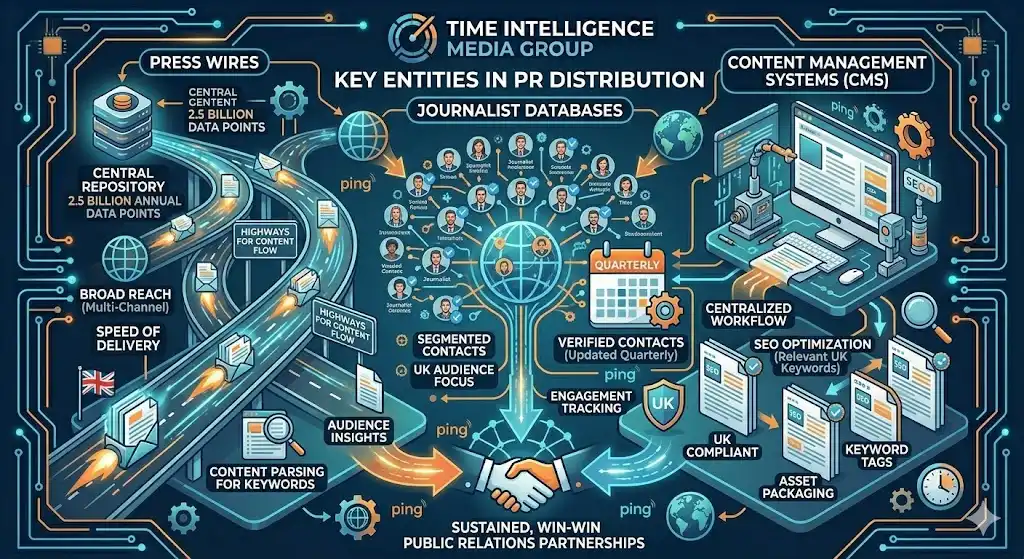
Key Entities in PR Distribution
Entities include press wires, journalist databases, and content management systems. Press wires act as highways for content flow. Databases hold verified contacts updated quarterly. Systems parse releases for SEO keywords relevant to UK audiences.
How Does the PR Distribution Process Work Step by Step?
The process starts with release creation, followed by platform upload, targeted sending, media pickup, and performance tracking over 48-72 hours.
Writers draft releases with headlines under 100 characters and bodies of 400-600 words. They include UK datelines like “London, 1 April 2026” and boilerplates detailing sender background. Upload occurs to distribution platforms via web dashboards. Systems scan for compliance with UK advertising standards from the Committee of Advertising Practice.
Targeting selects recipients based on 20-50 criteria, such as BBC News or Sky News feeds. Servers dispatch at scheduled times, often 8 AM GMT for peak pickup. Embargo options delay publication until specified dates. Initial distribution reaches 2,000-5,000 outlets within minutes.
Media teams review inboxes. Pickups appear in online editions within 24 hours. Analytics dashboards report views, shares, and backlinks. UK journalists cite releases in 15-25% of cases, driving traffic to sender sites.
Stages of Release Preparation
Preparation divides into research, writing, and approval. Research identifies 10-15 relevant angles. Writing follows inverted pyramid structure. Approval checks facts against official sources.
What Are the Main Components of UK PR Distribution Systems?
Core components consist of content upload portals, journalist databases, delivery engines, analytics tools, and compliance checkers tailored for UK regulations.
Upload portals feature drag-and-drop interfaces supporting multimedia attachments up to 5MB. Databases segment contacts into 100+ categories, including 1,200 national journalists. Delivery engines use secure protocols like HTTPS for transmission.
Analytics tools measure impressions reaching 50,000-500,000 readers. Compliance checkers flag issues like unsubstantiated claims under UK Consumer Protection Regulations. Multimedia optimizers embed images at 72 DPI for web display.
Integration with RSS feeds pushes content to aggregators like Google News UK. These components process 1 million releases annually across the industry.
Role of Journalist Databases
Databases verify emails weekly against bounces. They categorize by beats like finance or health. UK lists prioritize ASA-registered outlets.
What Benefits Does PR Distribution Provide in the UK Digital Media Landscape?
Benefits include 300% faster reach than email blasts, 20-40% higher pickup rates, SEO backlinks from .co.uk domains, and verifiable metrics for ROI calculation.
Distribution amplifies visibility to 70 million UK internet users daily. Releases rank in Google UK searches within hours, boosting domain authority by 5-15 points. Third-party credibility from outlets like The Telegraph enhances trust over direct posts.
Metrics quantify success with 1,000-10,000 impressions per release. Cost efficiency runs at £0.01-£0.05 per impression. Long-tail effects persist for 30-90 days in archives.
For deeper insights into selecting services that fit specific budgets, Which PR Distribution Services Are Best Suited for Small Business Marketing Budgets?.
Quantifiable Reach Advantages
Reach covers 95% of UK top 100 media sites. Backlinks from DA 70+ domains improve rankings. Trackable URLs log 500-5,000 clicks.
What Are Real-World Use Cases for PR Distribution in the UK?
Use cases cover product launches reaching 100,000 readers, crisis responses limiting damage in 24 hours, executive announcements gaining 50+ mentions, and event promotions filling 1,000 seats.
Product launches distribute specs and images to tech wires. Tesco-style retailers announce expansions via regional wires, securing coverage in Manchester Evening News. Responses to data breaches detail fixes, appearing in BBC Business within hours.
Announcements feature C-suite hires with bios, picked up by City A.M. Events promote conferences via trade lists, driving 20% attendance spikes. Non-profits share impact reports, gaining features in The Independent.
These cases demonstrate distribution across sectors like finance, retail, and tech in 2026.
Product Launch Examples in Practice
Launches target consumer tech journalists. Releases include high-res photos. Coverage spans 48 hours post-distribution.
How Does Targeting Work in UK PR Distribution?
Targeting filters databases by 30 parameters including geography, beat, circulation size, and publication frequency for precise delivery to 500-2,000 recipients.
Geographic filters prioritize London, Scotland, or Wales codes. Beat matching aligns content with journalists covering fintech or sustainability. Circulation targets outlets over 100,000 daily readers.
Frequency selects dailies versus weeklies. Exclusion lists avoid irrelevant sectors. Algorithms score matches on 1-10 scales, dispatching top scorers first.
Refinement uses A/B headlines tested on 10% samples. Delivery confirms via read receipts from 60% of recipients.
Geographic and Sector Targeting Details
Postcode filters narrow to M25 area. Sector tags cover 50 industries like healthcare. Daily papers receive morning blasts.
What Role Does Technology Play in Modern UK PR Distribution?
Technology automates 90% of workflows using AI matching, cloud servers, and real-time dashboards for 99.9% uptime and sub-minute delivery.
AI scans releases for keywords, suggesting 20 optimal lists. Cloud servers scale to 100,000 dispatches daily. Dashboards update metrics every 15 minutes.
APIs connect to CMS for seamless publishing. Blockchain verifies delivery chains. Mobile apps allow on-the-go monitoring.
Adoption reached 85% of UK campaigns by 2025, per Press Gazette data.
AI and Analytics Integration
AI predicts pickup odds at 75% accuracy. Analytics aggregate data from 50 sources. Dashboards export CSV reports.
How Do Metrics and Analytics Function in PR Distribution?
Metrics track impressions, clicks, shares, and sentiment via pixel tracking and API pulls, reporting 1,500-15,000 engagements per campaign.
Pixels embed in HTML releases for view counts. UTM parameters log traffic sources. Sentiment tools scan 1,000 articles for positive/negative ratios.
Engagement rates hit 5-15% on average. Reports generate within 24 hours, detailing top outlets.
For strategies on high-impact distributions across premium platforms, Invest in High Impact PR Distribution Services Across Premium News Platforms Today.
Tracking Tools and Reporting
Tools integrate with Google Analytics. Reports include pie charts of outlet performance. Benchmarks compare against 1,000 past releases.
What Regulations Govern PR Distribution in the UK?
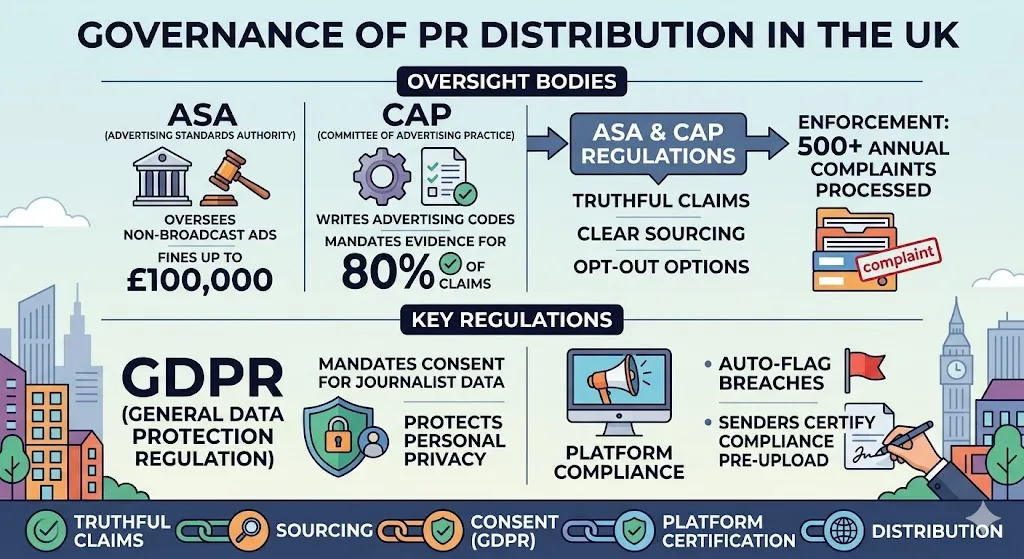
Regulations from ASA and CAP require truthful claims, clear sourcing, and opt-out options, enforced via 500 annual complaints processed.
ASA oversees non-broadcast ads, fining violators up to £100,000. CAP codes mandate evidence for 80% of claims. GDPR mandates consent for journalist data.
Platforms auto-flag breaches. Senders certify compliance pre-upload.