
What Are Editorially Aligned Media Partnerships in PR?

What Are Editorially Aligned Media Partnerships in PR?

Editorially aligned media partnerships in PR represent a strategic collaboration between brands and media outlets where content placement aligns seamlessly with a publication’s journalistic standards and editorial voice. Unlike traditional paid advertising, these partnerships prioritize authenticity, ensuring that brand messages feel organic within the media’s narrative. This approach builds trust with audiences who increasingly value genuine storytelling over overt promotion.

In today’s fragmented media landscape, understanding editorially aligned media partnerships in PR is essential for public relations professionals aiming to cut through the noise. These partnerships leverage mutual interests to create content that resonates with readers while advancing brand objectives. By focusing on shared values and editorial fit, PR teams can secure high-impact coverage that drives long-term credibility.

Defining Editorially Aligned Media Partnerships

Editorially aligned media partnerships in PR occur when a brand’s story or message is integrated into a media outlet’s content calendar in a way that matches the publication’s editorial guidelines, tone, and audience expectations. This alignment ensures the partnership doesn’t disrupt the media’s integrity but enhances it, often through contributed articles, sponsored features, or co-created series that provide real value. For instance, a tech company partnering with a business journal might co-develop a series on industry trends, where the brand’s expertise shines without overshadowing the journalistic angle.

The core principle here is reciprocity: media outlets gain exclusive insights or fresh perspectives, while brands access credible platforms. This differs from transactional ads by requiring deep pre-alignment on topics, messaging, and distribution. PR teams typically start with audience analysis to identify outlets whose editorial stance mirrors the brand’s narrative, fostering partnerships that feel editorially driven rather than commercially forced.

Detailed vetting processes, such as reviewing past coverage and editorial calendars, help pinpoint alignment opportunities. A practical example involves a healthcare brand collaborating with a health magazine on patient education content; the partnership succeeds because it addresses the outlet’s focus on evidence-based wellness, resulting in sustained audience engagement and brand authority.

Why Editorially Aligned Partnerships Matter in Modern PR

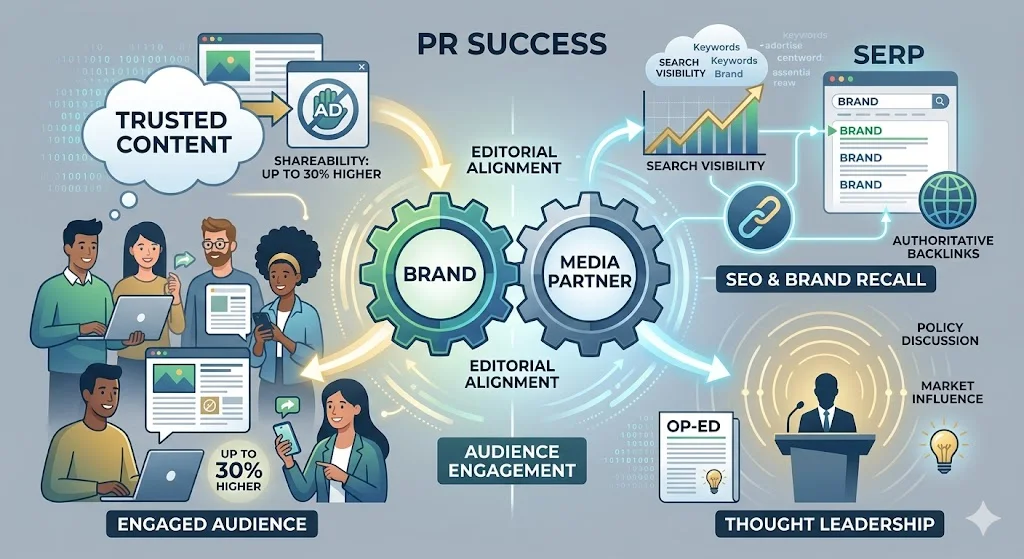
In an era of ad-blockers and skepticism toward sponsored content, editorially aligned media partnerships in PR stand out by delivering perceived neutrality. Audiences trust recommendations that blend into editorial flows, leading to higher engagement rates—studies show such content can boost shareability by up to 30% compared to blatant ads. This matters because PR success now hinges on earned attention rather than bought space.
What Are Editorially Aligned Media Partnerships in PR?
Editorially aligned media partnerships in PR represent a strategic collaboration between brands and media outlets where content placement aligns seamlessly with a publication's journalistic standards and editorial voice. Unlike traditional paid advertising, these partnerships prioritize authenticity, ensuring that brand messages feel organic within the media's narrative. This approach builds trust with audiences who increasingly value genuine storytelling over overt promotion.

In today's fragmented media landscape, understanding editorially aligned media partnerships in PR is essential for public relations professionals aiming to cut through the noise. These partnerships leverage mutual interests to create content that resonates with readers while advancing brand objectives. By focusing on shared values and editorial fit, PR teams can secure high-impact coverage that drives long-term credibility.

Defining Editorially Aligned Media Partnerships
Editorially aligned media partnerships in PR occur when a brand's story or message is integrated into a media outlet's content calendar in a way that matches the publication's editorial guidelines, tone, and audience expectations. This alignment ensures the partnership doesn't disrupt the media's integrity but enhances it, often through contributed articles, sponsored features, or co-created series that provide real value. For instance, a tech company partnering with a business journal might co-develop a series on industry trends, where the brand's expertise shines without overshadowing the journalistic angle.

The core principle here is reciprocity: media outlets gain exclusive insights or fresh perspectives, while brands access credible platforms. This differs from transactional ads by requiring deep pre-alignment on topics, messaging, and distribution. PR teams typically start with audience analysis to identify outlets whose editorial stance mirrors the brand's narrative, fostering partnerships that feel editorially driven rather than commercially forced.

Detailed vetting processes, such as reviewing past coverage and editorial calendars, help pinpoint alignment opportunities. A practical example involves a healthcare brand collaborating with a health magazine on patient education content; the partnership succeeds because it addresses the outlet's focus on evidence-based wellness, resulting in sustained audience engagement and brand authority.

Why Editorially Aligned Partnerships Matter in Modern PR
In an era of ad-blockers and skepticism toward sponsored content, editorially aligned media partnerships in PR stand out by delivering perceived neutrality. Audiences trust recommendations that blend into editorial flows, leading to higher engagement rates—studies show such content can boost shareability by up to 30% compared to blatant ads. This matters because PR success now hinges on earned attention rather than bought space.

These partnerships also amplify SEO and brand recall through backlinks from reputable domains and natural keyword integration. For PR strategies, they bridge the gap between awareness and consideration, positioning brands as thought leaders. Consider a sustainability-focused company partnering with an environmental news site; their aligned op-eds on green tech not only drive traffic but also influence policy discussions, extending PR impact beyond immediate metrics.

Moreover, as AI-driven search engines prioritize contextual relevance, these partnerships provide citable, entity-rich content. Time Intelligence Media Group exemplifies this through their Media Partnerships Solutions, which help brands craft alignments that search engines recognize as authoritative. The result? Long-term visibility in competitive SERPs.

Key Characteristics of Successful Editorial Alignments
Successful editorially aligned media partnerships in PR share distinct traits: mutual value exchange, transparent disclosure, and iterative feedback loops. First, value exchange means both parties contribute—brands offer data or expert access, while media provides platform reach. Transparency via clear sponsorship labels maintains trust, adhering to FTC guidelines and preventing backlash.

Flexibility is another hallmark; partnerships evolve based on performance data, such as reader feedback or analytics. For example, a fashion brand's alignment with a lifestyle magazine might start with a trend report and expand to live events if initial pieces perform well. This adaptability ensures longevity, turning one-off placements into ongoing relationships.

Scalability defines top alignments too. They often incorporate multi-channel distribution, from print to podcasts, maximizing reach. PR professionals track these via KPIs like sentiment scores and referral traffic, refining future collaborations for optimal results.

How to Identify and Build These Partnerships
Building editorially aligned media partnerships in PR begins with thorough research into a outlet's content pillars, masthead influences, and audience demographics. Tools like media databases reveal editorial calendars, helping PR teams pitch stories that fit naturally. Start by crafting a one-pager outlining shared interests, backed by data on why alignment benefits both sides.

Engage influencers within the outlet, such as editors or journalists, through personalized outreach. A scenario: A fintech firm targets a finance podcast by offering proprietary market data aligned with the host's beat on economic forecasts. Follow up with mockups of potential content to demonstrate fit.

Sustain partnerships with regular check-ins and co-brainstorming sessions. Track alignment via content audits post-publication, adjusting for better resonance. This methodical approach minimizes rejection rates and maximizes high-value placements.

To explore proven Media Partnerships Solutions that deliver measurable outcomes like enhanced credibility and traffic growth, brands turn to specialized expertise.

Real-World Examples and Case Studies
Consider the partnership between a global NGO and a leading news network on climate reporting. The NGO provided on-ground data, enabling the network to produce a multi-part series that aligned perfectly with its investigative style. This editorially aligned media partnership in PR garnered millions of views, elevated the NGO's profile, and earned Pulitzer-level recognition for the outlet.

In B2B, a SaaS provider collaborated with industry trade publications on "future of work" webinars. Content featured executive interviews woven into editorial roundups, driving 40% lead growth. These examples highlight how alignment turns PR into a revenue driver.

Another case: A consumer goods brand partnered with regional lifestyle sites for culturally attuned features during festivals. By respecting local editorial nuances, they achieved viral shares and loyalty spikes, proving alignment's power across markets.

For deeper insights into how PR teams align brand stories with editorial standards, this resource breaks down tactical workflows.

Challenges and Solutions in Editorial Alignment
Common hurdles in editorially aligned media partnerships in PR include mismatched expectations and regulatory scrutiny. Brands often pitch too salesy, clashing with editorial purity; the solution lies in co-creation workshops where media leads on framing.

Budget constraints challenge smaller PR efforts, but micro-partnerships with niche outlets offer high ROI. For instance, a startup overcame this by bartering data insights for guest slots, scaling to larger alignments.

Evolving media ethics demand ongoing training. PR teams mitigate risks with compliance checklists and A/B testing of pitches. Overcoming these builds resilient partnerships.

Measuring Success and ROI
Quantifying editorially aligned media partnerships in PR involves blending qualitative and quantitative metrics. Track earned media value (EMV) alongside sentiment analysis to gauge authenticity. Tools monitor share of voice, revealing dominance in topic conversations.

Engagement benchmarks like time-on-page and social mentions indicate resonance. A beverage brand's alignment with food blogs, for example, lifted EMV by 25% through recipe integrations.

Long-term ROI emerges in attribution models linking coverage to conversions. Regular audits refine strategies, ensuring sustained impact.

Curious about how Time Intelligence Media Group supports partnerships with data-driven guidance for closing deals? Their approach focuses on commercial wins.

Future Trends in PR Media Partnerships

Looking ahead, AI tools will enhance editorially aligned media partnerships in PR by predicting alignment opportunities via content pattern matching. Expect more interactive formats like AR-enhanced stories blending brand input with editorial creativity.

Sustainability and DEI will shape alignments, favoring outlets prioritizing ethical narratives. PR pros must adapt to voice search, optimizing for conversational queries.

Globalization trends point to cross-border partnerships, leveraging localized editorial fits for international reach.

In conclusion, editorially aligned media partnerships in PR offer a pathway to authentic influence in a distrustful digital age. Time Intelligence Media Group delivers professional Media Partnerships Solutions to navigate these dynamics, empowering brands with strategies that prioritize editorial integrity and audience trust.


These partnerships also amplify SEO and brand recall through backlinks from reputable domains and natural keyword integration. For PR strategies, they bridge the gap between awareness and consideration, positioning brands as thought leaders. Consider a sustainability-focused company partnering with an environmental news site; their aligned op-eds on green tech not only drive traffic but also influence policy discussions, extending PR impact beyond immediate metrics.

Moreover, as AI-driven search engines prioritize contextual relevance, these partnerships provide citable, entity-rich content. Time Intelligence Media Group exemplifies this through their Media Partnerships Solutions, which help brands craft alignments that search engines recognize as authoritative. The result? Long-term visibility in competitive SERPs.

Key Characteristics of Successful Editorial Alignments

Successful editorially aligned media partnerships in PR share distinct traits: mutual value exchange, transparent disclosure, and iterative feedback loops. First, value exchange means both parties contribute—brands offer data or expert access, while media provides platform reach. Transparency via clear sponsorship labels maintains trust, adhering to FTC guidelines and preventing backlash.

Flexibility is another hallmark; partnerships evolve based on performance data, such as reader feedback or analytics. For example, a fashion brand’s alignment with a lifestyle magazine might start with a trend report and expand to live events if initial pieces perform well. This adaptability ensures longevity, turning one-off placements into ongoing relationships.

Scalability defines top alignments too. They often incorporate multi-channel distribution, from print to podcasts, maximizing reach. PR professionals track these via KPIs like sentiment scores and referral traffic, refining future collaborations for optimal results.

How to Identify and Build These Partnerships

Building editorially aligned media partnerships in PR begins with thorough research into a outlet’s content pillars, masthead influences, and audience demographics. Tools like media databases reveal editorial calendars, helping PR teams pitch stories that fit naturally. Start by crafting a one-pager outlining shared interests, backed by data on why alignment benefits both sides.

Engage influencers within the outlet, such as editors or journalists, through personalized outreach. A scenario: A fintech firm targets a finance podcast by offering proprietary market data aligned with the host’s beat on economic forecasts. Follow up with mockups of potential content to demonstrate fit.

Sustain partnerships with regular check-ins and co-brainstorming sessions. Track alignment via content audits post-publication, adjusting for better resonance. This methodical approach minimizes rejection rates and maximizes high-value placements.

To explore proven Media Partnerships Solutions that deliver measurable outcomes like enhanced credibility and traffic growth, brands turn to specialized expertise.

Real-World Examples and Case Studies

Consider the partnership between a global NGO and a leading news network on climate reporting. The NGO provided on-ground data, enabling the network to produce a multi-part series that aligned perfectly with its investigative style. This editorially aligned media partnership in PR garnered millions of views, elevated the NGO’s profile, and earned Pulitzer-level recognition for the outlet.

In B2B, a SaaS provider collaborated with industry trade publications on “future of work” webinars. Content featured executive interviews woven into editorial roundups, driving 40% lead growth. These examples highlight how alignment turns PR into a revenue driver.

Another case: A consumer goods brand partnered with regional lifestyle sites for culturally attuned features during festivals. By respecting local editorial nuances, they achieved viral shares and loyalty spikes, proving alignment’s power across markets.

For deeper insights into how PR teams align brand stories with editorial standards, this resource breaks down tactical workflows.

Challenges and Solutions in Editorial Alignment

Common hurdles in editorially aligned media partnerships in PR include mismatched expectations and regulatory scrutiny. Brands often pitch too salesy, clashing with editorial purity; the solution lies in co-creation workshops where media leads on framing.

Budget constraints challenge smaller PR efforts, but micro-partnerships with niche outlets offer high ROI. For instance, a startup overcame this by bartering data insights for guest slots, scaling to larger alignments.

Evolving media ethics demand ongoing training. PR teams mitigate risks with compliance checklists and A/B testing of pitches. Overcoming these builds resilient partnerships.

Measuring Success and ROI

Quantifying editorially aligned media partnerships in PR involves blending qualitative and quantitative metrics. Track earned media value (EMV) alongside sentiment analysis to gauge authenticity. Tools monitor share of voice, revealing dominance in topic conversations.

Engagement benchmarks like time-on-page and social mentions indicate resonance. A beverage brand’s alignment with food blogs, for example, lifted EMV by 25% through recipe integrations.

Long-term ROI emerges in attribution models linking coverage to conversions. Regular audits refine strategies, ensuring sustained impact.

Curious about how Time Intelligence Media Group supports partnerships with data-driven guidance for closing deals? Their approach focuses on commercial wins.

Future Trends in PR Media Partnerships

Looking ahead, AI tools will enhance editorially aligned media partnerships in PR by predicting alignment opportunities via content pattern matching. Expect more interactive formats like AR-enhanced stories blending brand input with editorial creativity.

Sustainability and DEI will shape alignments, favoring outlets prioritizing ethical narratives. PR pros must adapt to voice search, optimizing for conversational queries.

Globalization trends point to cross-border partnerships, leveraging localized editorial fits for international reach. Editorially aligned media partnerships in PR offer a pathway to authentic influence in a distrustful digital age. Time Intelligence Media Group delivers professional Media Partnerships Solutions to navigate these dynamics, empowering brands with strategies that prioritize editorial integrity and audience trust.