
Startups thrive on timely, targeted communication, but haphazard press releases fall flat. Effective planning for press release distribution involves strategic mapping of goals, audiences, and channels to maximize media pickups and impact. This MOFU guide dives into actionable steps, helping founders craft distribution plans that drive real business outcomes.
Whether announcing funding, product launches, or milestones, a well-planned approach ensures your story resonates. We’ll explore frameworks, timelines, and optimization tactics with examples from successful startups, positioning PR distribution services as a core planning tool.
Defining Clear Objectives and KPIs
Planning starts with purpose. Startups must align press release distribution with specific goals like brand awareness, lead generation, or investor attraction. Without this, efforts scatter, yielding low ROI.
For a SaaS startup eyeing user growth, objectives might include 100+ media mentions and 20% traffic uplift. KPIs such as impressions, click-through rates, and sentiment scores provide measurable benchmarks. Tools within PR distribution services track these in real-time, allowing mid-campaign adjustments.
Detailed objective-setting prevents overreach. Founders document goals in a one-page brief, specifying primary (e.g., coverage in TechCrunch) and secondary (e.g., regional outlets) targets. This clarity sharpens content and channel selection.
Setting SMART Goals for Distribution
SMART goals—Specific, Measurable, Achievable, Relevant, Time-bound—structure planning. A healthtech startup set: “Secure 50 pickups in medtech media within 48 hours of distribution, driving 5,000 site visits.” They achieved 62 pickups via targeted wires.
Reviewing past campaigns refines this. If previous releases underperformed on leads, pivot to CTAs optimized for conversions. Consistent tracking builds data-driven planning cycles.
Audience Research and Media Targeting
Knowing your audience is non-negotiable. Startups profile ideal readers—journalists, influencers, investors—by beat, publication, and demographics. Tools like Cision or Muck Rack map this landscape.
A fintech startup targeting VCs researched beats like “startup funding” on PitchBook-integrated platforms, identifying 200 journalists. This informed a tailored distribution list, yielding 15 investor inquiries.
Layer in psychographics: Pain points, preferred formats (e.g., data visuals for analysts). Geographic targeting ensures relevance, like U.S. wires for domestic launches.
Building Targeted Media Lists
Construct lists with 3 criteria: relevance (80% match), authority (DA 50+), recency (active past 6 months).
- High-priority: Tier 1 outlets (Forbes, WSJ) for prestige.
- Mid-tier: Niche sites (VentureBeat) for depth.
- Long-tail: Blogs/podcasts for volume.
Validation via past coverage ensures fit. A cleantech firm curated 150 contacts, boosting pickup rates by 35%.
Crafting Compelling Press Release Content
Content is king in planning. Startups write releases with newsworthy hooks: data, exclusivity, trends. Structure includes headline, dateline, boilerplate, and 400-600 words.
An edtech startup hooked with “AI tutor boosts student scores 40%,” backed by study data. Multimedia—infographics, founder quotes—enhanced appeal, securing EdSurge features.
Optimize for SEO: Embed primary keywords naturally, use AP style. Avoid hype; focus on facts for journalist trust.
Key Elements of High-Impact Releases
- Headline: 10-12 words, keyword-rich, benefit-focused.
- Lead Paragraph: Answers who/what/when/where/why.
- Body: 3-5 quotes, stats, context.
- Boilerplate: 50-word company snapshot.
Test via A/B headlines. One proptech startup iterated from generic to “Revolutionizing Rentals: Proptech Platform Cuts Vacancies 25%,” doubling opens.
Selecting Optimal Timing and Channels
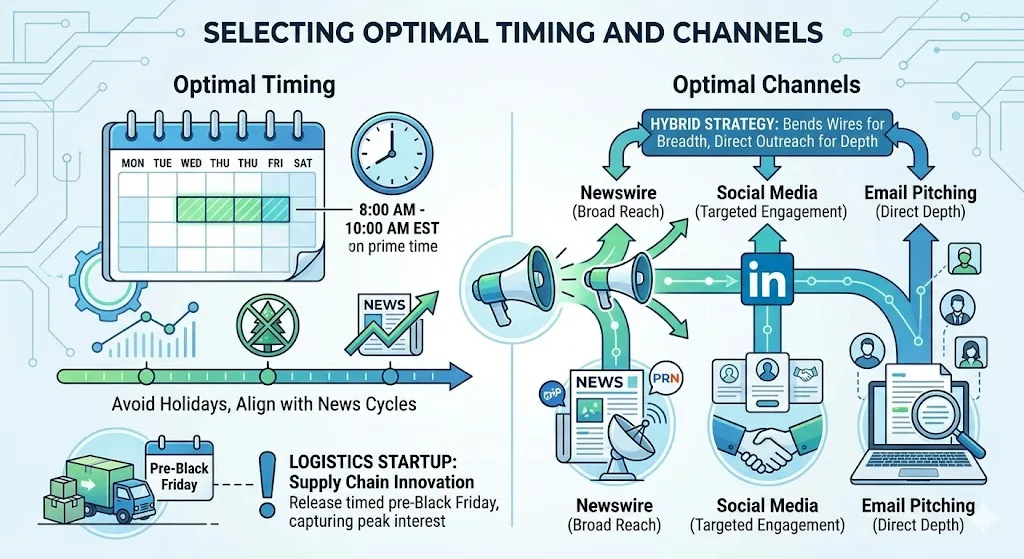
Timing maximizes exposure. Analyze industry calendars—avoid holidays, align with news cycles (e.g., Tuesdays-Thursdays, 8-10 AM EST).
A logistics startup timed supply chain innovation release pre-Black Friday, capturing peak interest. Channels blend wires (PR Newswire), social (LinkedIn), and email pitches. Hybrid strategies shine: Wires for breadth, direct outreach for depth.
Channel Mix Strategies
- News Wires: 70% reach (e.g., Business Wire for B2B).
- Industry Portals: Niche amplification.
- Social/Email: 20% for immediacy.
A/B test timings. Data shows fintech peaks Wednesdays; adjust per vertical.
For startups streamlining this, PR Distribution Services offer channel optimization for superior media outcomes.
Budgeting and Resource Allocation
Smart budgeting scales impact. Factor wire fees ($300+), add-ons (targeting $200), and agency support. Allocate 10-20% of marketing budget to PR.
A bootstrapped startup capped at $1,000/campaign, prioritizing U.S./global wires. ROI hit 5x via tracked leads.
Scale with tiers: Free tools for tests, premium for launches.
Cost Optimization Tactics
Negotiate bundles for frequency. Track AVE vs. actual value (leads/sales).
Internal vs. outsourced: DIY saves 50% initially, but pros boost pickups 2x.
Execution, Distribution, and Monitoring
Launch day demands precision. Upload to platforms, hit send, monitor dashboards for pickups.
Post-distribution, engage: Thank journalists, share amplifications. A foodtech firm followed up 20% of pickups, extending coverage.
Use alerts for real-time tweaks, like boosting underperformers.
Monitoring Frameworks
Dashboards track:
- Impressions/reach.
- Engagement (shares, clicks).
- Sentiment analysis.
Weekly reviews inform next cycles. For foundational benefits, see how startups benefit from PR distribution services.
Measuring Success and Iterating
Post-campaign audits close the loop. Compare KPIs to goals, calculate ROI (e.g., $10K sales from $2K spend).
A SaaS startup iterated after low conversions, adding stronger CTAs—next round yielded 3x leads.
Annual planning incorporates learnings, refining for scale.
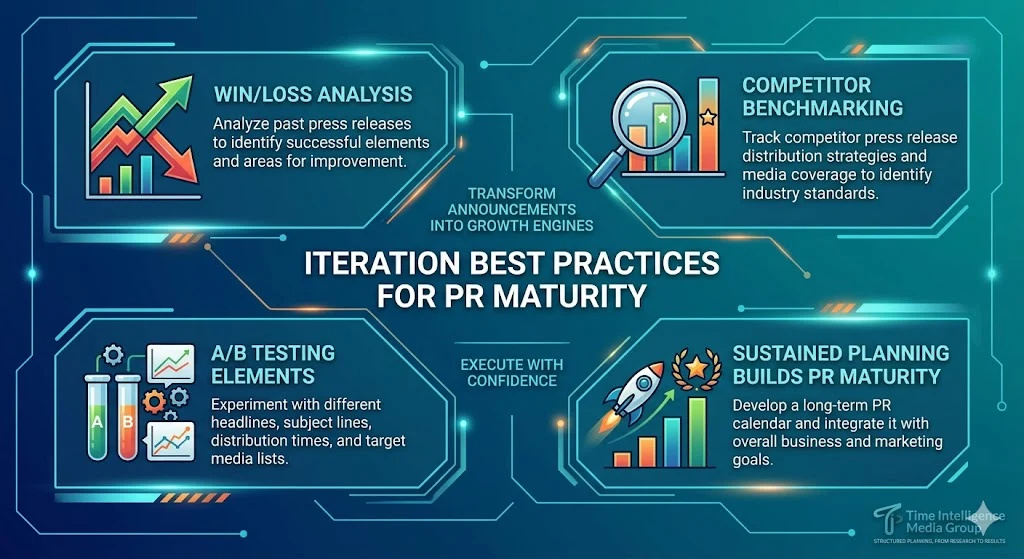
Iteration Best Practices
- Win/loss analysis.
- Competitor benchmarking.
- A/B testing elements.
Sustained planning builds PR maturity.
Mastering how startups plan press release distribution for media transforms announcements into growth engines. Time Intelligence Media Group delivers professional PR distribution services that support structured planning, from research to results, empowering founders to execute with confidence.