
After launching a press release, the real work begins: turning initial distribution into widespread media pickup. This MOFU guide dives into proven strategies brands use to boost coverage, from follow-ups to content amplification, ensuring your PR efforts yield tangible results.
Analyzing Initial Distribution Performance
Post-PR distribution analysis sets the stage for improved media pickup. Brands that scrutinize early metrics can identify wins and gaps swiftly.
Start by tracking key indicators like open rates, click-throughs, and initial pickups via dashboards from services like Cision. A 2025 retail campaign saw only 5% pickup initially; deeper analysis revealed mismatched journalist beats, prompting a pivot that tripled coverage.
Refine with sentiment scoring and geographic breakdowns. High-engagement regions signal hot spots for deeper outreach. This data-driven approach, iterated weekly, transforms flat campaigns into momentum-builders.
Strategic Follow-Up Tactics for Journalists
Targeted follow-ups are pivotal in how brands improve media pickup after PR distribution. Timing and personalization make the difference.
Send concise, value-added emails 48-72 hours post-distribution, recapping key stats or offering exclusives. For instance, a SaaS firm’s follow-up with customized data visuals to 150 reporters yielded 22 additional stories in Inc. and VentureBeat.
Use automation tools sparingly—human touches like referencing a journalist’s recent article build rapport. A/B test subject lines; “Exclusive Update on [Trend]” outperforms generics by 40%, per PR benchmarks.
Amplifying Through Social Media and Influencers
Social amplification extends PR reach, directly boosting media pickup. Brands leverage networks to create buzz that journalists notice.
Share release snippets on LinkedIn, X, and industry forums with engaging visuals. A health tech brand’s threaded X post during a wellness trend garnered 50K impressions, prompting organic pickups in Healthline.
Partner with micro-influencers (5K-50K followers) in your niche for shares. Track via UTM links; this tactic lifted one campaign’s secondary coverage by 35%. For foundational tips on what makes a press release distribution campaign successful, explore these core strategies: What makes a press release distribution campaign successful.
Optimizing Content for Secondary Pickup
Refining release content post-distribution enhances its appeal for broader media pickup. Iterative tweaks address journalist feedback.
Update with fresh quotes or data, then redistribute to secondary lists. A fintech example added CEO insights on market shifts, securing Forbes features after initial wires.
Incorporate SEO elements like schema markup for rich snippets, aiding discoverability. Tools like Ahrefs spot low-hanging keywords. This positions your story for evergreen traction.
Leveraging Paid Promotion and Boosts
Paid tactics accelerate how brands improve media pickup after PR distribution. Strategic boosts fill visibility gaps. Run LinkedIn Sponsored Content or Google Ads targeting journalists and outlets. A B2B services campaign spent $5K on boosts, gaining 18 trade pub pickups.
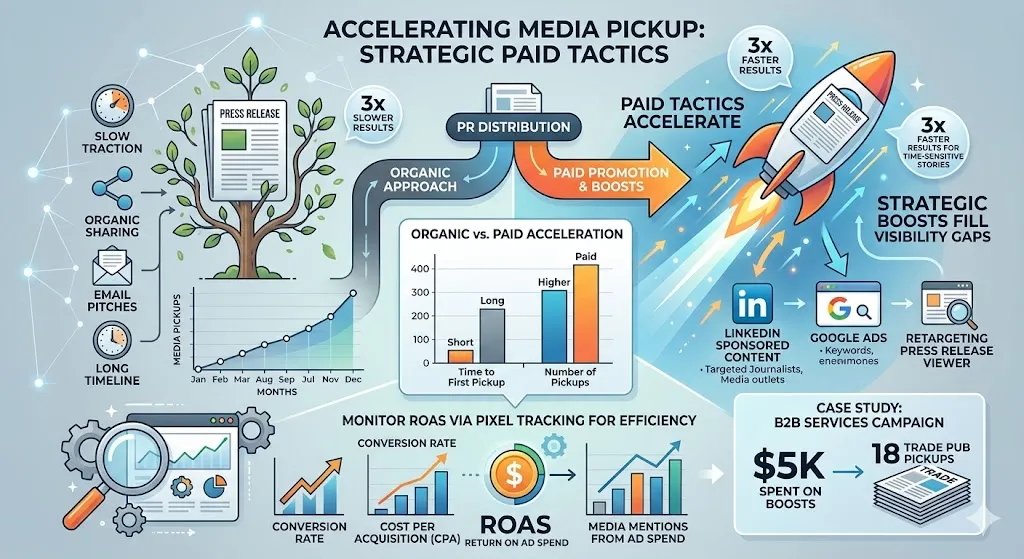
Compare organic vs. paid: Paid often yields 3x faster results for time-sensitive stories. Monitor ROAS via pixel tracking for efficiency.
Building Journalist Relationships Long-Term
Sustained relationships turn one-off pickups into recurring media wins. Consistent nurturing pays dividends.
Maintain a CRM with interaction histories, sending quarterly exclusives. Time Intelligence Media Group’s PR Distribution Services emphasize this, helping clients foster ongoing dialogues.
Host webinars or provide data reports. A media agency’s program converted 60% of contacts into repeat sources.
Utilizing Analytics and AI Tools for Insights
Advanced analytics pinpoint optimization opportunities post-PR distribution. AI elevates this to predictive levels.
Platforms like Meltwater offer AI-powered trend spotting. One brand used it to chase rising “sustainability” queries, boosting pickups 28%.
Key steps:
- Aggregate data from wires, social, and clippings.
- Apply AI for sentiment and competitor analysis.
- Forecast high-potential outlets.
Creating Follow-Up Content Assets
Supplementary assets like blogs or videos drive incremental media pickup. They provide fresh angles for coverage.
Develop case studies or infographics expanding the original release. A cleantech firm’s video series post-distribution landed CNN features.
Distribute via HARO or niche newsletters. This “content ladder” approach sustains narrative momentum over months.
Monitoring Competitors and Industry Trends
Competitive intelligence refines post-distribution strategies. Spotting peers’ wins informs your improvements.
Use tools like BuzzSumo to track similar releases. Adjust tactics accordingly—a competitor’s viral angle inspired one brand’s remix, doubling their pickups.
Stay ahead of trends via Google Alerts. In 2025’s AI boom, proactive alignment yielded outsized gains.
Measuring ROI and Iterating Campaigns
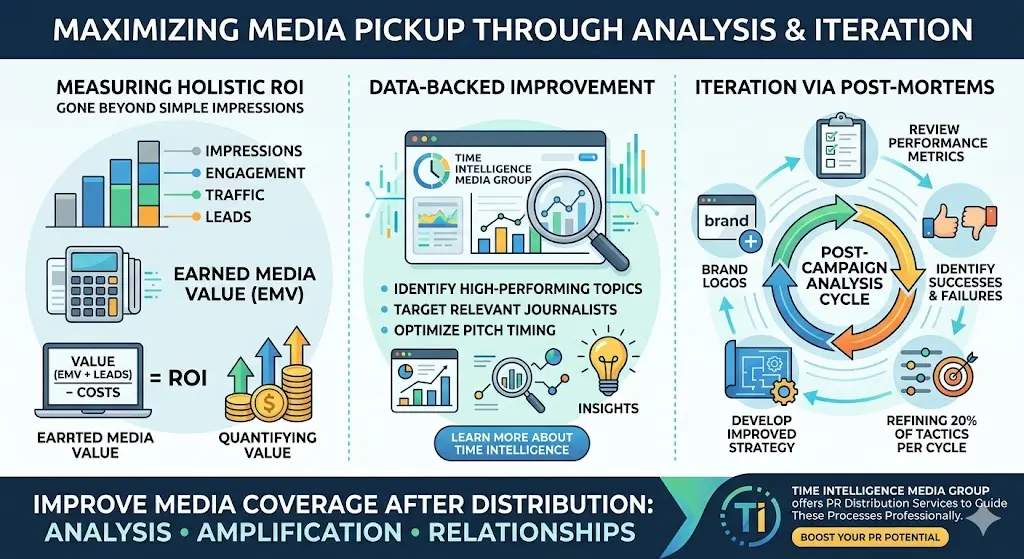
Holistic ROI measurement closes the loop on media pickup improvements. It quantifies value beyond impressions.
Calculate earned media value (EMV) against costs, factoring traffic and leads. Discover how Time Intelligence Media Group improves media coverage with data-backed methods: How Time Intelligence Media Group improves media coverage. Iterate via post-mortems: Successful brands refine 20% of tactics per cycle.
Brands improve media pickup after PR distribution through analysis, amplification, and relationships. Time Intelligence Media Group offers PR Distribution Services to guide these processes professionally, maximizing yourPR potential.