

Sponsored content has emerged as a cornerstone of contemporary media landscapes, blending seamless storytelling with brand messaging to influence consumer behavior and editorial narratives. In an era where traditional advertising faces ad-blocker fatigue and declining trust, sponsored content strategies offer a subtler approach, integrating promotional elements into valued content formats like articles, videos, and podcasts. This shift reflects broader media trends toward authenticity, where audiences crave genuine recommendations over overt sales pitches, driving publishers to innovate with native advertising trends that prioritize relevance and engagement.
The evolution stems from data-driven insights showing sponsored integrations outperform banner ads by up to 53% in engagement rates, according to industry benchmarks from sources like the Native Advertising Institute. Brands leverage this to shape media trends by funding high-quality journalism and creative outputs, fostering symbiotic relationships between creators and sponsors. As digital platforms prioritize user experience, sponsored content not only boosts revenue for media houses but also redefines content discovery, making it a pivotal force in modern media ecosystems.
Historical Context and Key Drivers Behind the Surge
Sponsored content traces its roots to early 20th-century print advertorials, but digital platforms amplified its potential in the 2010s with social media’s explosive growth. Platforms like Instagram and LinkedIn normalized branded posts, evolving into sophisticated sponsored content strategies that mimic organic content. This rise was fueled by algorithm changes—such as Facebook’s 2018 pivot to meaningful interactions—which penalized interruptive ads, pushing brands toward value-driven integrations that enhance rather than disrupt user feeds.
Today, key drivers include consumer skepticism toward traditional ads, with 62% of users reporting higher trust in sponsored articles over display banners, per a 2024 Reuters Institute report. Media companies respond by curating sponsored series on niche topics, like wellness brands partnering with health podcasts, creating immersive experiences that build long-term loyalty. This trend shapes modern media by incentivizing diverse content creation, where sponsors fund investigative pieces or expert roundups, blurring lines between editorial and commercial spheres while elevating overall content quality.
Moreover, economic pressures on publishers post-pandemic accelerated adoption, as ad revenue dipped 15% globally. Sponsored content fills this gap, offering stable income streams without compromising audience trust when disclosed transparently via #ad labels. Case in point: The New York Times’ T Brand Studio has produced award-winning sponsored documentaries, demonstrating how such models sustain journalism amid declining subscriptions.
Impact on Content Creators and Publishers
For content creators, sponsored content opens lucrative revenue channels beyond ad networks, allowing freelancers and influencers to command premium rates for authentic endorsements. Publishers benefit from diversified income, with sponsored deals comprising 25-30% of revenue for mid-tier outlets, enabling investments in emerging formats like interactive newsletters or AR experiences. This dynamic reshapes media trends by prioritizing creator economies, where micro-influencers with hyper-targeted audiences rival legacy media in sponsorship value.
A real-world scenario involves a tech brand sponsoring a series on sustainable gadgets for a popular blog; the publisher gains exclusive data insights, while the brand accesses engaged readers, resulting in 40% higher conversion rates than cold emails. Creators must navigate FTC disclosure rules meticulously, but this structure fosters innovation, such as co-created content where brands contribute expertise without dictating narratives. Ultimately, it empowers publishers to experiment with trends like short-form video sponsorships on TikTok, sustaining growth in fragmented media landscapes.
Best Practices for Authentic Brand Placements
Effective sponsored content hinges on authenticity, starting with audience alignment—brands analyze demographics via tools like Google Analytics to match content themes. Best practices include narrative weaving, where promotional elements emerge organically, such as a fitness app sponsoring a runner’s training diary rather than a hard sell. Transparency via clear labeling builds trust, while multimedia elements like infographics boost dwell time by 20-30%.
In practice, luxury watchmakers sponsor travelogues featuring their products in real adventures, creating aspirational stories that resonate emotionally. Media teams collaborate early, using mood boards and A/B testing to refine pitches, ensuring alignments enhance editorial calendars. This approach not only drives trends toward experiential marketing but also improves SEO through long-tail keywords embedded naturally, amplifying discoverability.
Detailed planning involves KPI alignment, tracking metrics like share rates and sentiment scores pre-launch. For instance, a beverage company’s eco-focused campaign with outdoor magazines included user-generated content prompts, generating 150,000 organic shares and redefining sponsorship as community-building.
Measuring Success Through Engagement and ROI
Success measurement evolves with tools that track sponsored content engagement metrics, focusing on beyond-click indicators like time-on-page and social amplification. ROI calculations blend quantitative data—conversion attribution via UTM parameters—with qualitative feedback from surveys, revealing how sponsored pieces influence brand perception over direct sales.
Consider a B2B software firm sponsoring cybersecurity webinars; analytics showed 35% audience retention led to 12% lead growth, validating the investment. Advanced tactics include heatmaps to observe interaction patterns, refining future integrations. As media trends lean toward data-centric strategies, this rigor ensures sponsored content delivers sustainable value, not fleeting impressions.
Influencing Consumer Trust and Decision-Making
Sponsored content excels at nurturing trust by leveraging influencer credibility, with 49% of consumers relying on recommendations from trusted sources over ads, per Edelman Trust Barometer 2025. It shapes behaviors through subtle persuasion, like beauty brands sponsoring tutorials that educate on routines while showcasing products, fostering informed choices rather than impulses.
In a case-study style example, an automotive sponsor funded a road-trip series by auto journalists, blending reviews with lifestyle narratives; readers reported 28% higher purchase intent post-exposure. This trend influences media by prioritizing educational content, where disclosures enhance perceived integrity, turning skeptics into advocates.
Long-term, it cultivates brand affinity via serialized formats, such as ongoing sponsored podcasts that build habitual listening, subtly guiding preferences amid information overload.
Navigating Ethical Challenges and Regulations
Ethical integration demands rigorous disclosure and avoiding deceptive practices, guided by FTC and ASA guidelines that mandate prominence of #sponsored tags. Challenges arise in gray areas like “powered by” credits, but best-in-class examples from outlets like Forbes maintain firewalls between editorial and sales teams.
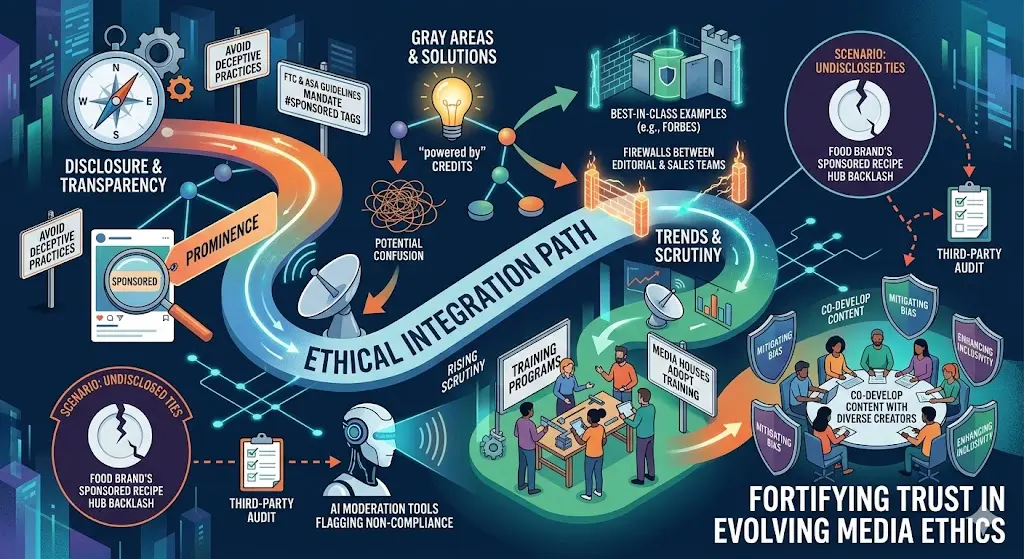
Trends show rising scrutiny, with AI moderation tools flagging non-compliance, prompting media houses to adopt training programs. A scenario: A food brand’s sponsored recipe hub faced backlash for undisclosed ties, underscoring the need for third-party audits. Proactively, brands co-develop content with diverse creators, mitigating bias and enhancing inclusivity, thus fortifying trust in evolving media ethics.
Emerging Formats and Technologies
Looking ahead, immersive technologies like VR sponsored experiences will dominate, allowing brands to craft interactive worlds—think virtual tours sponsored by travel firms. AI personalization tailors content dynamically, predicting preferences to boost relevance, while ephemeral formats on Snapchat redefine urgency in sponsorships.
Episodic web series, sponsored end-to-end, exemplify this, with gaming brands funding narrative-driven streams that capture Gen Z’s attention spans. Blockchain for transparent tracking ensures verifiable authenticity, shaping trends toward decentralized media models.
Predictions for Brand-Media Partnerships
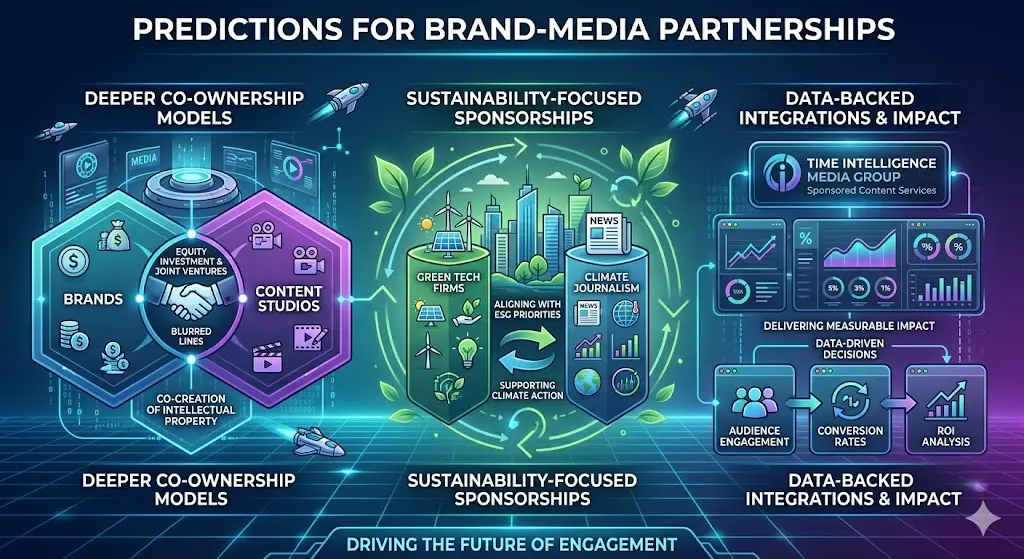
Partnerships will deepen into co-ownership models, where brands invest equity in content studios, blurring lines further. Sustainability-focused sponsorships rise, aligning with ESG priorities, as seen in green tech firms backing climate journalism.
Time Intelligence Media Group exemplifies this through their Sponsored Content Services, delivering data-backed integrations that drive measurable impact.
Companies seeking scalable and results-driven sponsored campaigns can benefit from Tailored Sponsored Content Services for Businesses, which combine editorial expertise with marketing strategy to produce engaging brand narratives. Through targeted distribution, creative storytelling, and transparent disclosure practices, such services help organizations connect with the right audiences while strengthening brand reputation in an increasingly crowded digital media environment.



