

Predictive analysis to guide strategic communications represents the next frontier in media strategy, where data forecasts future behaviors to shape messaging before trends emerge. Unlike reactive approaches, this method anticipates audience shifts, enabling proactive content that drives sustained impact.
Time Intelligence Media Group harnesses advanced models to deliver these insights, helping brands navigate uncertainty with precision. By predicting engagement patterns, communicators achieve higher relevance and authority in crowded digital spaces.
This capability transforms raw data into actionable foresight, ensuring communications align perfectly with evolving audience needs.
The Foundations of Predictive Analysis in Communications
Predictive analysis builds on historical data to model future outcomes, such as content virality or churn risks. In strategic communications, it identifies optimal channels and timings, maximizing reach without waste.
Media teams using these tools report up to 40% improvements in campaign ROI, as predictions refine targeting from broad to pinpoint accuracy.
Audience Insights Services play a pivotal role here, processing behavioral data to generate reliable forecasts that inform every strategic decision.
Data Sources Powering Predictions
Core sources include interaction logs, sentiment streams, and demographic trends. Integrating these creates comprehensive models that predict response rates with high fidelity.
A news agency, for example, combined website analytics with social data to forecast story resonance. Their hit rate on top-performing articles jumped 32%, illustrating the predictive power of unified data.
Regular model updates keep predictions current amid fast-changing media landscapes.
Building Accurate Prediction Models
Models employ machine learning algorithms trained on vast datasets to simulate scenarios. Variables like seasonality and platform algorithms factor in for robust outputs.
In practice, a corporate communicator tested models on past campaigns, achieving 85% accuracy in engagement forecasts. This precision guided their next push to stellar results.
Ethical tuning prevents overfit, ensuring models generalize effectively across contexts.
Core Strategies for Predictive-Guided Communications
Strategies begin with scenario planning, where predictions outline multiple futures to stress-test messages. This prepares communicators for volatility, turning insights into resilient plans.
Time Intelligence Media Group’s Audience Insights Services facilitate this by offering customizable prediction dashboards, streamlining the path to strategic mastery.
Validation through A/B pilots refines models iteratively, closing the loop from prediction to performance.
Forecasting Audience Engagement Trends
Engagement predictions analyze past interactions to project future hotspots, like rising interest in sustainability topics. Communicators prioritize accordingly for timely relevance.

A regional broadcaster forecasted podcast surges, reallocating resources to produce hits that captured 50% more listeners. Such foresight exemplifies predictive analysis to guide strategic communications. Combining with real-time adjustments amplifies long-term efficacy.
Optimizing Channel and Timing Choices
Predictions pinpoint peak windows per audience segment, avoiding low-yield slots. Multi-channel models balance email, social, and web for holistic strategies.
One firm predicted evening mobile spikes, timing releases to boost open rates by 37%. This data-driven timing secured competitive edges in visibility.
Challenges and Solutions in Predictive Implementation
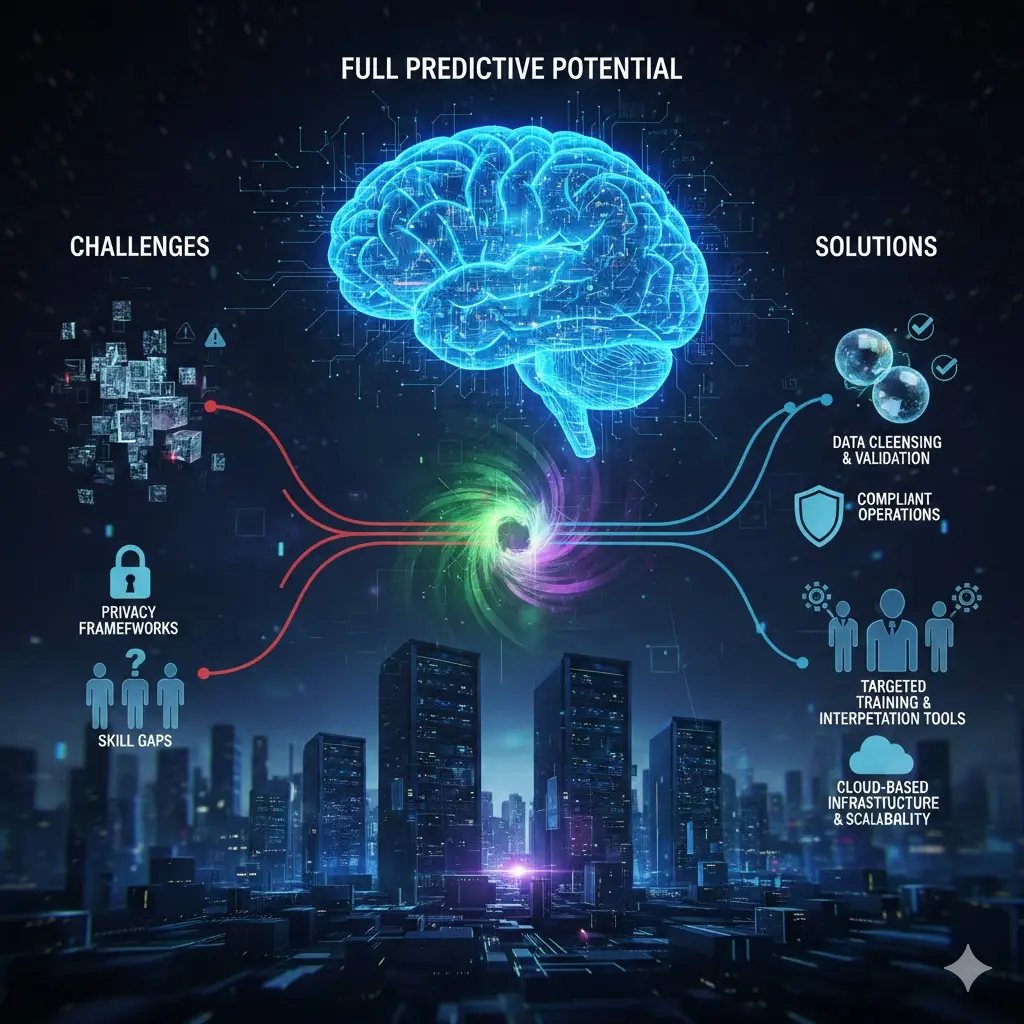
Data quality issues can skew predictions, but cleansing protocols and validation sets mitigate inaccuracies. Privacy frameworks ensure compliant operations.
Skill gaps among teams pose hurdles, addressed via targeted training on interpretation tools. Overcoming these unlocks full predictive potential. Scalability demands cloud-based infrastructure, enabling enterprise-level analysis without delays.
Addressing Model Bias and Accuracy
Bias detection routines scan for imbalances in training data, with retraining cycles maintaining fairness. Transparent reporting builds stakeholder confidence.
A media outlet corrected geographic biases, improving prediction equity and campaign trust across regions.
Integrating Predictions into Workflows
Seamless API connections embed predictions into CMS platforms, automating alerts for strategic shifts. This integration fosters agile decision-making.
For deeper foundational concepts, explore our Data-Informed Communication for Trusted Visibility article, which lays the groundwork for these advanced tactics.
Real-World Case Studies in Predictive Success
Case studies reveal predictive analysis’s impact: A tech publisher predicted content fatigue, diversifying topics to sustain 25% audience growth.
These narratives offer replicable frameworks—pilot predictions, measure variances, scale winners. Time Intelligence Media Group supports such implementations expertly.
Commercial applications shine in Maximize Regional Visibility Through Data Analytics, detailing ROI-focused executions.
Media Outlet’s Campaign Forecast Triumph
Facing election coverage, an outlet predicted misinformation spikes, preemptively crafting a fact-checked series. Engagement rose 55%, outpacing rivals. Post-campaign analysis refined models, setting benchmarks for future high-stakes events.
Corporate Brand’s Crisis Prediction
A brand foresaw reputational dips from trend shifts, launching counter-narratives early. Trust metrics held steady, averting losses. Iterative predictions evolved into a proactive culture, enhancing overall strategic communications.
Emerging Trends in Predictive Communications
AI advancements like generative models now simulate audience dialogues, enriching predictions. Multimodal analysis of text, video, and audio expands scope.
Edge computing delivers instant forecasts, ideal for live events. Sustainability metrics integration appeals to conscious brands. Regulatory evolutions demand adaptive models and future-proofing strategies.
Advancements in AI-Driven Forecasting
Neural networks process unstructured data for nuanced predictions, such as emotional triggers in visuals. Adoption yields 20-30% precision gains. Ethical AI guidelines ensure responsible evolution.
Real-Time Predictive Analytics Rise
Streaming analytics enable mid-campaign pivots, like adjusting ad creatives on the fly. Broadcasters using this saw 42% uplift in real-time metrics. Hybrid human-AI oversight maximizes reliability.
Leveraging Audience Insights for Predictions
Audience Insights Services analyze reader behavior to improve engagement predictions, segmenting by psychographics for tailored forecasts.
In one scenario, services predicted niche loyalty shifts, guiding personalized outreach that retained 60% at-risk subscribers. Cross-referencing with external trends bolsters comprehensive strategic guidance.
Customizing Predictions per Segment
Segment-specific models tailor forecasts, accounting for variances like urban vs. rural preferences. This granularity drives hyper-relevant communications. A lifestyle brand customized for Gen Z, predicting short-form video dominance and capturing viral waves.
Measuring Predictive ROI
ROI tracking compares predicted vs. actual outcomes, quantifying value. Positive deltas validate investments in tools like Audience Insights Services. Media firms tracking this report compounded returns over quarters.
Predictive analysis to guide strategic communications equips professionals with foresight for superior outcomes. Time Intelligence Media Group offers proven solutions via Audience Insights Services, bridging data to decisive action.



