

In today’s competitive media landscape, businesses and organizations seek ways to stand out in specific regions. Data analytics offers a powerful solution to maximize regional visibility through data analytics, enabling precise targeting of local audiences. By leveraging audience insights services, media groups like Time Intelligence Media Group help clients cut through the noise with tailored strategies that boost engagement and trust.
This approach goes beyond broad national campaigns. Regional visibility focuses on hyper-local behaviors, preferences, and trends, turning raw data into actionable intelligence. Whether you’re a regional business promoting events or a media outlet amplifying stories, data analytics ensures your message resonates where it matters most.
Understanding Regional Visibility Challenges
Regional visibility often falters due to generic strategies that ignore local nuances. Many organizations broadcast the same content nationwide, missing opportunities in specific markets like Punjab or Sindh in Pakistan. Data analytics addresses this by mapping audience demographics, online behaviors, and engagement patterns unique to each region.
For instance, a Lahore-based retailer might struggle with low foot traffic despite heavy social media ads. Without analytics, they overlook that their audience prefers video content in Urdu during evenings. Audience insights services reveal these patterns, allowing for customized campaigns that drive real results.
Moreover, competition intensifies in regional markets where local influencers and news outlets dominate. Data helps identify gaps—such as underserved topics or peak engagement times—empowering brands to claim visibility. Time Intelligence Media Group’s Audience Insights Services exemplify this, analyzing reader behavior to improve engagement and foster long-term loyalty.
Key Barriers to Regional Success
One major barrier is fragmented data sources. Social platforms, local search trends, and website metrics often sit in silos, making it hard to form a complete picture. Analytics tools integrate these, providing a unified view that highlights regional hotspots.
Another challenge involves cultural sensitivities. What works in urban Karachi may flop in rural Khyber Pakhtunkhwa. Through predictive analysis, teams can forecast responses and refine messaging accordingly.
How Data Analytics Drives Regional Targeting
Data analytics transforms vague outreach into laser-focused regional strategies. By processing vast datasets on user interactions, location signals, and content performance, it uncovers what truly captures local attention. This maximizes regional visibility through data analytics, prioritizing high-impact channels and formats.
Consider a regional news outlet aiming to grow subscribers in Rawalpindi. Analytics might show that 65% of their audience engages with mobile articles on weekends, favoring topics like local governance. Adjusting content calendars based on this data could double open rates, illustrating the power of informed decisions.
Time Intelligence Media Group integrates these insights into broader workflows. Their Audience Insights Services deliver granular reports that pinpoint opportunities, ensuring every campaign aligns with regional realities.
Core Analytics Techniques for Regions
Geo-fencing tracks user movements within specific areas, triggering personalized content. For media campaigns, this means promoting events to users within a 10-km radius.
Sentiment analysis scans social mentions to gauge regional opinions. A brand facing backlash in one province can pivot quickly, maintaining positive visibility.
Behavioral segmentation groups users by habits, like peak login times or preferred devices, enabling timed, device-optimized pushes.
Real-World Case Studies in Regional Media
Practical examples demonstrate how data analytics maximizes regional visibility through data analytics. A Pakistani telecom firm used audience insights to target rural Punjab, analyzing call patterns and app usage. They shifted from blanket SMS blasts to localized video ads, increasing sign-ups by 40% in three months.
In another scenario, a regional festival organizer in Islamabad applied predictive models to forecast attendance. By cross-referencing weather data, social buzz, and past event metrics, they optimized promotion channels, drawing 25% more visitors than the previous year.
These cases highlight structured benefits:
- Increased Engagement: Tailored content lifts click-through rates by 30-50%.
- Cost Efficiency: Focus on high-ROI regions cuts ad waste.
- Measurable ROI: Track metrics like conversions tied to specific locales.
For deeper foundational strategies, explore data-informed communication for trusted visibility.
Lessons from Successful Implementations
Success stems from iterative testing. Start with baseline data, launch pilots, then refine based on performance feedback loops.
Integrating AI enhances accuracy, predicting trends before they peak.
Scalability matters—small regional wins build toward national dominance.
Integrating Predictive Analysis for Sustained Growth
Predictive analysis elevates regional efforts by forecasting future behaviors. Building on current data, it models “what-if” scenarios, helping media strategists anticipate shifts in audience interests. This ensures long-term visibility in dynamic regional markets.
A media agency serving South Asia used predictive tools to guide content for monsoon season campaigns. By analyzing historical engagement dips, they preemptively boosted audio podcasts, maintaining steady reach amid weather disruptions.
Time Intelligence Media Group excels here, combining Audience Insights Services with forward-looking models. For teams ready to scale, dive into predictive analysis to guide strategic communications.
Steps to Implement Predictive Regional Strategies
- Collect historical data from regional sources like local Google Trends and social APIs.
- Build models using machine learning to simulate audience responses.
- Test predictions with A/B campaigns, adjusting variables like timing or tone.
- Monitor and retrain models quarterly for accuracy.
This process minimizes risks while amplifying opportunities.
Measuring and Optimizing Regional Performance
Success requires robust metrics to track regional visibility gains. Key indicators include localized traffic sources, bounce rates by geography, and conversion funnels segmented by region. Data analytics dashboards visualize these, spotlighting wins and weaknesses.

For example, a hospitality chain tracked hotel bookings via regional IP analytics. They discovered Islamabad users converted best from email nurtures, prompting a reallocation of budget that lifted revenues by 28%.
Optimization loops back into Audience Insights Services, where ongoing monitoring refines tactics. Brands achieve compounding growth by acting on fresh data insights.
Essential Metrics for Regional Campaigns
- Engagement Rate: Time spent and shares per region.
- Acquisition Cost: Spend versus new regional followers.
- Retention Score: Repeat interactions over 30 days.
Regular audits ensure strategies evolve with audience shifts.
Future Trends in Regional Data Analytics
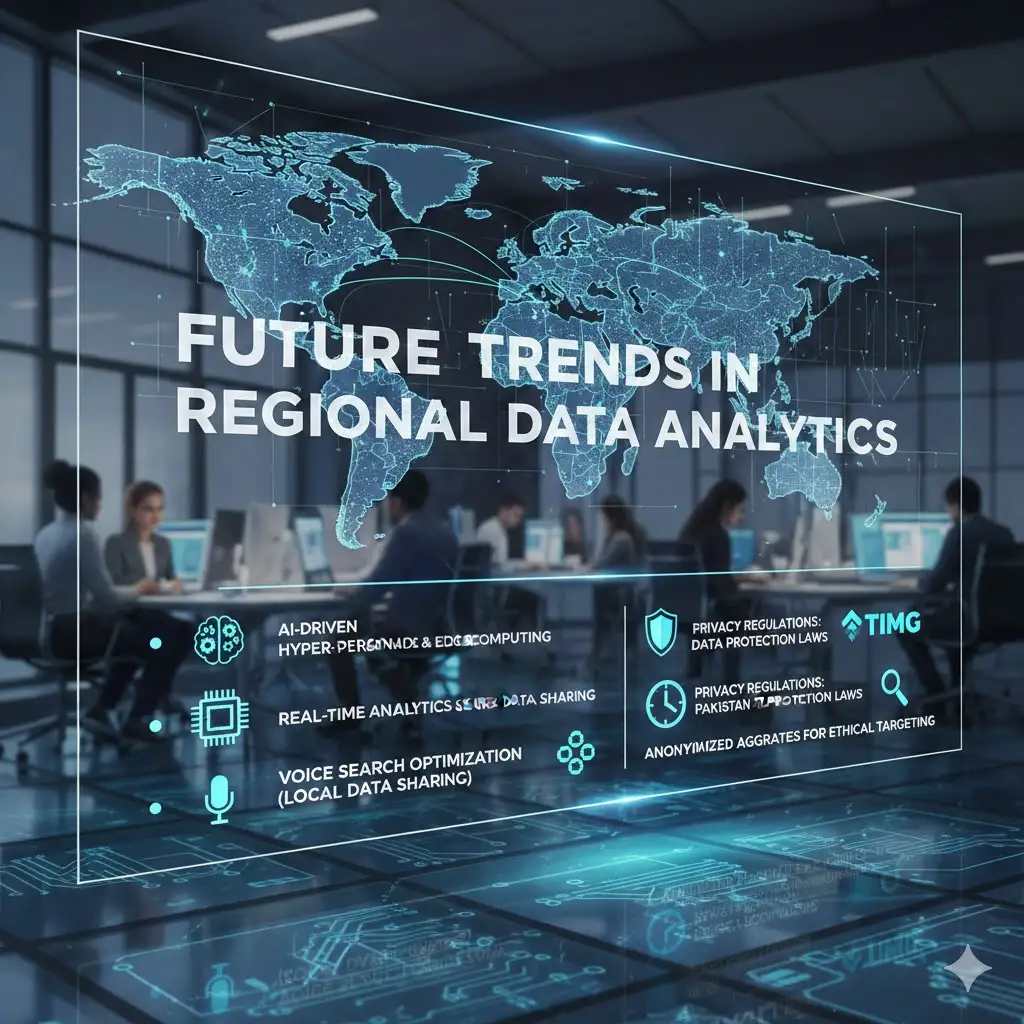
Emerging tech like AI-driven hyper-personalization will redefine regional visibility. Real-time analytics, powered by edge computing, enables instant adjustments during live events. Expect blockchain for secure data sharing across regional partners.
In media, voice search optimization for local dialects will surge, with analytics guiding content creation. Time Intelligence Media Group stays ahead, equipping clients with tools for these shifts.
Privacy regulations like Pakistan’s data protection laws demand compliant analytics, focusing on anonymized aggregates for ethical targeting.
Preparing for Tomorrow’s Landscape
Invest in AI talent and tools now.
Foster cross-regional data partnerships.
Prioritize mobile-first analytics, given regional smartphone penetration.



