Evaluating campaign performance through insights transforms raw data into actionable intelligence, enabling media brands to refine strategies and boost ROI. In a crowded digital landscape, superficial metrics like views fall short—deep insights reveal true engagement and long-term impact.
Time Intelligence Media Group leverages advanced analytics to dissect campaigns, uncovering patterns that drive success. This MOFU guide builds on foundational concepts, offering practical frameworks for measurement and optimization.
Engagement Depth Over Vanity Metrics
When evaluating campaign performance through insights, prioritize engagement depth: time spent, interaction rates, and conversion paths over likes or impressions. These reveal audience resonance, not just reach.
Shallow metrics mislead; a high-view campaign might yield zero actions if content misses the mark. Insights tools segment data by demographics and behavior, highlighting what converts passive viewers into advocates. For example, a 15% interaction rate signals strong performance, versus 2% indicating redesign needs.
Consider a lifestyle brand’s social push: Vanity metrics showed success, but insights exposed low dwell time, prompting content tweaks that lifted conversions 40%. This shift underscores structured evaluation’s value.
ROI and Attribution Modeling
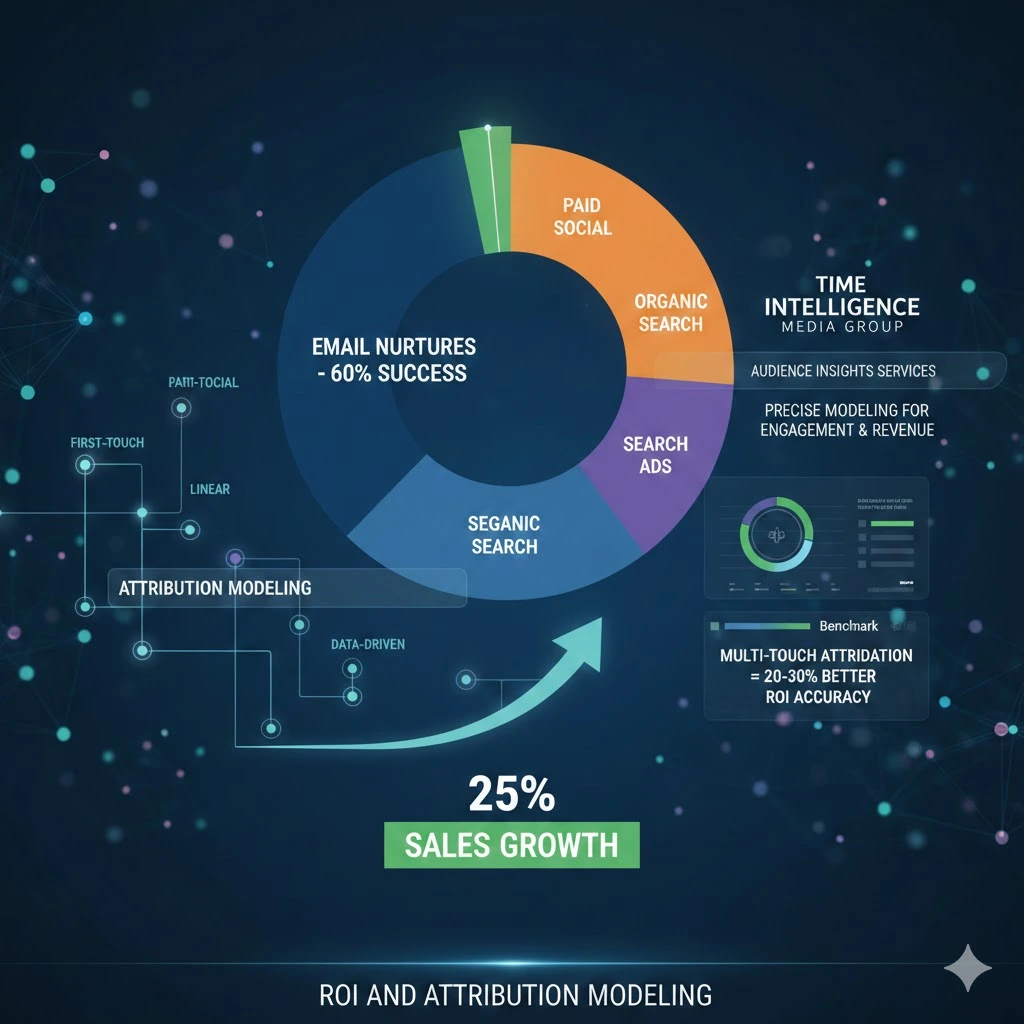
True evaluation hinges on ROI via attribution models—first-touch, linear, or data-driven—to credit channels accurately. Insights platforms trace customer journeys, quantifying each touchpoint’s contribution.
Multi-channel campaigns complicate this; without modeling, overcrediting paid ads skews budgets. Factual benchmarks: Campaigns with multi-touch attribution see 20-30% better ROI accuracy. Time Intelligence Media Group’s Audience Insights Services deliver precise modeling, analyzing reader behavior to improve engagement and revenue.
A case: An e-commerce drive attributed 60% success to email nurtures via insights, reallocating budget for 25% sales growth.
Analytics Platforms and Dashboards
Modern evaluation relies on platforms like Google Analytics 4 or custom dashboards integrating multi-source data. These aggregate metrics into visualizations for quick insights.
Dashboards enable real-time monitoring, flagging anomalies like traffic drops. Key features include cohort analysis for retention and funnel visualization for drop-offs. Structured setups ensure comparability across campaigns.
For instance, a media firm’s dashboard revealed peak engagement mid-week, optimizing post timing and increasing reach 35%.
Here’s how to build an effective one:
- Integrate sources (social, web, CRM) for holistic views.
- Set custom KPIs aligned with goals (e.g., lead quality scores).
- Automate alerts for performance thresholds.
AI-Powered Predictive Analytics
AI elevates evaluation by forecasting outcomes from historical data. Machine learning models predict campaign lift, identifying winning tactics proactively.
Unlike static reports, AI detects subtle patterns like sentiment shifts. In media, it benchmarks against industry norms, e.g., average CTR of 1.5% for display ads. How Stories Gain Momentum Across Communities explores initial spread, while AI insights quantify sustained performance.
Example: A publisher used AI to predict video series ROI, scaling high-potentials and cutting flops, netting 18% efficiency gains.
Pre-Campaign Baseline Establishment
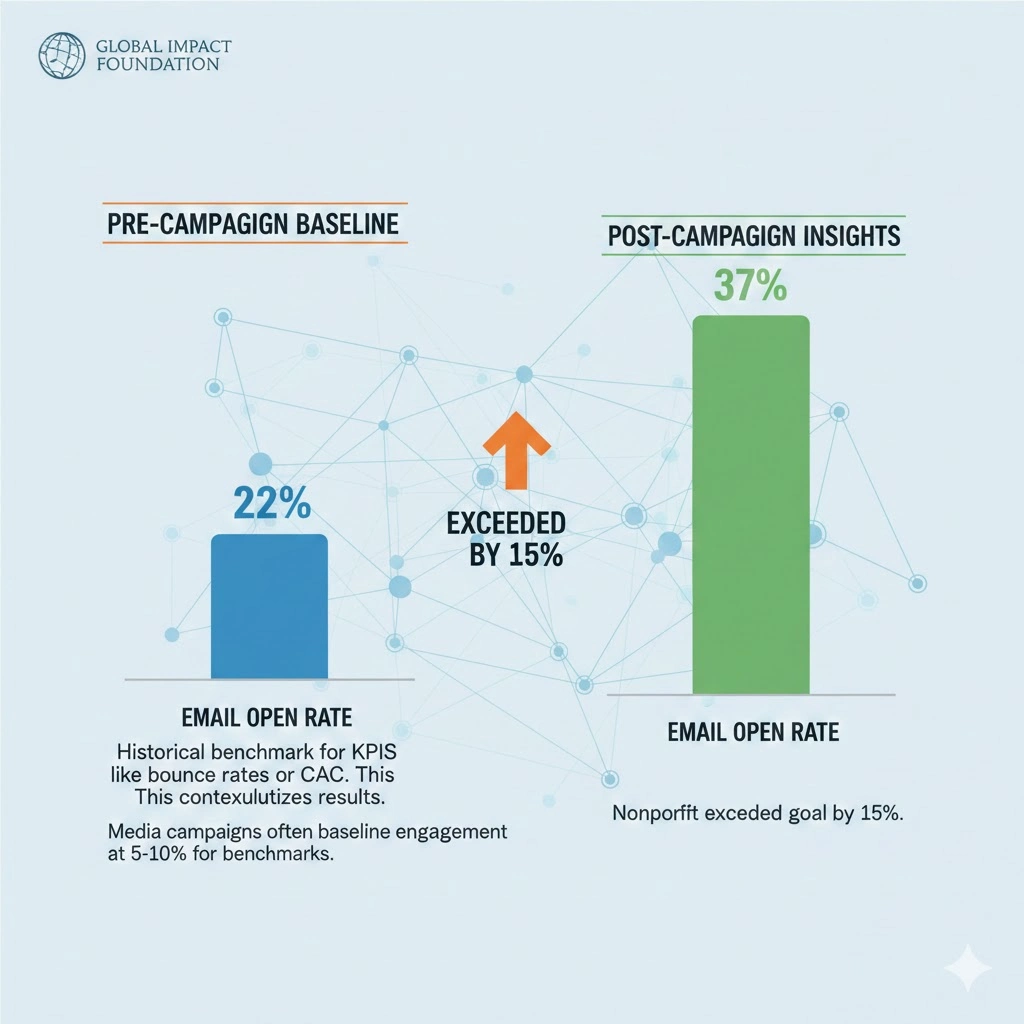
Start evaluating campaign performance through insights with baselines: Historical benchmarks for KPIs like bounce rates or CAC. This contextualizes results.
Without baselines, gains appear inflated. Set them via A/B tests or industry data, adjusting for seasonality. Media campaigns often baseline engagement at 5-10% for benchmarks.
A nonprofit established email open rates at 22%, using post-campaign insights to exceed it by 15%.
Real-Time Monitoring and Mid-Course Adjustments
Monitor live with heatmaps and session recordings to spot issues early. Pivot based on signals like rising exits.
Real-time tweaks—e.g., ad copy refreshes—preserve momentum. Data shows 70% of top campaigns adjust mid-flight. Tools flag variances >10% from baselines.
Case study: A retailer’s Black Friday campaign adjusted creatives via insights, recovering from a 20% engagement dip to hit targets.
Post-Campaign Deep Dive and Learnings
Conduct audits post-wrap: Win/loss analysis and qualitative feedback loops. Quantify uplift and document replicable tactics.
This codifies knowledge for iteration. Structured debriefs boost future ROI by 15-25%. Compare against goals in these areas:
- Acquisition efficiency (cost per lead).
- Retention signals (repeat visits).
- Revenue attribution.
Ignoring Audience Segmentation
Holistic views mask segment-specific failures. Evaluating campaign performance through insights demands breakdowns by persona, device, or location.
Overlooking this leads to misguided optimizations. Insights reveal, say, mobile users converting 2x desktop, guiding reallocations. A travel brand segmented data to double bookings from millennials.
Over-Reliance on Short-Term Metrics
Focusing on immediate wins neglects lifetime value. Balance with LTV calculations for sustainability.
Long-tail effects like brand lift emerge weeks later. Tools track these via surveys and repeat traffic.
Example: A SaaS campaign’s short-term leads converted poorly; insights shifted focus to nurturing, improving LTV 50%.
Sentiment Analysis and Qualitative Layers
Layer quantitative data with sentiment tools scanning comments for nuance. Positive/negative ratios predict virality. In media, this flags controversies early. AI accuracy hits 85% for tone detection. A news outlet used it to refine opinion pieces, enhancing loyalty.
Competitive Benchmarking
Compare against rivals using tools like SimilarWeb. Identify gaps in share of voice or engagement. This contextualizes performance. Brands benchmarking gain 10-20% edges.
Integrating Insights into Future Campaigns
Seamless integration loops learnings back in. Partner with Experts to Drive Audience Engagement for scaling these practices. Time Intelligence Media Group offers Audience Insights Services to streamline this, turning evaluations into growth engines. Evaluating campaign performance through insights equips media pros with precision tools for excellence. Time Intelligence Media Group delivers these professional solutions, fostering data-driven mastery.