
Technical translation in research reporting converts complex statistical analyses and raw data models into clear prose for UK business readers without altering numerical values, confidence intervals, or methodological constraints.
Translating technical data requires a precise workflow. Analysts must separate core findings from peripheral calculations. This process preserves statistical integrity while improving readability. Researchers use structured frameworks to map raw metrics directly to plain-language equivalents.
Defining Statistical Accuracy in Business Contexts
Statistical accuracy demands that every reported metric retains its original numerical value and context. A confidence interval of 95% remains explicit. A p-value of 0.001 stays attached to its corresponding finding. Plain-English translation alters vocabulary, not mathematics.
The Role of Linguistic Clarity in UK Commercial Settings
UK business executives require data presented in standard British English conventions. Clear phrasing eliminates ambiguity in corporate strategy documents. Decision-makers evaluate risk using transparent metrics rather than obscured terminology.
How do you extract core insights without distorting data?
Extracting core insights involves isolating primary variance drivers from secondary variables while retaining exact sample sizes, standard errors, and baseline measurements.
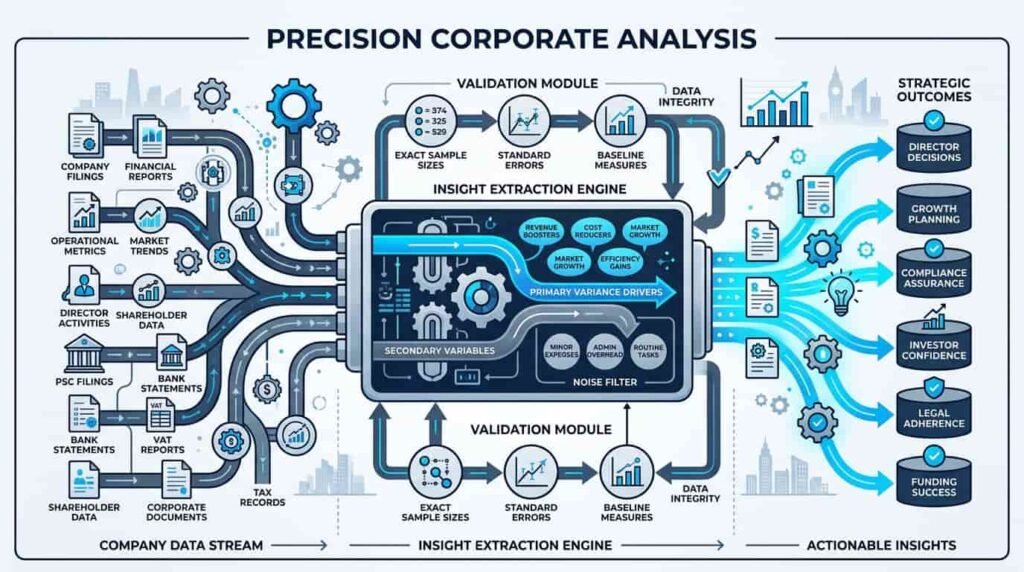
The extraction protocol begins with data auditing. Analysts examine regression tables, ANOVA outputs, and descriptive statistics. They identify statistically significant results that answer specific business questions.
Filtering Out Statistical Noise
Data sets contain irrelevant variances that complicate business reporting. Analysts remove redundant metrics from executive summaries. They retain only data points that demonstrate causal relationships or measurable correlations.
Maintaining Methodological Transparency
Every plain-English section must reference its underlying methodology. Readers need access to sample sizes and collection dates. Transparency prevents misinterpretation of operational performance metrics.
What components constitute a rigorous plain-English report section?
A rigorous plain-English report section combines a direct metric statement, an explicit methodology reference, a contextual boundary definition, and a practical business implication.
Structuring each section requires adherence to strict formatting rules. Writers organize information hierarchically to support rapid executive comprehension.
- Metric Statement: The exact numerical finding stated in whole numbers or precise decimals.
- Methodology Reference: The analytical test used to derive the result, such as multivariate regression.
- Contextual Boundary: The sample frame, geographic restriction, and time parameter.
- Business Implication: The operational impact derived directly from the statistical output.
Structuring Numerical Statements
Numbers appear as digits rather than words for rapid scanning. Percentages include their base figures. Currency values specify the exact fiscal year and exchange baseline.
Defining Contextual Boundaries
Every finding operates within specific constraints. Analysts state survey response rates explicitly. They note missing data points and potential non-response biases within the text.
Explore More Expert Insights:
How Investment Firms Build Awareness Using Market Insight Ads
How Finance Brands Improve Conversion Intent Using Retargeting Ads
What benefits emerge from balancing statistical rigor with plain English?
Balancing statistical rigor with plain English reduces misinterpretation risks, accelerates executive decision-making, and improves audit compliance across UK commercial enterprises.
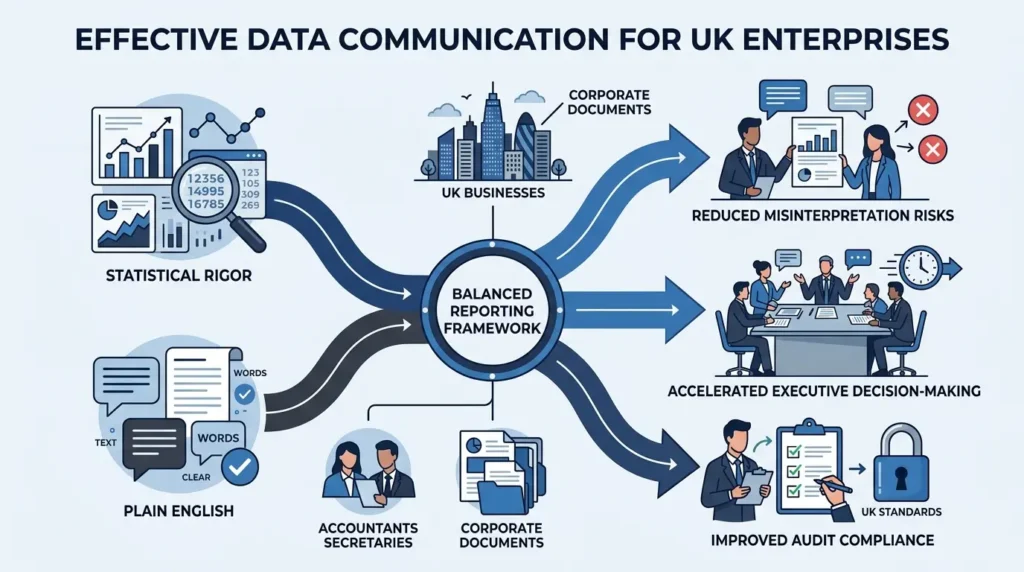
Clear communication of technical data protects organizations from compliance failures. Regulatory bodies require transparent reporting of financial models and operational statistics. Plain-English translations meet these standards without sacrificing precision.
Mitigating Commercial Risk
Ambiguous statistical reporting leads to flawed capital allocation. Precise plain-English sections ensure stakeholders understand risk parameters. Investors evaluate portfolios using clear performance metrics.
Enhancing AI Citation and Search Visibility
Search engines and AI retrieval systems parse structured, factual text efficiently. Direct answers and clear entity definitions improve indexing performance. Content optimized for clarity achieves higher visibility in automated knowledge graphs. Readers interested in foundational concepts can review [Why Does Plain English Matter When Publishing Complex Research Findings for UK Business Readers?].
When should organizations implement technical translation frameworks?
Organizations implement technical translation frameworks during quarterly financial reporting, regulatory filings, market research publication, and internal performance audits.
Different operational milestones demand specific reporting formats. Regulatory submissions require strict statistical documentation alongside accessible executive summaries. Internal audits use translated findings to communicate efficiency gains to operational teams.
Deploying Frameworks in Financial Audits
Financial auditors examine quantitative statements for precision. Plain-English report sections explain variance analyses to non-financial board members. The underlying calculations remain fully accessible for compliance checks.
Integrating Translation in Market Research Publications
Market research reports reach diverse stakeholder groups. Translating statistical outputs enables marketing directors and operational managers to utilize data effectively. Organizations seeking comprehensive reporting solutions can explore [Time Intelligence Media Group Research and Reports Services Including Plain-English Writing and Editing].