

Food and drink sponsored content is paid editorial-style material created for a brand and published through a media platform. It combines useful information, brand messaging, and audience relevance while clearly identifying its sponsored commercial status.
Food and drink sponsored content gives brands a structured way to communicate with relevant UK audiences through established publishing environments. The content can cover recipes, product stories, ingredient information, restaurant trends, sustainability, nutrition, food culture, and consumer interests.
Unlike a conventional display advert, sponsored content uses a longer editorial format. The article provides context before presenting the commercial message. The publication, audience, topic, format, and distribution channel all influence its reach.
For brands assessing content marketing options, understanding:
Food and drink sponsored content helps clarify how paid editorial placements fit within a wider UK media strategy.
How does sponsored content reach UK readers?
Sponsored content reaches UK readers through relevant publishers, audience targeting, search visibility, social distribution, newsletters, and media websites. Distribution connects the sponsored article with audiences already consuming food, drink, lifestyle, business, retail, and consumer information.
Publisher placement
Publisher selection determines the initial audience. Food and drink content can appear on lifestyle publications, consumer websites, business media, hospitality platforms, retail publications, and specialist food websites.
A food manufacturer, for example, can publish an article about sustainable packaging through a publication whose readers follow food production and consumer trends.
Audience relevance
Audience relevance connects the subject with reader interests. A sponsored article about premium coffee fits a different audience from an article about food manufacturing technology.
Relevant placement improves contextual alignment because readers encounter the content within a familiar subject area.
Distribution channels
Publishers distribute sponsored articles through several channels. Common routes include:
- Website publication
- Search engine discovery
- Email newsletters
- Social media posts
- Homepage placement
- Category pages
- Related-content recommendations
Each channel creates a different entry point for UK readers.
How do publishers select the right audience for food and drink content?
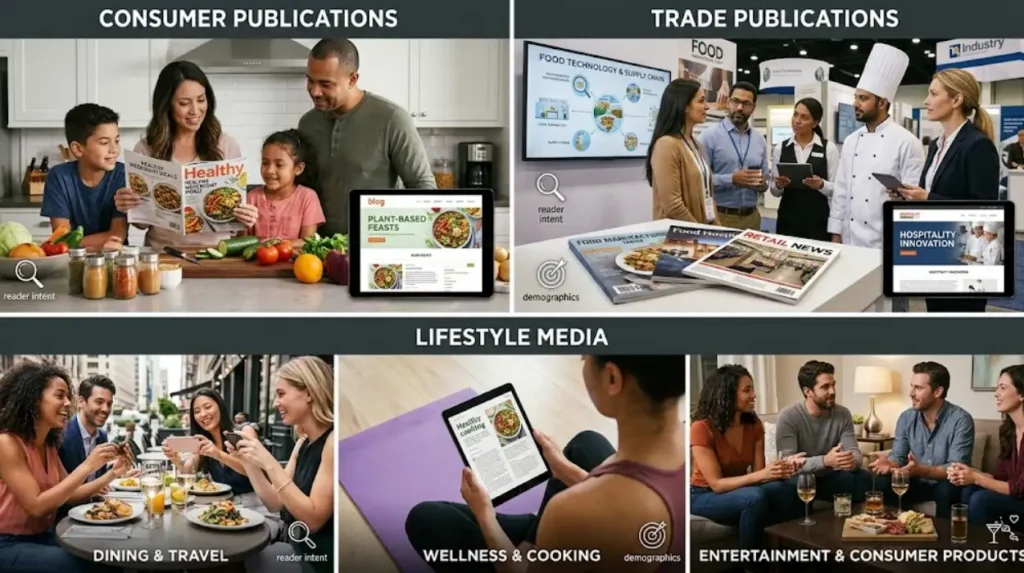
Publishers select audiences according to editorial subject, reader demographics, interests, search behaviour, publication category, and existing traffic patterns. Food and drink campaigns perform through relevance between the sponsored topic, publication audience, and reader intent.
Consumer publications
Consumer publications reach people researching products, recipes, dining experiences, ingredients, and household purchasing decisions.
A sponsored article about plant-based meals fits naturally within publications covering cooking, food trends, and everyday consumer interests.
Trade publications
Trade publications reach professional audiences across food manufacturing, hospitality, retail, catering, distribution, and supply chains.
For example, a food technology company can use specialist trade media to reach procurement professionals, manufacturers, and hospitality operators.
Lifestyle media
Lifestyle publications provide access to readers interested in dining, cooking, wellness, travel, entertainment, and consumer products.
The editorial context affects how readers discover and engage with sponsored content.
What role does search visibility play in sponsored food and drink content?
Search visibility allows sponsored articles to reach readers beyond the publication’s immediate audience. Relevant keywords, clear headings, useful information, descriptive metadata, and strong topical alignment help search engines understand and surface the content.
Search visibility starts with topic selection. The article needs a clear subject that matches identifiable reader searches.
For food and drink brands, relevant search themes include:
- Food trends in the UK
- Sustainable food packaging
- British food brands
- Healthy meal ideas
- Premium drinks
- Sustainable ingredients
- Restaurant industry trends
- Food manufacturing innovation
Search intent
Search intent describes the reason behind a user’s query. Informational intent focuses on learning. Commercial intent focuses on evaluating products or solutions.
A sponsored article titled around sustainable food packaging addresses an informational need. A product comparison addresses a stronger commercial research need.
On-page structure
Clear headings help readers and search systems understand the article. A structured sponsored article uses one central topic supported by relevant subtopics.
For example, an article about sustainable drinks packaging can cover materials, recycling, consumer expectations, production considerations, and industry developments.
How does sponsored content differ across UK media channels?
Sponsored content differs across UK media channels because each channel has distinct audiences, editorial formats, distribution methods, engagement patterns, and search characteristics. Media selection determines where readers encounter the content and how they continue discovering it.
News websites
News websites provide broad audiences and frequent content discovery. Food and drink brands use relevant editorial environments for stories connected with business, consumer behaviour, retail, hospitality, or industry developments.
Specialist publications
Specialist publications provide narrower audiences. Their readers have stronger subject relevance.
A beverage equipment supplier, for example, gains stronger contextual alignment from hospitality or food-service media than from an unrelated general-interest publication.
Digital magazines
Digital magazines often use longer editorial formats. They provide space for product explanations, interviews, trend articles, case studies, and expert-led content.
Newsletters
Newsletters deliver sponsored content directly to an existing subscriber base. The audience already has an established relationship with the publication.
This channel is useful for campaigns targeting defined reader communities.
What makes food and drink sponsored content relevant to UK consumers?
Relevant food and drink sponsored content addresses a specific consumer interest, uses appropriate UK terminology, provides useful information, and connects the brand message with a clearly defined topic. Relevance depends on audience needs, publication context, and content quality.
Local relevance
UK audiences respond to subjects connected with their market. British food regulations, UK consumer trends, local dining habits, seasonal occasions, and domestic retail activity create specific contextual signals.
For example, a campaign about Christmas food purchasing uses different seasonal context from a campaign about summer outdoor dining.
Cultural context
Food and drink content often depends on local habits. British terminology, spelling, product categories, dining occasions, and purchasing behaviour improve contextual accuracy.
Practical information
Useful information gives readers a reason to continue reading. Examples include ingredient explanations, preparation guidance, product information, sustainability data, industry statistics, and consumer research.
The commercial message remains connected to the subject rather than appearing as an isolated sales statement.
Which content formats work for food and drink sponsored campaigns?
Food and drink sponsored campaigns use formats such as expert articles, product explainers, trend reports, interviews, recipes, buying guides, case studies, and educational features. The appropriate format depends on audience intent and campaign objectives.
Expert articles
Expert articles position a brand around a defined topic. A nutrition-focused brand, for example, can publish educational content about ingredient selection or changing consumer preferences.
Product explainers
Product explainers describe features, applications, ingredients, production methods, or use cases.
This format works when readers need additional information before evaluating a product.
Trend reports
Trend reports focus on changes within food and drink markets. Topics include plant-based products, premium beverages, sustainable packaging, convenience foods, and restaurant technology.
Interviews
Interviews provide structured expert perspectives. A food manufacturer can use an interview format to explain production developments, sustainability initiatives, or market changes.
Case studies
Case studies demonstrate how a product or service operates in a defined situation. They provide evidence through a specific customer, project, process, or business result.
How does sponsored content support the food and drink customer journey?
Sponsored content supports the customer journey by introducing a brand during research, educating readers about relevant subjects, establishing product context, and directing interested audiences toward further information. Different content formats serve different stages of purchase consideration.
Awareness
At the awareness stage, readers encounter a brand while researching a broader topic.
An article about sustainable food production can introduce a packaging company without requiring an immediate purchase decision.
Consideration
At the consideration stage, readers compare options and evaluate product characteristics.
A detailed product explainer, comparison article, or case study provides more relevant information.
Decision
At the decision stage, readers require specific information about the supplier, product, pricing, availability, or next step.
This is where commercial landing pages and service information become more relevant than general educational content.
Brands evaluating publication-led campaigns can connect educational content with a dedicated:
Food and Drink Sponsored Content solution when readers demonstrate stronger commercial intent.
How can food and drink brands measure sponsored content performance?
Brands measure sponsored content through publication reach, page views, engagement, referral traffic, search visibility, branded searches, link activity, and conversions. Measurement connects media distribution with defined campaign objectives and business outcomes.
Reach metrics
Reach metrics show how many people encounter the content. Publishers provide metrics such as page views, unique visitors, newsletter distribution, or social impressions.
Engagement metrics
Engagement metrics show how audiences interact with the article. Common measures include time on page, scroll depth, clicks, and referral activity.
Search metrics
Search metrics identify whether content gains visibility for relevant queries. Rankings, impressions, and organic clicks provide evidence of search performance.
Conversion metrics
Conversion tracking connects content exposure with measurable actions. Examples include:
- Website visits
- Product enquiries
- Downloads
- Newsletter registrations
- Contact-form submissions
- Purchases
Measurement requirements need to match the campaign objective. A brand awareness campaign uses different success indicators from a lead-generation campaign.
When is sponsored content a useful option for food and drink brands?
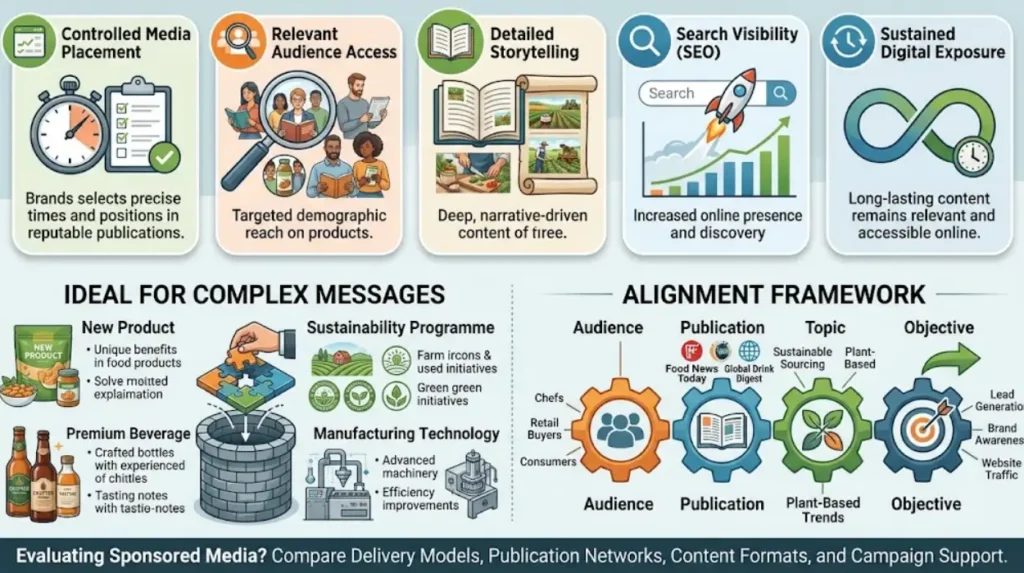
Sponsored content is useful when food and drink brands need controlled media placement, relevant audience access, detailed storytelling, search visibility, or sustained digital exposure. It provides a structured format for communicating information within an established publishing environment.
Sponsored content fits campaigns where the subject requires more explanation than a short advertisement provides.
A new food product, sustainability programme, hospitality solution, premium beverage, or manufacturing technology often requires supporting information. Sponsored editorial content creates space for that information.
The strongest campaigns maintain alignment between four elements:
- Audience — the people the campaign needs to reach.
- Publication — the media environment containing that audience.
- Topic — the subject connecting the brand with reader interest.
- Objective — the measurable outcome expected from distribution.
This framework also helps brands evaluate different sponsored media providers. For organisations comparing delivery models, publication networks, content formats, and campaign support, Food and Drink Sponsored Content provides a relevant commercial route for assessing available options.
What should brands consider before launching a UK sponsored content campaign?
Brands should define the audience, campaign objective, topic, publication type, content format, distribution channels, measurement framework, disclosure requirements, and budget before launching sponsored content. These factors establish campaign structure and determine how performance is evaluated.
Audience definition
Identify whether the campaign targets consumers, hospitality professionals, retailers, food manufacturers, procurement teams, or another defined group.
Publication selection
Select publications according to subject relevance, audience profile, geographic reach, authority, and distribution capabilities.
Content planning
Create a clear editorial topic before introducing the commercial message. The article needs useful information and accurate brand references.
Measurement
Set measurable indicators before publication. Page views, engagement, referral traffic, search visibility, and conversions provide different forms of campaign evidence.
Transparency
Sponsored content needs clear commercial disclosure. Readers need to understand that the content represents a paid partnership.
Explore More Expert Insights:
How Beauty Sponsored Articles Reach UK Consumers
How Sponsored Content Sustains Long-Term Brand Visibility
For UK food and drink brands, these elements create a structured approach to sponsored media. The process moves from audience identification to publication selection, content development, distribution, measurement, and optimisation.
Understanding how each stage works helps brands assess sponsored content as part of a broader UK digital media strategy.



