

Sponsored content packages provide brands with a structured way to publish branded editorial content across relevant media outlets. Time Intelligence Media Group packages combine content placement, media distribution, audience targeting, and performance reporting to support measurable UK marketing objectives.
For brands comparing sponsored content providers, package design matters. The right package defines the number of placements, publication types, content requirements, campaign objectives, reporting standards, and distribution scope before publication begins.
What Are Sponsored Content Packages?
Sponsored content packages are defined media placement solutions that combine content production or submission, publication opportunities, distribution, targeting, and reporting into one commercial service designed for brands seeking measurable media exposure across selected publications.
A sponsored content package differs from purchasing one isolated article placement. It establishes a campaign structure around specific media objectives.
Typical package components include:
- Sponsored article publication
- Publication across selected media websites
- Brand or product messaging
- Content formatting and editorial preparation
- Audience and industry targeting
- Publication scheduling
- Campaign reporting
- Coverage and placement records
For example, a UK fintech company launching a payment platform can use a package focused on business, finance, technology, and startup publications. A property company can select publications relevant to construction, commercial property, investment, and regional business audiences.
This structure gives marketing teams a defined scope before campaign execution.
What Do Time Intelligence Media Group Sponsored Content Packages Include?
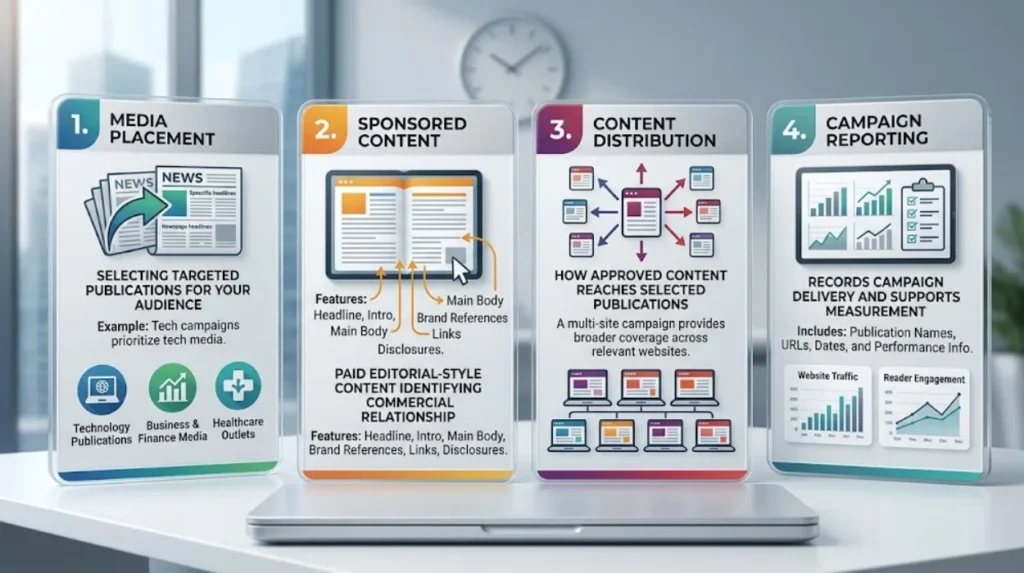
Time Intelligence Media Group sponsored content packages focus on planned media placement, brand visibility, targeted publication selection, content distribution, and campaign reporting, giving UK businesses a defined framework for purchasing sponsored content according to campaign objectives and media requirements.
Package specifications depend on the campaign selected. The commercial scope establishes what the brand receives and where the content appears.
Media Placement
Media placement identifies the publications selected for sponsored content distribution. Publication selection connects the campaign with a defined audience or industry.
A technology campaign can prioritise technology publications. A financial services campaign can focus on business and finance media. A healthcare campaign can target healthcare and professional audiences.
Sponsored Content
Sponsored content is paid editorial-style content that identifies the commercial relationship while presenting information about a brand, product, service, research report, event, or business development.
Content typically includes:
- A headline
- Introduction
- Main article body
- Brand references
- Relevant links
- Supporting information
- Disclosure where required by the publication
The content remains structured for the publication’s audience and format.
Distribution
Distribution determines how the approved content reaches selected publications. A multi-site campaign provides broader coverage than a single placement.
For example, a campaign distributed across 15 relevant websites creates 15 separate opportunities for readers to encounter the brand.
Reporting
Reporting records campaign delivery. Useful reporting includes publication names, URLs, publication dates, campaign details, and other available performance information.
This information supports internal marketing reporting and connects media activity with wider campaign measurement.
How Do You Choose the Right Sponsored Content Package?
Choose a sponsored content package by matching publication volume, audience relevance, campaign objectives, content requirements, distribution scope, reporting detail, and budget with the measurable outcome the business wants from its UK media campaign.
The first decision is the campaign objective.
A brand focused on awareness requires broad relevant exposure. A product launch requires publication timing and product messaging. A thought-leadership campaign requires publications that serve the intended professional audience.
The second decision is audience relevance.
A larger publication list does not automatically provide stronger campaign value. A smaller group of relevant business publications can provide better contextual alignment for a specialist B2B campaign.
The third decision is measurement.
Before purchasing a package, define the metrics used to evaluate delivery. These metrics can include:
- Number of published articles
- Number of publications
- Referral traffic
- Engagement
- Link clicks
- Lead activity
- Brand search activity
- Assisted conversions
Brands evaluating measurement frameworks can also use:
Sponsored content ROI as the internal link anchor.
What Should a Sponsored Content Package Contain?
A complete sponsored content package contains clearly defined publication scope, content requirements, distribution terms, campaign timing, reporting details, commercial costs, and delivery conditions so buyers can evaluate exactly what the service provides before committing budget.
Package clarity is essential at the buying stage.
Publication Scope
The package needs a defined publication scope. This includes the number or type of media outlets covered and the intended audience.
A UK business campaign can specify national business media, sector publications, regional publications, or a combination.
Content Requirements
Content requirements establish responsibility for article creation, editing, approval, formatting, and submission.
Brands also need clarity on:
- Word count
- Brand mentions
- Links
- Images
- Supporting assets
- Approval processes
- Publication requirements
Campaign Timing
Timing matters for product launches, financial announcements, events, research reports, seasonal campaigns, and corporate announcements.
A package with a defined campaign schedule gives marketing teams a clear publication framework.
Reporting Requirements
Reporting needs to provide enough information for internal evaluation. Publication URLs and dates establish delivery. Traffic and engagement data provide additional campaign context when available.
Why Use Sponsored Content Packages for UK Campaigns?
Sponsored content packages give UK brands a structured route to controlled media exposure, allowing businesses to align content with specific audiences, publication categories, campaign dates, messaging priorities, and measurable marketing objectives across relevant media environments.
The UK media environment contains national, regional, specialist, trade, business, and industry publications.
This diversity creates opportunities for targeted sponsored content.
Product Launches
A product launch requires coordinated messaging and timely exposure. A sponsored content package supports publication planning around the launch period.
For example, a UK software company launching an enterprise platform can distribute explanatory content through technology and business publications.
B2B Campaigns
B2B brands often require specialist audiences rather than mass consumer exposure.
A construction technology company can target construction, engineering, property, and business publications. This creates contextual relevance around the subject matter.
Thought Leadership
Thought leadership campaigns use expert commentary, research findings, industry analysis, and executive perspectives to establish a brand presence within a professional subject area.
Sponsored content provides a controlled publishing route for this type of content.
Corporate Announcements
Companies also use sponsored content for announcements involving expansion, partnerships, investment, awards, research, events, and strategic developments.
The campaign structure provides greater control over messaging and publication timing.
How Does Sponsored Content ROI Relate to Package Selection?
Sponsored content ROI depends on campaign cost, media delivery, audience relevance, engagement, referral activity, conversions, and business outcomes, making package selection an important part of establishing a measurable relationship between media expenditure and marketing performance.
Return on investment requires more than counting published articles.
A basic ROI calculation compares campaign-generated value with campaign cost:
ROI = (Campaign Value − Campaign Cost) ÷ Campaign Cost × 100
For example, a £5,000 campaign generating £8,000 in attributable revenue produces:
(£8,000 − £5,000) ÷ £5,000 × 100 = 60% ROI
Not every sponsored content campaign produces directly attributable sales. Some campaigns support awareness, consideration, referral traffic, or assisted conversions.
For that reason, reporting needs to match the campaign objective.
A campaign focused on lead generation requires lead tracking. A campaign focused on awareness requires visibility and engagement measurements. A campaign focused on SEO requires careful analysis of referral traffic, links, indexed coverage, and broader organic performance.
What Makes Time Intelligence Media Group Packages Different for UK Businesses?
Time Intelligence Media Group provides sponsored content solutions structured around media distribution, publication exposure, audience relevance, campaign requirements, and reporting, giving UK businesses a defined service framework for planned sponsored content campaigns.
The buying decision depends on campaign requirements.
A business purchasing sponsored content needs to evaluate the publication network, available package scope, content process, campaign management, reporting, and commercial terms.
Time Intelligence Media Group can support brands seeking structured sponsored content distribution across relevant media environments.
The service is particularly relevant to campaigns where publication coverage forms part of a wider marketing strategy.
The package selection process starts with the campaign objective and then establishes the appropriate publication scope, content requirements, timing, and reporting expectations.
This approach gives marketing teams a defined basis for comparing campaign options.
How Can Brands Use Sponsored Content Packages Across Multiple Sites?
Brands can use multi-site sponsored content packages to distribute coordinated campaigns across relevant publications, increasing the number of media touchpoints while maintaining consistent messaging, campaign timing, audience targeting, and measurable publication records.
Multi-site distribution creates broader media exposure.
A campaign targeting 15 publications can include several publication categories. For example:
- Business media
- Finance publications
- Technology websites
- Startup media
- Industry publications
- Regional business outlets
The exact combination depends on the campaign audience.
Multi-site campaigns also create multiple publication records. Marketing teams can track each article by publication, URL, date, audience category, and campaign objective.
This structure simplifies campaign documentation.
It also provides a stronger basis for comparing publication performance across the campaign.
When Is a Sponsored Content Package the Right Choice?
A sponsored content package is appropriate when a business requires planned media exposure, defined publication scope, controlled messaging, multi-site distribution, campaign reporting, and a commercial structure that supports a specific marketing or communications objective.
Sponsored content packages suit businesses with a defined campaign requirement.
They are relevant for:
- Product launches
- Brand awareness campaigns
- B2B marketing
- Thought leadership
- Industry announcements
- Research promotion
- Event promotion
- Corporate communications
- Market-entry campaigns
A package is less suitable when a business has no defined audience, message, publication objective, or measurement framework.
The purchasing decision becomes stronger when these elements are established before campaign execution.
How Can You Evaluate a Sponsored Content Package Before Buying?
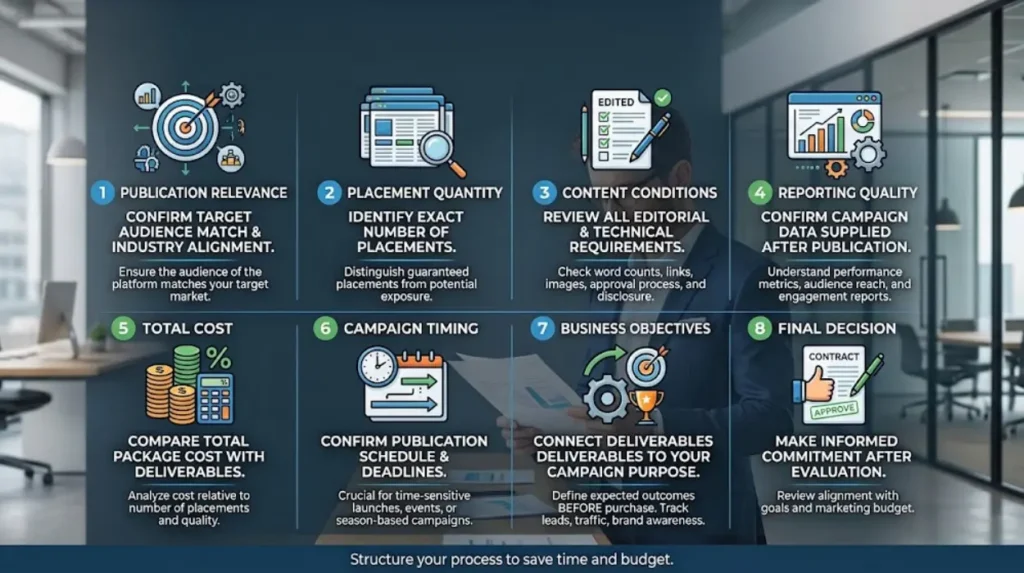
Evaluate a sponsored content package by checking publication relevance, placement quantity, content conditions, campaign timing, reporting quality, total cost, disclosure requirements, and expected business outcomes against the campaign’s defined objectives and available marketing budget.
Use a structured evaluation process before committing budget.
Check Publication Relevance
Confirm that the publications match the target audience and industry.
Check Placement Quantity
Identify exactly how many placements the package includes. Distinguish between guaranteed placements and potential exposure.
Check Content Conditions
Review word counts, editorial requirements, links, images, approval procedures, and disclosure rules.
Check Reporting
Confirm which campaign data is supplied after publication.
Check Total Cost
Compare the complete package cost with the number and type of deliverables included.
Check Campaign Timing
Confirm the expected publication schedule, particularly for time-sensitive product launches and events.
Check Business Objectives
Connect package deliverables with the campaign’s actual purpose. A package is easier to evaluate when the expected outcome is defined before purchase.
Explore More Expert Insights:
Product Launch Sponsored Content by Time Intelligence Media Group
Energy Sponsored Content by Time Intelligence Media Group
How Do You Get Started With Time Intelligence Media Group Sponsored Content?
Getting started involves defining the campaign objective, target UK audience, content topic, preferred publication categories, campaign timing, reporting requirements, and budget before selecting a sponsored content package that matches the required media distribution scope.
Start with the campaign brief.
Define what the business wants to promote and who needs to see it. Identify the relevant industry and publication categories. Establish the campaign timeline and content requirements.
Then review the available Time Intelligence Media Group sponsored content package options against those requirements.
A clear brief also improves campaign execution. It establishes the expected content, distribution scope, publication requirements, and measurement criteria from the beginning.
For brands already evaluating sponsored content as a commercial media strategy, the next step is to compare package scope against the expected campaign outcome.
Businesses seeking a structured route to UK sponsored content distribution can assess Time Intelligence Media Group packages according to publication relevance, distribution requirements, campaign timing, content needs, reporting, and budget.
For decision-stage research,
Sponsored content provide a defined framework for comparing the practical components of a paid media campaign and selecting a solution aligned with measurable business objectives.



