

Publishing sponsored content with Time Intelligence Media Group provides UK brands with a structured route for creating, distributing, and positioning paid editorial content across relevant news media, with defined campaign objectives, publication targets, messaging, and reporting.
Sponsored content is paid media content designed to communicate a brand, product, service, announcement, expertise, or campaign message through a publisher environment. It differs from earned editorial coverage because the brand pays for publication or distribution.
Time Intelligence Media Group supports sponsored content campaigns through a defined publishing process. The process connects content preparation, media selection, publication, and campaign reporting.
For businesses evaluating providers, the key decision factors include publication reach, audience relevance, content standards, turnaround, campaign management, and reporting.
Brands entering the decision stage also benefit from understanding how distribution works before selecting a provider. The broader mechanics are explained through:
Sponsored content distribution.
How does the sponsored content publishing process work?
The process starts with campaign requirements, continues through content preparation and media selection, moves into publication and distribution, and ends with coverage verification and reporting across the selected UK media placements.
1. Define the campaign objective
Every sponsored content campaign begins with a specific objective. Common objectives include brand awareness, product visibility, thought leadership, website traffic, event promotion, and market positioning.
A fintech company, for example, can use sponsored content to explain a new financial platform to UK business audiences.
2. Prepare the content
The content must match the campaign objective and target audience. It can take the form of a sponsored article, branded story, company announcement, expert commentary, or educational feature.
The article requires a clear headline, useful information, structured sections, relevant terminology, and accurate brand information.
3. Select media placements
Media selection determines where the sponsored article appears. Relevant factors include publication audience, geographic focus, industry relevance, content category, and campaign objectives.
A UK property company, for example, requires different media relevance from a healthcare technology provider.
4. Publish and verify
Once content requirements and placements are confirmed, the campaign proceeds to publication. Verification establishes whether the agreed content has appeared on the selected media properties.
5. Review campaign results
Reporting provides evidence of publication and campaign delivery. A useful report identifies published URLs, publication names, campaign details, and relevant performance information.
Why use Time Intelligence Media Group for sponsored content?
Time Intelligence Media Group gives brands a defined sponsored content route that connects campaign planning, content publishing, UK media placement, and reporting within one managed workflow for businesses seeking measurable media visibility.
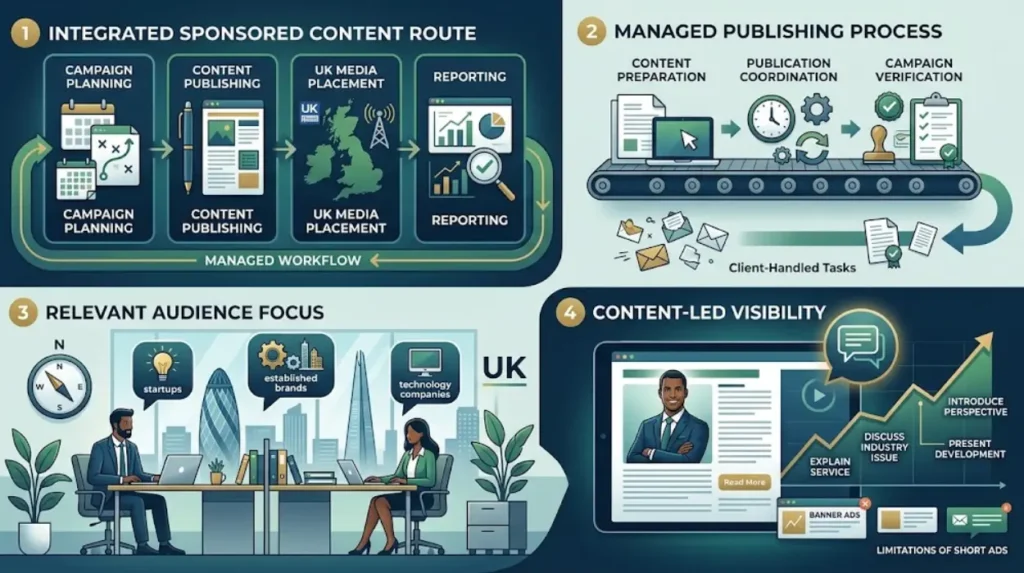
A managed publishing process reduces the number of separate activities handled by the client. Content preparation, publication coordination, and campaign verification follow an organised sequence.
This structure is relevant to SMEs, startups, agencies, professional service firms, technology companies, and established brands.
UK-focused media publishing
UK campaigns require UK-relevant publication choices. Audience location affects content relevance, messaging, and campaign outcomes.
A London-based technology company targeting British business decision-makers requires media exposure aligned with that audience.
Structured campaign management
Campaign management creates a consistent process from briefing to reporting. It establishes responsibilities for content, media selection, publication, and verification.
Content-led visibility
Sponsored content provides space for more detailed brand communication than a short advertisement. An article can explain a service, discuss an industry issue, introduce an executive perspective, or present a company development.
What types of sponsored content can UK businesses publish?
UK businesses can publish sponsored articles, branded stories, thought leadership pieces, company announcements, educational features, and campaign-led content based on their audience, business objective, and selected media publishing requirements.
Sponsored articles
Sponsored articles provide an editorial-style format for communicating a defined business message. They work for topics requiring context and explanation.
Thought leadership content
Thought leadership content positions a company or executive around a specific industry subject. A cybersecurity company, for example, can publish expert commentary about UK business security challenges.
Company announcements
Businesses use sponsored content to communicate launches, partnerships, expansion, appointments, awards, and corporate developments.
Educational content
Educational sponsored content answers audience questions while maintaining a clear connection to the sponsoring brand.
This format supports brands that need to explain complex subjects. Examples include financial technology, healthcare technology, property investment, business software, and professional services.
How does Time Intelligence Media Group support publication across UK news sites?
Time Intelligence Media Group supports multi-site sponsored content campaigns by coordinating content requirements and publication across selected media placements, giving brands a structured approach to expanding visibility beyond a single publisher.
Multi-site distribution creates multiple publication opportunities within one campaign strategy. Each placement provides another media environment where the sponsored content can reach a relevant audience.
The approach is particularly useful for businesses seeking broader UK visibility.
Publication diversity
A campaign involving multiple publications creates exposure across different audiences and media environments.
For example, a B2B software company can target business-focused publications while a consumer brand can prioritise publications with broader audience interests.
Consistent messaging
Multi-site publishing requires consistent core information. The company name, service description, campaign message, and key facts remain aligned across placements.
Broader discoverability
Multiple published articles create additional online locations where audiences can encounter a brand. These placements also provide publicly accessible evidence of campaign publication.
Brands evaluating multi-site strategies can first review how:
Sponsored content runs across UK news sites before selecting a publishing approach.
What should businesses check before purchasing sponsored content?
Businesses should check publication relevance, audience alignment, content requirements, placement terms, turnaround time, reporting standards, pricing, and campaign deliverables before purchasing sponsored content from a media publishing provider.
Publication relevance
The publication must match the intended audience. A high-traffic placement without audience relevance does not provide the same strategic value as a publication aligned with the campaign.
Content requirements
Businesses need clear information about word counts, formatting, links, images, author details, disclosure requirements, and editorial restrictions.
Delivery timeframe
Turnaround affects campaigns tied to product launches, events, announcements, seasonal activity, and corporate milestones.
Reporting
A provider needs to explain what evidence the client receives after publication. Useful reporting includes publication names and live URLs.
Campaign scope
The buyer needs to understand the exact number and type of placements included in the campaign. This prevents uncertainty about deliverables.
How can sponsored content support UK brand visibility?
Sponsored content supports UK brand visibility by placing detailed brand messages within publisher environments, creating additional audience touchpoints and giving businesses controlled space to communicate expertise, services, announcements, and market positioning.
Sponsored content provides control over the core message. The business defines the subject, positioning, key information, and campaign objective.
This control is important when the subject requires more explanation than a conventional advertisement allows.
A UK recruitment company, for example, can publish an article explaining changes in workplace recruitment while introducing its specialist service.
A technology company can explain a software solution through a problem-focused article.
A professional services firm can publish an expert-led article addressing a business challenge.
The content remains commercially sponsored, so disclosure and publisher requirements remain part of the publishing framework.
Which businesses benefit from sponsored content publishing?
Sponsored content publishing suits businesses that require controlled media visibility, detailed messaging, audience-specific communication, and documented publication across UK media environments as part of an active marketing or communications campaign.
Startups
Startups use sponsored content to introduce new products, explain their proposition, and establish visibility in competitive markets.
SMEs
SMEs use sponsored content to communicate services, expansion, expertise, and business developments to defined audiences.
Technology companies
Technology brands use detailed content to explain software, platforms, artificial intelligence, cybersecurity, and digital solutions.
Financial businesses
Financial brands use sponsored articles to communicate market developments, services, expertise, and business announcements.
Professional services firms
Consultancies, legal businesses, recruitment firms, and specialist agencies use sponsored content to demonstrate expertise and explain complex services.
How does sponsored content compare with relying only on organic media coverage?
Sponsored content provides greater control over message, timing, and publication terms than organic media coverage, while earned coverage depends on independent editorial decisions and publisher interest in the underlying news value.
Organic media coverage is earned through editorial selection. A journalist or editor decides whether a story fits the publication.
Sponsored content operates under a commercial publishing arrangement. The business pays for an agreed publishing opportunity and supplies content within publisher requirements.
The two approaches serve different communication functions.
Sponsored content is useful when message control and defined publication are central requirements. Earned media remains relevant when independent editorial coverage is the objective.
A broader media strategy can use both approaches when campaign goals require controlled content and independent journalism.
What does a sponsored content campaign with Time Intelligence Media Group include?
A sponsored content campaign includes defined campaign requirements, content preparation, selected media placements, publication coordination, live coverage verification, and reporting that documents where the sponsored content appeared across the agreed campaign.
The exact deliverables depend on the selected campaign package and publication requirements.
Before approval, businesses need confirmation of:
- Number of publication placements
- Target media categories
- Content specifications
- Publishing timeframe
- Link requirements
- Disclosure requirements
- Reporting format
- Campaign completion evidence
This information creates a clear basis for comparing providers.
How can a business start publishing sponsored content with Time Intelligence Media Group?
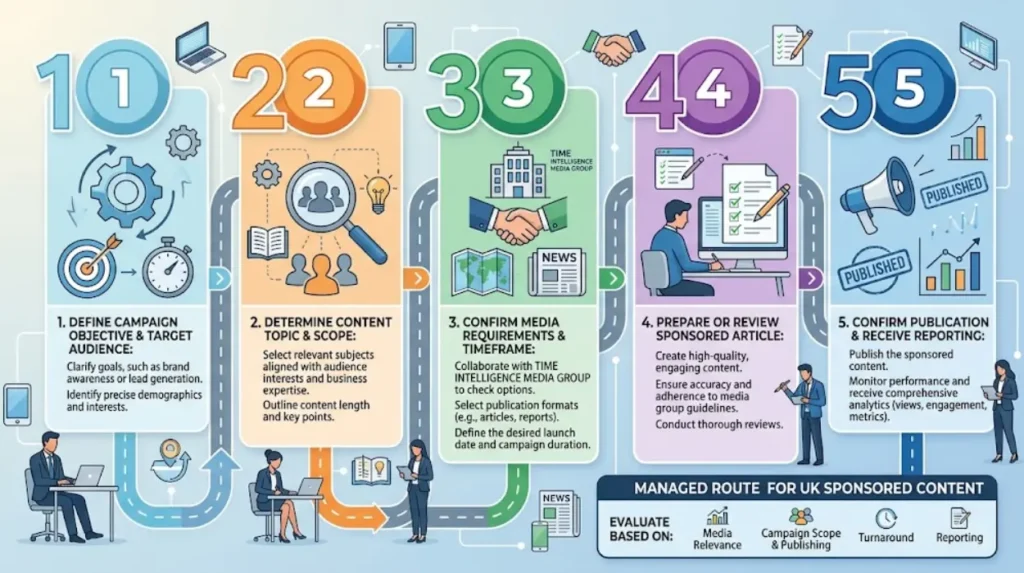
A business starts by defining its campaign objective, target audience, content topic, preferred media requirements, publication timeframe, and desired campaign scope, then confirms available sponsored content options and publishing deliverables with Time Intelligence Media Group.
The first step is identifying what the campaign needs to achieve.
The second step is defining the audience and subject.
The third step is confirming the desired publication environment and campaign scope.
The fourth step is preparing or reviewing the sponsored article.
The final step is confirming publication and receiving campaign reporting.
Businesses seeking a managed route for UK sponsored content can evaluate Time Intelligence Media Group based on media relevance, campaign scope, publishing requirements, turnaround, and reporting.
What are the key benefits of publishing sponsored content with Time Intelligence Media Group?
The key benefits include controlled brand messaging, structured campaign management, targeted UK media publishing, multi-site visibility, content-led communication, defined publication deliverables, and reporting that documents campaign completion.
For decision-makers, the value rests on control and structure.
A business knows the campaign objective before publication. The content communicates a defined message. The media strategy identifies intended publication environments. The reporting confirms completed placements.
Explore More Expert Insights:
Startup Sponsored Content by Time Intelligence Media Group
Financial Sponsored Content by Time Intelligence Media Group
This approach provides a practical framework for businesses that need sponsored content as part of their UK communications strategy.
It also creates a clear path from campaign planning to published media coverage.
For businesses ready to move from research to execution, Time Intelligence Media Group provides a direct route to planning and publishing sponsored content campaigns for UK audiences.



