Strategic press distribution is a planned communication process that places hospitality announcements in relevant media channels during expansion campaigns, product launches, and brand growth phases. It connects business milestones with journalists, publications, and audiences through structured media outreach.
A national hospitality rollout involves expanding a hospitality concept across multiple locations, regions, or customer segments. Examples include opening restaurant chains, launching entertainment venues, introducing hotel concepts, or expanding leisure experiences across the United Kingdom.
Strategic press distribution supports this process by ensuring announcements reach appropriate media audiences at the correct stage of expansion. It moves beyond basic publicity by aligning press activity with operational timelines, target markets, and brand objectives.
Traditional advertising methods such as flyers and local advertisements often focus on immediate local visibility. However, national hospitality concepts require broader awareness across business media, lifestyle publications, regional outlets, and industry platforms. Understanding the limitations of traditional promotion helps businesses evaluate stronger communication approaches through:
Why Traditional Flyer and Local Ad Campaigns Are a Risky Strategy for New Entertainment Concepts.
A strategic press distribution plan includes:
- Announcement planning
- Media targeting
- Press release development
- Distribution scheduling
- Coverage monitoring
- Performance analysis
Each element supports consistent messaging throughout the rollout process.
Why does a national hospitality rollout require press distribution planning?
A national hospitality rollout requires press distribution planning because expansion involves multiple audiences, locations, and communication stages. Media coordination creates structured visibility by connecting business announcements with journalists, industry publications, regional media outlets, and potential customers.
Hospitality expansion creates several communication requirements. A new venue opening requires local awareness. A franchise expansion requires business coverage. A new hospitality experience requires lifestyle and entertainment visibility.
Without structured planning, announcements often reach audiences without relevance or timing. Strategic press distribution creates a connection between the announcement type and the media channel.
For example, a hotel group expanding into Manchester, Birmingham, and Edinburgh requires different communication approaches. Regional publications focus on local economic impact, while hospitality trade publications focus on industry growth, investment, and operational development.
What are the main stages of a hospitality rollout checklist?
A national hospitality rollout checklist typically includes:
- Market preparation Businesses identify target locations, customer segments, competitors, and market conditions before announcing expansion.
- Announcement development Teams prepare press releases containing specific information such as opening dates, investment figures, employment numbers, partnerships, and customer experiences.
- Media segmentation Organisations categorise media targets into groups such as:
- National business publications
- Hospitality trade media
- Regional newspapers
- Lifestyle publications
- Entertainment platforms
- Distribution scheduling Press releases are distributed according to business milestones, including launch announcements, opening events, and expansion updates.
- Coverage measurement Teams evaluate media mentions, publication quality, audience reach, and brand visibility.
This checklist ensures press activity supports the entire rollout timeline instead of operating as a single promotional event.
How does strategic press distribution fit into a hospitality launch checklist?
Strategic press distribution fits into a hospitality launch checklist by becoming a dedicated communication function alongside operations, marketing, staffing, and customer experience planning. It ensures media activity follows the same timeline as business expansion activities.
A successful hospitality rollout requires coordination between different departments. Operations teams manage locations and services. Marketing teams manage customer campaigns. Public relations teams manage reputation and media communication.
Press distribution connects these activities by creating external visibility for internal business progress.
Which rollout milestones require media distribution?
Different hospitality milestones require different press strategies:
Pre-launch phase
The pre-launch stage builds awareness before customers experience the venue. Press announcements focus on:
- Concept introduction
- Investment details
- Location selection
- Founder or leadership statements
- Community impact
Launch phase
The launch stage communicates immediate availability. Media activity focuses on:
- Opening dates
- Customer experiences
- Events
- Brand partnerships
- Local economic contribution
Growth phase
The growth stage demonstrates business momentum. Announcements include:
- Additional locations
- New services
- Employment growth
- Strategic partnerships
Each phase requires different messaging because journalists evaluate news value based on relevance, timing, and audience interest.
How do hospitality brands select the right media channels?
Hospitality brands select media channels by matching announcement topics with publication audiences, industry relevance, geographic focus, and customer demographics. Effective distribution prioritises media outlets that align with the specific purpose of the announcement.
Media selection is a critical part of strategic press distribution. A national hospitality rollout involves multiple audience groups, so one communication channel does not serve every purpose.
A hospitality business opening a new entertainment venue requires different media coverage from a hotel group announcing corporate expansion.
What types of media channels support hospitality expansion?
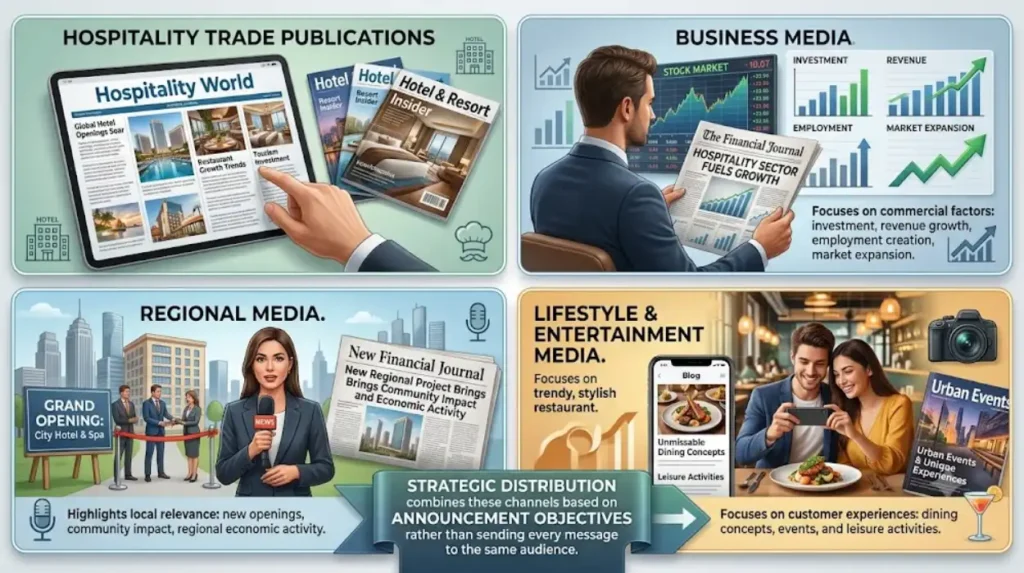
Key media categories include:
Hospitality trade publications
These platforms cover industry developments, including hotel openings, restaurant growth, tourism investment, and operational trends.
Business media
Business publications focus on commercial factors such as investment, revenue growth, employment creation, and market expansion.
Regional media
Regional outlets highlight local relevance. They cover new openings, community impact, and regional economic activity.
Lifestyle and entertainment media
These publications focus on customer experiences, dining concepts, events, and leisure activities.
Strategic distribution combines these channels based on announcement objectives rather than sending every message to the same audience.
What information belongs in a hospitality press distribution strategy?
A hospitality press distribution strategy includes clear objectives, audience definitions, media lists, announcement schedules, messaging frameworks, and measurement methods. These components create consistency across multiple locations and communication stages during national expansion.
A structured strategy prevents inconsistent messaging during rapid growth.
What are the essential components of a distribution strategy?
Communication objectives
Businesses define what each announcement needs to achieve. Objectives include increasing awareness, announcing expansion, highlighting investment, or building industry credibility.
Target audience mapping
Audience mapping identifies who needs to receive the information. Common groups include customers, investors, journalists, partners, and local communities.
Media database development
A media database contains relevant journalists, editors, and publications. It includes hospitality writers, business reporters, regional journalists, and lifestyle editors.
Content planning
Content planning establishes:
- Press release topics
- Publishing dates
- Supporting information
- Brand messaging
Measurement framework
Measurement tracks outcomes such as:
- Number of published articles
- Media authority
- Audience reach
- Geographic coverage
- Brand mentions
These components create a repeatable process for future expansion campaigns.
How does press distribution support national hospitality brand visibility?
Press distribution supports national hospitality brand visibility by increasing awareness across multiple media environments, strengthening industry recognition, and creating consistent communication during expansion activities. It connects operational growth with external audience awareness.
Hospitality businesses depend on reputation, customer trust, and market recognition. National expansion requires visibility beyond individual locations.
A structured press approach creates opportunities for coverage across relevant media sectors. It helps businesses communicate their development story through credible third-party platforms.
Why is media consistency important during expansion?
Consistency prevents fragmented messaging across different locations.
For example, a hospitality group opening five venues across the UK needs consistent information about:
- Brand identity
- Customer experience
- Expansion objectives
- Business achievements
Journalists require accurate information to create reliable coverage. Consistent press materials improve clarity and reduce communication gaps.
What role does timing play in hospitality press distribution?
Timing determines how effectively hospitality announcements reach media audiences because journalists evaluate stories based on relevance, news value, and publication schedules. Strategic timing aligns announcements with business readiness and market attention periods.
A press release distributed too early creates information gaps. A release distributed too late reduces media opportunities.
How do businesses plan press timing?
Effective timing considers:
Operational readiness
The business confirms locations, dates, images, and supporting information before distribution.
Market relevance
Announcements align with relevant periods such as tourism seasons, hospitality events, or regional developments.
Media deadlines
Publications operate according to editorial schedules. Planning ahead improves opportunities for coverage.
For example, a summer hospitality opening requires communication preparation before peak travel periods. Media teams need sufficient time to review announcements, request additional information, and prepare coverage.
How can hospitality companies evaluate press distribution options?
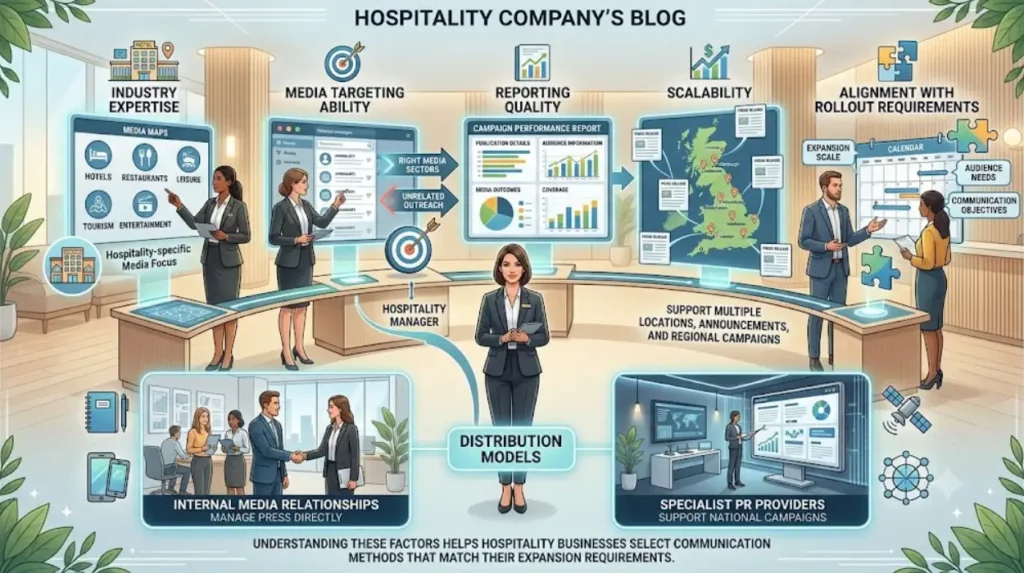
Hospitality companies evaluate press distribution options by reviewing targeting capabilities, media reach, reporting systems, industry understanding, and alignment with rollout requirements. The right approach depends on expansion scale, audience needs, and communication objectives.
Different organisations use different press distribution models. Some manage media relationships internally. Others use specialist PR distribution providers to support national campaigns.
What factors influence the choice of a distribution approach?
Important evaluation factors include:
Industry expertise
Hospitality campaigns require knowledge of relevant media sectors, including tourism, leisure, restaurants, hotels, and entertainment.
Media targeting ability
Effective distribution requires accurate targeting instead of broad, unrelated outreach.
Reporting quality
Coverage reports help businesses understand campaign performance. Useful reports include publication details, audience information, and media outcomes.
Scalability
National rollouts require systems that support multiple locations, announcements, and regional campaigns.
Understanding these factors helps hospitality businesses select communication methods that match their expansion requirements.
Explore More Expert Insights:
Leveraging Milestone Press Releases to Attract the Attention of Major Hospitality Investors
Crisis Communication Frameworks: Issuing Rapid Statements to Retain Guest Loyalty Fast
How does strategic press distribution prepare hospitality brands for long-term growth?
Strategic press distribution prepares hospitality brands for long-term growth by creating repeatable communication systems, improving market recognition, and supporting expansion announcements throughout different business stages. It transforms individual announcements into structured brand development activities.
National hospitality growth requires continuous communication. One opening announcement does not represent the complete expansion journey.
Long-term press distribution supports:
- New location launches
- Partnership announcements
- Leadership updates
- Industry achievements
- Customer experience developments
Businesses evaluating advanced PR support models can explore:
Full-Service Lifestyle PR Agencies vs. Time Intelligence Media Group to understand how full-service PR approaches compare with specialised distribution solutions.
A structured press distribution framework helps hospitality organisations maintain visibility, communicate growth effectively, and build stronger relationships with media audiences across the United Kingdom.