
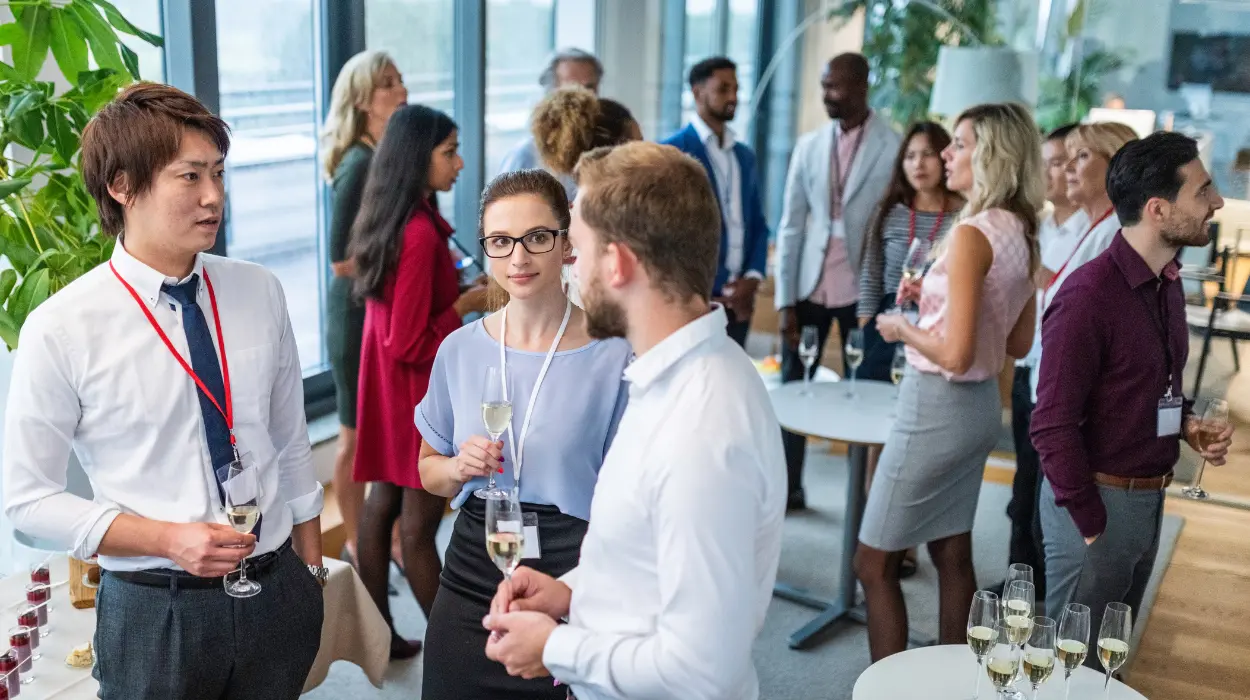
News media plays a pivotal role in shaping public perception of corporate events, from high-stakes mergers to product launches. Understanding how news media covers corporate events reveals the intricate balance between storytelling, timeliness, and audience engagement. This coverage not only informs stakeholders but also influences market dynamics and brand reputation. In today’s fast-paced digital landscape, media outlets employ sophisticated strategies to capture these moments, blending traditional reporting with multimedia elements.
Corporate events, such as annual general meetings (AGMs), executive announcements, or industry conferences, generate vast amounts of data and narratives. Journalists sift through press releases, live feeds, and insider insights to craft compelling stories. This process ensures that key messages from organizers reach a global audience, often amplifying the event’s impact far beyond its physical location.
From Print to Digital Dominance in Event Reporting
Historically, news media coverage of corporate events relied on print newspapers and television broadcasts, where reporters attended events in person and filed stories post-event. This model limited reach and speed, often resulting in delayed dissemination of critical information. For instance, during the 2008 financial crisis, coverage of Lehman Brothers’ collapse events took hours or days to reach readers via traditional channels, missing real-time market reactions.
Today, digital transformation has revolutionized this space. Online platforms enable live-tweeting, streaming, and instant updates, allowing media to cover corporate events with unprecedented immediacy. Outlets like Reuters and Bloomberg now deploy mobile units and drone footage for immersive reporting. This shift emphasizes multimedia integration—videos, infographics, and interactive timelines—that boost engagement metrics by up to 40%, according to industry reports from the Reuters Institute.
The result is a more dynamic ecosystem where corporate event coverage adapts to audience preferences. Social media amplification extends reach, with hashtags like #CES2025 trending during tech conferences, drawing millions of views. Media strategists must now anticipate viral potential, ensuring stories resonate across platforms.
Key Trends Shaping Modern Corporate Event Coverage
Several trends define how news media covers corporate events in 2026. First, data-driven journalism uses AI tools to analyze event metrics, such as attendee sentiment from live polls or stock fluctuations tied to announcements. This approach provides deeper context; for example, during a recent Tesla AGM, media highlighted real-time EV production data visualizations, correlating them with share price surges.
Second, sustainability and ESG (Environmental, Social, Governance) angles dominate narratives. Coverage increasingly scrutinizes corporate events for green initiatives, like zero-waste conferences, influencing investor sentiment. A case in point is the 2025 Davos World Economic Forum, where outlets like The Guardian dissected panels on climate commitments, framing them as pivotal for corporate accountability.
Finally, personalization via algorithms tailors content. News apps push event recaps based on user interests, enhancing retention. These trends underscore the need for event organizers to partner with experts in Events Media Coverage Services to optimize visibility and narrative control.
Pre-Event Buildup: Teasers and Press Kits
Effective news media coverage of corporate events begins well before the event kicks off. Media outlets receive detailed press kits containing executive bios, high-res photos, and embargoed announcements. This preparation allows journalists to craft preview stories that build anticipation. For a product launch like Apple’s iPhone unveilings, pre-event hype through outlets like CNBC generates buzz, often spiking pre-order sales.
Journalists also leverage exclusive briefings or virtual previews to secure scoops. This strategy ensures balanced coverage, incorporating diverse viewpoints from analysts and competitors. Organizers who provide multimedia assets—such as 360-degree venue tours—facilitate richer reporting, turning static events into engaging narratives.
In practice, this pre-event phase sets the tone. A well-executed press kit can result in 20-30% more mentions, as seen in Salesforce’s Dreamforce conferences, where media previews dominated tech feeds days in advance.
Live Coverage: Real-Time Reporting Techniques
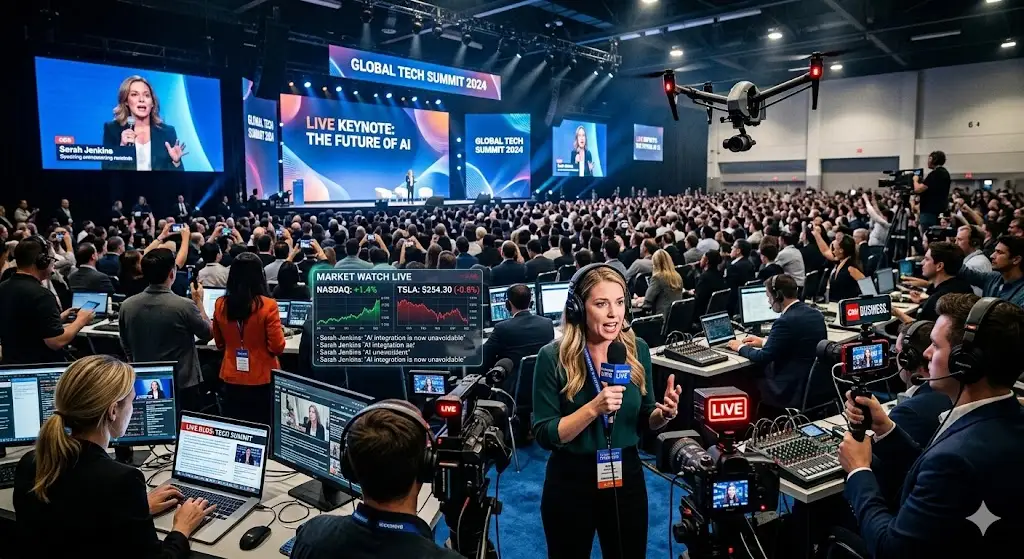
During the event, how news media covers corporate events shifts to high-octane live reporting. Correspondents provide play-by-play updates via Twitter Spaces, live blogs, and Periscope streams. This immediacy captures unscripted moments, like CEO Q&A sessions, which often yield headline-grabbing quotes.
Multimedia enhances immersion: drone shots of massive keynotes or AR overlays explaining tech demos. Bloomberg’s live ticker during earnings calls exemplifies this, integrating market data with executive speeches for instant analysis. Challenges include fact-checking on the fly amid information overload, where media verifies claims against regulatory filings.
Organizers benefit from structured agendas that accommodate media zones, ensuring seamless access. For hybrid events post-pandemic, virtual platforms like Zoom integrate with media dashboards, enabling global coverage without geographical limits.
Post-Event Analysis: Deep Dives and Follow-Ups
Post-event, coverage evolves into analytical pieces that dissect implications. Media publishes recaps, opinion columns, and data breakdowns, often 24-48 hours later. This phase explores ripple effects, such as how a merger announcement at a corporate summit impacts competitors.
In-depth features use interviews and metrics; for instance, after Google’s I/O conference, Wired analyzed AI demo impacts on stock futures. Follow-ups track promises, like sustainability pledges, holding companies accountable.
To explore Types of Event Coverage: Digital, Video, PR in greater detail, consider how these formats layer into comprehensive strategies.
Navigating Bias and Accuracy in High-Stakes Reporting
One major challenge in how news media covers corporate events is maintaining objectivity amid sponsored content pressures. Outlets combat this through disclosure policies, but perceptions of bias persist, especially in polarized climates. During politically charged events like pharma earnings amid health crises, media cross-references with independent sources.
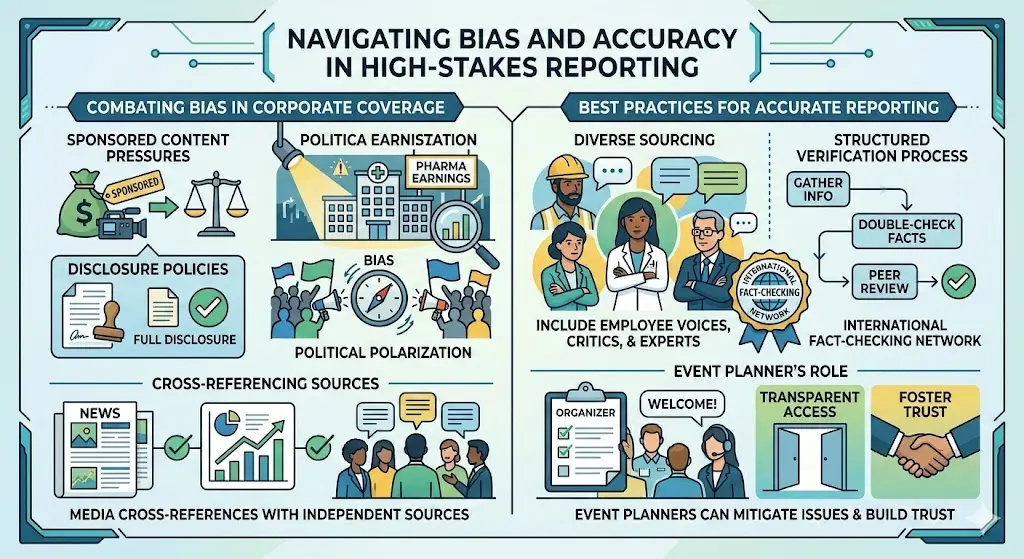
Best practices include diverse sourcing: including employee voices, critics, and experts. Structured verification processes, like those from the International Fact-Checking Network, ensure accuracy. Event planners can mitigate issues by offering transparent access, fostering trust.
Leveraging Technology for Enhanced Coverage
AI and automation streamline workflows. Tools like Otter.ai transcribe keynotes instantly, while sentiment analysis gauges audience reactions. This tech enables hyper-personalized follow-ups, such as tailored newsletters.
Comparisons highlight benefits:
- Traditional: Manual notes, 2-3 day turnaround.
- Tech-Enabled: Real-time transcripts, 1-hour analysis.
Case studies, like the 2025 COP climate summit covered by BBC with VR walkthroughs, show 50% higher engagement.
For those weighing options, learn Why Outsource Event Media Coverage to professional providers for superior results.
Tech Conferences: CES and Beyond
At CES, news media coverage of corporate events peaks with gadget reveals. Outlets like Engadget live-blog sessions, embedding videos of prototypes. Samsung’s foldable phone demos in 2025 garnered 10 million views, driving industry trends.
This coverage influences B2B decisions, with follow-ups analyzing supply chain implications.
Financial Summits: Davos and AGM Spotlights
Davos exemplifies global stakes. Media like Financial Times frames panels on trade wars, using data visualizations. A 2025 session on AI ethics led to regulatory headlines, showcasing coverage’s policy-shaping power.
AGMs, such as Berkshire Hathaway’s, draw investor-focused reports on Buffett’s letters, blending archival footage with live analysis.
These examples illustrate structured approaches: pre-event hooks, live immersion, and analytical depth.
Elevating Your Corporate Events with Expert Media Strategies
Mastering how news media covers corporate events empowers organizers to maximize reach and impact. Time Intelligence Media Group excels in delivering tailored Events Media Coverage Services, combining cutting-edge strategies with proven execution to ensure your events dominate headlines. By aligning with professional solutions, brands secure authoritative, citation-worthy coverage that drives long-term visibility.
