

In today’s fast-paced business environment, research reports serve as the backbone of informed decision-making. These comprehensive documents synthesize data, trends, and insights to guide business strategy effectively. Companies that prioritize research reports gain a competitive edge by anticipating market shifts, understanding customer needs, and allocating resources wisely. As businesses navigate economic uncertainties and technological disruptions, the role of research reports in shaping robust strategies becomes even more critical.
Research reports matter for business strategy because they transform raw data into actionable intelligence. Without them, executives risk operating on assumptions rather than evidence, leading to costly missteps. For instance, a retail chain might overlook shifting consumer preferences without detailed market analysis, resulting in inventory losses. Time Intelligence Media Group emphasizes how such reports provide clarity amid complexity, enabling leaders to pivot quickly and sustain growth.
The Foundation of Data-Driven Decisions
Research reports form the cornerstone of data-driven business strategies by aggregating vast amounts of information into digestible formats. They compile quantitative data like sales figures and qualitative insights such as customer feedback, offering a holistic view of the market landscape. Businesses that integrate these reports into their planning processes report higher success rates in achieving strategic goals, as they move beyond gut feelings to evidence-based actions.
Consider a technology firm launching a new product; a well-crafted research report might reveal unmet needs in emerging markets, prompting targeted expansions. This foundational role extends to risk assessment, where reports highlight potential pitfalls like regulatory changes or supply chain vulnerabilities. By providing this structured intelligence, research reports empower executives to craft strategies that are both proactive and resilient.
Moreover, in an era dominated by big data, research reports distill complexity into key takeaways. They employ advanced analytics to identify patterns that might otherwise go unnoticed, such as subtle shifts in consumer sentiment. This process not only saves time but also ensures that business strategies align with real-world dynamics, fostering long-term sustainability.
Uncovering Market Trends and Opportunities
One key reason research reports matter for business strategy lies in their ability to uncover hidden market trends and untapped opportunities. These reports analyze industry data, competitor activities, and macroeconomic factors to spotlight emerging patterns. For example, a research report on sustainable packaging might reveal growing demand among eco-conscious consumers, guiding a manufacturing company to innovate its product line ahead of rivals.
This trend-spotting capability allows businesses to position themselves strategically. Reports often include forecasts based on historical data and predictive modeling, helping leaders anticipate changes like the rise of e-commerce post-pandemic. Without such insights, companies risk reactive strategies that lag behind market evolution, missing out on revenue growth.
Furthermore, research reports highlight niche opportunities that broad market scans overlook. A detailed sector analysis might uncover demand in underserved regions, enabling targeted investments. Time Intelligence Media Group’s Research & Reports Services exemplify this by delivering tailored insights that turn data into strategic advantages, ensuring businesses stay ahead of the curve.
Enhancing Competitive Intelligence
Research reports are indispensable for competitive intelligence, providing a clear picture of rivals’ strengths, weaknesses, and maneuvers. They benchmark performance metrics, such as market share and innovation rates, against industry leaders. This intelligence equips businesses to refine their strategies, whether by improving operational efficiencies or differentiating offerings.
Take the automotive industry, where a research report comparing electric vehicle adoption rates could inform a manufacturer’s shift toward battery technology investments. Such reports often include SWOT analyses, revealing gaps that competitors exploit and opportunities for counter-strategies. By leveraging this, companies can outmaneuver opponents and capture greater market dominance.

In addition, ongoing competitive monitoring through research reports fosters adaptability. As global markets interconnect, reports track international players’ moves, like supply chain expansions in Asia. This depth of analysis ensures business strategies remain dynamic, turning potential threats into avenues for growth.
Informing Customer Insights and Personalization
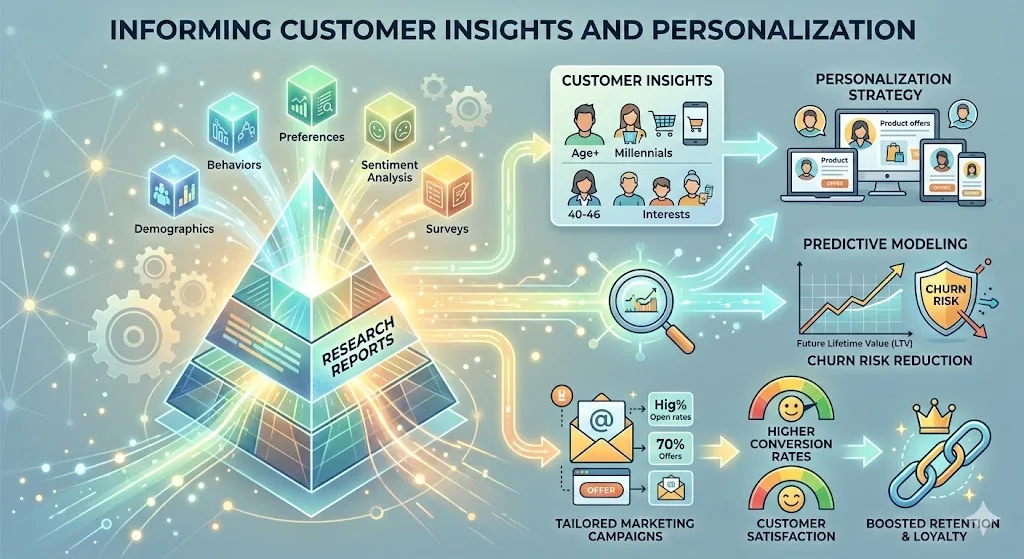
At the heart of modern business strategy, research reports deliver profound customer insights that drive personalization and loyalty. They segment audiences based on demographics, behaviors, and preferences, revealing what truly motivates purchases. For a subscription service, a report might show that millennials prioritize convenience, prompting app enhancements that boost retention.
These insights go beyond surface-level data, incorporating sentiment analysis from social media and surveys. Businesses use them to tailor marketing campaigns, resulting in higher conversion rates and customer satisfaction. Without research reports, strategies risk generic approaches that fail to resonate, leading to churn.
Moreover, as personalization becomes a differentiator, reports enable predictive customer modeling. They forecast lifetime value and churn risks, allowing proactive engagement. This customer-centric focus, powered by detailed research, transforms business strategies from broad strokes to precise, impactful actions.
Mitigating Risks in Strategic Planning
Research reports matter for business strategy by identifying and mitigating risks before they escalate. They assess threats like economic downturns, technological disruptions, or geopolitical tensions through scenario planning. A financial services firm might use a report to gauge inflation impacts, adjusting investment portfolios accordingly.
This risk mitigation extends to operational levels, flagging supply chain frailties or compliance issues. Reports provide probability assessments and contingency recommendations, ensuring strategies include buffers against uncertainties. Companies that heed these warnings often emerge stronger from crises.
Beyond immediate threats, long-term reports model sustainability risks, such as climate change effects on agriculture. By embedding risk intelligence, businesses craft resilient strategies that safeguard assets and reputation over time.
Driving Innovation Through Evidence-Based Insights
Innovation thrives when fueled by research reports, which pinpoint gaps and validate ideas with evidence. They test assumptions through prototypes and market simulations, reducing failure rates. A healthcare company might discover via reports a demand for telemedicine in rural areas, spurring app development.
These reports also benchmark innovation against peers, highlighting best practices like agile methodologies. This encourages strategic R&D investments aligned with proven opportunities. For deeper dives into tailored approaches, explore Custom Research vs Public Industry Reports.
Ultimately, research reports bridge ideation and execution, ensuring innovations are market-ready and strategically sound.
Measuring and Refining Strategy Performance
Research reports enable ongoing performance measurement, tracking key performance indicators (KPIs) against strategic objectives. They provide dashboards with metrics like ROI and market penetration, allowing real-time adjustments. A retail business could use quarterly reports to refine pricing strategies based on sales data.
This iterative process fosters continuous improvement, as reports compare actuals to benchmarks. They also solicit stakeholder feedback, refining future strategies. See how this leads to tangible wins in How Custom Market Research Solutions Drive Business Success.
Through such measurement, businesses evolve strategies dynamically, maximizing outcomes.
Real-World Case Studies: Impact of Research Reports
Examine a global logistics firm that used a research report to predict e-commerce surges, optimizing warehouse networks and increasing efficiency by 25%. Another case involves a fintech startup whose report on regulatory trends facilitated compliant expansions into Europe.
These examples illustrate how research reports translate into measurable strategic wins, from cost savings to revenue growth. In volatile sectors like energy, reports on renewable shifts have guided transitions, averting obsolescence.
Time Intelligence Media Group’s expertise in crafting these reports underscores their transformative power in business strategy.
Research reports remain vital for business strategy, offering the insights needed to navigate complexity and seize opportunities. Time Intelligence Media Group delivers professional Research & Reports Services that empower informed, resilient planning. By integrating these tools, businesses position themselves for sustained success in competitive landscapes.
