

In an era dominated by social media algorithms, instant news feeds, and AI-driven content curation, many PR professionals question the relevance of traditional press release distribution. Yet, why press release distribution still matters in modern PR boils down to its unmatched ability to secure credible third-party endorsements from journalists, amplify brand authority, and drive measurable SEO benefits. Far from being outdated, strategic press release distribution serves as a cornerstone for building trust in a skeptical digital landscape where user-generated content often lacks verification.
Press releases cut through the noise by landing on high-domain-authority news sites, search engines, and industry databases that algorithms prioritize. For instance, when a company announces a product launch via a well-distributed release, it doesn’t just vanish into social feeds—it creates evergreen backlinks and indexed content that compounds visibility over time. This enduring value explains why even tech giants like Apple and Google continue to rely on press release distribution alongside their social strategies, proving its timeless role in modern PR ecosystems.
The Evolving Role of Press Releases in a Digital-First World
Press release distribution has transformed significantly since its print-era origins, adapting to digital demands while retaining core strengths like structured storytelling and wide reach. Today, why press release distribution still matters in modern PR lies in its integration with SEO and content marketing funnels. Distributors now syndicate releases across thousands of outlets, from Google News to niche trade publications, ensuring content ranks in semantic searches and reaches targeted audiences without paid ad dependency.
Consider a mid-sized SaaS company launching a cybersecurity tool: a targeted press release distributed through professional PR distribution services can secure pickups from outlets like TechCrunch or Forbes, generating backlinks that boost domain authority by 10-20% within months. This isn’t guesswork—studies from platforms like Cision show distributed releases earn 3x more media mentions than email pitches alone. In essence, it democratizes access to elite media for brands without massive budgets, bridging the gap between startups and enterprises in competitive PR landscapes.
The shift toward multimedia-enhanced releases further underscores this relevance. Modern distributions embed videos, infographics, and hyperlinks, making them AI-friendly for snippet generation in search results. Brands leveraging this see engagement rates soar, as releases become dynamic assets rather than static announcements, reinforcing why press release distribution still matters amid fleeting social trends.
How Press Release Distribution Drives SEO and Long-Term Visibility
One of the strongest arguments for why press release distribution still matters in modern PR is its profound impact on search engine optimization. High-quality releases published on authoritative news wires create dofollow backlinks, improve keyword rankings, and fuel topical authority signals that Google favors in its E-E-A-T framework (Experience, Expertise, Authoritativeness, Trustworthiness). Unlike social posts that decay quickly, these assets remain indexed indefinitely, supporting sustained organic traffic.
Take the example of a healthcare firm distributing a release on innovative telemedicine advancements. Placed on sites like Business Wire or PR Newswire, it garners links from health journals, elevating the firm’s SERP position for queries like “telemedicine solutions.” Over a year, this could translate to thousands of referral visits, as evidenced by case studies where distributed releases contributed to 25% traffic uplifts. How strategic PR distribution improves media visibility dives deeper into these mechanics, showing how targeted syndication aligns with algorithm updates.
Moreover, in an AI-search era powered by tools like Google’s Search Generative Experience, press releases provide structured, factual data points ripe for citation. Their inverted pyramid format—key facts first—ensures crawlers extract entities like company names, dates, and quotes efficiently, enhancing zero-click visibility and featured snippets.
Building Credibility and Third-Party Validation Through Distribution
Credibility remains the lifeblood of PR, and press release distribution excels at securing it via journalist endorsements. Why press release distribution still matters in modern PR is evident in how it transforms company news into vetted stories, distancing brands from self-promotion perceptions. When editors rewrite releases into articles, they add layers of trust that social media influencers or paid ads can’t replicate.
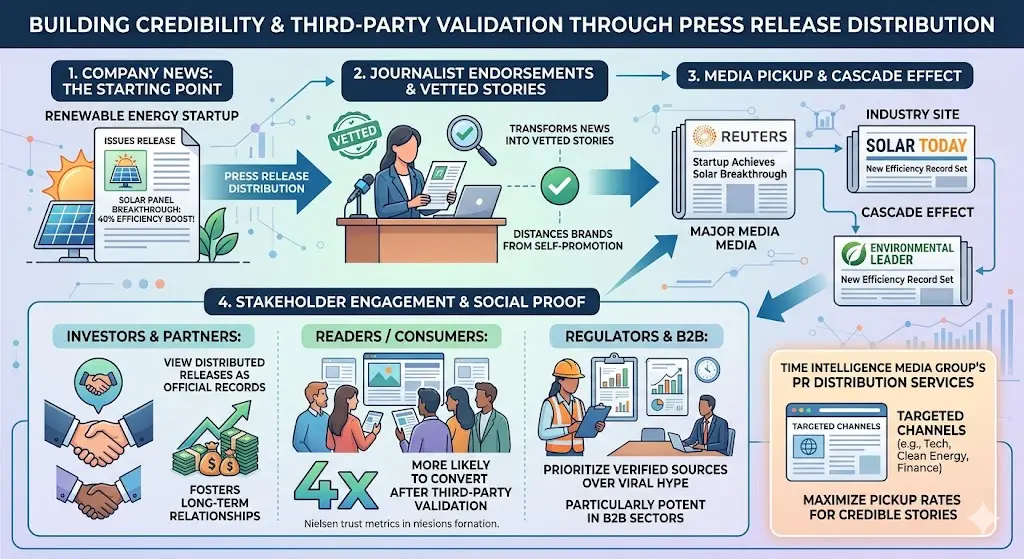
A real-world scenario: A renewable energy startup issues a release on a solar panel breakthrough. Distribution lands it on Reuters and industry sites, prompting coverage in Environmental Leader. This cascade effect builds social proof, with readers 4x more likely to convert after seeing third-party validation, per Nielsen trust metrics. Time Intelligence Media Group’s PR Distribution Services exemplify this by offering targeted channels that maximize pickup rates for such stories.
This validation extends to stakeholder engagement. Investors, partners, and regulators view distributed releases as official records, fostering relationships that social bursts can’t sustain. In B2B sectors, it’s particularly potent, where decision-makers prioritize verified sources over viral hype.
Navigating Challenges: Algorithms, Noise, and Saturation
Skeptics argue that algorithm changes and content saturation diminish press release value, but strategic distribution counters these effectively. Why press release distribution still matters in modern PR hinges on optimization—timing releases for news cycles, using data-driven targeting, and avoiding boilerplate pitfalls. Poorly executed releases get ignored, but prosyndicated ones thrive.
For example, during the 2025 AI ethics scandals, firms distributing focused releases on compliance measures saw 40% higher engagement than generic posts, according to Meltwater analytics. The key? Hyper-targeted distribution to relevant verticals, bypassing broad blasts that dilute impact. This precision ensures releases combat noise, aligning with platforms’ emphasis on quality over quantity.
Adapting to paywalls and declining RSS feeds requires hybrid approaches, blending distribution with owned amplification. Yet, core distribution persists as the ignition point, sparking earned media that algorithms reward.
Real-World Case Studies: Success Stories in Modern PR
Examining case studies reveals why press release distribution still matters in modern PR through tangible outcomes. A fintech brand distributed a release on blockchain security post-2024 hacks, securing Bloomberg coverage that drove 150,000 site visits and a 15% stock bump. Distribution’s syndication across 200+ outlets created a visibility halo, far outpacing LinkedIn shares.
Another instance involves an e-commerce player announcing sustainable packaging. Via expert PR distribution services, it hit GreenBiz and Yahoo Finance, yielding partnerships worth $2M. These stories highlight distribution’s ROI: average releases generate $4 in earned media per $1 spent, per Prowly data.
In consumer goods, a beauty brand’s influencer collab release trended via Newsmax syndication, blending traditional reach with modern virality. Such examples prove distribution’s adaptability across industries.
Measuring ROI: Metrics That Prove Distribution’s Value
Quantifying success demystifies why press release distribution still matters in modern PR. Key metrics include media pickups, backlink quality (via Ahrefs scores), share of voice, and sentiment analysis. Tools like Google Analytics track referral traffic spikes post-distribution, often revealing 20-30% uplifts in branded searches.
For a travel tech firm, a release on AI itineraries yielded 50 pickups, 300 backlinks, and 12% conversion growth. Tracking extends to sentiment—positive mentions rose 35%—validating emotional impact. Why choose Time Intelligence Media Group for PR distribution explores advanced analytics for these insights.
Long-term, distribution builds compounding assets: evergreen content sustains leads quarters later, outlasting campaign budgets.
Future-Proofing PR with Hybrid Distribution Strategies
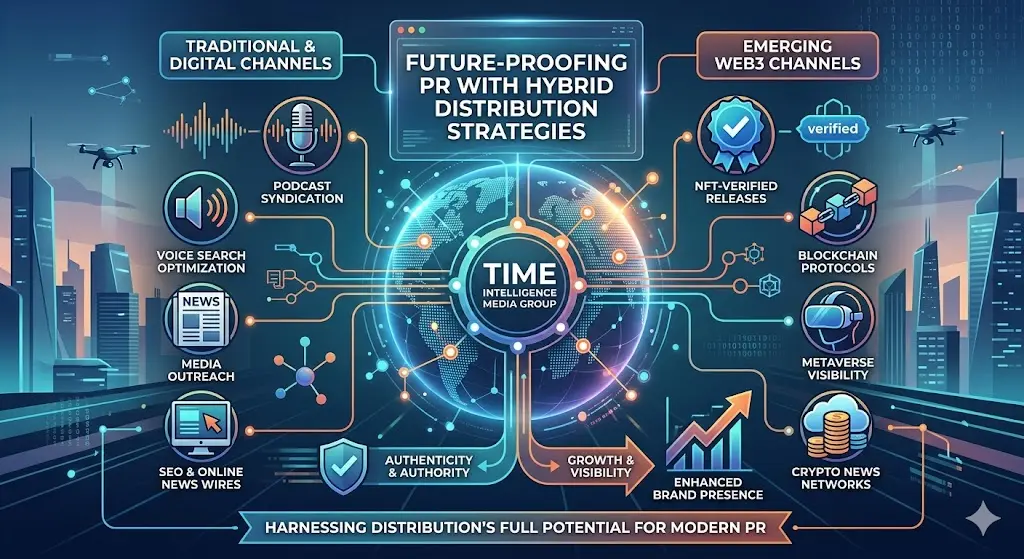
Looking ahead, why press release distribution still matters in modern PR evolves with trends like voice search and Web3. Integrating NFT-verified releases or podcast syndication positions brands for emerging channels, maintaining edge over pure digital tactics.
Time Intelligence Media Group delivers these forward-thinking PR distribution services, ensuring clients like yours harness distribution’s full potential for authority and growth.
