

In today’s crowded event landscape, standing out requires more than just a great venue and engaging program. Professional media exposure transforms events from local happenings into widely recognized successes, amplifying reach and impact. Organizers who invest in targeted media coverage see measurable boosts in attendance, sponsorships, and long-term brand loyalty.
Events without strong media backing often fade into obscurity, missing opportunities to connect with broader audiences. Professional media exposure ensures your event gains credibility through trusted outlets, driving organic interest and positioning it as a must-attend industry benchmark.
Why Visibility Drives Event Attendance and Revenue
Professional media exposure directly correlates with higher attendance rates, as studies from event industry reports show events with pre-event coverage experience up to 40% more registrations. When journalists, bloggers, and influencers cover your event, they create a ripple effect of buzz that organic social media alone can’t match. For instance, a tech conference in Dubai gained 25,000 additional views after features in Forbes and TechCrunch, leading to sold-out sessions and new sponsor deals.
This visibility isn’t just about numbers; it builds perceived value. Attendees and sponsors gravitate toward events endorsed by reputable media, viewing them as high-caliber opportunities. Without it, even the most innovative events struggle against competitors who prioritize media outreach from the planning stage.
Trends Shaping Modern Event Media Strategies
Current trends like hybrid and virtual events have heightened the need for digital-first media exposure. Platforms such as LinkedIn Live and TikTok events demand coverage that spans traditional press releases and multimedia storytelling. Data from EventMB indicates that 68% of organizers now integrate AI-driven media monitoring tools to track real-time sentiment and amplify positive narratives.
Moreover, post-pandemic shifts emphasize sustainability and inclusivity angles, which professional media excels at highlighting. A music festival in Berlin, for example, secured global attention by partnering with eco-focused outlets, resulting in a 150% sponsorship increase. These trends underscore why events need professional media exposure to stay relevant in algorithm-driven search and social ecosystems.
Limited Reach and Audience Engagement Gaps
Without professional media exposure, events confine their reach to existing networks, often resulting in stagnant growth. Email blasts and social posts reach only 10-20% of your list effectively due to algorithm suppression, whereas a single feature in an industry publication can expose your event to tens of thousands of targeted prospects. Consider a corporate retreat that relied solely on internal promotions—it drew 300 attendees instead of the potential 1,200 when media ignored it.
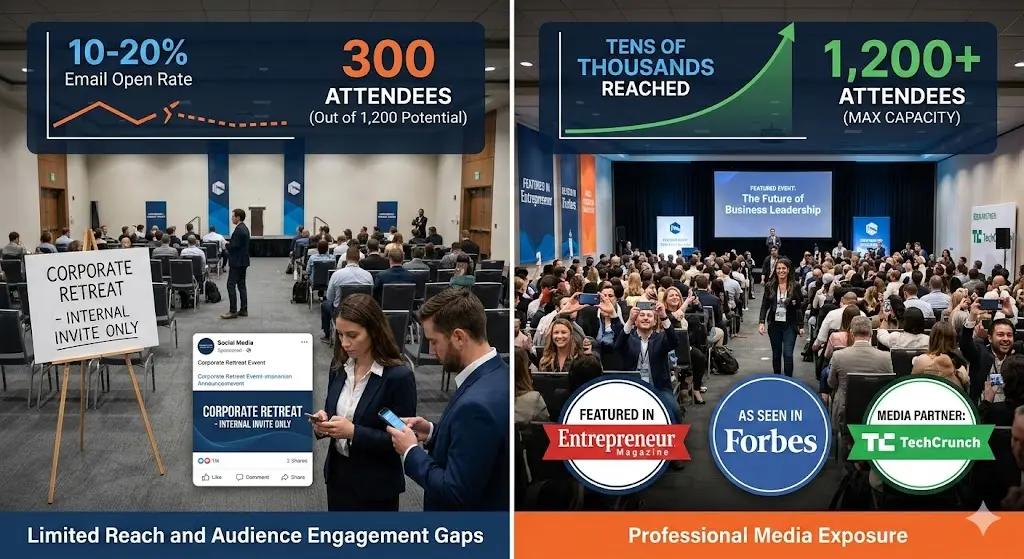
Engagement suffers too, as unverified events lack the social proof that drives FOMO (fear of missing out). Potential attendees scroll past unendorsed invites, prioritizing those with media badges of honor like “Featured in Entrepreneur Magazine.”
Risks of Negative or No Publicity
The absence of coverage leaves events vulnerable to oversight or negative narratives from attendee mishaps amplified on social media. Professional media exposure acts as a proactive shield, framing stories positively through controlled channels. A charity gala in New York avoided PR disaster after quick media partnerships turned a minor logistical glitch into a narrative of resilience, preserving donor confidence.
In competitive sectors like tech or entertainment, no publicity equates to irrelevance. Events without it miss data-rich insights from media analytics, hindering future improvements.
Enhanced Brand Credibility and Long-Term ROI
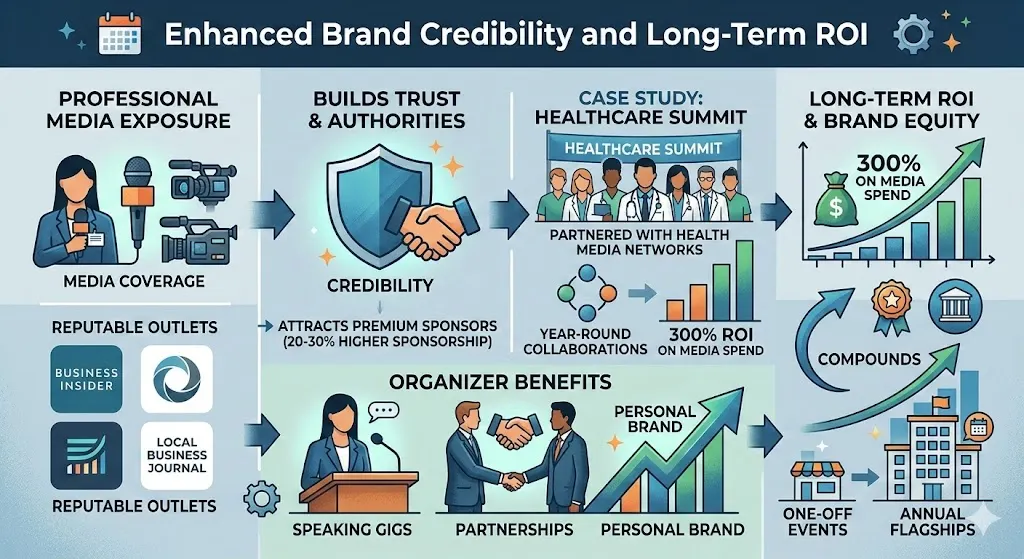
Professional media exposure elevates your event’s brand from niche to authoritative, fostering trust that pays dividends beyond the event date. Coverage in outlets like Business Insider or local business journals signals legitimacy, attracting premium sponsors willing to pay 20-30% more. A real-world example: A healthcare summit partnered with health media networks, gaining endorsements that led to year-round collaborations and a 300% ROI on media spend.
This credibility extends to organizers’ personal brands, opening doors to speaking gigs and partnerships. Over time, consistent exposure compounds, turning one-off events into annual flagships.
Measurable Metrics for Success Tracking
Events with professional media exposure benefit from robust analytics, including earned media value (EMV), share of voice, and conversion tracking. Tools like Meltwater quantify how a press mention drives ticket sales, with top campaigns achieving 5x EMV returns. For a sports tournament, media features correlated with a 45% uptick in merchandise sales via tracked referral links.
These metrics enable data-driven refinements, such as targeting underrepresented demographics for inclusive events, ensuring sustained growth.
Strategies for Pre-Event Buzz Building
Building hype starts with tailored press kits distributed to vetted journalists three months out, including high-res visuals and exclusive data. Professional teams craft pitches around unique angles, like “How This Event Pioneers AI in Event Management.” A fashion week in Lahore succeeded by securing runway previews in Vogue Asia, spiking pre-registrations by 60%.
Layer in influencer seeding and live-stream teasers to media partners, creating multi-channel anticipation that search engines reward with higher rankings.
During-Event Coverage and Real-Time Amplification
On-site, professional media exposure shines through live reporting, interviews, and visual content syndication. Dedicated crews capture keynote highlights for immediate release, boosting real-time engagement. At a recent innovation expo, on-the-ground coverage by partnered outlets generated 500,000 impressions within hours, far outpacing self-posted content.
Integration with event apps allows seamless sharing, turning attendees into amplifiers while pros handle high-quality outputs.
Post-Event Follow-Up for Lasting Impact
Post-event, recaps and success stories sustain momentum. Professional services compile highlight reels and performance reports for evergreen content, like “Top 10 Insights from [Event Name].” This extends shelf life, with a wellness retreat’s recap article driving 40% of next year’s early birds.
Repurposing clips for YouTube and podcasts ensures year-round visibility. For deeper dives into event media partnerships, explore best practices for event media partnerships.
Key Qualities of Reliable Providers
Select partners with proven networks in your industry, offering end-to-end services from pitching to distribution. Time Intelligence Media Group exemplifies this through their Events Media Coverage Services, delivering customized strategies that maximize reach and ROI.
Look for transparency in reporting and adaptability to trends like short-form video.
Comparing DIY vs. Professional Approaches
DIY efforts save upfront costs but yield 70% less coverage due to limited access. Professionals leverage relationships for placements unattainable solo. If you’re ready for professional event media coverage solutions, they provide the edge.
Events thrive when professional media exposure bridges the gap between planning and prominence, unlocking audiences, revenue, and reputation. Time Intelligence Media Group offers tailored Events Media Coverage Services that turn these insights into action, ensuring your next event captures the spotlight it deserves.
