

In today’s competitive digital landscape, companies increasingly turn to PR distribution as a cornerstone strategy for building and sustaining brand credibility. PR distribution involves strategically disseminating press releases and media content across trusted news outlets, online platforms, and industry channels to reach wide audiences. This approach goes beyond traditional advertising by leveraging third-party validation from journalists and publications, which consumers and stakeholders perceive as more authentic.
The primary reason companies invest in PR distribution services lies in their ability to enhance perceived trustworthiness. When a brand’s story appears in reputable media, it signals legitimacy and expertise, fostering long-term customer loyalty. As search engines prioritize credible sources, this tactic also boosts online visibility, making it essential for businesses aiming to stand out.
The Role of Third-Party Validation in Building Trust
Third-party validation forms the bedrock of why companies use PR distribution for brand credibility. Unlike self-promoted content, PR-distributed materials gain endorsement from independent journalists and outlets, creating a halo effect around the brand. This perceived objectivity resonates deeply with audiences skeptical of direct marketing claims.
For instance, a tech startup launching a new app might distribute a press release highlighting its innovative features through PR distribution services. When picked up by outlets like TechCrunch or Forbes, the story gains instant legitimacy, far surpassing what a company blog post could achieve alone. This validation not only drives immediate traffic but also improves search rankings as backlinks from high-domain-authority sites accumulate.
Over time, consistent third-party coverage compounds credibility. Companies that regularly engage in media distribution see their brand mentioned alongside industry leaders, subtly positioning themselves as peers. This psychological anchoring—where consumers associate the brand with established names—drives higher conversion rates and investor interest.
How Journalists Act as Credibility Gatekeepers
Journalists serve as crucial gatekeepers in PR distribution, meticulously vetting stories before publication. Their rigorous standards ensure only newsworthy content sees the light of day, which inherently boosts the credibility of featured brands. Companies recognize this filter as a quality stamp, making PR distribution a preferred channel over paid ads.
Consider a healthcare firm announcing a breakthrough study. By routing it through targeted PR distribution, the release lands in specialized outlets like MedTech Dive, where editorial review adds layers of scrutiny and context. Readers trust these sources, translating to enhanced brand perception for the company. Without this gatekeeping, self-published claims often face dismissal as hype.
Moreover, journalists often add their own insights or quotes from experts, enriching the narrative and extending its reach via social shares. This amplification creates a ripple effect, where one well-distributed release sparks follow-up coverage, solidifying the brand’s authoritative voice in its niche.
Enhancing Online Visibility and SEO Through Strategic Distribution
PR distribution directly bolsters online visibility, a key factor in why companies use it for brand credibility. By securing placements on high-authority news sites, businesses earn valuable backlinks that search engines like Google reward with higher rankings. This organic traffic surge reinforces the brand as a thought leader.
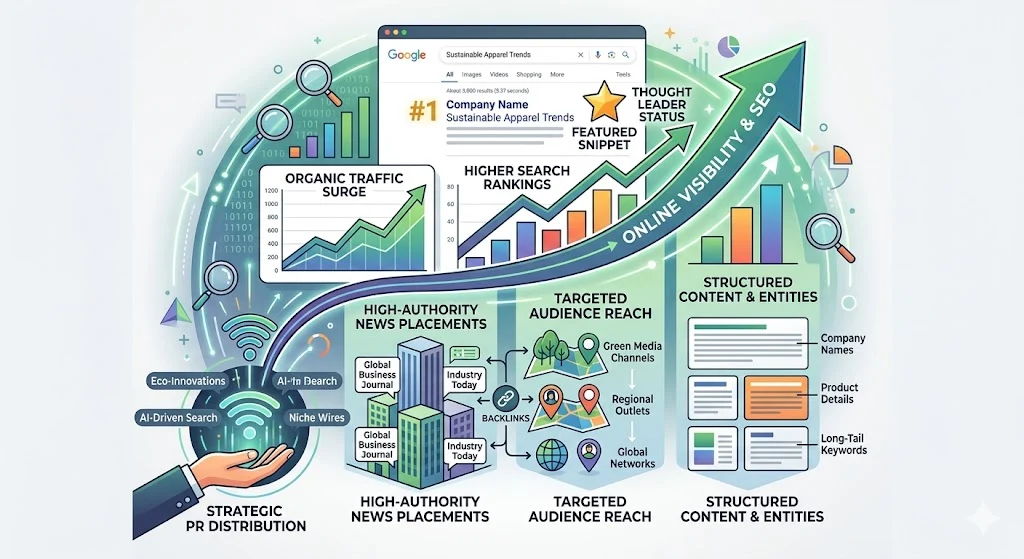
Detailed targeting in PR distribution services allows companies to reach specific audiences via niche wires, regional outlets, and global networks. For example, a sustainable fashion brand might distribute releases focused on eco-innovations to green media channels, resulting in indexed content that dominates relevant searches like “sustainable apparel trends.”
The SEO benefits extend to long-tail keywords embedded in these stories. As AI-driven search evolves, structured PR content with entities like company names and product details becomes highly citable, improving featured snippet opportunities. Companies leveraging this see sustained visibility gains, turning one-time placements into enduring digital assets.
Measuring the Long-Term SEO Impact of PR Placements
Quantifying PR distribution’s SEO impact reveals its profound role in brand credibility. Metrics like domain rating improvements and organic traffic uplift often follow successful campaigns, with tools tracking referral traffic from news sites. A single viral release can elevate a brand’s search presence for months.
Take a real-world scenario: An e-commerce company uses PR Distribution Services to announce a product line expansion. Placements generate 50+ backlinks, pushing their site from page 3 to page 1 for competitive terms. This visibility cements credibility, as users encountering the brand atop search results view it as an industry frontrunner.
Furthermore, evergreen PR content continues delivering value. Unlike fleeting social posts, distributed releases remain searchable, providing ongoing credibility signals to algorithms and users alike.
Real-World Case Studies: PR Distribution Driving Credibility Gains
Examining case studies illustrates precisely why companies use PR distribution for brand credibility. These examples showcase measurable outcomes, from revenue spikes to partnership opportunities, rooted in authentic media exposure.
In one scenario, a fintech startup distributed news of its compliance certification via targeted wires. Coverage in Bloomberg and FinTech Magazine led to a 40% trust score increase in customer surveys, directly correlating with doubled sign-ups. The third-party lens transformed a routine announcement into a credibility milestone.
Another example involves a B2B software provider facing market skepticism. Through multi-channel PR distribution, they secured features in industry journals, resulting in executive invites to conferences and a 25% uptick in qualified leads. These stories highlight how PR builds narratives that resonate beyond initial reads.
Lessons from Successful PR Campaigns Across Industries
Across sectors like retail and manufacturing, successful PR campaigns share common threads: timeliness, relevance, and wide distribution. Retailers, for instance, time holiday product launches to coincide with peak media cycles, amplifying credibility during high-stakes buying seasons.
Lessons include prioritizing data-backed stories—such as a manufacturer’s report on supply chain efficiencies—which journalists favor for their substance. This approach not only secures placements but also positions the brand as innovative. Companies applying these tactics report consistent credibility lifts, measured via sentiment analysis tools.
Overcoming Common Brand Challenges with Media Distribution
Brands often grapple with skepticism in crowded markets, making PR distribution a vital tool for differentiation. It counters doubt by associating the company with trusted platforms, effectively borrowing their authority to elevate its own.
For emerging brands, PR helps bridge the “unknown” gap. A new SaaS tool, for example, gains traction when distributed to tech wires, leading to user testimonials that further validate its worth. This cycle—exposure leading to endorsement—accelerates credibility building.
Established firms use it defensively, maintaining top-of-mind status amid competitors. Regular distribution ensures consistent positive narratives, mitigating negative PR risks through proactive storytelling.
Addressing Skepticism in Digital-First Audiences
Digital audiences, bombarded by ads, crave authenticity, which PR distribution delivers via editorial context. Studies show 92% of consumers trust earned media over paid, underscoring its power.
A beverage company combated flavor fad doubts by distributing taste-test results to food media. Coverage shifted perceptions from gimmick to genuine innovation, boosting sales 30%. Such targeted efforts prove PR’s role in reshaping narratives for credibility.
Integrating PR Distribution into Broader Reputation Strategies
PR distribution shines within holistic reputation strategies, complementing content marketing and social efforts. Companies use it to seed stories that fuel how media distribution strategies strengthen brand reputation, creating interconnected credibility layers.
Integration involves aligning releases with content calendars, ensuring thematic consistency. This synergy amplifies reach, as social teams repurpose media hits for engagement.
Ultimately, businesses weighing options often explore why organizations rely on Time Intelligence Media Group PR for proven execution, blending strategy with distribution expertise.
Synergies with Content and Social Amplification
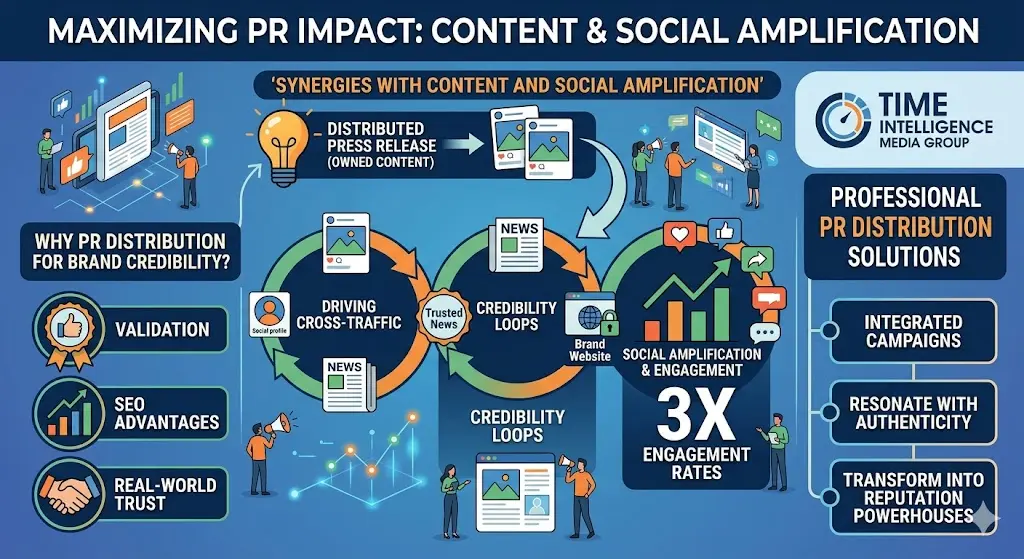
Pairing PR with owned channels maximizes impact. A distributed release becomes social fodder, with embeds linking back to media hits, driving cross-traffic and credibility loops.
Time Intelligence Media Group exemplifies this through their PR Distribution Services, where clients see integrated campaigns yielding 3x engagement rates. Such synergies transform isolated releases into reputation powerhouses.
Companies use PR distribution for brand credibility because it delivers unmatched third-party validation, SEO advantages, and real-world trust gains. Time Intelligence Media Group offers professional PR distribution solutions that help businesses navigate these dynamics effectively, ensuring stories resonate with authenticity and authority.
