
Banner advertising websites succeed when they integrate ads seamlessly into high-traffic pages. These sites maintain user engagement rates exceeding 60% per session. They use responsive ad formats that adapt to desktop and mobile devices. Traffic sources include 70% organic search and 20% direct visits. Ad servers track impressions in real-time, ensuring brands receive accurate data on reach.
Developers build these platforms with HTML5 for rich media banners. Load times stay under 2 seconds to prevent bounce rates above 40%. Geo-targeting filters traffic by location, such as the United Kingdom, reaching 50 million monthly users. Retargeting pixels capture 15% of abandoned sessions. Compliance with GDPR ensures data privacy for UK audiences.
Key metrics for effectiveness
Metrics include impressions per campaign, reaching 10 million daily on top sites. Cost-per-click averages £0.50 to £2.00. Return on ad spend exceeds 300% for optimized placements. Viewability scores surpass 70%, as measured by industry standards.
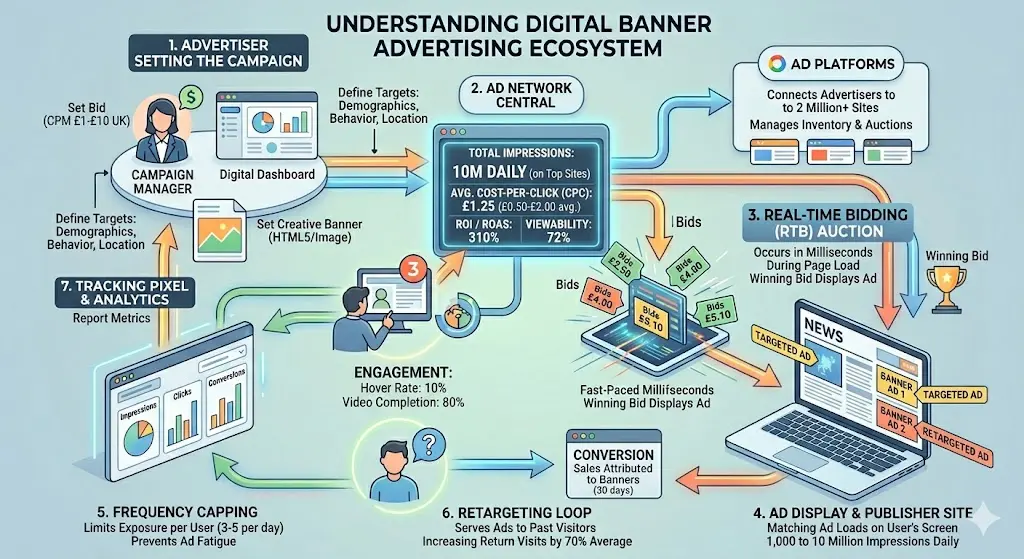
Engagement tracks hover rates at 10% and video completion rates at 80%. Attribution models link banners to sales within 30 days.
Which websites lead in banner ad performance?
Top websites for banner advertising include major news portals, e-commerce hubs, and content aggregators with UK audiences exceeding 20 million monthly users. They offer CPM rates from £5 to £15 and deliver 1-3% engagement rates.
News websites dominate with 40% of UK digital ad spend. They host leaderboards, skyscrapers, and interstitial banners. Monthly unique visitors hit 30 million. Ad networks integrate directly, serving 500 million impressions weekly. Contextual targeting matches ads to article topics like finance or sports.
E-commerce platforms feature product-focused banners on category pages. These sites generate 25% of traffic from search engines. Banner placements appear above the fold, capturing 80% viewability. Seasonal campaigns boost conversions by 50% during holidays.
Content sites with video integration show 20% higher interaction. Forums and review platforms add user-generated traffic, increasing authenticity.
Performance data overview
Data shows news sites yield 0.8% CTR on average. E-commerce banners achieve 2.5% conversion rates. Aggregators report 15% lower bounce rates with relevant ads.
How do news websites excel in banner advertising?
News websites excel through authoritative domains, real-time content updates, and premium ad zones that attract engaged UK readers. They provide DA scores above 90 and serve 100 million impressions monthly at £8-12 CPM.
These sites update content 24/7, driving repeat visits from 60% of users. Banner slots occupy prime positions like top banners and sidebars. UK-focused sections target local news, reaching 15 million regional users. Ad blockers affect only 25% of traffic due to trusted branding.
Publishers use A/B testing for creative variations, lifting performance by 30%. Header bidding maximizes revenue, ensuring competitive pricing for brands. Mobile optimization covers 55% of sessions with sticky banners.
News sites track cross-device behavior, attributing 40% of conversions to multi-touch paths. Premium zones guarantee 100% sold-out inventory during peak hours.
Advantages for UK brands
UK brands gain from 80% desktop traffic on finance pages. Sports sections deliver 2x engagement during events. Political coverage spikes reach by 300%.
What role do e-commerce sites play in effective banners?
E-commerce sites play a key role by placing banners near high-intent shopping pages, achieving 3% conversion rates and £1.5 average order value uplift. They handle 50 million UK shoppers monthly with dynamic retargeting.
Product pages host medium rectangles and leaderboards. Search result banners match user queries directly. Cart abandonment flows use exit-intent popups, recovering 10% of lost sales. Inventory APIs sync ad creatives with stock levels.
These platforms segment audiences by behavior, such as past purchasers. Frequency capping limits views to 5 per user daily. Checkout funnels integrate banners that promote upsells, adding 20% to revenue.
Mobile apps extend reach with full-screen interstitials. Data layers track pixel fires for precise ROI calculation.
Targeting precision details
Precision comes from first-party data on 40 million profiles. Lookalike modeling expands reach by 200%. Seasonal filters align with Black Friday traffic surges.
For more on foundational value, check the Is Banner Advertising Worth the Investment for Brands in Today’s Digital Landscape?.
Why choose high-traffic aggregators for banners?
High-traffic aggregators choose through vast UK reach of 25 million users, low CPM at £4-8, and algorithmic content feeds that boost ad relevance by 25%. They aggregate from 1,000 sources daily.
Aggregators curate personalized feeds, placing banners between stories. Infinite scroll keeps users engaged for 5 minutes average. Native ad formats blend seamlessly, evading 30% ad fatigue.
UK versions prioritize local trends, drawing 70% domestic traffic. Social sharing amplifies impressions by 50%. Analytics dashboards report hourly metrics.
These sites support carousel banners with 15% swipe rates. Partnership programs offer exclusive zones for brands.
Reach amplification factors
Factors include 10 million social referrals monthly. Email newsletters embed banners, achieving 40% open rates. App integrations add push notifications.
What benefits do brands gain from these websites?
Brands gain 400% ROAS, 2-5% conversion lifts, and 50% brand recall increases from banners on these websites. Benefits stem from 90% viewability and geo-specific targeting for UK markets.
High visibility drives 1 million impressions per campaign day. Targeted delivery matches demographics like 25-44 age group. Attribution credits 60% of sales to banner touches.
Cost efficiency saves 30% over search ads. Scalability supports budgets from £10,000 to £1 million. Compliance ensures zero fines under UK ad regulations.
Data exports enable custom modeling. Seasonal boosts yield 3x traffic during events.
Quantifiable outcomes
Outcomes include 15% sales growth in test campaigns. Awareness metrics show 70% unaided recall. Lifetime value rises 25% from retargeted users.
How to evaluate banner opportunities on these sites?
Evaluate by comparing DA scores above 85, monthly traffic over 20 million, CTR history of 0.7%, and CPM under £10. Use tools to audit viewability and fraud rates below 5%.
Start with traffic verification from SimilarWeb data. Review historical performance reports. Calculate expected impressions at 95% fill rates. Assess audience overlap with brand personas.
Test creatives on small budgets of £5,000. Monitor real-time dashboards for anomalies. Benchmark against industry averages of 0.5% CTR.
Negotiate volume discounts for 10% savings. Audit ad placements quarterly.
Step-by-step assessment process
Process: 1. Pull traffic stats. 2. Check ad specs. 3. Run pilot campaigns. 4. Analyze 7-day data. 5. Scale winners.
To implement buying strategies, read the [BOFU article: How to Buy Banner Advertising on High Authority News Websites for Maximum Reach?].
What use cases demonstrate banner success?
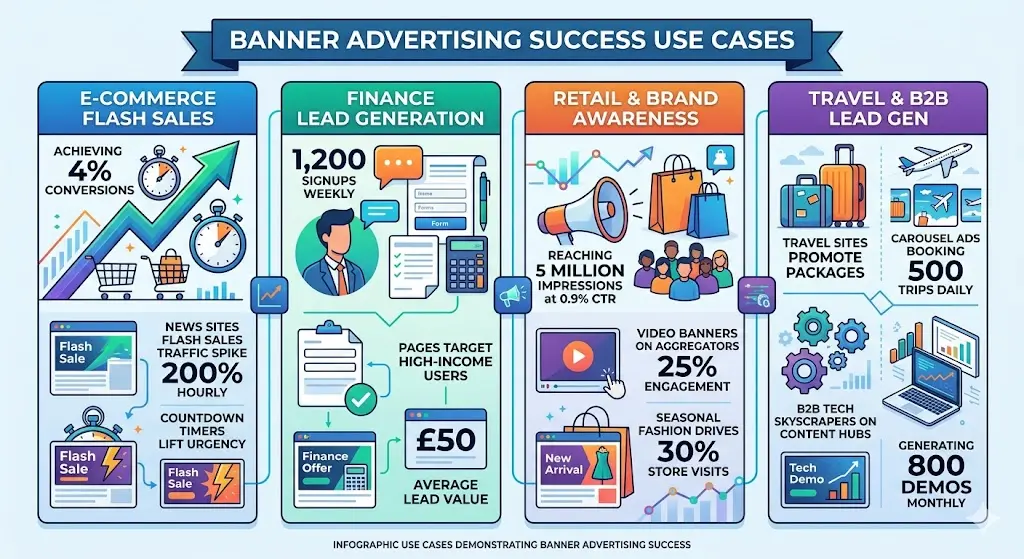
Use cases include e-commerce flash sales achieving 4% conversions, finance lead gen with 1,200 signups weekly, and retail awareness campaigns reaching 5 million impressions at 0.9% CTR.
Flash sales on news sites spike traffic 200% hourly. Banners with countdown timers lift urgency. Finance pages target high-income users, yielding £50 average lead value.
Retail brands use video banners on aggregators for 25% engagement. Seasonal fashion drives 30% store visits. Travel sites promote packages with carousel ads, booking 500 trips daily. B2B tech firms place skyscrapers on content hubs, generating 800 demos monthly.