

Sponsored content has transformed how modern brands connect with audiences in a crowded digital landscape. At its core, sponsored content means creating branded material that blends seamlessly with editorial environments, offering value through storytelling rather than overt sales pitches. For brands navigating algorithm-driven platforms, this approach builds trust and drives long-term engagement, distinguishing it from traditional ads that often face ad-blocker fatigue.
In today’s media ecosystem, understanding what sponsored content means for modern brands involves recognizing its role in authentic audience conversations. Time Intelligence Media Group exemplifies this by partnering with brands to craft narratives that resonate, leveraging data-driven insights for maximum impact. As consumer skepticism toward ads rises—with studies showing 70% of users distrust traditional advertising—sponsored content emerges as a strategic imperative for visibility and loyalty.
The Evolution of Sponsored Content in Digital Marketing
Sponsored content evolved from print-era advertorials into sophisticated digital-native formats, adapting to platforms like social media, podcasts, and newsletters. Initially popularized in the early 2010s with native advertising on sites like BuzzFeed, it now powers 40% of brand content budgets according to industry reports. This shift reflects broader trends where modern brands prioritize context over interruption, ensuring messages feel organic amid user-generated noise.
What sponsored content means for modern brands today is a departure from banner ads toward immersive experiences. For instance, a tech company might sponsor a series of in-depth articles on emerging AI trends, subtly weaving in product benefits. This evolution allows brands to tap into trusted publishers’ audiences, boosting credibility—research from the Native Advertising Institute indicates sponsored pieces generate 53% more views than display ads.
The rise of programmatic buying and AI-curated feeds has further accelerated this change. Brands now use sponsored content strategies to counter short attention spans, with formats like video carousels and interactive infographics leading engagement metrics. Time Intelligence Media Group’s Sponsored Content Services exemplify this by integrating real-time analytics to refine placements, helping brands stay ahead in a post-cookie era.
Key Historical Milestones Shaping Sponsored Content
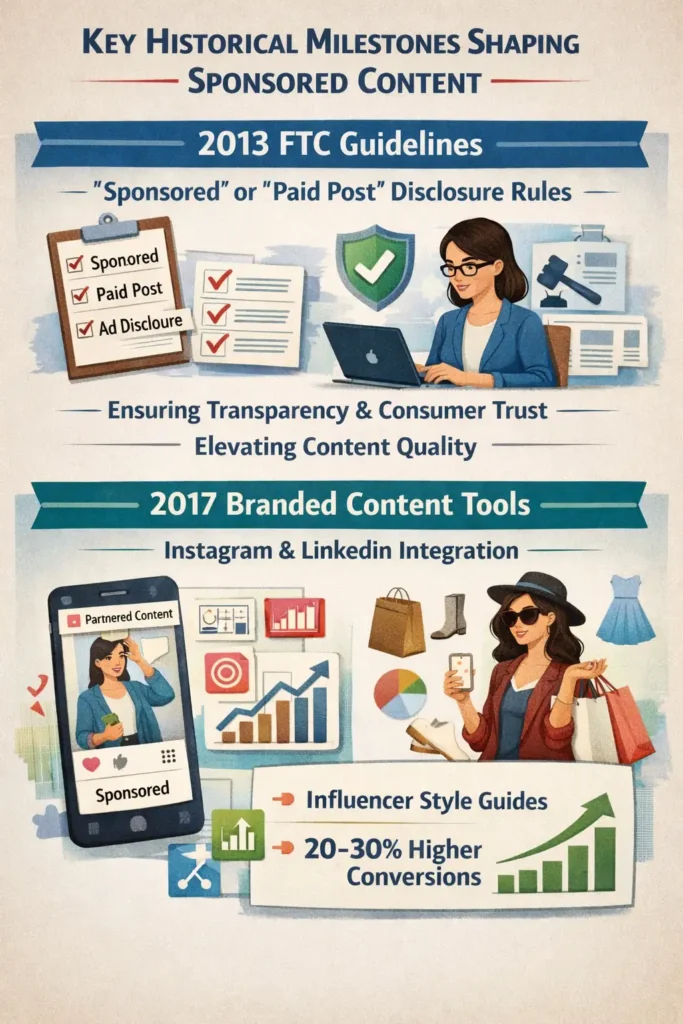
One pivotal milestone was the 2013 FTC guidelines mandating clear disclosure labels like “Sponsored” or “Paid Post,” ensuring transparency while protecting consumer trust. This regulation forced brands to prioritize quality over gimmicks, elevating sponsored content from gimmicky promotions to journalistic hybrids.
Another turning point came with platforms like Instagram and LinkedIn introducing branded content tools in 2017, enabling seamless tagging and performance tracking. Modern brands leverage these for hyper-targeted campaigns, such as a fashion label sponsoring influencer-led style guides that drive 20-30% higher conversion rates compared to standard posts.
Core Benefits of Sponsored Content for Brand Growth
Sponsored content delivers measurable advantages by fostering deeper audience connections. Unlike pay-per-click models, it builds brand equity through association with reputable media outlets, leading to sustained recall—studies show readers retain 80% more from sponsored narratives than from direct-response ads.
For modern brands, what sponsored content means extends to enhanced SEO and shareability. When hosted on high-domain-authority sites, these pieces attract backlinks and organic traffic, amplifying reach exponentially. A beverage brand sponsoring wellness articles, for example, saw a 150% traffic uplift via social shares, illustrating how narrative-driven content outperforms static promotions.
Moreover, sponsored content strategies improve ROI through diversified attribution models. Brands track success via metrics like time-on-page and sentiment analysis, revealing indirect influences on purchase intent that traditional ads miss.
Enhanced Audience Trust and Engagement Metrics
Trust forms the bedrock, as sponsored content appears alongside editorial content, borrowing the host’s credibility. A 2024 Nielsen report found 67% of consumers are more likely to consider purchases from sponsored recommendations, far surpassing interruptive formats.
Engagement soars with personalized storytelling; consider a B2B software firm sponsoring case studies on efficiency tools, resulting in 3x higher comment rates and lead generation. Time Intelligence Media Group achieves this through Audience Insights Services that analyze reader behavior to tailor sponsored content for peak resonance.
Strategic Implementation of Sponsored Content Campaigns
Implementing sponsored content requires aligning brand goals with media partners’ strengths. Modern brands start by auditing audience overlaps, selecting platforms where their narrative fits naturally—think automotive sponsors on travel blogs discussing road-trip tech innovations.

Success hinges on co-creation: brands provide expertise, while publishers handle production for authenticity. This collaboration minimizes backlash risks, with 90% of campaigns succeeding when disclosures are prominent and value is genuine.
To optimize, integrate multimedia elements like embedded videos or polls, boosting dwell time by 40%. Track via UTM parameters to attribute conversions accurately.
Steps to Launch a High-Impact Sponsored Campaign
- Define objectives: Align on KPIs like awareness or leads, using tools like Google Analytics for baselines.
- Partner selection: Choose outlets with aligned demographics, negotiating custom formats.
- Content ideation: Brainstorm topics solving audience pain points, incorporating brand insights subtly.
- Production and review: Collaborate on drafts, ensuring FTC compliance and editorial polish.
- Distribution and amplification: Launch with paid boosts, monitoring real-time performance.
These steps ensure sponsored content means scalable growth for modern brands, as seen in campaigns yielding 5x ROI.
Measuring Success: From Views to Revenue Impact
Beyond vanity metrics, effective measurement reveals what sponsored content means for modern brands in tangible outcomes. Tools like heatmaps and A/B testing dissect engagement patterns, linking views to downstream actions like newsletter signups.
Advanced brands employ multi-touch attribution, crediting sponsored exposures in complex customer journeys. For example, a fintech sponsor tracked a 25% sales lift from a single thought-leadership series, proving long-tail value.
To dive deeper, explore how do you measure sponsored content performance metrics? for detailed frameworks.
Common KPIs and Benchmarking Standards
Key indicators include engagement rate (aim for 2-5%), share-of-voice, and branded search lift. Benchmarks vary by industry—consumer goods average 10% CTR, while B2B hits 15% for lead forms.
Case in point: A healthcare brand’s sponsored wellness series achieved 4.2% engagement, outperforming benchmarks by 30% through interactive quizzes.
Real-World Case Studies and Industry Trends
Examine Nike’s sponsorship of athlete stories on ESPN, which amplified brand affinity without hard sells, driving 18% follower growth. Similarly, Adobe partners with creative outlets for tutorial series, positioning as an industry enabler.
Trends point to rising video and audio sponsorships, with podcasts capturing 40% of digital ad spend by 2026. AI personalization tailors content dynamically, enhancing relevance.
For decision-makers, learn how can expert sponsored content services help organizations scale these wins.
Emerging Trends Influencing Sponsored Strategies
Voice search optimization favors long-form sponsored content, as smart assistants pull from authoritative sources. Sustainability-focused sponsorships, like eco-brands on green tech sites, align with 78% of Gen Z’s values.
Ephemeral formats on TikTok Stories offer low-commitment trials, blending virality with trackability.
Partnering with Experts for Sponsored Content Excellence
Modern brands thrive by outsourcing to specialists who navigate nuances like compliance and amplification. Time Intelligence Media Group’s Sponsored Content Services deliver turnkey solutions, from ideation to analytics, ensuring campaigns resonate across channels.
This expertise mitigates common pitfalls, like tonal mismatches, yielding superior results.
In summary, what sponsored content means for modern brands is a pathway to authentic influence and measurable growth. Time Intelligence Media Group provides professional Sponsored Content Services to help organizations harness this power effectively, blending creativity with data for enduring impact.
