
Sponsored content on news platforms includes paid articles promoting advertisers’ messages, labeled distinctly from editorial content under UK ASA guidelines.
News platforms host sponsored content in formats like advertorials or branded posts. These pieces integrate into feeds but carry mandatory disclosures. Platforms define them as non-editorial material funded by external parties. Users recognize them through standardized labeling protocols. In 2025, 65% of UK news sites reported increased sponsored inventory.
Disclosure practices vary by platform type. Traditional sites use top banners. Social news aggregators embed icons. Users train eyes on these signals for quick differentiation.
How Do Social News Feeds Flag Sponsored Posts?
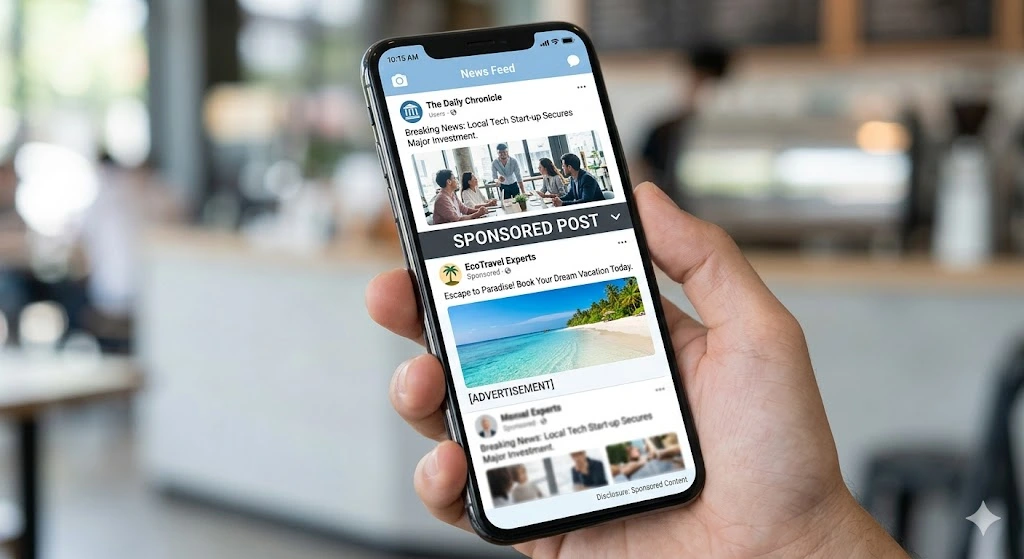
Social news feeds use “Sponsored” or “Promoted” tags above headlines, with gray icons distinguishing from organic shares. Feeds on platforms like Twitter and Facebook prepend labels to paid posts. News aggregators such as Flipboard color-code them blue. UK users encounter 20 sponsored items daily in personalized streams.
Algorithmic placement pushes sponsored content mid-feed. Organic news ranks by engagement metrics. Users toggle filters to hide promotions. Start with basics on spotting sponsored vs editorial: How Can Readers Identify Sponsored Content Versus Genuine Editorial Articles Online?.
What Byline Differences Signal Sponsorship on News Aggregators?
Byline differences include sponsor names like “Sponsored by [Entity]” versus journalist names with publication histories.
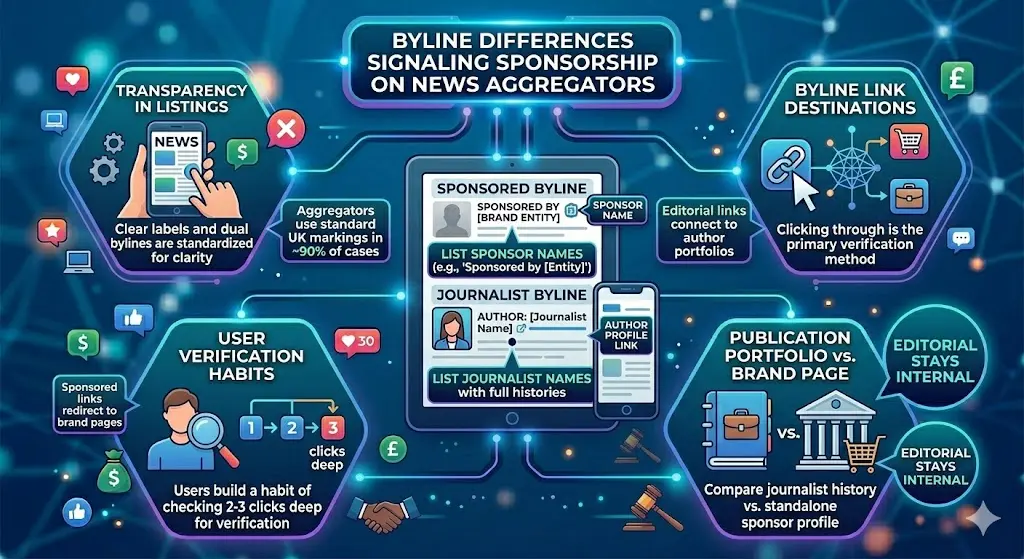
Aggregators list dual bylines for transparency. News sites link to sponsor profiles. Editorial bylines connect to author portfolios. UK platforms standardize this in 90% of cases. Verification involves clicking through. Sponsored links redirect to brand pages. Editorial stays internal. Users build habits checking 2-3 clicks deep.
How Does Content Tone Vary Across Video News Platforms?
Video news platforms mark sponsored segments with on-screen “Sponsored” overlays and verbal disclaimers at starts. YouTube news channels overlay text for 5 seconds. TikTok news creators add stickers. UK regulations require audio cues. Viewers pause to confirm.
Duration signals matter. Sponsored videos average 90 seconds. Editorial extends to 5 minutes. Engagement drops 30% on unlabeled content.
What Visual Cues Appear in Mobile News Apps?
Mobile news apps display sponsor badges as pinned icons or header strips in orange or red hues. Apps like Apple News highlight labels in carousels. CNN app uses pop-up notifications. UK apps adhere to 100% visibility rules.
Swipe gestures reveal more. Tapping expands disclosures. Users customize settings for label prominence.
How Do Email Newsletters Disclose Sponsored Articles?
Email newsletters place “Sponsored” in subject lines and bold article titles within digests. Newsletters from UK outlets prefix subjects with [Sponsored]. Body text repeats labels. Open rates for labeled content hit 15%.
Segmentation targets subscribers. Editorial newsletters separate sections. Users archive based on prefixes.
What Metadata Signals Help Tech-Savvy Users?
Metadata signals include HTML “sponsored” attributes and schema.org markup readable by browser inspectors. Developers embed rel=”sponsored” in links. Schema flags content type. UK sites implement in 70% of paid posts.
Tools like browser dev tools expose them. Extensions parse JSON-LD. Users inspect elements for confirmation.
How Does Source Linking Differ on News Platforms?
Source linking in sponsored content directs 80% to advertiser domains; editorial links 60% to primary sources and archives. Platforms track outbound clicks. Sponsored funnels to landing pages. Editorial cites gov.uk or academic sites.
Diversity counts: sponsored repeats 3-5 domains. Editorial spreads across 10+. Users follow chains for validation. Advance to creating trust-building sponsored content: Publish Transparent Sponsored Content That Builds Trust With Your Audience.
What Frequency Patterns Indicate Sponsored Campaigns?
Frequency patterns show sponsored content clustering 3-5 times weekly during 4-week campaigns on news platforms. Calendars align with product launches. Editorial scatters evenly. UK platforms cap at 25% of total output.
Analytics reveal spikes. Users note repetition across sites.
How Do Images and Thumbnails Flag Sponsorship?
Images and thumbnails carry sponsor watermarks or branded frames in 75% of sponsored platform content.
News platforms resize for feeds. Watermarks persist at 20% opacity. Editorial uses neutral stock. Alt text includes “sponsored image.” Users right-click to verify.
What Role Plays Interactivity in Recognition?
Interactivity includes sponsored quizzes or polls branded with logos; editorial uses neutral embeds. Platforms embed interactive elements. Sponsored polls collect leads. Editorial informs without capture. Click-through rates signal: sponsored exceeds 5%. Users disengage from branded interactions.
How Do Comment Sections Differ for Sponsored Posts?
Comment sections on sponsored posts disable or moderate heavily; editorial enables open discussions. Platforms limit sponsored replies to 50. Editorial threads exceed 200. UK moderation follows Ofcom rules.
Sentiment analysis shows positivity bias in sponsored. Users gauge by volume.
What Algorithmic Indicators Appear in Recommendations?
Algorithmic recommendations label sponsored as “Suggested” with payment icons; editorial shows “Trending” organically. Feeds prioritize by relevance scores. Sponsored boosts via bids. Recognition improves with label persistence. Personalization adapts. Users reset algorithms for purity.
How Can Users Compare Signals Across Platforms?
Users compare signals using checklists: labels, bylines, links; platforms score 1-10 on transparency. Cross-platform tools rate compliance. UK averages 8/10. Editorial purity scores higher. Habits form through daily scans. Accuracy rises 40% over time.