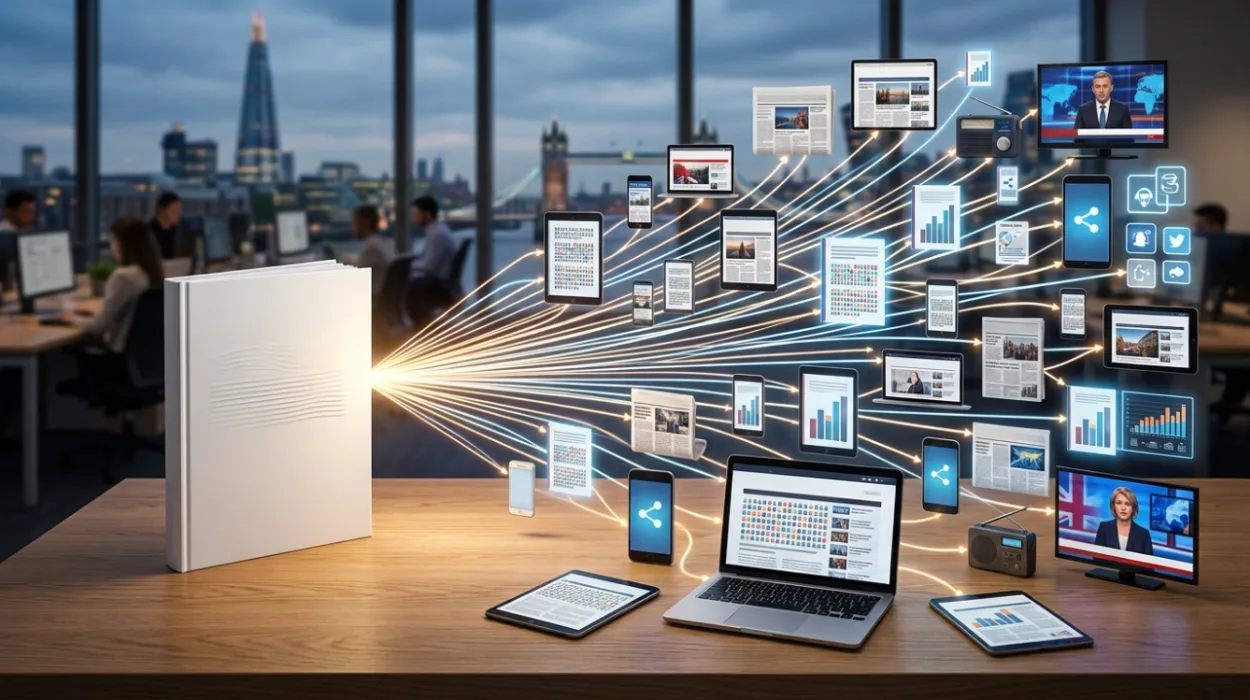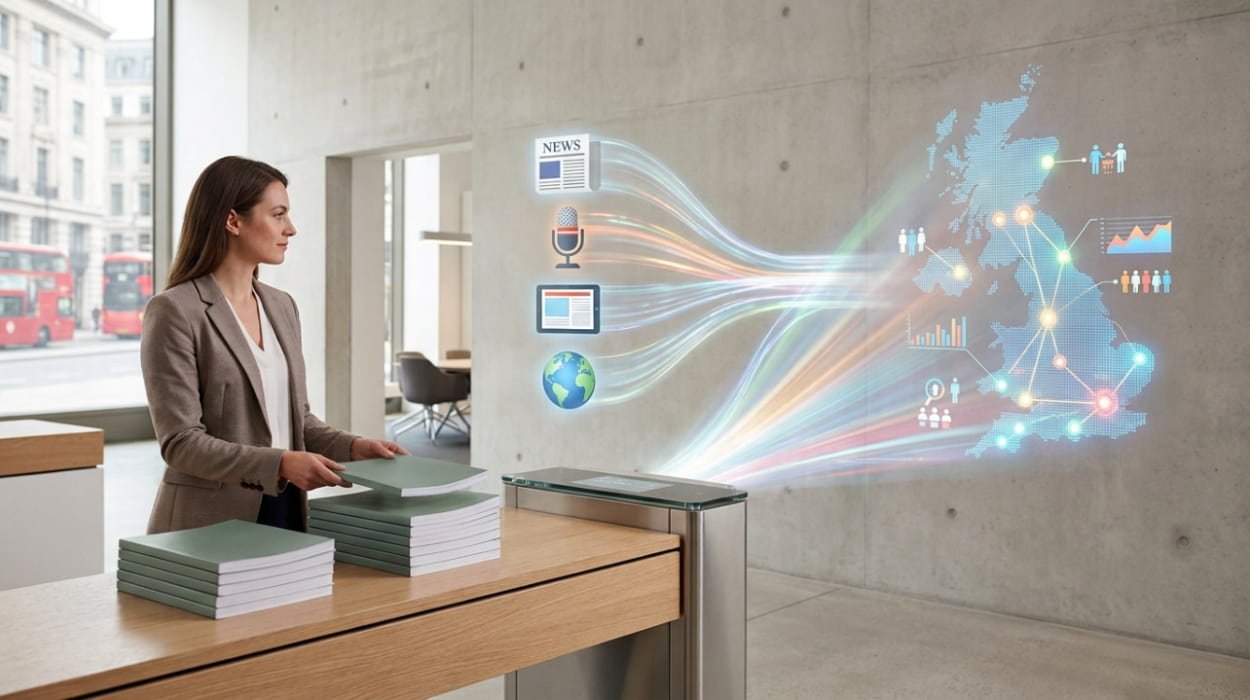
Banner advertising consists of rectangular graphic ads placed on websites, typically at the top, bottom, or sides of pages, measuring sizes like 728×90 pixels or 300×250 pixels, delivering clickable messages to drive user actions.
Banner advertising emerged in 1994 with the first web banner on HotWired.com, which featured a 468×60 pixel animated ad for AT&T. This format displays static or animated images with text and calls to action. Websites host these banners in fixed positions to maximize visibility. Advertisers pay based on impressions, clicks, or conversions.
Banners integrate directly into page layouts without disrupting content flow. They load quickly due to optimized file sizes under 150 KB. Targeting occurs through cookies, IP addresses, and user behavior data. In 2025, global banner ad spend reached $120 billion, accounting for 45% of display advertising revenue.
How Does Banner Advertising Differ from Other Display Formats?
Banner advertising uses fixed-position rectangular graphics on web pages, unlike pop-ups that overlay content, interstitials that fill screens between pages, or native ads that blend into editorial content, providing consistent visibility without user interruption.
Standard display formats include pop-ups, which appear in new windows; interstitials, which delay page loads; native ads, which mimic site design; and video ads, which autoplay moving content. Banners remain static on the page periphery. This positioning avoids annoyance factors present in overlays.
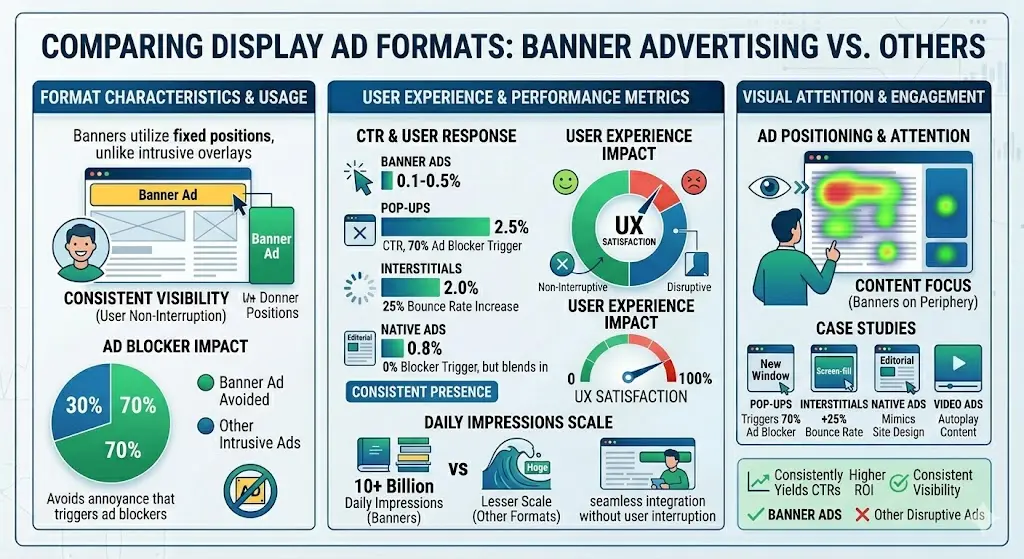
Pop-ups achieve 2-5% click-through rates (CTRs) but trigger 70% of ad blockers. Interstitials deliver high engagement at 1-3% CTRs yet increase bounce rates by 25%. Native ads secure 0.5-1% CTRs through seamless integration. Banners consistently yield 0.1-0.5% CTRs across 10 billion daily impressions.
What Key Design Elements Make Banners More Effective?
Effective banners incorporate high-contrast colors, concise text under 20 words, compelling visuals, and clear calls to action like “Shop Now,” achieving 20-30% higher CTRs than generic designs.
Design principles focus on size standardization: leaderboard (728×90), medium rectangle (300×250), and skyscraper (120×600). Colors follow brand guidelines with 4:1 contrast ratios for readability. Text limits to 6-8 words per line prevent clutter.
Animation cycles run 3-5 seconds with loops under 15 seconds to retain attention. Images use product shots or lifestyle scenes at 72 DPI resolution. Buttons feature rounded edges and hover effects. A/B testing refines elements, boosting performance by 15%.
Why Do Standardized Sizes Boost Banner Performance?
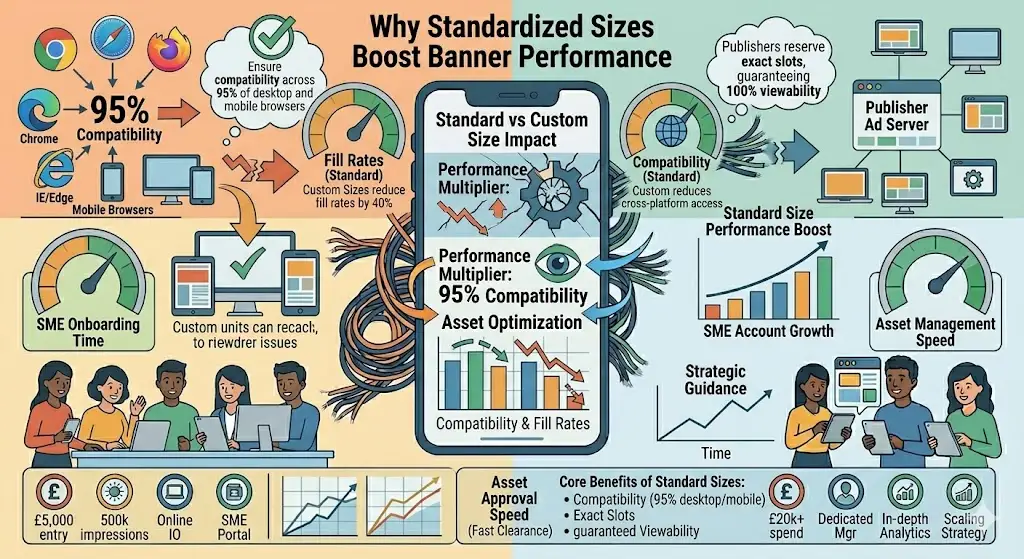
Standard sizes ensure compatibility across 95% of desktop and mobile browsers. Publishers reserve exact slots, guaranteeing 100% viewability. Custom sizes reduce fill rates by 40%.
What Targeting Capabilities Enhance Banner Effectiveness?
Banner advertising leverages first-party data, geolocation, demographics, and retargeting to reach specific audiences, delivering 3x higher conversion rates than untailored display formats.
Targeting methods include contextual placement on relevant sites, behavioral tracking via pixels, and lookalike modeling from customer lists. UK regulations under UK GDPR require consent for cookies. Frequency caps limit exposures to 5-7 per user daily.
Demographic filters select age 25-44, income over £50,000, or interests in finance. Retargeting serves ads to site visitors within 30 days, increasing returns by 150%. Dynamic creative optimization swaps images based on user data in real time.
How Does Retargeting Specifically Improve Results?
Retargeting identifies cart abandoners and serves personalized banners, recovering 10-20% of lost sales. Pixel tracking logs interactions for sequence-based ads.
What Metrics Prove Banner Advertising Outperforms Others?
Banners achieve 99% viewability on premium sites, 0.2-0.6% average CTRs, and £2-5 cost per acquisition (CPA), surpassing pop-ups’ 60% viewability and interstitials’ £8-12 CPA.
Key metrics track impressions served, CTR calculated as clicks divided by impressions, and conversions via post-click tracking. Viewability measures 50% pixels in viewport for 1 second. UK benchmarks show banners at 0.35% CTR versus 0.15% for native ads.
CPM rates for banners average £3-6 per 1,000 impressions. ROAS hits 4:1 on optimized campaigns. Attribution models credit banners for 25% of assisted conversions. Tools like Google Analytics report these across 1 million sessions monthly.
Why Do Banners Generate Higher Engagement Than Pop-Ups or Interstitials?
Banners maintain page context and avoid blocking content, resulting in 40% lower bounce rates and 2x session durations compared to disruptive pop-ups and interstitials.
Pop-ups interrupt reading, causing 80% immediate closures. Interstitials extend load times by 2-3 seconds, frustrating mobile users. Banners coexist with content, encouraging 15% more page scrolls.
User tolerance favors non-intrusive formats; 65% of UK users ignore pop-ups outright. Banners build familiarity through repeated exposure, lifting brand recall by 22%.
What Role Does Placement Play in Banner Superiority?
Prime placements like above-the-fold positions deliver 70% higher visibility and 50% better CTRs than footer or sidebar spots in other display formats.
Above-the-fold means visible without scrolling, capturing 80% of initial attention. Leaderboard tops pages; sidebars align with navigation. Mobile optimizes for 320×50 formats.
Heatmap data confirms 60% focus on top 300 pixels. Responsive designs adapt to screen sizes from 360×640 to 1920×1080.
What Technical Factors Contribute to Banner Effectiveness?
Lightweight files under 100 KB load in under 1 second, ensuring 95% completion rates, while HTML5 supports rich media without plugins, outperforming Flash-based legacy formats.
HTML5 enables animations via CSS and JavaScript. Compression tools reduce GIFs by 50%. Servers deliver via content delivery networks (CDNs) with 99.9% uptime. Caching stores assets locally, cutting repeat loads by 70%. Third-party trackers verify delivery without slowing pages.
What Benefits Do Banners Offer Over Native and Video Ads?
Banners provide scalable reach to 90% of UK internet users at lower costs, with easier A/B testing and faster deployment than production-heavy video or custom native ads.
Native ads require editorial matching, delaying launches by 2 weeks. Videos demand 5-10 MB files, buffering on 20% of connections. Banners deploy in hours across 5,000 sites. Scalability supports 100 million impressions daily. Testing variants costs 30% less.
What Real-World Use Cases Demonstrate Banner Effectiveness?
E-commerce sites use banners for flash sales, achieving 25% traffic spikes; finance portals promote loans with 15% application increases; travel brands drive 20% booking uplifts.
Retail examples include seasonal promotions on news sites, serving 50 million impressions. Finance banners target high-net-worth users on business pages.
Travel campaigns geo-fence UK cities, retargeting searchers. For creative inspiration on high-conversion examples, What Are Some Creative Examples of Banner Advertising That Drive High Conversions?.
How Has Technology Evolved Banner Advertising in 2026?
AI-driven personalization and server-side tagging replace cookies, boosting match rates to 85% and compliance with privacy laws, enhancing precision over static display methods.
Server-side tagging processes data before browser transmission. AI predicts user intent from 500 data points. 5G networks enable richer creatives. Privacy sandbox APIs provide cohort targeting. Blockchain verifies ad fraud, reducing invalid traffic to 5%.
What Challenges Do Other Display Formats Face That Banners Avoid?
Pop-ups and interstitials face 50% block rates and regulatory fines under £20 million, while banners comply with viewability standards and maintain 80% delivery success. Ad blockers target overlays specifically. Regulations cap interstitial frequency. Banners adhere to IAB guidelines.
How Can Banner Advertising Scale for Large Campaigns?
Networks distribute banners across 10,000+ premium UK sites, handling 1 billion impressions monthly with unified reporting, exceeding fragmented display options. Demand-side platforms (DSPs) automate bidding. Data management platforms (DMPs) unify audiences. Real-time bidding clears auctions in 100 milliseconds.
To explore launching scalable campaigns on premium networks, Launch Targeted Banner Advertising Campaigns Across Our Premium News Website Network.