
Media coverage for events refers to the strategic dissemination of information about an event through various media channels to amplify its visibility, credibility, and impact. In today’s fast-paced digital landscape, understanding what media coverage for events entails can make the difference between a local gathering that fades into obscurity and a high-profile occasion that resonates with thousands. This TOFU guide breaks down the fundamentals, helping event organizers grasp how press coverage for events builds awareness and sets the stage for broader reach.
At its core, media coverage for events involves journalists, broadcasters, bloggers, and influencers reporting on your event through articles, TV segments, radio spots, podcasts, or social media posts. It’s not just about getting mentioned—it’s about crafting a narrative that positions your event as newsworthy. For instance, a corporate conference on sustainable tech might secure media coverage for events by highlighting keynote speakers’ innovations, attendee testimonials, or real-time data from interactive sessions. This exposure turns attendees into advocates and attracts future participants, creating a ripple effect.
Event organizers often overlook the planning phase, but what is media coverage for events without proactive outreach? It starts with identifying media outlets aligned with your audience, such as industry publications for B2B events or lifestyle blogs for consumer festivals. By providing journalists with press releases, high-res photos, and exclusive access, you transform a simple event into a media magnet.
Why Media Coverage Matters for Event Success
Media coverage elevates events from isolated occurrences to culturally significant moments, driving attendance, sponsorships, and long-term brand loyalty. Without it, even the most meticulously planned events struggle to break through the noise of competing promotions. In essence, what is media coverage for events? It’s the bridge that connects your event to a wider audience, validating its importance through third-party endorsement.
Consider a music festival in a mid-sized city: organic word-of-mouth might draw 500 locals, but targeted media coverage for events—through features in national music outlets and viral social clips—could boost numbers to 5,000. This amplification stems from media’s authority; readers trust a review in Rolling Stone more than a self-promoted flyer. Moreover, coverage generates social proof, with shares and mentions extending reach exponentially on platforms like Twitter and Instagram.
The psychological impact can’t be understated. When outlets like Forbes or local TV stations cover your event, it signals prestige, encouraging VIP attendance and partnerships. Data from event marketing studies shows events with robust press coverage for events see 3-5x higher engagement rates, proving its role in measurable success.
Key Benefits of Strategic Event Publicity
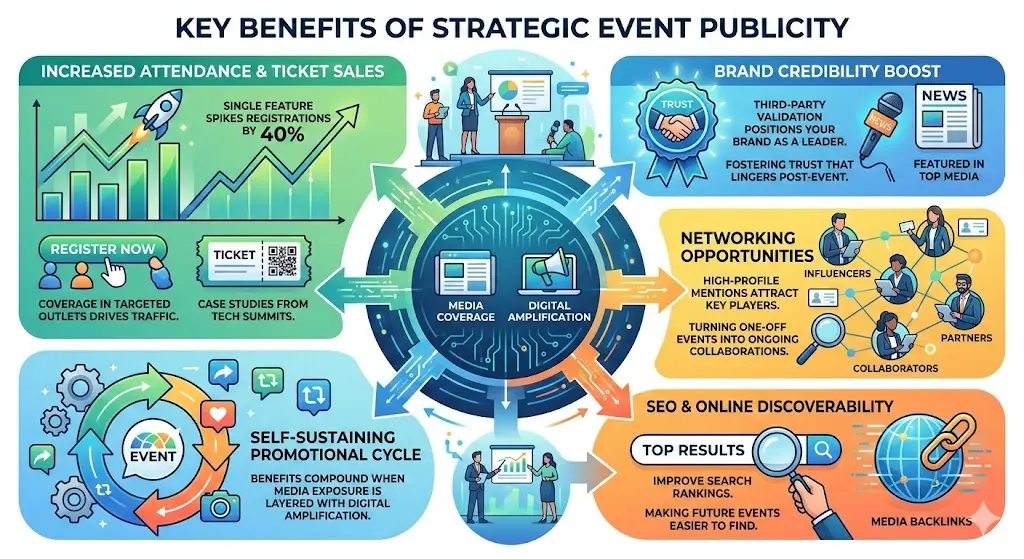
Strategic event publicity through media channels offers tangible advantages that go beyond mere visibility.
- Increased Attendance and Ticket Sales: Coverage in targeted outlets drives traffic; a single feature can spike registrations by 40%, as seen in case studies from tech summits.
- Brand Credibility Boost: Third-party validation positions your brand as a leader, fostering trust that lingers post-event.
- Networking Opportunities: High-profile mentions attract influencers and partners, turning one-off events into ongoing collaborations.
- SEO and Online Discoverability: Media backlinks improve search rankings, making future events easier to find.
These benefits compound when media exposure for events is layered with digital amplification, creating a self-sustaining promotional cycle.
Types of Media Coverage for Events Explained
Media coverage for events spans traditional, digital, and hybrid formats, each serving unique purposes based on your event’s scale and audience. Understanding these types helps organizers tailor pitches effectively, ensuring coverage aligns with goals like lead generation or community building. What is media coverage for events in practice? It’s a multifaceted toolkit, from print features to live streams.
Traditional media, like newspapers and TV, provides evergreen credibility but requires timely pitches. Digital coverage, via blogs and podcasts, offers niche targeting and shareability. Hybrid approaches, such as live-tweeting by journalists, blend both for real-time buzz. A charity gala, for example, might land a TV spot for broad appeal, a blog deep-dive for donor insights, and social recaps for viral spread.
Choosing the right mix depends on demographics—Gen Z favors TikTok influencers, while executives prefer LinkedIn articles. Time Intelligence Media Group excels in curating these for optimal impact.
Traditional vs. Digital Media Coverage Breakdown
Traditional media delivers authority through established outlets.
Print and broadcast coverage builds lasting prestige; a feature in The New York Times on a film premiere can sustain buzz for months.
Digital channels enable interactivity, with podcasts interviewing speakers or YouTube recaps garnering millions of views.
How to Secure Media Coverage for Your Events
Securing media coverage for events demands a structured approach: research, pitch, follow-up, and measurement. Start by building a media list of 50-100 relevant journalists using tools like HARO or Cision. Craft personalized pitches highlighting unique angles, such as “exclusive data on event trends.” What is media coverage for events without persistence? Timely, value-driven outreach turns rejections into placements.
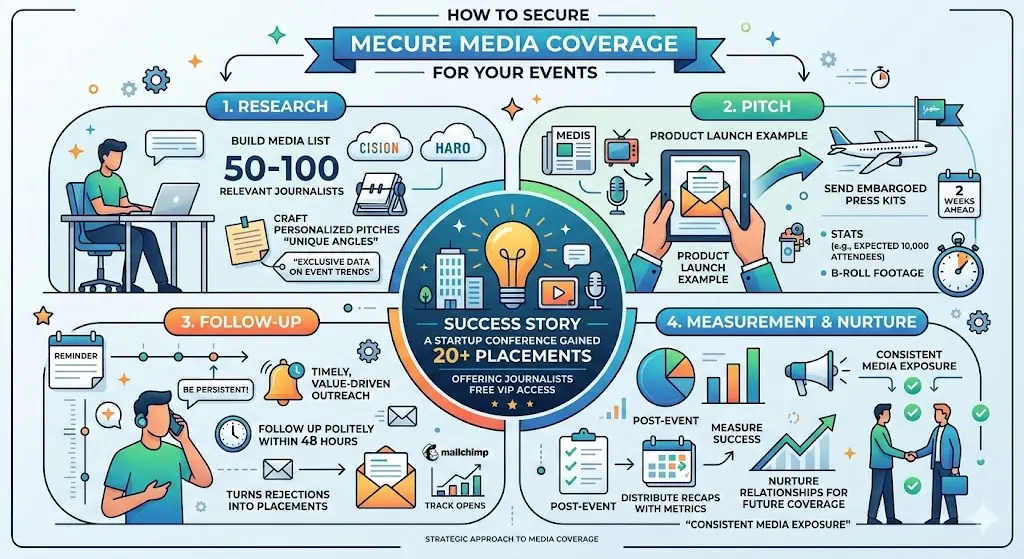
For a product launch, send embargoed press kits two weeks ahead, including stats like “expected 10,000 attendees” and B-roll footage. Follow up politely within 48 hours. Track opens with tools like Mailchimp. Success stories abound: a startup conference gained 20+ placements by offering journalists free VIP access.
Post-event, distribute recaps with metrics to nurture relationships for future coverage. This cycle ensures consistent media exposure for events.
Step-by-Step Guide to Event PR Outreach
Follow these steps for reliable results.
- Research Targets: Identify 20 outlets per audience segment, noting journalists’ beats.
- Develop Hooks: Tie your event to trends, e.g., “AI in events post-2025 boom.”
- Pitch and Package: Use concise emails with visuals; aim for 150 words.
- Amplify Wins: Share coverage on your channels to extend reach.
- Measure ROI: Track mentions via Google Alerts and tie to attendance spikes.
Professional Events Media Coverage Services streamline this process for seamless execution.
Real-World Examples of Effective Media Coverage
Case studies illustrate what media coverage for events achieves in action. Take Coachella: pre-event hype via celebrity interviews and Vogue features drew 250,000 attendees, with coverage generating $100M+ in earned media value. Smaller events replicate this scaled down—a local food festival in Chicago secured WGN TV spots and Eater articles, boosting vendors’ sales by 60%.
Another example: TEDx events leverage speaker stories for global pickup by outlets like BBC, turning local talks into viral phenomena. These scenarios highlight tailored strategies: data-driven pitches for B2B, emotional narratives for consumer events.
Trends show hybrid events post-pandemic dominate, with 70% of coverage now digital-first. Learn how media coverage increases event reach through advanced tactics.
Measuring the Impact of Event Media Coverage
Quantifying media coverage for events involves metrics like reach, sentiment, and conversions. Tools such as Meltwater track impressions (e.g., 1M from a campaign), while sentiment analysis gauges positivity. What is media coverage for events worth? Tie it to KPIs: a webinar with 50K impressions might yield 500 leads.
In one scenario, a trade show’s coverage across 15 outlets resulted in 30% attendance growth and 20 new sponsors. Use UTM links in press materials for attribution. Long-term, it enhances brand equity, with covered events seeing 2x repeat participation.
Advanced organizers benchmark against industry averages, adjusting for events media coverage services for brands that deliver ROI-focused results. Time Intelligence Media Group provides professional Events Media Coverage Services to help brands maximize event impact through expert strategies.
