
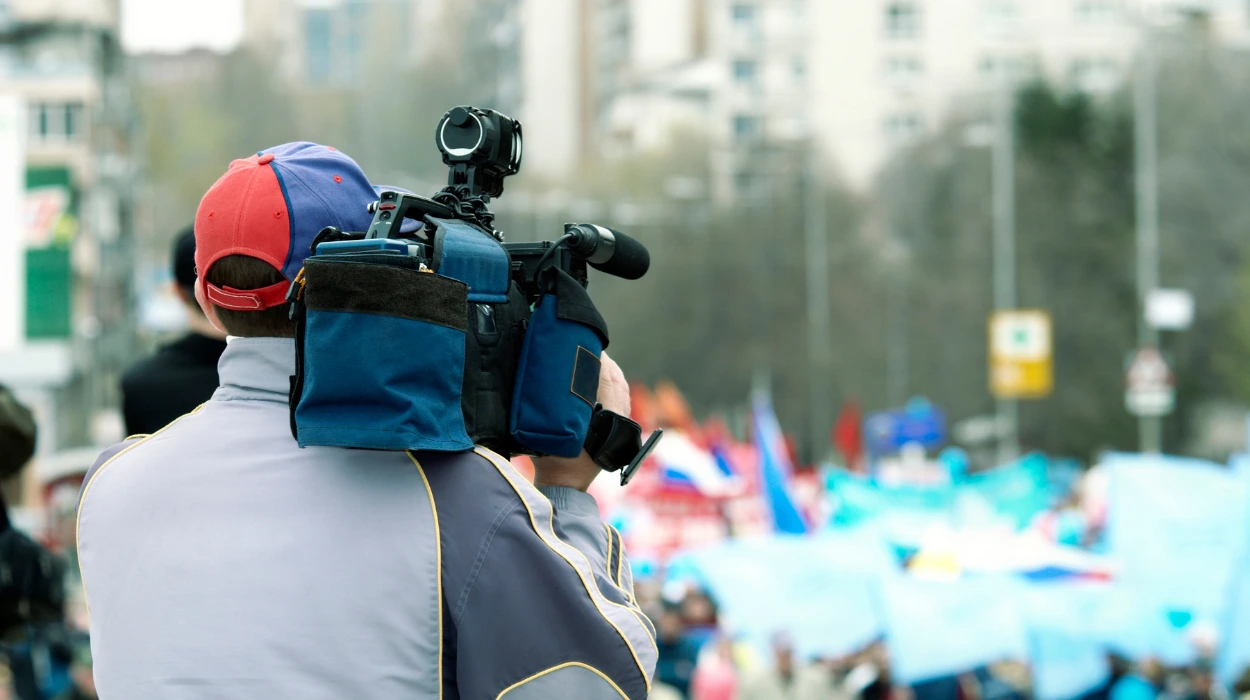
Event photography is the planned capture of people, activities, locations, and key moments at an event for editorial use. It gives UK news coverage visual evidence that supports the written story and shows what happened, who participated, and where the event took place.
Event photography forms part of visual journalism. Photographs provide factual context alongside headlines, introductions, quotations, statistics, and event details.
A news photograph differs from a promotional image. Editorial photography focuses on documenting an event accurately. It captures recognisable people, relevant activities, event settings, speakers, audiences, and significant moments.
For example, a photograph from a business conference can show the keynote speaker addressing an audience, the venue environment, and the presence of attendees. These details strengthen the reader’s understanding of the event.
Event photography also creates visual assets that news publishers use across digital articles, event reports, business news pages, local coverage, and industry publications.
Why do news stories need event photography?
Event photography adds immediate visual context to a news story. A relevant photograph identifies the event, reinforces the subject of the article, introduces participants, and gives readers factual visual information that written coverage alone does not provide.
Online news is highly visual. Photographs help readers identify the subject before reading the full article. They also establish a connection between the event and the published story.
A photograph can communicate several factual elements simultaneously:
- Event location
- Event scale
- Speaker identity
- Audience participation
- Organiser presence
- Branding visible at the venue
- Awards or presentations
- Demonstrations or activities
For example, coverage of a charity fundraising event becomes more informative when an image shows the organisers presenting funds, volunteers participating, or attendees engaging with the programme.
The photograph therefore works as an editorial information layer. It supports the article without replacing written reporting.
How does event photography support the news reporting process?
Event photography supports news reporting by documenting key moments before, during, and after an event. Photographers capture relevant people, activities, locations, and interactions, creating visual evidence that aligns with the article’s factual narrative.
The process begins with identifying the event’s editorial priorities. These priorities determine which people, moments, and locations require photographic coverage.
What happens before the event?
Before an event, photography planning establishes the essential visual requirements. The photographer identifies the venue, schedule, speakers, organisers, and significant programme activities.
A conference, for example, has several predictable photographic requirements. These include registration, keynote sessions, panel discussions, networking, audience participation, and closing activities.
Planning also establishes practical requirements such as access, lighting conditions, movement restrictions, and image permissions.
What happens during the event?
During the event, the photographer records significant moments as they occur. The focus remains on accurate documentation.
Key photographs include speakers delivering presentations, people receiving awards, guests participating in activities, and groups interacting during important programme moments.
The photographer also captures establishing images. These show the venue, stage, audience, signage, and wider event environment.
What happens after the event?
After the event, photographs are selected, organised, edited, and prepared for publication. Selection focuses on relevance, clarity, composition, and connection with the news story.
The final image set gives editors several options for representing the event visually.
What types of photographs are useful for UK news coverage?
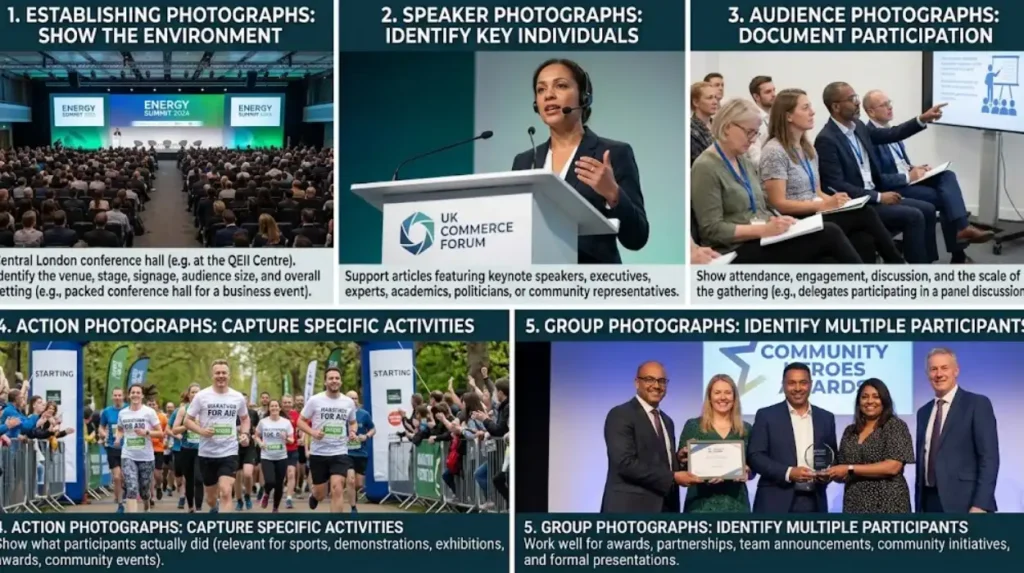
Useful event photographs include establishing shots, speaker images, audience photographs, interaction scenes, presentation moments, group photographs, and activity images. Each format provides a different type of factual context for the accompanying news story.
What are establishing photographs?
Establishing photographs show the event environment. They identify the venue, stage, signage, audience size, and overall setting.
For example, an image showing a packed conference hall establishes the scale and location of a business event.
What are speaker photographs?
Speaker photographs show people directly connected to the event. They support articles featuring keynote speakers, executives, experts, academics, politicians, or community representatives.
A clear image of a speaker at a podium gives readers immediate visual identification.
What are audience photographs?
Audience photographs document participation. They show attendance, engagement, discussion, and the scale of the gathering.
For example, an educational conference article gains additional context from an image showing delegates participating in a panel discussion.
What are action photographs?
Action photographs capture specific activities. These images are particularly relevant to sports events, demonstrations, exhibitions, charity activities, awards ceremonies, and community events.
They show what participants actually did rather than simply showing who attended.
What are group photographs?
Group photographs identify multiple participants in a single image. They work particularly well for awards, partnerships, team announcements, community initiatives, and formal presentations.
How does photography improve the factual context of an event story?
Photography improves factual context by showing visible details that confirm the setting, participants, activities, and scale of an event. A relevant image connects abstract written information with specific people, places, and documented moments.
Written coverage often contains descriptions such as a large audience, a keynote presentation, or an awards ceremony. A photograph provides direct visual representation of those details.
This relationship is important for news publishers because editorial images need clear relevance to the accompanying article.
For example, an article about a property industry conference can include a photograph of the main stage, a panel discussion, or delegates examining an exhibition. Each image connects directly with the subject of the report.
Photography also helps distinguish events with similar names or themes. A visual record identifies the particular venue, participants, and activities associated with one event.
How does event photography affect reader engagement with news coverage?
Event photography increases the amount of visual information available to readers. Relevant images create an immediate entry point into an article and help readers understand the event before processing the complete written report.
Readers scan digital news pages quickly. Images provide visual signals that help establish the article’s subject.
A photograph placed near the headline or introduction can identify the event immediately. Further images can break up longer articles and provide additional context.
Visual relevance also matters. An unrelated stock photograph does not document the actual event. An authentic event photograph directly represents the people and activities described in the article.
For example, coverage of a technology exhibition becomes more informative when photographs show exhibitors demonstrating products and visitors engaging with displays.
The image therefore supports both comprehension and editorial presentation.
How does event photography support different types of UK events?
Event photography supports news coverage across business, charity, cultural, educational, property, technology, healthcare, sports, and community events. Each category requires images that document its specific participants, activities, locations, and newsworthy moments.
How does photography support business events?
Business events often feature executives, speakers, panel discussions, networking sessions, product announcements, and awards.
Photographs document these activities and establish the professional context of the story.
How does photography support charity events?
Charity events frequently involve fundraising, volunteering, presentations, community participation, and beneficiary activities.
Images show the people and activities behind the fundraising story.
How does photography support conferences?
Conference photography focuses on speakers, panels, audiences, exhibition areas, and networking.
These photographs demonstrate the scale and professional context of the conference.
How does photography support awards events?
Awards photography documents winners, presenters, trophies, ceremonies, and group celebrations.
For example, a business awards article can use photographs of individual winners alongside the written announcement.
How does photography support community events?
Community event photography focuses on participation, local venues, activities, organisers, and attendees.
This visual evidence helps establish the local relevance of the story.
How does event photography contribute to multi-site news coverage?
Event photography gives multiple publishers consistent visual material connected to the same event. A strong image set supports different editorial formats while maintaining accurate identification of the event, participants, location, and news subject.
A single event can generate coverage across national, regional, local, business, trade, and specialist publications. Each publication applies its own editorial format.
The underlying photographs still provide important visual evidence.
For example, a technology conference can generate business coverage focused on industry speakers, regional coverage focused on the host city, and specialist coverage focused on technology developments.
Photographs help each article represent the event accurately while supporting different editorial angles.
For readers exploring the next stage of how visuals contribute to wider distribution, can be connected naturally:
What makes an event photograph suitable for news publication?
A newsworthy event photograph is relevant, clear, accurately connected to the story, and editorially appropriate. It identifies important people or activities and provides useful context without relying on artificial or unrelated visual material.
Several factors determine photographic usefulness:
- Relevance to the article
- Clear subject identification
- Adequate image quality
- Accurate captions
- Correct names and roles
- Appropriate event context
- Editorial suitability
- Permission and usage compliance
Captions also provide essential information. A caption can identify the people shown, describe the activity, and state the event location.
Accurate metadata and captions reduce ambiguity for editors and readers.
How does event photography strengthen the overall value of UK news coverage?

Event photography strengthens UK news coverage by combining visual evidence with written information. It documents real people, locations, activities, and moments, giving publishers and readers a clearer representation of what occurred at an event.
The strongest event coverage combines several information types. The headline identifies the news subject. The article explains the event. Quotations provide statements from participants. Data establishes measurable facts. Photography documents the visible reality.
This combination creates a more complete editorial record.
Event photography therefore has a defined role within news coverage. It is not simply decorative content. It documents events, identifies participants, establishes context, and supports the factual presentation of news.
For readers researching practical approaches to distributing event visuals across multiple publications:
Event photography and news coverage.
What is the main role of event photography in UK news coverage?
The main role of event photography is to document an event visually and strengthen the factual presentation of its news coverage. It identifies people, places, activities, and significant moments while giving readers immediate editorial context.
Event photography connects visual evidence with written reporting. It helps readers understand what happened and who participated.
Explore More Expert Insights:
How Nonprofit Events Earn News Coverage on Small Budgets
Why Property Launches Need News Coverage in 2026
For UK news coverage, relevant event photographs support business stories, charity reports, conference coverage, awards announcements, community news, cultural events, and specialist publications.
The result is a more complete record of the event. Written reporting explains the news. Event photography shows the documented setting and moments that make the story identifiable and visually understandable.



