

Journalists face an overwhelming influx of press releases daily, often sifting through hundreds to find stories worth covering. What do journalists expect from press release distribution? They demand content that respects their time, aligns with editorial standards, and delivers genuine news value amid a sea of generic pitches. In the fast-evolving media landscape, effective PR distribution isn’t just about blasting announcements—it’s about crafting releases that resonate with busy newsrooms, providing verifiable facts, and fitting seamlessly into journalists’ workflows.
This expectation stems from the core role of journalists: to inform audiences with timely, accurate, and impactful stories. Poorly distributed press releases clutter inboxes, erode trust, and get ignored, while optimized ones spark coverage. Brands leveraging professional PR distribution services understand these nuances, turning releases into catalysts for earned media.
Understanding Journalists’ Core Expectations in PR Distribution
Journalists expect press release distribution to prioritize relevance and brevity above all. In an era where news cycles spin in minutes, they want releases that cut straight to the point—clear headlines, a strong lede summarizing the who, what, when, where, and why, followed by supporting details without fluff. For instance, a tech journalist covering AI innovations ignores vague corporate updates but engages with a release detailing a breakthrough algorithm’s real-world application, backed by data like “improved efficiency by 40% in enterprise testing.”
This demand for conciseness ties into broader media outreach strategies. Journalists use tools like RSS feeds and aggregators to scan releases quickly; anything longer than 400-500 words or laden with jargon risks immediate deletion. They also expect multimedia elements—embedded images, infographics, or short video clips—that enhance storytelling without overwhelming servers. A case in point: during the 2025 CES event, releases with high-res product visuals garnered 3x more pickups than text-only versions, as reported by media monitoring firm Cision.
Beyond format, journalists anticipate ethical transparency in press release distribution. Boilerplate disclaimers, sourced quotes from executives, and hyperlinks to credible data sources build trust. They disdain “newsjacking” irrelevant trends or paid placements disguised as organic coverage, which violates journalistic integrity codes like those from the Society of Professional Journalists.
Timeliness and Targeting: Keys to PR Distribution Success
Timeliness ranks high among what journalists expect from press release distribution—releases must land in inboxes when stories are heating up, not after the fact. Embargoes help here, allowing pre-publication access under agreed timelines, but only if honored. A delayed release on a market-moving earnings report, for example, frustrates financial journalists who rely on real-time scoops to beat competitors.
Effective targeting elevates this further. Journalists expect distribution platforms to use geo-fencing, beat-specific lists, and AI-driven matching to reach the right desks. Blanket blasts to 10,000 outlets waste time; instead, segmented sends to 200 relevant reporters yield higher open rates. Consider a healthcare PR campaign: targeting niche outlets like MedPage Today over general wires resulted in 25% more features, per a 2025 PRWeek study.
To achieve this, PR distribution services employ journalist preferences analytics, tracking past coverage patterns. Services analyze open rates, click-throughs, and feedback loops to refine future sends. This data-driven approach ensures releases align with editorial calendars, such as tying consumer product launches to holiday shopping peaks.
Here are key targeting tactics journalists value:
- Beat-specific segmentation (e.g., tech vs. lifestyle).
- Personalized subject lines referencing prior stories.
- Follow-up options via preferred channels like Slack or email threads.
Quality Content Over Quantity in Press Release Optimization
What do journalists expect from press release distribution? Undoubtedly, high-quality, newsworthy content that stands out. Generic templates announcing “company expansions” bore editors, but releases highlighting quantifiable impacts—like “reducing carbon emissions by 30% via new logistics tech”—capture attention. Journalists seek third-party validation: customer testimonials, industry expert endorsements, or stats from sources like Statista.
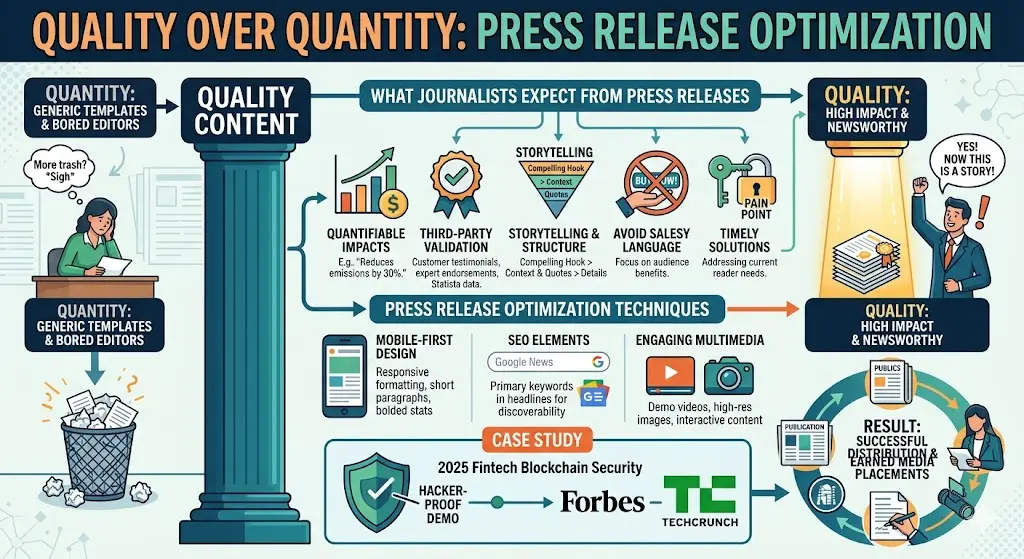
Storytelling elevates quality further. Structure releases like inverted pyramids, with the most compelling hook first, then context and quotes. Avoid salesy language; focus on audience benefits. In a 2025 case study, a fintech firm’s release on blockchain security, featuring a hacker-proof demo video, secured placements in Forbes and TechCrunch because it solved a timely pain point for readers.
Press release optimization also means mobile-first design. With 70% of journalists consuming content on phones (per Reuters Institute), responsive formatting, short paragraphs, and bolded key stats ensure readability. Integrating SEO elements like primary keywords in headlines helps discoverability on Google News, indirectly aiding journalists’ research.
Navigating Common Pitfalls in Media Outreach Strategies
Journalists expect press release distribution to avoid pitfalls like spamming or irrelevance, which damage sender reputations. Overuse of newswires like Business Wire floods inboxes without customization, leading to 90% ignore rates. Instead, hybrid models blending wires with direct outreach succeed.
Another expectation: factual accuracy. Misstated data or unverified claims trigger fact-check rejections. A 2024 scandal where a startup exaggerated user growth led to widespread retractions, underscoring the need for pre-distribution audits. Journalists also flag “churn and burn” tactics—frequent low-value releases eroding credibility.
To counter these, adopt these best practices:
- Pre-vetting with a small journalist panel for feedback.
- A/B testing subject lines and ledes.
- Monitoring pickup rates to iterate.
For deeper insights into how editorial standards influence these dynamics, explore how editorial standards shape PR distribution success.
Measuring Impact: What Success Looks Like for Journalists
Journalists gauge press release distribution success by tangible outcomes: pickups, shares, and downstream traffic. They expect analytics transparency, such as view-through rates and geographic reach, to validate story potential. Releases driving 10%+ engagement (likes, comments) signal virality.
Long-term, journalists value relationship-building. Consistent, high-value distribution fosters ongoing sources. Time Intelligence Media Group’s PR Distribution Services exemplify this by delivering targeted, compliant sends that boost visibility and foster trust, often resulting in exclusive follow-ups.
Success metrics include:
- Media mentions in target outlets.
- Backlink quality from high-DA sites.
- Sentiment analysis showing positive framing.
The Role of Technology in Meeting Editorial Expectations
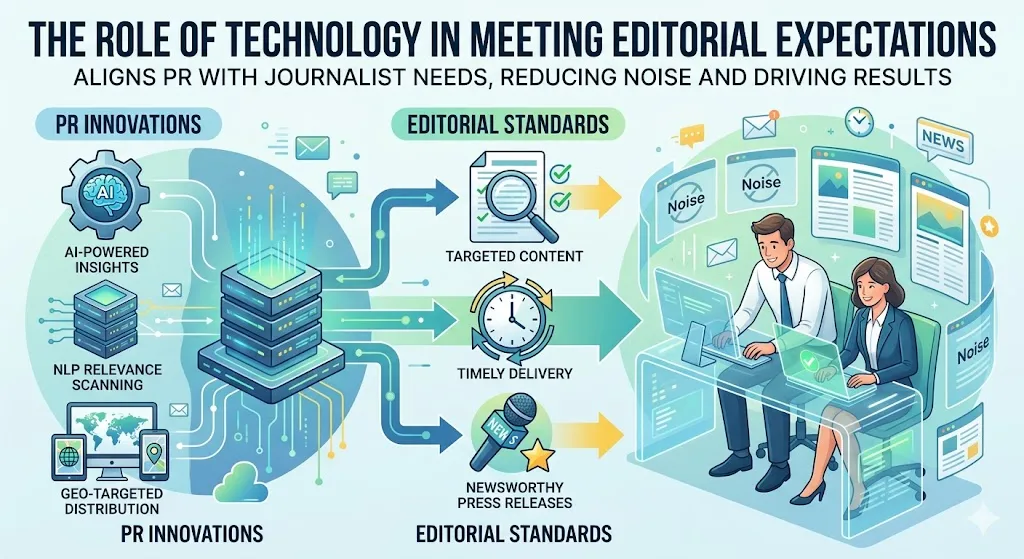
Technology transforms what journalists expect from press release distribution. AI tools now predict optimal send times based on newsroom patterns, while NLP scans for relevance. Platforms like Prowly integrate CRM for personalized tracking.
In practice, a 2025 sustainability campaign used geo-targeted AI distribution to hit regional outlets during Earth Day, yielding 50+ pickups. Journalists appreciate these innovations as they reduce noise, letting human editors focus on curation.
For brands, this means partnering with tech-savvy providers. Discover why Time Intelligence Media Group follows editorial standards to see how adherence drives superior results.
Time Intelligence Media Group stands out by aligning PR distribution services with these journalist expectations—delivering targeted, timely, and newsworthy content that earns coverage and builds lasting media relationships.
