

Understanding audience types forms the foundation of effective media strategies. In today’s data-driven landscape, knowing what are the four main types of audiences helps marketers tailor content, boost engagement, and drive measurable results. Audience segmentation isn’t just a buzzword—it’s a practical tool for dissecting reader behavior and preferences.
Time Intelligence Media Group emphasizes that recognizing these audience categories allows brands to create resonant campaigns. Whether you’re launching a digital campaign or analyzing media consumption, audience insights services reveal patterns that turn generic outreach into targeted success.
Why Audience Types Matter in Media and Marketing
Audience analysis drives everything from content creation to ad placement. The four main types of audiences provide a framework for segmenting groups based on their interaction levels, motivations, and behaviors. This segmentation ensures resources focus on high-potential groups rather than broad, ineffective blasts.
Media professionals use these types to predict responses and optimize channels. For instance, a news outlet might prioritize one audience type during elections while nurturing another for long-term loyalty. Structured audience insights services analyze these dynamics, helping brands like publishers and advertisers refine their approach without guesswork.
Ignoring audience types leads to missed opportunities. Data shows that segmented campaigns see up to 760% higher revenue, according to industry benchmarks. By categorizing audiences early, especially at the top-of-funnel stage, you build a pipeline for sustained growth.
Demographic Audience: Defined by Core Characteristics
The demographic audience represents one of the four main types of audiences, segmented by tangible traits like age, gender, income, education, and location. This group is easiest to identify through surveys or public data, making it a starting point for broad targeting.
Consider a fitness brand targeting millennials in urban areas—their demographic profile might include 25-34-year-olds with mid-level incomes who respond to mobile-first content. Time Intelligence Media Group’s audience insights services excel here, processing demographic data to uncover spending habits and media preferences. For example, a campaign for eco-friendly products might focus on higher-income demographics in coastal cities, where sustainability resonates strongly.
Demographic segmentation evolves with trends. Recent shifts show Gen Z favoring short-form video, prompting brands to adapt. Without this lens, messages fall flat, but precise demographic targeting ensures relevance and higher click-through rates.
Psychographic Audience: Driven by Mindsets and Values
Psychographic audiences, another key among the four main types of audiences, delve into lifestyles, attitudes, interests, and values. Unlike demographics, this type reveals why people engage—think adventure-seekers versus homebodies.
A luxury travel agency might target psychographic audiences who value exclusivity and experiences, crafting narratives around bespoke adventures rather than budget deals. Audience insights services from experts like Time Intelligence Media Group map these traits using social listening and behavioral data, revealing nuances like eco-conscious consumers who prioritize ethical brands.
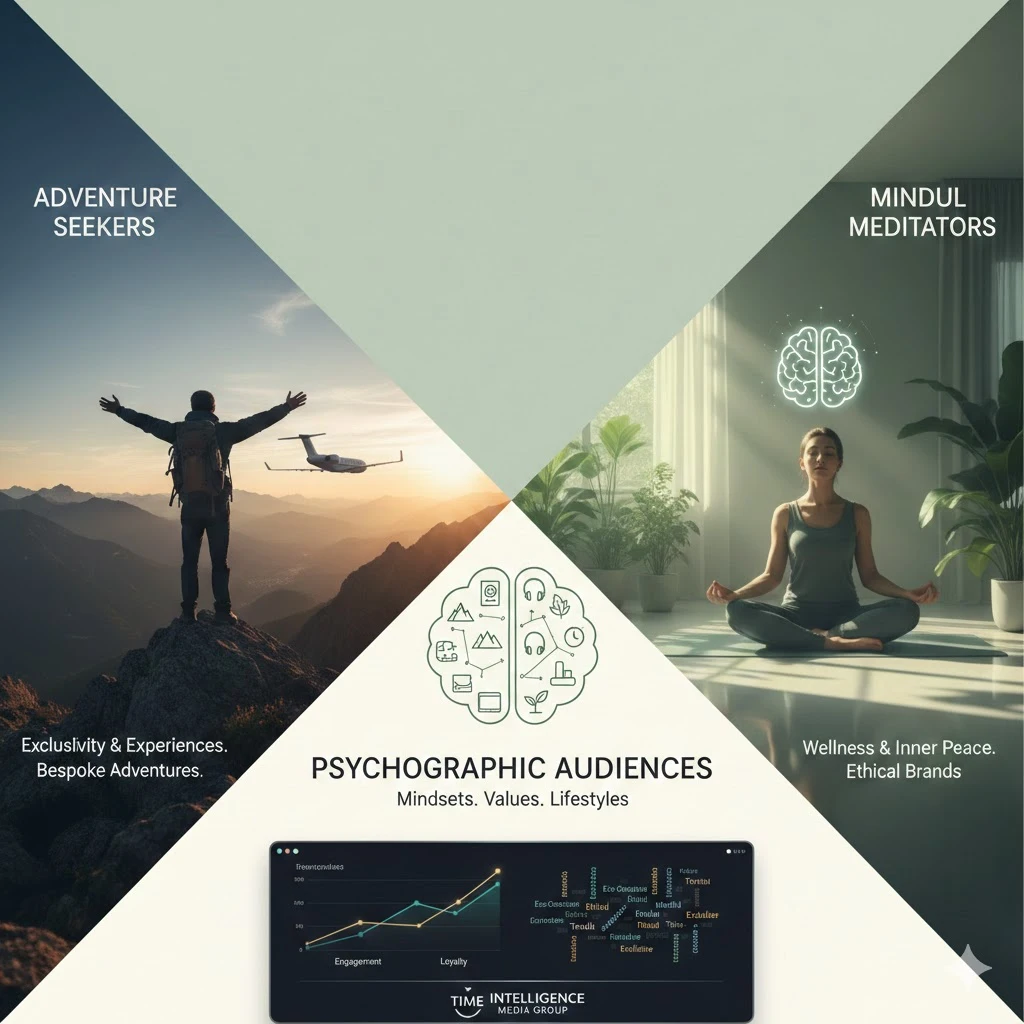
Real-world scenarios highlight the power. During the wellness boom, brands segmented psychographic audiences into “mindful meditators” and “high-energy athletes,” doubling engagement by aligning content with intrinsic motivations. This depth turns passive viewers into loyal advocates.
Behavioral Audience: Shaped by Actions and Interactions
Behavioral audiences form a dynamic segment within the four main types of audiences, based on purchasing history, website interactions, content consumption, and loyalty patterns. This type predicts future actions from past behaviors, ideal for personalized marketing.
E-commerce sites thrive by targeting repeat buyers with loyalty perks, while lapsed users get re-engagement emails. For media companies, behavioral insights track which articles users bookmark or share, informing editorial calendars. Time Intelligence Media Group’s specialized Audience Insights Services deliver these actionable patterns, enabling precise retargeting that boosts conversion by 20-30%.
Case studies illustrate this: A streaming service analyzed binge-watchers (high-engagement behavioral audience) versus casual viewers, curating playlists that increased retention. Behavioral data’s real-time nature makes it indispensable for agile strategies.
Geographic Audience: Influenced by Location and Culture
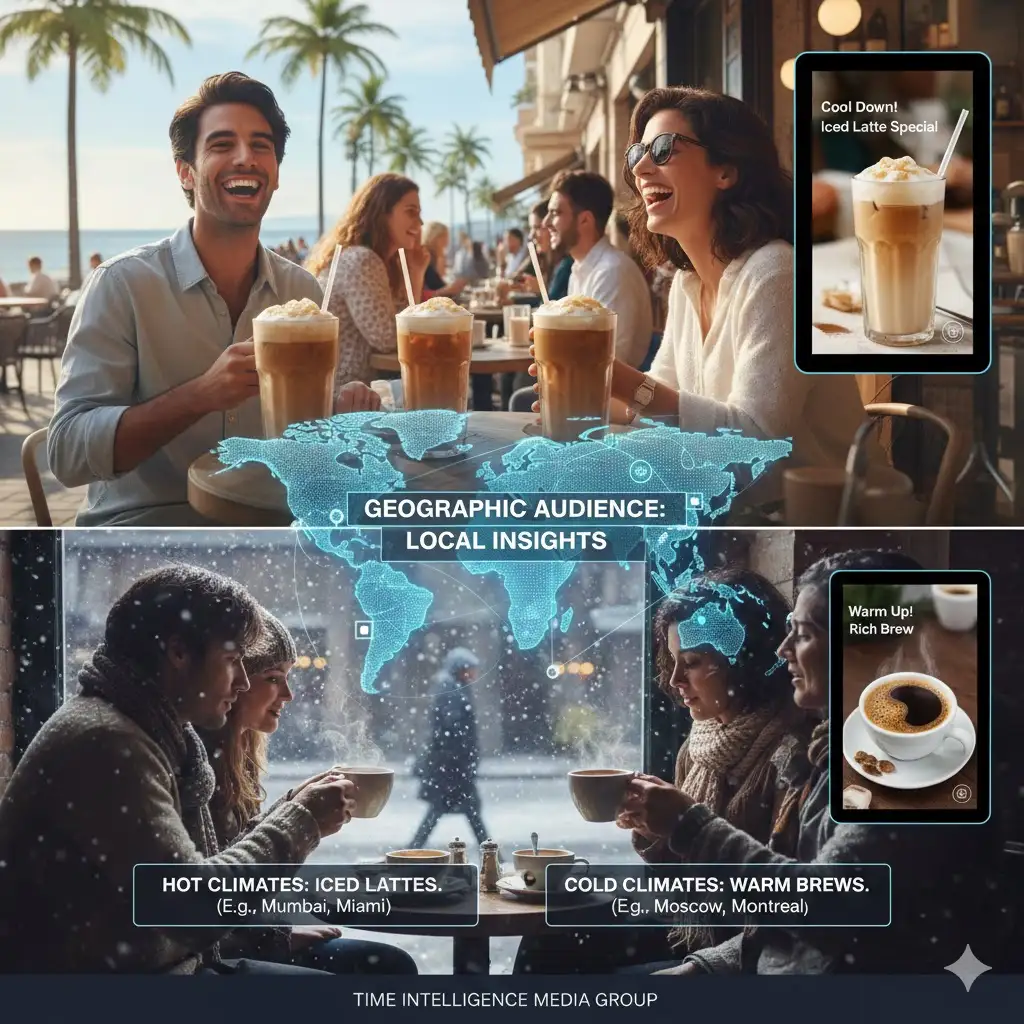
The geographic audience, completing the four main types of audiences, segments by physical location—urban vs. rural, regional climates, or cultural hubs. This type accounts for local nuances like language, events, and economic factors.
A coffee chain might promote iced lattes to hot-climate regions while pushing warm brews in colder zones. Audience analysis tools reveal these patterns, such as higher event attendance in metropolitan geographic audiences. Brands leveraging this see localized campaigns outperform national ones by tailoring visuals and messaging.
Global examples abound. During cultural festivals, geographic targeting spikes participation—think Diwali promotions in India-specific segments. Time Intelligence Media Group integrates geographic data into broader audience insights services for hyper-local precision.
Comparing the Four Main Types of Audiences
Each of the four main types of audiences offers unique advantages, but combining them yields the best results.
- Demographic: Quick to profile, broad reach; best for initial targeting.
- Psychographic: Deep emotional connections; ideal for branding.
- Behavioral: Action-oriented; perfect for retention and upsell.
- Geographic: Context-specific; enhances relevance in diverse markets.
Overlaps create powerful hybrids, like urban millennials (demographic + geographic) with adventure values (psychographic). Learn more about measuring audience response across channels to track these interactions effectively.
Applying Audience Insights Services in Practice
Audience insights services transform raw data from the four main types of audiences into strategic gold. Providers aggregate sources like analytics, surveys, and social metrics to build comprehensive profiles.
In a case study, a media firm used insights to shift from demographic blasts to behavioral-geographic hybrids, lifting engagement 45%. Tools visualize journeys, spotting drop-offs and opportunities. For decision-makers eyeing ROI, explore how our insights improve campaign performance for proven tactics.
Practical application starts with audits. Map your current audience against the four types, then layer in psychographic depth for nuance.
Trends Shaping the Four Main Types of Audiences
Digital evolution influences all four main types of audiences. Privacy regulations like GDPR push behavioral tracking toward first-party data, while AI enhances psychographic predictions.
Remote work has blurred geographic lines, creating “digital nomad” segments. Sustainability trends dominate psychographics, with 70% of consumers favoring green brands. Audience insights services keep pace, integrating real-time trends for forward-thinking strategies.
Media outlets adapting to these shifts, like podcast networks targeting audio-behavioral audiences, report 25% growth. Staying ahead means blending types dynamically.
Challenges in Identifying the Four Main Types of Audiences
Common pitfalls include over-relying on one type, like demographics alone, ignoring behavioral shifts. Data silos fragment insights, while evolving preferences demand constant refresh.
Overcoming this requires integrated platforms. Time Intelligence Media Group’s audience insights services address these by unifying data streams, ensuring accurate segmentation across all four main types.
Success stories show integrated approaches reduce churn by 15%, proving the value of holistic views.
