
Sponsored content deals are paid partnerships where brands create and publish branded articles, videos, or posts on third-party platforms to reach targeted audiences while maintaining an editorial tone.
Sponsored content deals involve brands paying publishers to produce content that integrates brand messages into native formats. Publishers label this content as “sponsored” to disclose the commercial arrangement. These deals differ from traditional advertising because they blend seamlessly with the platform’s regular content. Brands select platforms based on audience alignment and reach. The content follows platform guidelines to ensure authenticity.
In 2023, global sponsored content spending reached $12.5 billion, with growth projected at 15% annually through 2028. Deals typically last from one publication to ongoing campaigns spanning multiple pieces. Contracts specify content approval rights, performance metrics, and payment terms. Publishers handle distribution, while brands provide creative input.
Key Elements of Sponsored Content Deals
Elements include clear disclosure labels, native format integration, and measurable outcomes. Disclosure appears as “Sponsored” or “Paid Post” at the top and bottom of content. Native formats match the platform’s style, such as listicles on news sites or videos on social feeds. Outcomes track via unique URLs, pixel tracking, or promo codes.
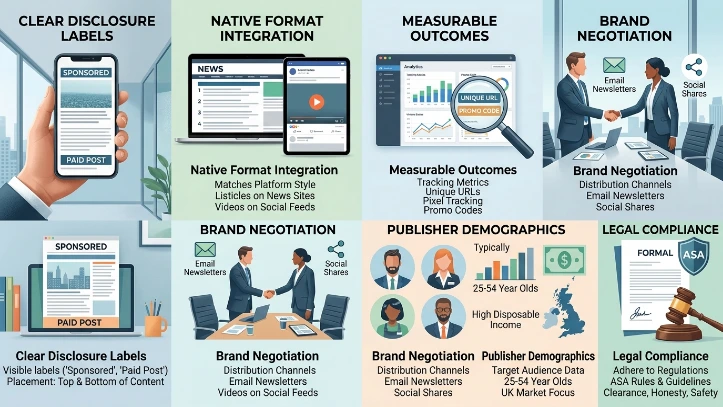
Brands negotiate distribution channels, including email newsletters and social shares. Publishers provide audience demographics, typically 25-54-year-olds with high disposable income in the UK market. Deals require legal compliance with Advertising Standards Authority rules.
How Do Brands Identify Suitable Platforms for Sponsored Content?
Brands identify platforms by analyzing audience demographics, content relevance, and domain authority using tools like SimilarWeb and Ahrefs, targeting sites with 1 million+ monthly UK visitors.
Brands start with audience overlap analysis. They review platform traffic data for UK-specific metrics, focusing on sectors like finance or lifestyle. Tools aggregate data on 500 million domains, revealing top performers. Brands prioritize platforms with engaged users, measured by average session duration over 3 minutes.
Next, brands assess content fit. Platforms produce topic-aligned articles, ensuring brand messages resonate. For example, tech brands target gadget review sites. Domain authority scores above 70 indicate strong SEO value. Brands compile shortlists of 10-20 platforms.
When evaluating options in depth, explore:
What brands look for before choosing sponsored content publishing platforms.
Metrics Brands Use for Platform Selection
Metrics cover traffic volume, engagement rates, and historical performance. Traffic volume exceeds 500,000 UK uniques monthly. Engagement rates above 2% signal quality interactions. Historical data shows click-through rates averaging 0.5-1.2%. Brands request media kits with these figures.
Additional factors include ad viewability scores over 70% and bounce rates under 50%. UK brands verify GDPR compliance in data handling.
What Steps Do Brands Follow to Secure Sponsored Content Deals?
Brands secure deals through a five-step process: research platforms, pitch proposals, negotiate terms, produce content, and launch with tracking, typically closing within 4-6 weeks.
The process begins with platform research using pitch databases and direct outreach. Brands send initial emails outlining objectives and budget ranges from £5,000 to £50,000 per piece. Responses arrive within 7-10 days. Selected platforms schedule calls to discuss audience fit.
Negotiation covers rates, timelines, and deliverables. Standard rates range £10,000-£30,000 for UK news sites with 2 million readers. Brands secure final approval on two drafts. Production involves collaborative editing over 2-3 weeks.
For advanced strategies on high-authority sites, check:
How brands secure sponsored content deals with high authority news websites.
Pitching and Negotiation Details
Pitches include one-page briefs with goals, target KPIs like 50,000 impressions, and creative concepts. Negotiations address exclusivity clauses preventing competitor placements for 90 days. Payments structure as 50% upfront and 50% post-publication.
Legal reviews ensure contracts define revision limits at three rounds and indemnity for claims.
What Components Make Up a Sponsored Content Deal Agreement?
Components include scope of work, payment schedule, performance KPIs, disclosure requirements, and termination clauses, outlined in 5-10 page contracts.
Scope defines content type, length (800-1500 words), and topics. Payments follow milestones: 40% on signing, 30% on draft approval, 30% on live. KPIs target 100,000 impressions and 1% engagement rate. Disclosure mandates ASA-compliant labels.
Termination allows cancellation with 14 days’ notice, forfeiting 20% fee. Intellectual property rights revert to brands post-campaign.
Performance Tracking Components
Tracking uses UTM parameters for 100% attribution. Platforms provide post-campaign reports within 30 days, detailing views, clicks, and shares. Brands integrate Google Analytics for deeper insights, achieving 95% accuracy.
Evergreen clauses enable content repurposing after 12 months.
What Benefits Do Sponsored Content Deals Provide to Brands?
Deals deliver 3x higher engagement than banners, trusted audience reach, SEO backlinks, and measurable ROI, with average 4:1 return on ad spend.
Engagement rates hit 2.5% versus 0.5% for display ads, per 2024 industry benchmarks. Trust stems from editorial context, boosting brand recall by 20%. SEO gains from dofollow links on authority domains improve rankings.
ROI calculations factor lifetime value, with campaigns yielding £4 revenue per £1 spent. UK brands report 15% sales uplift post-campaign.
Quantifiable Benefits with Data
Data shows 75% of readers view sponsored content as valuable information. Retention rates exceed 60% for native formats. Long-term benefits include 12-month link equity building site authority.
Explore More Expert Insights:
What Is the Difference Between Guest Blogging and Paid Sponsored Content Services?
How Does Sponsored Content Work Across Multi-Network News Publishing Platforms Today?
What Real-World Use Cases Demonstrate Sponsored Content Success?
Use cases span finance, retail, and tech sectors, where brands publish educational guides driving 200,000+ impressions and 5% conversion rates.
Finance brands create “investment tips” articles on business platforms, generating 150 leads per piece. Retail brands feature “product roundups” on lifestyle sites, boosting traffic 30%. Tech firms produce “innovation overviews,” securing 50,000 shares.
In healthcare, wellness guides on news outlets achieve 10% click rates. Travel brands use destination features, increasing bookings 12%.
Sector-Specific Examples
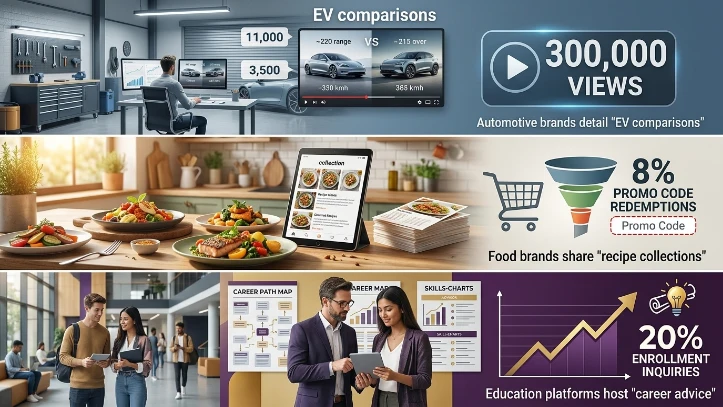
Automotive brands detail “EV comparisons,” yielding 300,000 views. Food brands share “recipe collections,” with 8% promo code redemptions. Education platforms host “career advice,” driving 20% enrollment inquiries.